
I like to learn a few words in the language of the country I’m visiting. Thank you is one of the most common – and useful – expressions to know. Whether I’m ordering something in a restaurant, asking for directions, checking into a hotel, or buying a souvenir, it’s a word I use frequently.
Perhaps we all know how to say thank you in a few languages. Most of us have heard gracias, merci, grazie, and danke, even if we haven’t visited the countries where they’re spoken. But I wanted this article to go deeper, because expressing gratitude is more than memorizing a word.
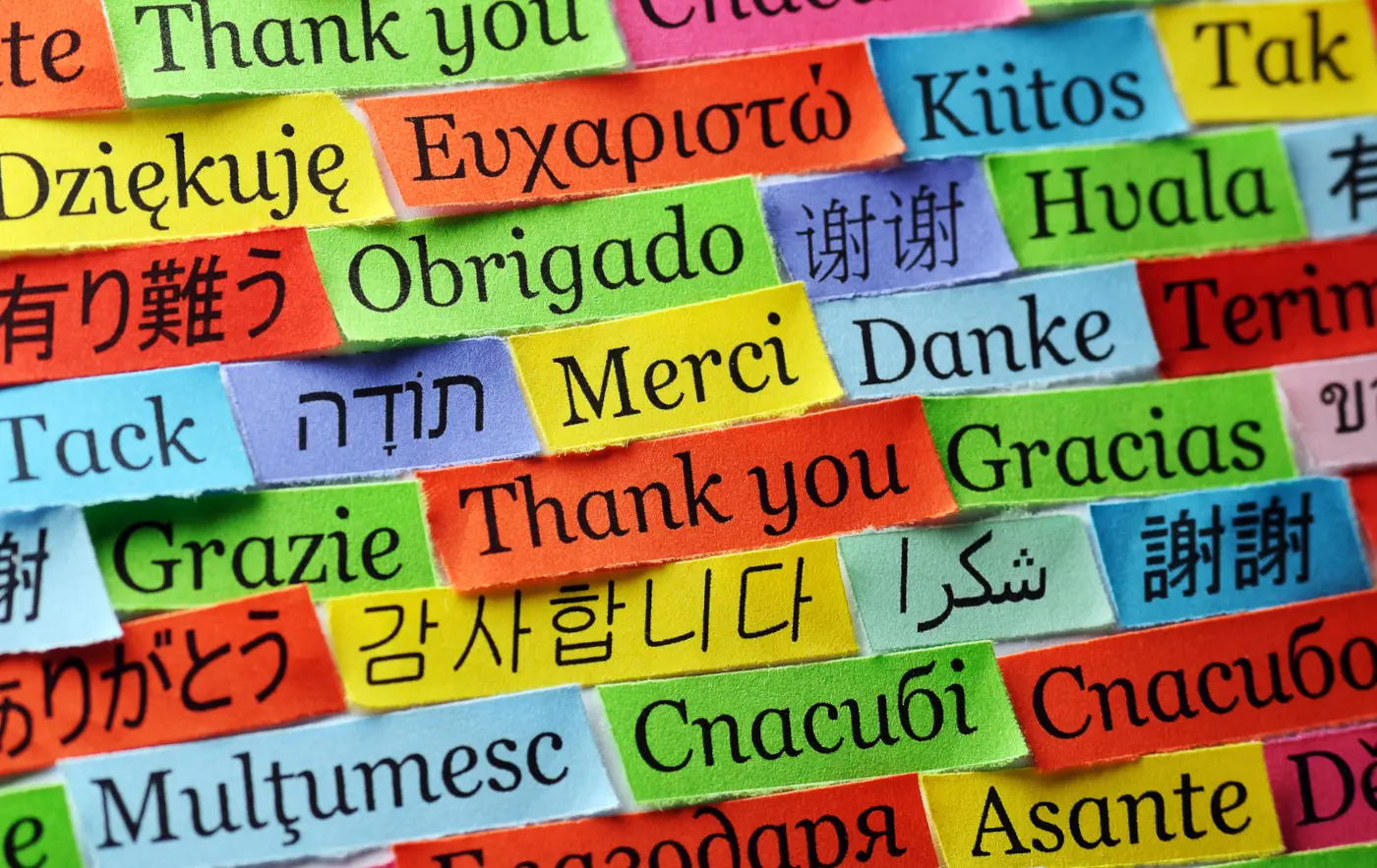
So I’ve put together 50 ways to say thank you in different languages, with pronunciation guides, original spelling, formal and informal expressions, and useful cultural tips. Some languages have different ways to thank friends and strangers, while others use special forms when receiving gifts or services. And there are a few expressions that might surprise you!
ID 40787593 © Ivaylo Sarayski | Dreamstime.com
I’ve grouped the languages by region so you can find what you need, and there’s a complete reference chart near the end. I hope you’ll find it useful, whether you’re preparing for a trip, learning a language, or simply curious about how people express gratitude around the world.
How to Pronounce Thank You in Different Languages
The pronunciation guides in this article are written for English speakers. Capital letters show the stressed syllable, while familiar sounds such as “ee” in “see” and “ah” in “father” make the words easier to read aloud. They’re approximations, not exact phonetic transcriptions, and regional accents can change how an expression sounds.
For languages with their own writing systems, I’ve included the original spelling and, where useful, a romanized version. You’ll also notice accent marks and special characters in some European languages. These matter, so it’s worth learning the correct spelling alongside the pronunciation.
Mandarin Chinese, Cantonese, Thai, Vietnamese, and several African languages use tones, which can affect a word’s meaning. For these, I recommend listening to recordings from native speakers using a reliable pronunciation dictionary such as Forvo. A written guide is useful for remembering the expression, but it can’t reproduce every sound accurately.
How to Say Thank You in Different European Languages
Europe has an incredible variety of languages. Some thank-you expressions are closely related, while others look and sound completely different, even when the countries are neighbors.
Here are 26 European languages, with practical expressions you can use while traveling.
1. How to Say Thank You in Spanish
Thank you: Gracias
Pronunciation: GRAH-syahs (approximate Latin American pronunciation)
Thank you very much: Muchas gracias
Gracias is useful throughout Spain and much of Latin America. The pronunciation changes depending on where you are: in most of Spain, the c has a sound similar to the English th in “think,” while in Latin America and the Canary Islands, it’s pronounced like s.
If you want to express stronger appreciation, say muchas gracias (MOO-chahs GRAH-syahs). You might also hear muchísimas gracias, an especially enthusiastic way of saying thank you very much.
There are also regional languages worth knowing when visiting Spain. In Catalan, thank you is gràcies, while Basque uses eskerrik asko. Spanish gracias is widely understood, but recognizing these local expressions can be helpful.
2. How to Say Thank You in French
Thank you: Merci
Pronunciation: mehr-SEE
Thank you very much: Merci beaucoup
Merci is suitable for almost any everyday situation in France and other French-speaking destinations. You can use it when someone hands you a receipt, serves your meal, gives you directions, or helps you with a question.
For a warmer thank you, say merci beaucoup (mehr-SEE boh-KOO). Another expression, je vous remercie, means “I thank you” and is more formal.
When you’re in France, it’s also useful to begin an interaction with bonjour and use s’il vous plaît when making a request. Even a few French words during a first trip to Paris can come in handy.
One detail to remember: merci alone can sometimes communicate “no, thank you” when responding to an offer. If you want to accept, saying oui, merci makes your answer clearer.
3. How to Say Thank You in Italian
Thank you: Grazie
Pronunciation: GRAHT-tsyeh
Thank you very much: Grazie mille
Grazie is the standard Italian expression for thank you, and you can use it in both formal and informal conversations. The z has a ts sound, and the final vowel is pronounced, so don’t say it like the English word “grazy.”
For stronger appreciation, grazie mille literally means “a thousand thanks.” You may also hear mille grazie or molte grazie. If someone thanks you, a common response is prego (PREH-goh), meaning “you’re welcome.”
Grazie is among the most useful Italian phrases for travel, whether you’re buying train tickets, ordering coffee, visiting museums, or asking for directions.
4. How to Say Thank You in German
Thank you: Danke
Pronunciation: DAHN-kuh
Thank you very much: Vielen Dank
Danke is a standard expression in Germany, Austria, and German-speaking Switzerland. For a more emphatic thank you, say vielen Dank (FEE-len DAHNK) or danke schön (DAHN-kuh SHURN).
German is useful to know when traveling to places such as Munich or Vienna. You might hear danke schön when someone receives a drink at a café, finishes shopping, or thanks a person who has helped them.
There’s also a small but useful distinction when accepting or declining offers. If someone offers you something and you simply answer danke, it can be understood as a polite refusal. To be clearer, use ja, bitte for “yes, please” and nein, danke for “no, thank you.”
5. How to Say Thank You in Portuguese
Thank you: Obrigado / Obrigada
Pronunciation: oh-bree-GAH-doo / oh-bree-GAH-dah (approximate; pronunciation varies by region)
Thank you very much: Muito obrigado / Muito obrigada
Portuguese has a distinction that many travelers don’t expect. Traditionally, male speakers say obrigado, while female speakers say obrigada. The ending agrees with the speaker, not with the person being thanked.
The expressions are used in both Portugal and Brazil, although their pronunciation varies. The underlying meaning is connected to being obliged or indebted to someone.
In Brazil, you’ll also hear valeu, a casual expression similar to “thanks” or “cheers.” It’s appropriate among friends and in relaxed situations, while obrigado or obrigada is a safer, more general option.
6. How to Say Thank You in Dutch
Thank you: Dank je wel
Pronunciation: DAHNK yuh VEL
Formal thank you: Dank u wel
Dutch has several common ways to express gratitude. Dank je and dank je wel are friendly, informal expressions. You’ll hear them in everyday conversations in the Netherlands and Dutch-speaking Belgium.
When you want to sound more formal, say dank u wel (DAHNK oo VEL). The difference comes from the pronouns je, used informally, and u, used to address someone respectfully.
Another useful word is bedankt (buh-DAHNKT). It’s common in everyday situations and can be used with strangers or people you know. For a warmer expression, hartelijk dank means “heartfelt thanks.”
7. How to Say Thank You in Polish
Thank you: Dziękuję
Pronunciation: jen-KOO-yeh (approximate)
Informal thanks: Dzięki
Dziękuję is the standard Polish expression for thank you and works well when speaking to restaurant staff, shop assistants, hotel employees, or strangers.
In informal conversations, Polish speakers often say dzięki (JEN-kee), which is similar to the English “thanks.” For “thank you very much,” use dziękuję bardzo.
Polish has nasal vowels and consonant sounds that English spelling can’t fully reproduce. If you want to decline an offer politely, nie, dziękuję means “no, thank you.”
8. How to Say Thank You in Hungarian
Thank you: Köszönöm
Pronunciation: KUR-suh-nuhm (approximate)
Informal thanks: Köszi
Hungarian sounds quite different from the Germanic and Romance languages many travelers are familiar with. Köszönöm is a polite expression you can use in shops, restaurants, and everyday interactions.
With friends, you’ll often hear köszi, a short informal version. For “thank you very much,” say köszönöm szépen.
The Hungarian ö sound doesn’t have a direct equivalent in English. If you’re planning a trip to Budapest, it’s worth listening to the word before trying it yourself.
Hungarian was one of the languages I encountered during our travels, and it’s certainly not a language where I can guess the meaning of most words from their spelling!
9. How to Say Thank You in Romanian
Thank you: Mulțumesc
Pronunciation: mool-tsoo-MESK
Thank you very much: Mulțumesc foarte mult
Romanian is my native language, so this is one word I don’t need to practice! Mulțumesc is the standard way to say thank you, appropriate in restaurants, hotels, shops, and conversations with people you don’t know.
For stronger appreciation, you can say „mulțumesc mult” or „mulțumesc foarte mult. Another warm expression is mulțumesc frumos, which can be understood as “thank you kindly.”
In casual conversation, many Romanians simply say mersi, borrowed from French merci. You’ll hear it frequently among friends and in everyday interactions.
If you’re visiting Bran Castle or anywhere else in Romania, mulțumesc is a good word to learn before your trip.
10. How to Say Thank You in Greek
Thank you: Ευχαριστώ
Transliteration: Efcharistó
Pronunciation: ef-khah-ree-STOH
Efcharistó is the standard Greek expression for thank you, suitable in both everyday and polite conversations. The stress falls on the final syllable.
The Greek χ sounds similar to the ch in the Scottish pronunciation of “loch.” For “thank you very much,” say ευχαριστώ πολύ (efcharistó polí).
ID 408175808 © melitas | Dreamstime.com
11. How to Say Thank You in Czech
Thank you: Děkuji
Pronunciation: DYEH-koo-yee
Informal thanks: Díky
Děkuji is a polite Czech expression you can use when visiting Prague or other parts of Czechia. You’ll also hear děkuju, a common spoken variation.
Among friends, díky is similar to “thanks.” For stronger appreciation, use moc děkuji, meaning “thank you very much.”
12. How to Say Thank You in Slovak
Thank you: Ďakujem
Pronunciation: DYA-koo-yem
Thank you very much: Ďakujem pekne
Ďakujem is the standard way to say thank you in Slovak. It works in both formal and everyday conversations.
If you want to express stronger appreciation, say ďakujem pekne or ďakujem veľmi pekne. The expressions are useful when visiting Bratislava or other destinations in Slovakia.
13. How to Say Thank You in Croatian
Thank you: Hvala
Pronunciation: HVAH-lah
Thank you very much: Hvala puno
Hvala is a short and useful word for travelers in Croatia. It’s suitable when thanking someone at a restaurant, hotel, shop, or tourist attraction.
For a warmer expression, use hvala puno or hvala lijepa. You’ll also recognize hvala in several closely related Balkan languages.
14. How to Say Thank You in Serbian
Thank you: Хвала / Hvala
Pronunciation: HVAH-lah
Thank you very much: Hvala puno
Serbian uses both Cyrillic and Latin scripts, so you’ll see the expression written as хвала or hvala.
The standard word works in most situations. If you’d like to add emphasis, say hvala puno. Travelers moving between Serbia, Croatia, Bosnia and Herzegovina, and Montenegro will find this expression especially useful.
15. How to Say Thank You in Slovenian
Thank you: Hvala
Pronunciation: HVAH-lah
Thank you very much: Najlepša hvala
Slovenian also uses hvala for thank you. It’s a standard, everyday expression that works with strangers and people you know.
For a more emphatic thank you, say najlepša hvala, a common expression of warm appreciation.
16. How to Say Thank You in Bulgarian
Thank you: Благодаря
Transliteration: Blagodarya
Pronunciation: blah-goh-dah-RYAH
Blagodarya is the standard Bulgarian expression for thank you. You can use it with strangers, restaurant staff, or anyone helping you during your trip.
In casual Bulgarian conversations, you’ll also hear мерси (mersi), borrowed from French. For stronger appreciation, много благодаря (mnogo blagodarya) means “thank you very much.”
17. How to Say Thank You in Albanian
Thank you: Faleminderit
Pronunciation: fah-leh-min-DEH-reet
Thank you very much: Faleminderit shumë
Faleminderit is commonly used in Albania, Kosovo, and Albanian-speaking communities elsewhere. It’s the standard way to thank someone politely.
To say “thank you very much,” use faleminderit shumë. Shumë means “very much” or “a lot.”
18. How to Say Thank You in Danish
Thank you: Tak
Pronunciation: TAHK
Thank you very much: Mange tak
Tak is short, easy to remember, and suitable for everyday situations in Denmark. You can use it with friends, strangers, and service providers.
For stronger appreciation, say mange tak, meaning “many thanks,” or tusind tak, meaning “a thousand thanks.” The expression tak for mad is used to thank someone for food or a meal.
19. How to Say Thank You in Swedish
Thank you: Tack
Pronunciation: TAHK
Thank you very much: Tack så mycket
Swedish tack is similar to Danish tak and Norwegian takk, and it’s one of the most common everyday expressions you’ll hear in Sweden.
For “thank you very much,” say tack så mycket (TAHK soh MIK-et, approximately). Another useful expression is tack för maten, meaning “thanks for the food,” often said after a meal.
20. How to Say Thank You in Norwegian
Thank you: Takk
Pronunciation: TAHK
Thank you very much: Tusen takk
Takk works in formal and informal situations across Norway. It’s appropriate for everyday exchanges, including shopping, dining, and asking for help.
Tusen takk literally means “a thousand thanks.” If someone has prepared a meal, you may also hear takk for maten, meaning “thanks for the food.”
21. How to Say Thank You in Finnish
Thank you: Kiitos
Pronunciation: KEE-tohs
Thank you very much: Kiitos paljon
Finnish is not closely related to Swedish, Norwegian, or Danish, despite Finland’s geographical location. Its word for thank you, kiitos, is different from the Nordic takk and tak expressions.
For stronger appreciation, say kiitos paljon. In informal situations, you may hear kiitti, a casual version of thanks.
Kiitos can also appear in requests where English speakers might use “please,” depending on the sentence. This doesn’t mean the two words are interchangeable in every situation.
22. How to Say Thank You in Icelandic
Thank you: Takk
Pronunciation: TAHK
Common expression: Takk fyrir
Icelandic uses takk, which is similar to the Norwegian word. You’ll also hear takk fyrir, a natural way to say thanks in everyday situations.
For a warmer or more emphatic thank you, Icelandic speakers may say kærar þakkir. The language has sounds that can be unfamiliar to English speakers, but takk is a manageable word to learn.
23. How to Say Thank You in Irish
Thank you: Go raibh maith agat
Pronunciation: guh rev mah AH-gut (approximate)
Irish, also called Gaeilge, has a different way of expressing thanks. Go raibh maith agat is used when thanking one person, and the phrase literally conveys a wish for goodness to be with them.
When thanking several people, say go raibh maith agaibh. To express especially strong appreciation, go raibh míle maith agat means “a thousand thanks.”
Irish pronunciation varies by dialect, so it’s worth listening to the phrase before trying to reproduce it.
24. How to Say Thank You in Russian
Thank you: Спасибо
Transliteration: Spasibo
Pronunciation: spah-SEE-buh
Spasibo is the standard Russian expression for thank you. It’s suitable in polite and informal interactions, and the stress falls on the second syllable.
To say “thank you very much,” use большое спасибо (bolshoye spasibo). The modern expression developed from an older phrase associated with wishing that God would save someone.
25. How to Say Thank You in Ukrainian
Thank you: Дякую
Transliteration: Diakuiu
Pronunciation: DYAH-koo-yoo
Diakuiu is the standard Ukrainian expression for thank you, suitable for everyday conversations and polite interactions.
For “thank you very much,” say дуже дякую (duzhe diakuiu). Although Ukrainian and Russian both use Cyrillic writing, their standard thank-you expressions are different.
26. How to Say Thank You in English
Thank you: Thank you
Pronunciation: THANK yoo
Informal version: Thanks
English has several ways to express gratitude, ranging from a quick “thanks” to more emphatic expressions such as “thank you very much,” “many thanks,” and “I really appreciate it.”
Regional expressions can be interesting, too. In parts of the United Kingdom and Australia, cheers is commonly used as an informal thank you, even when there’s no drink involved!
How to Say Thank You in Different Asian Languages
In several Asian languages, the way you thank someone changes depending on your relationship with that person. The expression you use with a close friend may not be the one you’d choose when addressing a hotel employee or an older person.
Some languages also require attention to tones, respectful particles, or different forms of speech. I’ve included the practical distinctions travelers are most likely to need.
27. How to Say Thank You in Japanese
Polite thank you: ありがとうございます
Romanization: Arigatō gozaimasu
Pronunciation: ah-ree-gah-TOH goh-zah-ee-mahs (approximate)
Japanese has several ways to say thank you, and formality matters. The shorter ありがとう (arigatō) is commonly used among friends, family members, and people you’re close to. When thanking strangers, restaurant staff, hotel employees, or people you want to address politely, arigatō gozaimasu is a useful expression.
For a stronger thank you, say どうもありがとうございます (dōmo arigatō gozaimasu). You may also hear ありがとうございました (arigatō gozaimashita), a polite form often used when thanking someone for a completed interaction or when bringing an interaction to a close.
In Japan, gratitude may also be accompanied by a small bow or nod. The gesture depends on the situation, and tourists don’t need to memorize exact bowing angles. If you’re preparing for your visit, understanding a little Japanese etiquette can help with many everyday interactions.
28. How to Say Thank You in Mandarin Chinese
Thank you: 谢谢 / 謝謝
Pinyin: Xièxie
Pronunciation: approximately shyeh-shyeh, with a falling first tone and a light second syllable
Xièxie is a standard Mandarin expression for thank you. You’ll find the simplified characters 谢谢 in mainland China and the traditional characters 謝謝 in Taiwan and other communities that use traditional Chinese writing.
Mandarin uses tones, so simply reading the English approximation won’t give you the full pronunciation. In xièxie, the first syllable has a falling fourth tone, while the second is normally pronounced with a neutral tone.
To address someone more respectfully, you may hear 谢谢您 (xièxie nín), using the polite pronoun nín. A more emphatic expression is 非常感谢 (fēicháng gǎnxiè), meaning “thank you very much.”
29. How to Say Thank You in Cantonese
Thank you for a service: 唔該
Jyutping: M4 goi1
Thank you for a gift: 多謝 (Do1 ze6)
Cantonese is interesting because it has two common expressions for thanking people, and they aren’t used in exactly the same situations.
唔該 (m̀h gōi), pronounced approximately “mm-GOY,” is used when someone provides a service or performs an action for you. It’s useful when a waiter brings your food, someone holds a door, or a stranger helps you with directions.
多謝 (dō ze6), approximately “doh-JEH,” is commonly used when receiving gifts, compliments, or something someone has given you.
If you’re planning to visit Hong Kong or Macau, learning this distinction is useful. Cantonese is tonal, and the numbers in Jyutping indicate the tones used when speaking.
30. How to Say Thank You in Korean
Polite thank you: 감사합니다
Romanization: Gamsahamnida
Pronunciation: gahm-sah-hahm-nee-dah
Korean has different speech levels, so choosing the appropriate expression is important. Gamsahamnida is a formal, polite way to thank someone and works well with strangers, shop assistants, hotel employees, and people you want to address respectfully.
Another common expression is 고마워요 (gomawoyo), which is polite but less formal. With close friends, Korean speakers may use 고마워 (gomawo), a casual form that isn’t appropriate for every relationship.
A small nod can accompany your thanks, and respectful handling of objects is also part of many Korean social interactions. You don’t need to perform elaborate gestures when visiting South Korea, but learning gamsahamnida is certainly worthwhile.
31. How to Say Thank You in Thai
Thank you: ขอบคุณ
Romanization: Khop khun
Pronunciation: approximately KHAWP khoon
In Thai, the basic expression is khop khun, but polite speech commonly includes a particle at the end. In conventional usage, women typically say ขอบคุณค่ะ (khop khun kha), while men typically say ขอบคุณครับ (khop khun khrap).
You may also see people bring their palms together in a gesture called the wai, sometimes accompanied by a slight bow of the head. The gesture has different levels of formality, and it isn’t necessary for every thank-you interaction.
Thai is a tonal language, so the pronunciation deserves a little practice. If you’re planning to travel there, learning a few local expressions alongside other things to know before visiting Thailand can be useful.
32. How to Say Thank You in Vietnamese
Thank you: Cảm ơn
Pronunciation: approximately gahm uhn (regional pronunciation and tones vary)
Cảm ơn is the standard Vietnamese expression for thank you. It’s useful in restaurants, shops, markets, hotels, and conversations with people you meet during your trip.
Vietnamese speakers may include a form of address depending on the age and relationship of the person being thanked. You might hear cảm ơn anh or cảm ơn chị, for example.
To express stronger gratitude, say “cảm ơn rất nhiều. Vietnamese is tonal, and the tones and vowel sounds are difficult to reproduce in English-style spelling, so listening to native pronunciation is helpful.
33. How to Say Thank You in Hindi
Thank you: धन्यवाद
Romanization: Dhanyavaad
Pronunciation: DHUN-yuh-vaad (approximate)
Dhanyavaad is a polite way to say thank you in Hindi. It can sound somewhat formal in everyday conversation, depending on the setting.
Another very common expression is शुक्रिया (shukriya), which is widely used as a natural way of saying thanks. You’ll also hear English “thank you” in many conversations, particularly in urban areas.
For stronger appreciation, use बहुत धन्यवाद (bahut dhanyavaad) or बहुत शुक्रिया (bahut shukriya).
India has many languages, so Hindi isn’t the local language everywhere. If you’re visiting a particular region, learning expressions in the language commonly spoken there may be even more useful.
34. How to Say Thank You in Bengali
Thank you: ধন্যবাদ
Romanization: Dhonnobad
Pronunciation: DHON-noh-bahd
Bengali, also called Bangla, is spoken in Bangladesh and parts of India. Dhonnobad is a standard way to say thank you and can be used to express appreciation politely.
For “thank you very much,” you may hear অনেক ধন্যবাদ (onek dhonnobad), meaning “many thanks.” As with several South Asian languages, the way gratitude is expressed in everyday interactions can depend on the relationship between the people involved.
35. How to Say Thank You in Indonesian
Thank you: Terima kasih
Pronunciation: tuh-REE-mah KAH-see
Informal thanks: Makasih
Terima kasih is the standard Indonesian expression for thank you. It’s useful in Bali, Jakarta, and other destinations throughout Indonesia.
Among friends and in relaxed situations, people often shorten it to makasih. It’s friendly and common, but terima kasih is suitable when speaking to strangers.
For stronger appreciation, say terima kasih banyak, meaning “thank you very much.” If someone responds with sama-sama, they’re saying “you’re welcome.”
36. How to Say Thank You in Malay
Thank you: Terima kasih
Pronunciation: tuh-REE-mah KAH-see
Thank you very much: Terima kasih banyak
Malay shares the expression terima kasih with Indonesian. It’s commonly used in Malaysia, Brunei, and Malay-speaking communities elsewhere.
Although Malay and Indonesian are closely related, their everyday pronunciation and vocabulary can differ. The standard thank-you expression is one of the many phrases travelers can recognize in both languages.
37. How to Say Thank You in Filipino (Tagalog)
Thank you: Salamat
Pronunciation: sah-LAH-maht
Respectful expression: Salamat po
Salamat is a common way to say thank you in Filipino and Tagalog. It’s useful during everyday interactions in the Philippines.
If you’re speaking to an older person or someone you want to address respectfully, you can say salamat po. The particle po adds politeness and is an important feature of respectful speech in Tagalog.
For “thank you very much,” say maraming salamat (mah-RAH-ming sah-LAH-maht).
38. How to Say Thank You in Khmer (Cambodian)
Thank you: អរគុណ
Romanization: Aw kun
Pronunciation: aw-KOON (approximate)
Aw kun is the standard Khmer way to say thank you. You’ll hear it in Cambodia, including Phnom Penh and Siem Reap.
For stronger appreciation, you can say អរគុណច្រើន (aw kun chraen), meaning “thank you very much.” Khmer pronunciation includes sounds that don’t correspond exactly to English, so an audio recording can help you practice.
39. How to Say Thank You in Tamil
Thank you: நன்றி
Romanization: Nandri
Pronunciation: NAHN-dree (approximate)
Tamil is spoken in Tamil Nadu in India, Sri Lanka, Singapore, and communities around the world. Nandri is the standard Tamil expression for thank you.
For stronger appreciation, use மிக்க நன்றி (mikka nandri), meaning “thank you very much.

ID 118244487 © Skypix | Dreamstime.com
How to Say Thank You in Middle Eastern and Central Asian Languages
Arabic, Hebrew, Persian, and Turkish have different linguistic histories, but their everyday vocabulary has also been shaped by centuries of cultural contact. Some thank-you expressions have been borrowed from other languages and are now common in ordinary conversation.
40. How to Say Thank You in Arabic
Thank you: شكرًا
Transliteration: Shukran
Pronunciation: SHOOK-ran
Shukran is a widely understood Arabic expression for thank you. It’s useful in countries such as Egypt, Jordan, Morocco, Saudi Arabia, and the United Arab Emirates, although local dialects have their own everyday expressions.
For stronger appreciation, you can say شكرًا جزيلًا (shukran jazīlan), meaning “thank you very much.” Another common expression is شكراً كثيراً (shukran kathīran).
In some Arabic-speaking communities, placing your right hand over your heart can accompany a sincere expression of gratitude. The gesture isn’t obligatory, and customs vary widely by country and situation.
You may hear عفوًا (afwan) in response to shukran, meaning “you’re welcome” or “not at all.”
41. How to Say Thank You in Hebrew
Thank you: תודה
Transliteration: Toda
Pronunciation: toh-DAH
Toda is the standard Hebrew expression for thank you and works in everyday conversations, shops, restaurants, and other situations.
For “thank you very much,” say תודה רבה (toda raba), pronounced toh-DAH rah-BAH. It’s a common and useful expression of stronger appreciation.
42. How to Say Thank You in Persian (Farsi)
Thank you: ممنون
Transliteration: Mamnun
Pronunciation: mahm-NOON
Persian speakers have several common expressions for gratitude. Mamnun is widely used in everyday conversations, while متشکرم (moteshakkeram) is another polite expression that can sound more formal.
You may also hear مرسی (mersi), borrowed from French, particularly in casual speech. سپاس (sepās) is a Persian expression of thanks, although it isn’t the only or necessarily the most common word used in ordinary conversations.
Persian is spoken in different varieties, including Farsi in Iran, Dari in Afghanistan, and Tajik in Tajikistan. Everyday vocabulary and pronunciation differ between these varieties.
43. How to Say Thank You in Turkish
Thank you: Teşekkür ederim
Pronunciation: teh-shek-KOOR eh-deh-REEM (approximate)
Shorter expression: Teşekkürler
Teşekkür ederim is a standard, polite way to say thank you in Turkish. It’s appropriate when speaking to strangers, restaurant staff, hotel employees, and people helping you.
The shorter teşekkürler is also common in everyday conversation. Among friends and people you’re familiar with, you’ll hear sağ ol, a more casual way to say thanks.
For stronger appreciation, say çok teşekkür ederim, meaning “thank you very much.”
How to Say Thank You in Different African Languages
Africa is home to an enormous variety of languages, and no short selection could represent them all. The five expressions below come from different parts of the continent and are useful examples of how people express gratitude.
44. How to Say Thank You in Swahili
Thank you: Asante
Pronunciation: ah-SAHN-teh
Thank you very much: Asante sana
Asante is one of the most useful Swahili words to know when visiting Tanzania, Kenya, or other Swahili-speaking regions of East Africa.
For stronger appreciation, say asante sana (ah-SAHN-teh SAH-nah). When addressing more than one person, you may hear asanteni, a plural form of thanks.
45. How to Say Thank You in Afrikaans
Thank you: Dankie
Pronunciation: DAHN-kee
Thank you very much: Baie dankie
Afrikaans is spoken in South Africa, Namibia, and other communities in southern Africa. Dankie is the common word for thank you.
It resembles words in Dutch and German because Afrikaans developed historically from Dutch. To say “thank you very much,” use baie dankie (BY-uh DAHN-kee, approximately).
46. How to Say Thank You in Zulu
Thank you: Ngiyabonga
Pronunciation: ngee-yah-BOHN-gah (approximate)
Thank you very much: Ngiyabonga kakhulu
Ngiyabonga is a common Zulu expression for thank you, with the meaning “I thank you.” It’s useful in Zulu-speaking areas of South Africa.
You’ll also hear siyabonga, which means “we thank you.” This form is used when the speaker is expressing thanks on behalf of a group.
47. How to Say Thank You in Amharic
Thank you: አመሰግናለሁ
Transliteration: Ameseginalehu
Pronunciation: ah-meh-seh-gih-NAH-leh-hoo (approximate)
Amharic is widely spoken in Ethiopia. Ameseginalehu is a standard expression of thanks that visitors may find useful in Amharic-speaking areas.
Amharic uses the Ethiopic writing system, which differs considerably from the Latin alphabet. The English pronunciation approximation can help you recognize the word, but listening to a native speaker will give you a much better understanding of its sounds.
48. How to Say Thank You in Hausa
Thank you: Na gode
Pronunciation: nah GOH-deh (approximate)
Thank you very much: Na gode sosai
Hausa is widely spoken in northern Nigeria, Niger, and other parts of West Africa. Na gode is a common way to express gratitude.
For “thank you very much,” say na gode sosai. Hausa is tonal, so the spoken pronunciation contains distinctions that an English-style guide doesn’t capture completely.
How to Say Thank You in Hawaiian and Māori
Hawaiian and Māori are Polynesian languages with their own expressions for gratitude. Although English is widely used in Hawaii and New Zealand, learning a few words from the Indigenous languages can be a useful way to become familiar with the places you’re visiting.
49. How to Say Thank You in Hawaiian
Thank you: Mahalo
Pronunciation: mah-HAH-loh
Thank you very much: Mahalo nui loa
Mahalo is the Hawaiian word for thank you. You’ll see and hear it frequently in Hawaii, including on signs and in everyday interactions.
For stronger appreciation, say mahalo nui loa (mah-HAH-loh NOO-ee LOH-ah). Hawaiian has a relatively consistent spelling system, although vowel length and the ʻokina (a glottal stop) are important for accurate pronunciation.
50. How to Say Thank You in Māori
Thank you: Ngā mihi / Kia ora
Pronunciation: ngah MEE-hee / kee-ah OH-rah (approximate)
Te reo Māori, the Indigenous language of New Zealand, has several expressions used to acknowledge or thank someone.
Ngā mihi means thanks or acknowledgments and is also common in written communication, including email sign-offs. Kia ora is widely used as a greeting, but it can also mean “thank you” or express acknowledgment, depending on the context.
For stronger appreciation, ngā mihi nui means “many thanks.” Another expression is kia ora rawa atu, meaning “thank you very much.”
The ng in Māori is pronounced like the final sound in the English word “singer,” without adding a separate hard g sound.
How to Say Thank You Very Much in Different Languages
Sometimes you want to express more appreciation than a quick thank you. Maybe someone helped you find your way when you were lost, returned something you’d forgotten, or spent extra time solving a problem during your vacation.
Here are some common ways to say thank you very much in different languages:
Spanish: Muchas gracias
French: Merci beaucoup
German: Vielen Dank
Italian: Grazie mille
Portuguese: Muito obrigado / Muito obrigada
Dutch: Hartelijk dank
Polish: Dziękuję bardzo
Hungarian: Köszönöm szépen
Romanian: Mulțumesc foarte mult
Greek: Ευχαριστώ πολύ (efcharistó polí)
Japanese: どうもありがとうございます (dōmo arigatō gozaimasu)
Mandarin Chinese: 非常感谢 (fēicháng gǎnxiè)
Turkish: Çok teşekkür ederim
Arabic: شكرًا جزيلًا (shukran jazīlan)
Swahili: Asante sana
Some of these expressions are used for especially meaningful favors, while others are common in ordinary polite conversation. You don’t need to save every longer expression for a major occasion.
How to Say You’re Welcome in Different Languages
It’s useful to know how to say thank you, but what happens when someone thanks you? You may want to respond in their language, or simply understand what they’re saying.
In Spanish, a common response is de nada, literally “of nothing.” French uses de rien, while Italian speakers frequently say prego. German uses bitte or gern geschehen, and Portuguese also has de nada.
In Romanian, you’re likely to hear cu plăcere, meaning “with pleasure.” In Greek, παρακαλώ (parakaló) can mean “you’re welcome,” and in Turkish, rica ederim is a polite response.
Arabic speakers may respond with عفوًا (afwan), while Mandarin speakers commonly say 不客气 (bù kèqi), meaning there’s no need to be so polite. In Indonesian, sama-sama is a common reply.
Japanese has the textbook expression どういたしまして (dō itashimashite), but everyday responses are often different. Depending on the situation, a person might simply acknowledge your thanks or use a modest expression such as いえいえ (ie ie).
These responses aren’t always direct translations of the English “you’re welcome.” Some mean “it’s nothing,” “no need to thank me,” or “with pleasure.”
How to Say No, Thank You in Different Languages
This is another expression worth learning before a trip. You’ll probably have opportunities to use it when someone offers you food, a drink, assistance, or something you don’t want to buy.
Here are several useful expressions:
Spanish: No, gracias
French: Non, merci
Italian: No, grazie
German: Nein, danke
Portuguese: Não, obrigado / Não, obrigada
Polish: Nie, dziękuję
Romanian: Nu, mulțumesc
Russian: Нет, спасибо (net, spasibo)
Turkish: Hayır, teşekkürler
Arabic: لا، شكرًا (lā, shukran)
In Mandarin, 不用了,谢谢 (bú yòng le, xièxie) is useful when declining something because you don’t need it.
Japanese speakers may use 結構です (kekkō desu) or 大丈夫です (daijōbu desu) to decline an offer, but both depend on context and tone. A polite expression such as いいえ、ありがとうございます (iie, arigatō gozaimasu) explicitly combines “no” and “thank you.”
Knowing these phrases is useful because a plain thank you can sometimes be interpreted as declining an offer in certain languages. Adding a clear yes or no makes the meaning easier to understand.

How to Use Thank You in Another Language When Traveling
I usually try to learn a few practical expressions before visiting another country. Thank you is always one of them, along with hello, please, excuse me, and a few phrases for ordering food or asking for help.
Use the Polite Version When Speaking to Strangers
If a language has different formal and informal expressions, learning the polite version first is a sensible approach. You’ll probably use it with hotel employees, restaurant staff, shop assistants, drivers, and people you meet for the first time.
For Japanese, that might mean arigatō gozaimasu instead of arigatō. In Korean, gamsahamnida is a useful choice. Dutch dank u wel is more formal than dank je wel, and Thai polite particles are important in ordinary respectful speech.
Pay Attention to Local Customs, But Don’t Overcomplicate Them
In Japan, a small bow may accompany a thank you. In Thailand, you might see a wai, while in some Middle Eastern settings, a hand-over-heart gesture can express sincere appreciation.
These gestures aren’t required every time you thank someone, and customs vary by person and situation. Observing how people interact locally is often more helpful than trying to memorize a rigid set of rules before arriving.
Listen to the Word Before Your Trip
For unfamiliar languages, I find it useful to hear the expression spoken aloud. You can repeat it a few times and save it on your phone so you can practice again when needed.
This is especially important for tonal languages, but it also helps with unfamiliar European sounds, such as Hungarian ö, Polish nasal vowels, or the Greek χ.
You don’t need a perfect accent to make a polite effort. If the person understands you, that’s a good beginning, and sometimes you’ll even learn another useful expression during the conversation.
Thank You in 50 Different Languages: Quick Reference Chart
Looking for a particular language? This chart brings all 50 expressions together so you can quickly check the translation. It includes the native spelling where applicable and a romanized or approximate pronunciation.
The pronunciation guides are intended as a starting point, and some expressions have different formal, informal, or regional variations, as explained in the language sections above.
| Language | How to say thank you | Pronunciation / Romanization |
|---|---|---|
| Afrikaans | Dankie | DAHN-kee |
| Albanian | Faleminderit | fah-leh-min-DEH-reet |
| Amharic | አመሰግናለሁ | Ameseginalehu |
| Arabic | شكرًا | Shukran |
| Bengali | ধন্যবাদ | Dhonnobad |
| Bulgarian | Благодаря | Blagodarya |
| Cantonese | 唔該 / 多謝 | M4 goi1 / Do1 ze6 |
| Croatian | Hvala | HVAH-lah |
| Czech | Děkuji | DYEH-koo-yee |
| Danish | Tak | TAHK |
| Dutch | Dank je wel | DAHNK yuh VEL |
| English | Thank you | THANK yoo |
| Filipino (Tagalog) | Salamat | sah-LAH-maht |
| Finnish | Kiitos | KEE-tohs |
| French | Merci | mehr-SEE |
| German | Danke | DAHN-kuh |
| Greek | Ευχαριστώ | Efcharistó |
| Hausa | Na gode | nah GOH-deh |
| Hawaiian | Mahalo | mah-HAH-loh |
| Hebrew | תודה | Toda |
| Hindi | धन्यवाद | Dhanyavaad |
| Hungarian | Köszönöm | KUR-suh-nuhm |
| Icelandic | Takk | TAHK |
| Indonesian | Terima kasih | tuh-REE-mah KAH-see |
| Irish | Go raibh maith agat | guh rev mah AH-gut |
| Italian | Grazie | GRAHT-tsyeh |
| Japanese | ありがとうございます | Arigatō gozaimasu |
| Khmer | អរគុណ | Aw kun |
| Korean | 감사합니다 | Gamsahamnida |
| Malay | Terima kasih | tuh-REE-mah KAH-see |
| Mandarin Chinese | 谢谢 / 謝謝 | Xièxie |
| Māori | Ngā mihi / Kia ora | ngah MEE-hee / kee-ah OH-rah |
| Norwegian | Takk | TAHK |
| Persian (Farsi) | ممنون | Mamnun |
| Polish | Dziękuję | jen-KOO-yeh |
| Portuguese | Obrigado / Obrigada | oh-bree-GAH-doo / dah |
| Romanian | Mulțumesc | mool-tsoo-MESK |
| Russian | Спасибо | Spasibo |
| Serbian | Хвала / Hvala | HVAH-lah |
| Slovak | Ďakujem | DYA-koo-yem |
| Slovenian | Hvala | HVAH-lah |
| Spanish | Gracias | GRAH-syahs |
| Swahili | Asante | ah-SAHN-teh |
| Swedish | Tack | TAHK |
| Tamil | நன்றி | Nandri |
| Thai | ขอบคุณ | Khop khun |
| Turkish | Teşekkür ederim | teh-shek-KOOR eh-deh-REEM |
| Ukrainian | Дякую | Diakuiu |
| Vietnamese | Cảm ơn | gahm uhn (approximate) |
| Zulu | Ngiyabonga | ngee-yah-BOHN-gah |
Final Thoughts on Saying Thank You Around the World
Some of these 50 ways to say thank you are easy to remember, while others take a little practice. And there are several fascinating similarities between languages spoken in different countries, along with expressions that have no obvious connection to English.
I’ve always enjoyed learning practical words before traveling, even when I only have time to learn a handful. Thank you is one of the expressions I use most, and knowing it in the local language is genuinely helpful.
I hope this collection will be useful when you’re preparing for your next trip or simply exploring languages out of curiosity. Perhaps you’ll also discover that you already know how to say thank you in more languages than you realized!
A note on pronunciation: The pronunciation guides in this article are designed to help English speakers learn these expressions. Some sounds and regional accents differ from English, so you may also enjoy hearing the words spoken aloud. Here’s a video with examples of how to say thank you in different languages.
Frequently Asked Questions About Saying Thank You in Different Languages
How do you say thank you in 10 different languages?
In Spanish, thank you is gracias; in French, merci; in German, danke; in Italian, grazie; in Portuguese, obrigado or obrigada; in Russian, spasibo; in Japanese, arigatō or the polite arigatō gozaimasu; in Mandarin Chinese, xièxie; in Arabic, shukran; and in Hindi, dhanyavaad or shukriya.
What are the most common ways to say thank you around the world?
Some widely recognized expressions are gracias (Spanish), merci (French), grazie (Italian), danke (German), obrigado or obrigada (Portuguese), arigatō (Japanese), xièxie (Mandarin), shukran (Arabic), and asante (Swahili). Which expressions are most familiar depends on the languages spoken in your region and your travel or language-learning experience.
How do you say thank you in different European languages?
Common expressions include merci in French, gracias in Spanish, grazie in Italian, danke in German, dank je wel in Dutch, dziękuję in Polish, mulțumesc in Romanian, köszönöm in Hungarian, efcharistó in Greek, and kiitos in Finnish. Many other European languages have their own expressions, including Welsh diolch, Catalan gràcies, and Basque eskerrik asko.
How do you say thank you in Asian languages?
Useful expressions include arigatō gozaimasu in Japanese, gamsahamnida in Korean, xièxie in Mandarin Chinese, khop khun in Thai, cảm ơn in Vietnamese, terima kasih in Indonesian and Malay, dhanyavaad in Hindi, and salamat in Filipino. In several languages, the appropriate expression depends on politeness levels or the relationship between the people speaking.
How do you say thank you very much in different languages?
In Spanish, say muchas gracias; in French, merci beaucoup; in German, vielen Dank; in Italian, grazie mille; in Portuguese, muito obrigado or muito obrigada; in Japanese, dōmo arigatō gozaimasu; in Arabic, shukran jazīlan; and in Swahili, asante sana. These expressions show stronger appreciation, although their everyday usage varies.
What is the most polite way to say thank you in another language?
It depends on the language and the situation. In Japanese, arigatō gozaimasu is a useful polite expression, while Korean gamsahamnida is appropriate when addressing strangers and people respectfully. Dutch dank u wel is more formal than dank je wel, and Turkish teşekkür ederim is a standard polite expression. When you’re unsure, learning the commonly used respectful form is a good place to start.
How do you reply to thank you in different languages?
Common responses include de nada in Spanish and Portuguese, de rien in French, prego in Italian, bitte in German, afwan in Arabic, bù kèqi in Mandarin Chinese, and sama-sama in Indonesian. These expressions may translate literally as “it’s nothing,” “no need to be polite,” or other similar acknowledgments.
Is thank you the same in every country that speaks the same language?
Not always. Many languages have standard expressions understood across several countries, but pronunciation, regional vocabulary, and everyday usage can differ. Spanish gracias is widely understood throughout the Spanish-speaking world, while Arabic has numerous regional dialects with different expressions. Portuguese also has pronunciation differences between Portugal, Brazil, and other Portuguese-speaking countries.
How can I learn to pronounce thank you correctly in different languages?
Start with the expression in its original spelling, check the pronunciation guide, and listen to a recording by a native speaker. Repeat the phrase aloud a few times, paying attention to stress, unfamiliar sounds, and tones where applicable. English-style pronunciation guides are useful approximations, but they can’t reproduce every sound accurately.
How do you say thank you in sign language?
Sign languages differ from country to country and aren’t universal. In American Sign Language (ASL), the sign for thank you is made by bringing the fingertips of a flat hand toward the chin or lips and moving the hand outward toward the person being thanked. Other sign languages have their own signs and conventions.
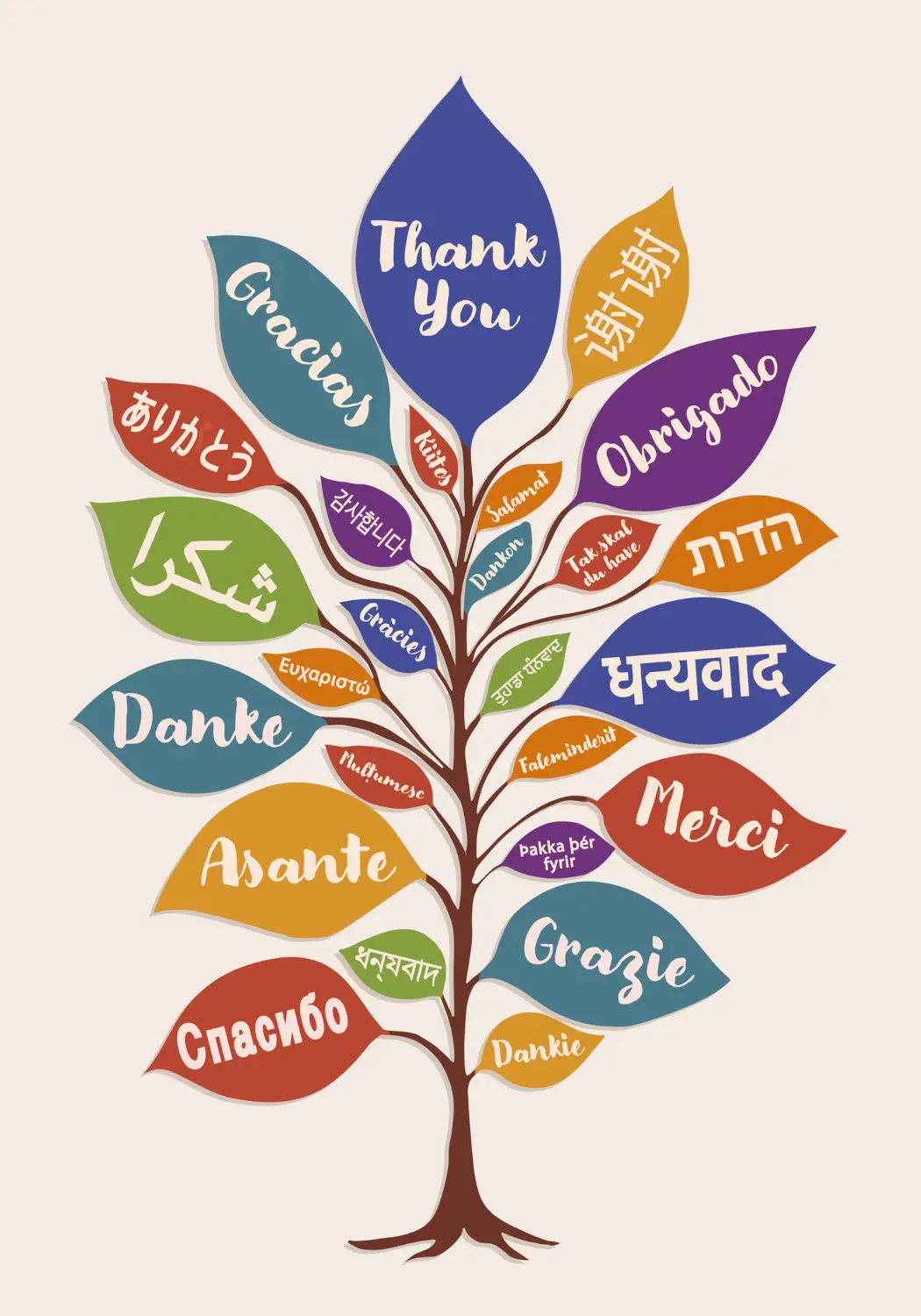
Pin made by ChatGPT
More amazing articles for you:

A Complete Travel Guide to Darjeeling (India), The Queen of Hills

Travel medical insurance for digital nomads

Australian food: the 12 best Australian dishes you should try

Sofia sightseeing: local's guide to Sofia

From Canned Air and Water to Cane Toad Wallets: The 50+ Weirdest Souvenirs People Actually Buy

Travel tips: How to choose the best time to travel anywhere using Rove.me

Inside Lufthansa Business Class: German Precision Meets Sky-Level Comfort

A Luxury Travel Guide To Dubai

Violeta-Loredana Pascal is a communications expert, business mentor, and the founder of Earth’s Attractions and PRwave INTERNATIONAL. A pioneer in the Romanian digital PR landscape since 2005, she holds a degree in Communication and Social Sciences from SNSPA Bucharest. Violeta is a senior trainer at AcademiadeAfaceri.ro, where she leverages over 20 years of experience to teach professional courses in PR strategy and workplace productivity. By blending high-level business consulting with a passion for holistic travel and wellness, she empowers solopreneurs to overcome procrastination, build profitable brands, and design a life of purposeful adventure.