
Have you ever witnessed someone’s behavior at a hotel and wondered what you would have done if you’d been the employee dealing with that person? I’ve certainly come across some situations during my travels that made me ask myself that question.
In fact, I’ve shared quite a few interesting hotel stories lately. Remember the woman who suggested using a hotel coffee maker to wash underwear? I still can’t understand how anyone could think that’s a good idea. And when I researched the items guests steal from four- and five-star hotels (yes, really, they steal from those too, and the item list is just… unbelievable!), I certainly didn’t expect to find mattresses and televisions on the list.
Then there were the revelations from hotel employees about stained sheets, the debate over wearing pajamas at breakfast, and the couple who returned to their five-star hotel room and found strangers inside. I’ve also shared some rather unusual front desk stories that made me appreciate how much patience people working in hospitality need.
But the story I’m sharing today made me reread part of the conversation to make sure I’d understood it correctly. I could understand what had happened initially, but I couldn’t understand the guest’s subsequent behavior. And when another hotel employee shared a similar experience, I began to wonder how often people try to get away with this sort of thing.

Image from Depositphotos
A Hotel Employee Returned From a Day Off and Found an Incident Report
A hotel employee using the username New_Craft4332 shared an experience on Reddit on November 21, 2026, explaining that they work at a property where guest rooms come with fully equipped kitchens, including stoves, ovens, refrigerators, pots, and pans.
When the employee returned to work after a day off, they found an incident report detailing what had happened the previous night.
One of the guests had apparently decided to cook a pizza in their room. Unfortunately, shortly after putting the pizza in the oven, the guest fell asleep. The pizza didn’t just burn. It was left in the oven for so long that it caught fire, triggering the hotel’s fire alarms and prompting a response from the fire department.
Fortunately, firefighters extinguished the fire; nobody was injured, and, according to the employee, the damage was minimal.
The Hotel Decided Not to Charge the Guest for the Damage
Given what happened, the guest could have faced an unexpected bill at the end of their stay. However, the hotel decided to be understanding.
“Mind you, we do NOT charge this guest for any of the damages with the mindset of like it was an accident and accidents happen and they seemed genuinely apologetic for the incident.”
In the comments, the employee also revealed something that wasn’t included in the original post. The guest had apparently spent the entire day at the hospital with a family member, which they said explained why they were so tired.
I can understand why the hotel chose not to charge the guest – and I can actually appreciate this, especially as the hotel has some damage, even if it’s not huge. I can also understand how a person might fall asleep unintentionally. And I imagine the guest was relieved when they learned they wouldn’t have to pay for the damage.
Or at least that’s what I would have expected.
The Employee Received a Phone Call From the Booking Company
So far, as you can see, things seem… well… like everything was done, the matter was closed, and we all moved forward. But then, the OP wouldn’t have written the post, and I wouldn’t have written this. Because now comes the most surprising part! The guest had made their reservation through a third-party booking company, and the following day, a representative of that company called the hotel.
The reason for the phone call? The guest was requesting compensation for the inconvenience caused by the fire.
Yes, the very same fire the guest had accidentally started in their own hotel room, and for which the hotel had already decided not to charge them.
Someone reading the employee’s account wanted to know what the guest had actually told the booking company. The employee’s reply revealed another interesting detail:
“The guy from the third party said the guest told them there was a fire on their floor during their stay and that due to the smell of the fire and the noise and commotion of the fire alarm and the fire department they were requesting compensation. I was so dumbfounded I had to double check which person they were calling for before absolutely declining that refund!”
Now, imagine being the booking company representative receiving that initial complaint. A guest tells you there was a fire on their floor, that their stay was disrupted by the smell and the noise, and that the fire department had to intervene.
Without knowing how the fire started, you might think the guest had a perfectly understandable reason for contacting customer service. According to the hotel employee’s account of the conversation, however, the guest’s own involvement apparently hadn’t been mentioned.
Many People Thought the Hotel Should Reconsider Its Original Decision
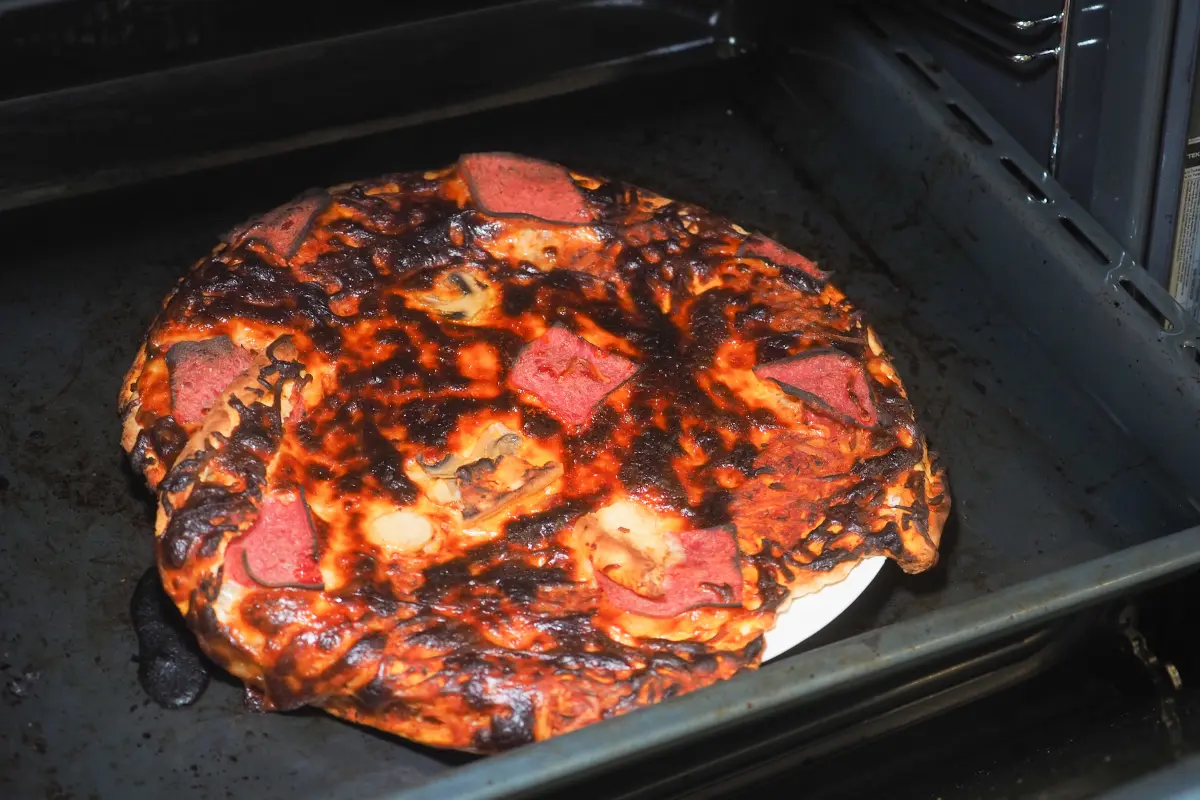
Image from Depositphotos
Although the employee refused to approve the refund, many people reading the story thought that wasn’t enough. They argued that the hotel should reconsider its decision not to charge the guest for the damage.
One of the commenters, who also works at a hotel, suggested the following response:
“I’m sorry sir/ma’am, but since you’ve tried to gain compensation from the fire YOU started, we will be reconsidering our decision to not charge you for damages. Here’s the new list of charges that YOU must pay for.”
Others agreed, with some suggesting that the hotel should refuse to accept future reservations from this particular guest.
“Your hotel should charge for damages and you should put him on the do not rent list.”
Another person wanted the hotel to consider not just the cost of repairing the room but also any expenses associated with the emergency response.
“I hope management changes their minds and bills them for the emergency services call out as well as the repairs needed to the room.”
Someone else pointed out something I think the guest might have overlooked: other people were staying at the hotel that night.
“The fire was a bit of an INCONVENIENCE to the rest of us ALSO sir 👀”
The original poster didn’t say whether the other guests were evacuated, how long the incident lasted, or whether anyone else requested compensation. We also don’t know whether the hotel subsequently reconsidered its decision regarding the damage. The employee did, however, make it clear that the refund request was denied.
Another Hotel Guest Requested a Refund Because Their Room Smelled of Smoke
Just when I thought the original story was unusual enough, another hotel employee shared an experience involving a guest who apparently also wanted compensation for a problem they had created.
The hotel had a nonsmoking policy in all its guest rooms, but one guest decided to smoke in their room anyway.
“That’s wild. I had a guest recently smoke in his room (our property is no smoking in all the rooms), then he complained that his room smelled like smoke and wanted a refund for it. Also not approved.”
Unlike the guest who accidentally started the fire, this guest reportedly ended up with an additional charge rather than a refund.
“In fact he was charged a cleaning fee because we had to break out the ozone machine and heavy-duty air fresheners!”
I’ve read plenty of complaints from travelers who checked into dirty hotel rooms or found evidence that a previous guest had smoked there. And I understand why someone who specifically booked a nonsmoking room would be unhappy to discover that it smelled of cigarettes. But complaining about the smell after being the person responsible for it is something else entirely – and I am asking myself again: how could someone do this?
Other Hotel Employees Revealed How Easily Cooking Can Cause Problems
The conversation also revealed that hotel employees have dealt with several dangerous situations involving cooking appliances in guest rooms. One employee said their hotel’s kitchens have only stovetops, not ovens, yet guests have still come close to starting fires.
Another recalled discovering something worrying while checking rooms after guests had left:
“I remember one time, I had to check rooms after guests checked out. One guest left the stove on. Luckily, there was nothing on the stove.”
That’s another thing worth adding to the list of things to check if you’re staying in a hotel room or apartment with a kitchen. In addition to my usual five-minute checkout routine, I’d make sure every cooking appliance was switched off before leaving.
Others admitted that they had nearly started fires while cooking at home. One person said that after an incident that ruined both their food and their pan, they started setting an alarm on their phone whenever they cooked.
Cooking Is the Leading Cause of Hotel and Motel Fires
After reading the discussion, I wanted to find out how common cooking-related fires actually are in hotels. According to the U.S. Fire Administration, cooking is the leading cause of fires in hotels and motels. Using data from 2014 to 2016, the agency estimates that approximately 3,900 hotel and motel fires occur annually in the United States, resulting in around $100 million in property losses.
That was higher than I expected! I’ve previously shared the five-second phone habit I recommend when entering a hotel room: photographing the emergency evacuation map, which is often displayed on the inside of the room door. The U.S. Fire Administration also recommends identifying the two nearest emergency exits and counting the doors between your room and those exits, as this can help you find your way in the dark.
And if you’re traveling with someone who has mobility difficulties, you might want to ask the hotel about its emergency evacuation procedures and available assistance when you arrive.
Even if you’re not cooking in your room, someone else in the building might be. And you have absolutely no control over what other hotel guests are doing.
When Does Being Understanding Become Being Too Accommodating?
I’ve made mistakes – not like the ones mentioned in this post -, and I’m sure I’ll make others. I also appreciate it when someone understands the circumstances and gives me a little grace instead of imposing every possible consequence for an honest mistake.
That’s why I actually liked the hotel’s initial response to this incident. Nobody was injured, the damage was reportedly minimal, and the staff decided to be understanding toward someone who had apparently had a difficult day.
What I can’t understand is the decision to contact the booking company afterward and request compensation. If anything, I would have been grateful that the hotel hadn’t handed me a bill for the damage.
I also wonder what would have happened if the booking company had offered the guest compensation without contacting the hotel first to hear its version of events.
Would you have reconsidered the hotel’s original decision and charged the guest for the damage after receiving that phone call? Or would you have done exactly what this employee did, refused the refund, and left it at that?
More amazing articles for you:

His Son Booked a First Class Seat for His 83-Year-Old Dad. At the Gate, His Boarding Pass Was Flagge...

An insider’s guide to Jaipur, India: top 20+ things to do in Jaipur

19 Best Cities to Visit in Europe in October: Weather, Festivals and Fall Experiences

He Occupied the Plane Bathroom for an Hour to Do THIS - People Are Furious

115 German Proverbs and Sayings With English Translations and Meanings - From Practical Wisdom to Sa...

130 Greek Proverbs and Sayings With English Meanings: Wisdom About Life, Love, Work, Luck, and Every...

Why You Should Propose In London

What Shocks Americans Visiting Romania? 27 Surprises From a Local

Violeta-Loredana Pascal is a communications expert, business mentor, and the founder of Earth’s Attractions and PRwave INTERNATIONAL. A pioneer in the Romanian digital PR landscape since 2005, she holds a degree in Communication and Social Sciences from SNSPA Bucharest. Violeta is a senior trainer at AcademiadeAfaceri.ro, where she leverages over 20 years of experience to teach professional courses in PR strategy and workplace productivity. By blending high-level business consulting with a passion for holistic travel and wellness, she empowers solopreneurs to overcome procrastination, build profitable brands, and design a life of purposeful adventure.