Something happened the other day on one of my favourite roads in Romania, and what concerned me even more than the situation itself was the attitude of the person involved. Then the story started spreading online, the comments came in, and while most people were just as upset by what had happened, a few reactions were surprising for a completely different reason.
What makes this even sadder is that it isn’t something specific to my country. Similar things happen in many other parts of the world. In fact, just one day earlier, there was a remarkably similar situation in Spain. And there have been quite a few other cases at famous places around the world – including some where the consequences for the people involved were much more serious.
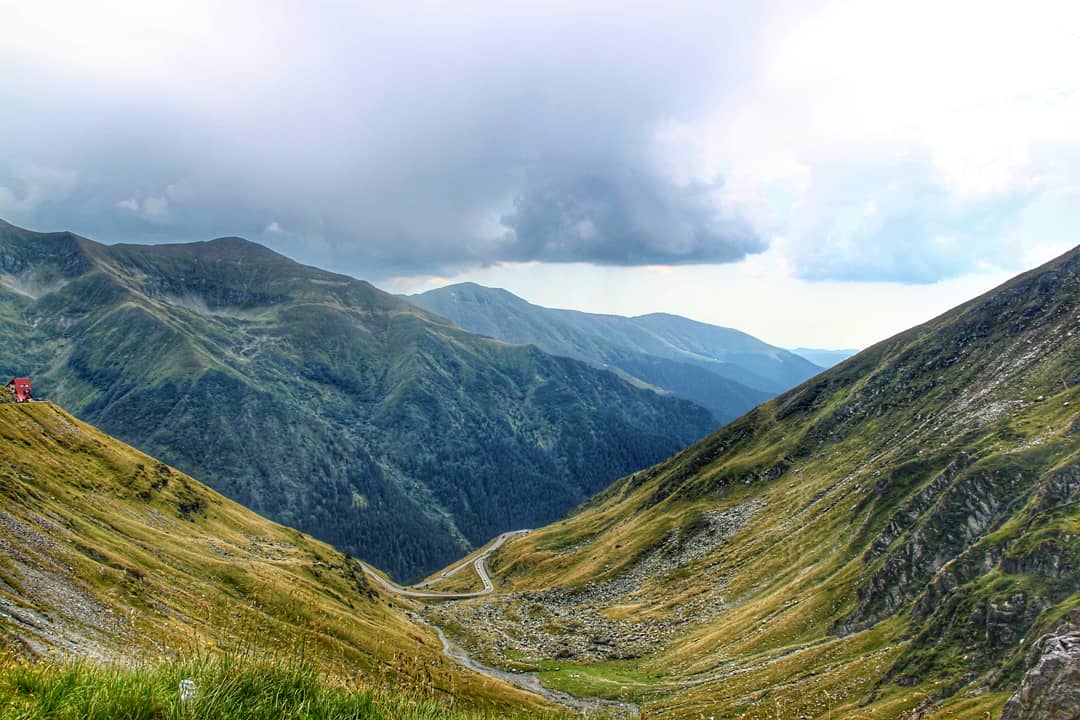
I’ll get to all of them below, because once you see what happened in Romania, some of the other examples are difficult to believe. But first, the Romanian incident happened on the Transfăgărășan, a spectacular mountain road and one of my favourite places in the country.
If the name sounds familiar, there’s a good reason. Jeremy Clarkson, Richard Hammond and James May came to Romania for a special Top Gear trip while searching for a road that could beat Italy’s Stelvio Pass. When they reached the Transfăgărășan, Clarkson famously called it “the best road in the world.” And this is where the story begins.
What the Man Was Doing Beside the Salvamont Base
The video was published by Cristian Toma, interim director of the Argeș County Public Mountain Rescue Service.
According to his post, the incident took place beside the Salvamont Argeș base at Cota 2000. A tourist was using spray paint on a rock, creating a large heart with the name “ANNA” inside it.
A man started filming him and told him, calmly, that what he was doing wasn’t right. He explained that nature should be protected and that such a gesture had no place there.
The tourist’s answer was:
“It’s a rock.”
He then continued with his work, apparently convinced that the person questioning him was the one being unreasonable.
Cristian Toma explained in his post why the “it’s a rock” answer missed the point:
“It isn’t ‘just a rock.’ It’s a mountain we all share, a landscape thousands of people come to see exactly as nature left it.”
He also pointed out that something which may seem like a momentary whim to one person can leave a mark that’s difficult to remove.
His final message was simple:
“The mountain doesn’t need our signature. It needs us to leave it clean for those who come after us.”
On August 6, 2026, the Argeș County Police said that officers and environmental commissioners had begun checks to identify the man and determine what legal measures could be taken. Sources quoted by Digi24 said that he could face a fine and that a criminal case concerning the act itself would probably be opened.
At the time of writing, the man hadn’t been publicly identified and no final sanction had been announced.
The Comments Started Pouring In
News outlets and social media pages across Romania shared the video. The wording differed from one comment section to another, but the main reactions were very similar.
Many people were angry about the damage. Quite a few addressed Anna directly. Several suggested more suitable places where the man could have displayed his feelings. Then there were the people who insisted that everyone else was overreacting.
Anna Received Plenty of Unsolicited Advice
When I checked Cristian Toma’s Facebook post, the comment shown as the most relevant had received 228 reactions. It said:
“Anna, keep your fool at home!”
Another commenter appeared concerned about Anna’s choice of partner:
“Anna, I think you should reconsider. I also hope this is the only bad choice you’ve made!”
Someone else pointed out that the entire public display could have been avoided:
“He could’ve just told Ana directly!”
One person suggested that, if the man wanted to paint something, he should have chosen an object that belonged to him:
“Ideally, he should’ve painted his car. That way, he could keep the image with him all the time. Maybe someone can help him.”
“It’s a Rock” Didn’t Convince Most People (And You Will See Why I Say Most People, Not All People)
Several comments replied directly to the excuse heard in the video.
One person used the Romanian word bou, which literally means “ox” but is also commonly used as an insult:
“Yes, it’s a rock – and an OX is drawing on it!”
Another comment focused on something the man appeared to have forgotten:
“It isn’t your rock, so you can’t do whatever mess you want to it!”
Under a television station’s post about the incident, someone asked what the mountain would look like if everyone made the same choice:
“What would all the rocks look like if each of us made a drawing like that? It would certainly be a huge mess. Rocks should remain natural so we can see them in all their splendour.”
Another person remembered a Romanian saying that’s usually applied to names written where they don’t belong:
“Where I come from, people used to say: ‘Fools’ names are written on every fence.’”
The saying fits surprisingly well.
A Few Comments Defended Him
Thankfully, the comments defending the man were greatly outnumbered by those criticising him. But they exist 🙁
One man argued that people who condemned the gesture didn’t understand real love:
“Mean comments come only from people who’ve never known true love! When you love someone, you don’t always think about what you do. What he did wasn’t right, but do the rest of us always do the right thing? I hope Ana understands how much he loves her. How beautiful it is to love and be loved. Let’s not be mean, because true love is rare. He didn’t kill anyone. A big yes from me!”
Under another post, someone dismissed the story by comparing it with the country’s larger problems:
“Oh, what a ‘crime’ he committed! This country has much more serious problems than what this man did. We’ll never get better.”
And there was a woman too defending him:
“In a bitter world full of malice and envy, a romantic gesture is discussed and commented on more than a law in Parliament. Not that it should be encouraged, but not like this either. You throw mud at people who still have even a little love left, and you destroy that too. What a shame.”
Unfortunately, we don’t have to imagine how common this attitude can become. The same week brought another name painted on a protected structure in Spain.
One Day Earlier, “Paula” Appeared on a 16th-Century Structure in Granada
On August 4, 2026, one day before the Romanian police were notified about the Transfăgărășan incident, a tourist was accused of spray-painting the name “Paula” on the Aljibe del Zenete in Granada.
The Aljibe del Zenete is a 16th-century Mudéjar water cistern in the city’s historic Albaicín neighbourhood. The name was reportedly written in bright pink and blue paint across part of the protected structure.
The reason behind the name hasn’t been publicly confirmed. What’s known is that nearby security cameras helped the police identify a visitor from Spain’s Basque Country. According to The Independent, the tourist was arrested and accused of an offence against cultural heritage.
A Heart at the Alhambra Led to a Night in Police Custody
Granada had seen an even closer example in January 2012.
An 18-year-old Swiss tourist was visiting the Alhambra when staff saw her scratching a heart and an initial into the stucco wall of the Golden Room. She wasn’t using a spray can or a knife. She was making the marks with her fingernail.
The staff told her to stop.
She continued until she had finished.
That decision turned what she may have considered a small personal gesture into a night in police custody. She was arrested, held overnight and released after appearing before a judge, with a vandalism charge still hanging over her.
El País reported that the authorities at the Alhambra were assessing the damage to determine the seriousness of the offence and the appropriate legal consequences.
The heart may have taken only a few moments to scratch into the wall. More than 14 years later, the incident can still be found in news reports.
“Ivan + Hayley 23” Was Carved Into the Colosseum

ID 144201572 ©Sorin Colac | Dreamstime.com
In June 2023, a man visiting Rome used a key to carve “Ivan + Hayley 23” into an interior wall of the Colosseum.
Another tourist saw what was happening and recorded him. The person filming confronted the man, but the video showed him continuing to carve before turning and smiling at the camera.
The footage spread internationally, and Italian police later said they had identified a couple living in England as the likely people involved.
The inscription was clearly meant to preserve a relationship and a year. Instead, it preserved a video of someone damaging one of the most recognisable landmarks in the world while another visitor repeatedly asked him what he was doing.
At the time, Reuters reported that the person responsible risked a fine of at least €15,000 and a prison sentence of up to five years.
The man later apologised and said that he hadn’t realised how old the Colosseum was. That explanation caused another wave of disbelief. Even without knowing its exact age, he knew that he was standing inside a major historic monument rather than beside a wall he owned.
At Pompeii, He Wanted to Leave a Record of His Family’s Visit
A 37-year-old British tourist was caught carving into a wall at Pompeii in August 2024.
He left his initials, the initials of his two daughters and the date of the visit on a wall at the House of the Vestals. Photographs showed several separate inscriptions, including “JW,” “LMW,” “MW” and “07.08.24.”
When staff noticed what he had done, they contacted the authorities. The man was identified and reported to the public prosecutor’s office for damaging artistic heritage.
He apologised and said that he had wanted to leave a sign of his family’s visit.
According to a report on the incident by ANSA, he was reported to the authorities. Other reports said that he would be expected to cover restoration costs and could face a substantial fine, although I couldn’t find a reliable report confirming the final legal outcome.
Football Graffiti Covered Part of Florence’s Vasari Corridor
The writing left on Florence’s Vasari Corridor in August 2023 wasn’t a declaration of love or a family record.
Large black letters and numbers appeared across seven exterior pilasters of the 16th-century structure. They were believed to refer to the German football club 1860 Munich. The graffiti was painted on the side facing the Arno River. Police examined video footage and identified two German tourists who were staying in Florence as suspects.
The case was still under investigation when the Associated Press reported it. No detention had been announced at that stage, although aggravated damage could carry a prison sentence of up to three years under Italian law.
Thousands of people travel to Florence to see the architecture, galleries and bridges that have survived for centuries. Two visitors apparently decided that part of that view also needed the name of their football club.
Vandals Climbed Onto Christ the Redeemer and Covered It With Graffiti
In April 2010, vandals used maintenance scaffolding to reach Christ the Redeemer in Rio de Janeiro. They didn’t leave a small mark near the base. They climbed high enough to spray graffiti across parts of the statue’s head, arms and chest.
The statue was undergoing restoration work and the area had been closed to visitors, which gave the vandals access to scaffolding that wouldn’t usually have been available.
Rio’s mayor called the act a crime against the nation and said those responsible should go to jail. Reuters reported that the writing included several phrases and apparent references to local criminal cases.
“Ding Jinhao Was Here” Appeared on an Ancient Egyptian Relief
In 2013, a photograph taken at Luxor Temple started spreading through Chinese social media.
Written across a 3,500-year-old relief were Chinese characters meaning:
“Ding Jinhao was here.”
Internet users identified Ding Jinhao as a Chinese teenager who had visited Egypt with his family. His parents later apologised publicly to the people of Egypt and to those in China who had followed the story.
The inscription caused widespread embarrassment and anger in China. The story wasn’t only about one damaged surface. It became part of a larger discussion about tourist behaviour and the desire to prove that you visited a place by leaving your name on it. CBS News reported that the image went viral after another visitor photographed it and shared it online. I couldn’t find confirmation of a formal legal punishment, but the teenager and his family were identified publicly, and the apology became international news.
“Julian” Was Carved Into a 1,200-Year-Old Temple in Japan
In July 2023, a 17-year-old Canadian visitor was seen carving into a wooden pillar at Toshodaiji Temple in Nara, Japan. The Golden Hall dates from the eighth century.
Using his fingernail, he made the letter “J” and the name “Julian” on a pillar inside the Golden Hall. A Japanese visitor noticed what was happening and informed the temple staff.
The teenager admitted what he had done and said that he hadn’t intended to harm Japanese culture.
Police questioned him on suspicion of violating Japan’s cultural properties protection law. Under that law, damaging an important cultural property can lead to a prison sentence of up to five years and a substantial fine. The available reports didn’t confirm that such a penalty was eventually imposed. However, the temple added a warning at the entrance telling visitors not to damage the hall and reminding them that violations could be punished.
A Couple Carved Their Names, a Heart and a Date Into a Rock in China
The final case brings the story back to a natural formation and another romantic message. In August 2020, a couple visiting Bolang Valley in Yulin, China, carved their names into the red sandstone. They added a large heart and the date of their visit, August 21.
The soft rock made it possible to create large, visible marks. After images circulated online, the management of the site and local police began an investigation. The Independent reported the investigation but didn’t provide a later update confirming the final consequences.
One person responding to the video said there were many other places where the couple could have expressed their love. That brings us directly back to the Transfăgărășan.
There are endless ways to tell someone that you love them. You can say it, write it on paper, send it in a message, buy a card, create something for your home – but mountains should be left as they are.
The Message May Be Personal, but the Place Belongs to Everyone
The cases above are separated by years and thousands of kilometres. They involve different countries, different ages and different excuses. Yet the decision behind them is very similar.
The Transfăgărășan doesn’t need Anna’s name painted on it. The Colosseum didn’t need a relationship record. Pompeii didn’t need one family’s initials, and a 1,200-year-old temple didn’t need to know that Julian had visited.
People can keep their photographs, stories and memories for the rest of their lives. The places should be left for everyone else.
Leave no mark – and leave everything as you find it, or better!
Extra sources:
- The Top Gear video mentioned – get after minute 4 – at minute 5 you have the sentence with Transfagarasan being the best road in the world. Note: their video is not exactly the way things go – there are clear signs, you don’t get lost (but their video was suitable for their show). The road is repaired every few years:)
- The initial Facebook post by Toma Cristian
- And the other Facebook post I mentioned some comments from
More amazing articles for you:
Travelers Trusted AI With Their Trips. Then Rangers Were Called, a Mayor Got Involved - And Things G...
Zurich Travel Guide by a Local: Things to Do, Food & Tips
100 Japanese Proverbs and Sayings: Meanings Behind Japan’s Most Memorable Expressions
The Ultimate London Bucket List for the Museum Lover
A guide to Haldwani, Uttarakhand, India
The Louvre Raises Ticket Prices by 45% - And the New Policy Is Sparking Backlash
Louis Vuitton’s Chocolate Has Travelers Flying Across the World - Here’s How to Get Your Hands on It
150 Halloween Movie Trivia Questions and Answers: Horror, Classics, Family Films & More

Violeta-Loredana Pascal is a communications expert, business mentor, and the founder of Earth’s Attractions and PRwave INTERNATIONAL. A pioneer in the Romanian digital PR landscape since 2005, she holds a degree in Communication and Social Sciences from SNSPA Bucharest. Violeta is a senior trainer at AcademiadeAfaceri.ro, where she leverages over 20 years of experience to teach professional courses in PR strategy and workplace productivity. By blending high-level business consulting with a passion for holistic travel and wellness, she empowers solopreneurs to overcome procrastination, build profitable brands, and design a life of purposeful adventure.