There are a few nightmare vacation scenarios that I think we prefer to ignore. We know they can happen, but perhaps, like me, you tend to think they won’t happen to you because you’re careful.
You check the accommodation, read reviews, look at the photos, compare prices and book through a platform you know. Of course, things can still go wrong. Usually, though, you expect the problem to be a bad room, a reservation mix-up, or perhaps a hotel that looked much better in the photos.
Then something happens that ruins the vacation – or at least its beginning. Yes, it may become a funny story later, when you’re safely back home. But I doubt there’s anything funny about arriving after a long trip with your luggage, perhaps with children too, and discovering that you have nowhere to sleep.
What recently happened in Italy is something I’ve seen in the news before, but usually on a much smaller scale. While reading what happened, I kept thinking about how I would have reacted in the same situation.
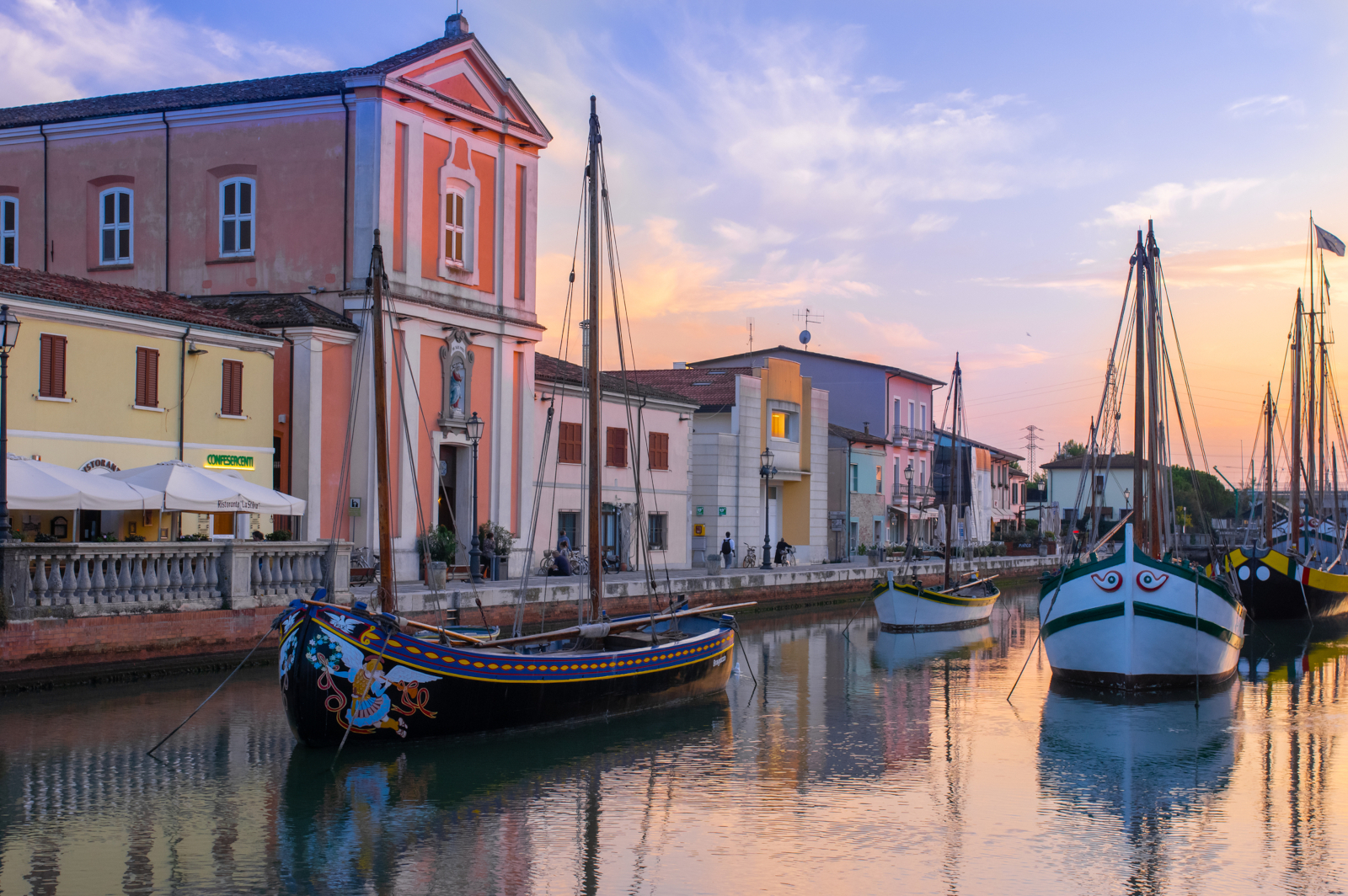
ID 231100325 ©Kiparisas S. | Dreamstime.com
And then I saw another recent story about a man who booked what he thought was a room at an Accor hotel – but what happened when he arrived was very odd. I will tell you all about it!
But let’s start with Cesenatico.
Tourists arrived for their seaside vacations – but there was no residence waiting for them
Cesenatico is a popular seaside destination on Italy’s Adriatic coast, so families arriving with luggage at the beginning of August would be completely normal.
Except some of them reached the address of the so-called Residence Da Andrea and discovered that the vacation accommodation they thought they had booked wasn’t there.
And more people kept arriving.
By August 5, Teleromagna reported that more than 150 tourists had been affected. The case also became linked to another alleged fake residence in Milano Marittima.
This wasn’t simply a hotel saying, “Sorry, we can’t find your reservation.” People had travelled to the destination and then discovered that the accommodation they expected to check into did not exist as advertised. That would be bad enough. But when I started reading about how the properties in Italy had been advertised, I understood better why so many people had booked them.
There Were Plenty of Reasons to Think the Listings Were Real
A woman who had planned to stay at the supposed Residence Ferrino in Milano Marittima told Il Resto del Carlino that she and a friend had found the property on Booking.com.
There were no reviews yet, so they searched for it online. They found a website with photos, descriptions and contact details and eventually paid a €200 deposit. Later, after seeing alarming comments online, they actually went to the address. The residence they thought they had booked wasn’t there.
Other details made the alleged operation look more convincing too. According to Cesenatico mayor Matteo Gozzoli, identification codes belonging to legitimate accommodation businesses had allegedly been used.
Those codes are important in Italy. Tourist accommodation and short-term rentals are required to display a CIN, or Codice Identificativo Nazionale, in their advertisements. The code is supposed to identify the property in Italy’s national accommodation database.
So someone looking at an advertisement with an address, property photos, phone number, website and CIN could reasonably think they had done more checking than someone responding to a random social-media post.
There was another detail, though: the price.
Some tourists were offered a better deal if they paid directly
According to reports about the case, some tourists first encountered the accommodation through Booking.com and were then offered discounts if they paid directly rather than keeping the entire transaction on the platform.
Payments now being examined include bank transfers and prepaid cards. Teleromagna’s report on the fake vacation rentals also warned about requests to move payments outside official booking systems.
But this doesn’t mean every hotel offering a direct-booking discount is suspicious. Plenty of legitimate hotels do this. But in this case, moving outside the original booking system left some people in a much more difficult position once they realized there was a problem.
One woman caught up in the Milano Marittima case said she had wanted to pay using PayPal but was instead directed to Postepay Evolution. When she later realized there was a problem and called the number again, she says the response was almost unbelievable.
According to her account to Il Resto del Carlino, the man she spoke with mocked her and claimed that she was the 20th person they had scammed that week. He also allegedly told her the money was already in Lithuania.
That is her account of the conversation, not an established finding about where the money went. Investigators are still working on the case.
Other tourists didn’t discover anything was wrong until they were already standing in Cesenatico, Italy with their bags.
The town suddenly had families with nowhere to stay
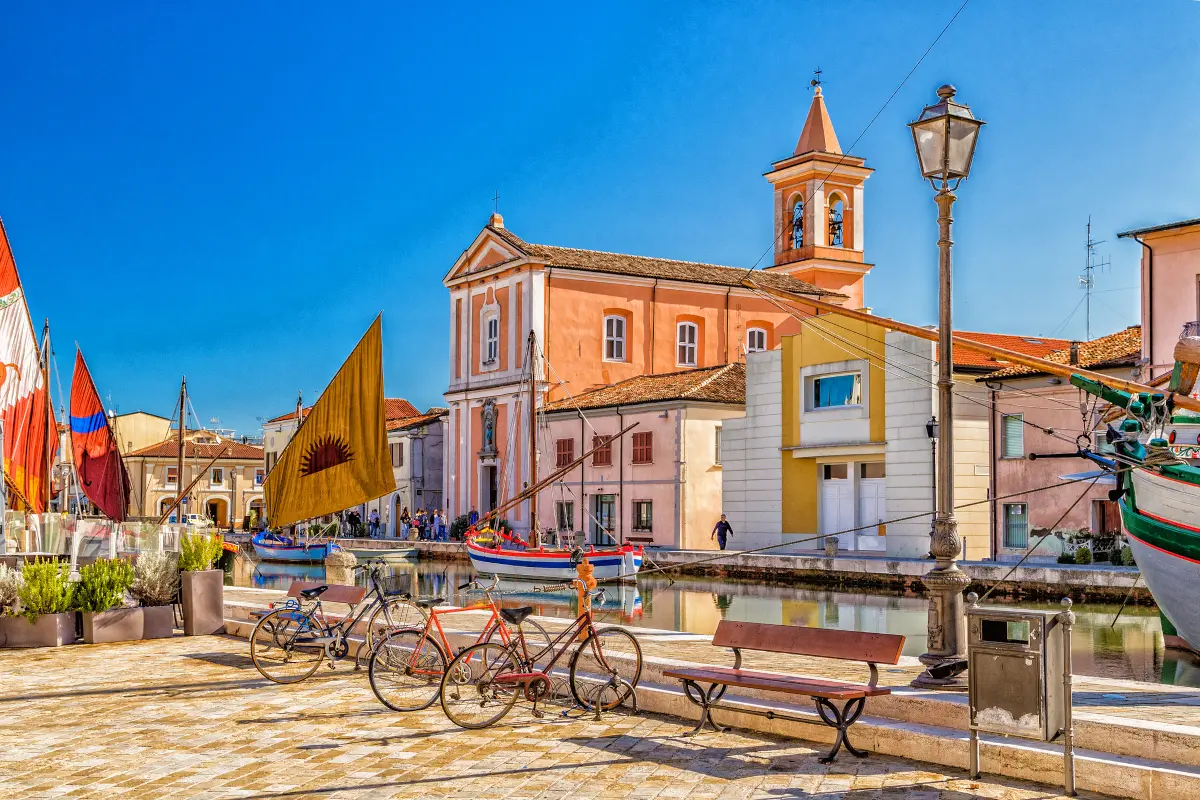
ID 70738880 ©Vividaphoto | Dreamstime.com
As more affected tourists arrived, Cesenatico had another problem: where were all these people supposed to go?
The municipality opened an assistance point and the local tourist office began helping families find genuine accommodation. Hotels, residences and camping facilities became involved, some offering reduced rates, while some stays were reportedly provided free.
Civil Protection also helped with some foreign families, and Cesenatico Camping Village made mobile homes available.
It was early August on the Italian coast, when accommodation is hardly sitting empty everywhere waiting for last-minute guests. Yet local authorities and tourism businesses managed to relocate many of the affected visitors rather than simply telling them to deal with the booking company themselves.
The mayor also said Cesenatico intended to take legal action because of the damage the case could cause to the town’s reputation.
And among the tourists who needed help was a family of five from Belgium.
Their vacation had gone from bad to worse – and I am not exaggerating when I say this. Here is why:
One family was caught twice
The Belgian family had driven to Cesenatico and arrived at the address of Residence Da Andrea expecting to begin their vacation.
Instead, according to their account reported by Il Resto del Carlino, the residence wasn’t there.
So they did what most people would probably do: they tried to find somewhere else to stay. Another option was located in the Cervia/Milano Marittima area, and the family drove there.
That residence reportedly didn’t exist either.
Two attempts to find accommodation during the same vacation. Two drives to the addresses. And twice, the property the family expected to find wasn’t there.
Eventually, they returned to Cesenatico, where the local assistance effort helped them find a real hotel at a price they could afford.
I’m not sure what I would have thought while driving toward accommodation number three. After the first experience I’d be checking everything again. After the second, I’d probably want someone at the hotel to confirm that they could physically see my room before I got back into the car.
This is also one reason I keep important reservations and addresses easy to access while travelling. I have a separate list of what I save on my phone before a trip, including hotel confirmations, contact details and information I may need even if mobile data isn’t working.
Of course, having the confirmation on your phone won’t make a fake property suddenly appear. But if something goes wrong, you don’t want to be standing on a sidewalk searching through hundreds of old emails for the reservation number and payment details.
Investigators are now following payments, phone numbers and the digital trail
By August 8, this was no longer simply a collection of complaints from tourists who had lost deposits.
Investigators were examining bank transfers, prepaid cards, telephone numbers, online activity and possible intermediaries or prestanome – people whose names may have been used for accounts or other parts of the operation.
The August 8 investigation update reported that dozens of officers were involved and that investigators were trying to identify the people ultimately responsible. They were also looking at possible connections between the cases in Cesenatico and Milano Marittima.
But then, there is another question we can ask: How did accommodation that allegedly didn’t exist end up appearing on one of the biggest booking platforms in the world?
Now Booking.com has been pulled into the dispute
On August 7, Italian consumer association Codacons filed a complaint with prosecutors asking them to examine whether Booking.com could also bear responsibility in relation to the checks carried out on the listings.
An important note as an important thing needs to be clear: Codacons is asking prosecutors to investigate possible responsibility. There has been no ruling that Booking.com is liable for the alleged fraud.
But the involvement of the platform is now part of the case because many tourists say they originally encountered the properties there. Codacons argues that appearing on a major booking platform can make an accommodation listing seem more trustworthy to a customer.
Teleromagna reported on the Codacons complaint, while the mayor has also questioned the checks that allowed accommodation using allegedly mismatched identification information to appear online.
And I think that’s a question many people who book accommodation online will understand.
When you use a large booking platform, how much do you assume has already been checked for you?
Which brings me to the other Booking.com reservation I mentioned at the beginning.
A man arrived at an Accor hotel in São Paulo with his reservation confirmation.
Reception couldn’t find him.
He paid around $60 for an Accor hotel room – except he hadn’t really booked the hotel
Matthew Klint, who writes Live and Let’s Fly, recently had a long daytime layover in São Paulo and decided that spending around 13 hours at the airport wasn’t particularly appealing.
He found accommodation at the Mercure São Paulo Ibirapuera Privilege, part of Accor’s Mercure brand. According to Klint’s account of the experience, the normal hotel price was around $140 through other booking options. On Booking.com, however, he found what appeared to be accommodation at the same property for about $60.
He wondered whether the price might be an error, but the reservation went through.
Then he arrived.
The front desk searched for his name and told him there was no reservation.
After everything I had just read about Italy, I had an idea where this story might be going.
I was wrong.
His room existed. It just wasn’t really a hotel room
After Klint showed the confirmation to reception, they eventually worked out what had happened.
He apparently hadn’t booked one of the rooms operated by the Mercure hotel. Instead, he had booked a privately controlled apartment inside the same building.
His confirmation included instructions to contact his “host,” so he messaged the person through WhatsApp. The host notified reception, Klint waited for around an hour, his name was added and he was finally given a key.
Upstairs, there really was accommodation waiting for him. In fact, it was more like an apartment, with a living area and kitchenette as well as the bedroom.
Readers familiar with Brazil explained that some buildings can contain both hotel-operated rooms and privately owned apartments whose owners rent them independently. Guests may still enter through the same lobby even though their rental agreement isn’t actually with the hotel.
So Klint had gone to a Mercure property thinking he had booked an unusually cheap Mercure room, only to discover that his reservation was actually with somebody controlling a private unit inside the building.
And he had paid about $80 less.
I’d still prefer to know exactly what I’m booking before I arrive. The check-in process, cleaning, hotel services, cancellation terms and help available if something goes wrong may be very different.
But compared with arriving at an address and discovering that the accommodation itself isn’t there, finding out that your suspiciously cheap hotel room is actually a larger private apartment seems like a much better surprise.
And once I had the key, I’d go back to my normal routine and do the few things I check when entering a hotel room before unpacking.
How to check if a vacation rental is real before you pay
The Cesenatico fake accommodation case made me think again about how much checking is reasonable before booking a hotel or vacation rental.
I’m certainly not going to investigate every hotel as though I were buying the building. But if a property is new, has almost no reviews, costs considerably less than comparable accommodation or asks me to pay somewhere outside the platform where I found it, I’d check a little more.
- Search the exact property name and address separately. Check Google Maps and Street View where available. If a large residence supposedly exists at an address but you can’t find any independent sign of it, look further before paying.
- Compare the phone number, website and photos. Search for the same property outside the booking platform. For a new or suspiciously cheap vacation rental, you can also reverse-search some of the images to see whether they appear in unrelated real-estate or accommodation listings.
- Be careful if someone asks you to move the payment outside the booking platform. A legitimate hotel can offer direct rates, but a request to cancel the original booking and send money by transfer or prepaid card deserves extra checking. You may also lose protections you would have had by keeping the transaction on the original platform.
- If you’re booking in Italy, verify the CIN. Don’t only check whether the advertisement displays a code. Italy’s Ministry of Tourism has an official public CIN search, so you can check the accommodation information connected to that code.
- Check reviews in more than one place. A new property can legitimately have no reviews, of course. But no reviews + unusually low price + off-platform payment would make me spend another few minutes checking before sending money.
I use the same approach when I use technology to plan trips. AI, booking platforms and travel apps can save enormous amounts of time, but I still verify the details that could leave me stranded or cost a lot of money. I’ve mentioned the same problem in my article about AI travel planning mistakes: use the tool, but check the information that could cause real problems if it’s wrong.
What happens if a vacation rental turns out to be fake?
If you arrive and the accommodation doesn’t exist, or you suspect you’ve paid for a fake vacation rental, keep your booking confirmation, messages, payment receipts, screenshots of the listing and any contact details you have.
Contact the booking platform immediately if you used one, and report the property. If you paid by card, contact the card issuer or bank as soon as possible to ask what options are available for disputing the transaction. If money was transferred directly, contact the bank quickly; whether it can be recovered will depend on the payment method and circumstances.
You should also report the suspected fraud to local police or the appropriate authorities. Don’t delete messages just because you’re angry or assume the phone number is useless. Those records may become part of an investigation.
If you’re already at the destination, the immediate problem is obviously finding somewhere to sleep. Ask the booking platform for alternative accommodation and keep receipts for additional expenses in case reimbursement is later available.
And save those details somewhere you can reach quickly. My hotel safety guide focuses on what can happen once you’re actually inside a hotel, but this case is a good reminder that accommodation safety starts before you ever receive the room key.
I’ll still book accommodation online – but this is one detail I’ll check more often
I knew fake vacation rentals existed before reading about Cesenatico. I think most people do.
What stayed with me was the scale of this case and the sequence of events. More than 150 tourists reportedly affected. Families arriving with luggage and nowhere to stay. A town trying to find replacement rooms during the busy August season. Another alleged fake residence in Milano Marittima. One family somehow reaching two of them during the same vacation. Investigators following bank accounts and phone numbers. And now Codacons asking prosecutors to examine Booking.com’s possible responsibility too.
Then, almost as a strange counterpoint, another traveler arrived at an Accor hotel with a Booking.com confirmation that reception couldn’t find – and discovered that his $60 “hotel room” was actually a perfectly real private apartment inside the building.
I’ll continue booking hotels and apartments online. I’m not going to assume that every new property or good deal is suspicious either.
But the next time I book somewhere I’ve never heard of, especially if there are few reviews or someone wants me to send the payment elsewhere, I’ll probably spend another minute checking the address.
After all, the moment to discover that your vacation accommodation doesn’t exist is definitely before you arrive with your suitcase.
“`
More amazing articles for you:
Things to Do During a Long Layover: 100 Airport Games, Trivia Questions, and Scavenger Hunt Ideas
Top Bucket List Destinations for Adventure Seekers
Responsible travel: 15 things you should never do while travelling abroad
27 Famous Buildings and Landmarks in the USA You Should See
A Local’s Guide to Denver, Colorado: Top Things to Do in Denver, Where to Eat and Stay, and Tips
70 Italian Proverbs That Say More About Life Than a Whole Travel Guide
Tourists Visited What They Were Told Was One of the World’s Oldest Amphitheaters. Now a Man Is in Ja...
300 Music Trivia Questions and Answers About Famous Songs - Easy to Hard (You'll Love This Trivia)

Violeta-Loredana Pascal is a communications expert, business mentor, and the founder of Earth’s Attractions and PRwave INTERNATIONAL. A pioneer in the Romanian digital PR landscape since 2005, she holds a degree in Communication and Social Sciences from SNSPA Bucharest. Violeta is a senior trainer at AcademiadeAfaceri.ro, where she leverages over 20 years of experience to teach professional courses in PR strategy and workplace productivity. By blending high-level business consulting with a passion for holistic travel and wellness, she empowers solopreneurs to overcome procrastination, build profitable brands, and design a life of purposeful adventure.