
One of the most important things I search before – and even more carefully after – buying a flight ticket is how I’ll get from the airport to my hotel and how the public transport is in the city I am visiting.
I know the main options are similar in many destinations. There’s usually public transport, a taxi, a private transfer or a ride-hailing service. But choosing the best one for your trip can still feel overwhelming.
It was the same for me when I visited Paris. I’ll tell you what my husband and I chose, but first I want to give you the information you need to make the best decision for your own visit.
Your airport, arrival time, hotel location, luggage, budget, mobility and plans for the following day can all influence that decision. You may even choose a different option during two visits to the same city.
Then there’s the question of getting around Paris after you reach your hotel.
The Metro and RER looked complicated to me at first. There were different lines, directions, zones, tickets and trains travelling beyond central Paris. But I managed it, and it became easier over the following days. I used the Metro, changed lines, travelled on the RER and went to Versailles by train.
The ticket system has changed considerably since my trip, so I checked the current fares, airport rules and available passes against official information for 2026.
This Paris Metro and RER guide for first-time visitors will take you through the system in the same order in which you’ll use it: understanding the networks, choosing a ticket, buying it, finding the correct platform, making transfers and travelling to CDG, Orly, Versailles and Disneyland Paris.
You can also use these first-trip Paris tips while planning the rest of your visit.

ID 56426294 ©Ekaterina Pokrovsky | Dreamstime.com
Transport fares and ticket rules in this article were last checked on August 8, 2026.
Paris Metro, RER, Transilien, Bus and Tram: What’s the Difference?
Understanding the difference between the Paris Metro and RER will make the rest of the system much easier to follow.
The networks connect with one another, but they serve different types of journeys. You don’t need to learn every line before your trip. You only need to understand which network serves your destination and how its directions are displayed.
The Paris Metro
The Paris Metro is the dense urban network most people use while sightseeing in and around the city.
The main lines are numbered 1 through 14, with two shorter additional lines called 3bis and 7bis. Each line also has a color that makes it easier to identify on maps and signs.
You may use the Metro to reach many famous Paris landmarks, including the Louvre, Arc de Triomphe, Eiffel Tower, Montmartre and major museums. Metro directions are based on the final station, or terminus, at each end of the line. Knowing that you need Line 6, for example, isn’t enough. You also need to know which terminus is in the direction of your destination.
The RER
The RER is a regional express railway with five lines: A, B, C, D and E.
Within central Paris, the RER can be a fast way to cross the city. Outside the center, it connects Paris with suburbs and major destinations such as Charles de Gaulle Airport, Versailles and Disneyland Paris.
RER lines can divide into several branches. This means that two trains using the same RER letter may eventually travel toward different destinations.
“Take RER A” isn’t a complete instruction if the line divides farther along the route. For Disneyland Paris, you need an eastbound RER A train serving Marne-la-Vallée – Chessy.
Yes, I know, it sounds complicated!
ID 9305584 ©Artdirection | Dreamstime.com
Transilien Trains
Transilien trains are suburban commuter services identified by letters such as H, J, L, N, P, R and U.
They generally depart from major railway stations, including Gare Saint-Lazare, Gare Montparnasse and Gare du Nord.
You may not need a Transilien train during a short first visit. However, these trains can provide useful alternatives when an RER line is closed.
Transilien Line N from Gare Montparnasse to Versailles Chantiers is particularly useful during disruptions affecting the usual RER C route to Versailles.
Buses and Trams
Paris buses can be useful when you want to see more of the city above ground or avoid some of the stairs and long underground corridors found in older Metro stations.
Trams mainly serve areas outside the central sightseeing districts.
Buses and trams use a different single-ticket category from the Metro, RER and suburban trains.
| Network | How lines are identified | Useful for | Main first-time difficulty |
|---|---|---|---|
| Metro | Numbers and colors | Central Paris and nearby areas | Choosing the correct direction by terminus |
| RER | Letters and branches | Fast cross-city journeys, airports, Versailles and Disneyland | Checking which branch the train serves |
| Transilien | Letters | Suburban destinations and alternative routes | Finding the correct departure station and train |
| Bus and tram | Numbers | Surface journeys and some easier-access routes | Remembering that a separate single-ticket category applies |
The New Paris Metro and RER Fare System Explained
The Paris ticket system changed substantially in 2025. This is why many older articles still give confusing or inaccurate advice about paper ticket carnets, origin-destination fares and paying more to reach outer zones.
In 2026, the standard Metro-Train-RER Ticket has one flat fare. It costs €2.55 and can be used for ordinary Metro, RER and suburban train journeys throughout Île-de-France.
Versailles and Disneyland Paris are included in that fare.
CDG and Orly airport stations are the major exceptions. Journeys entering or leaving those airport stations require a €14 Paris Region Airports Ticket or a pass that specifically includes airport access.
Current Paris Public Transport Prices for 2026
| Ticket or pass | Adult price | What it covers | Airport access |
|---|---|---|---|
| Metro-Train-RER Ticket | €2.55 | One uninterrupted Metro, RER or suburban train journey | No entry or exit at CDG or Orly airport stations |
| Reduced Metro-Train-RER Ticket | €1.30 | Eligible passengers, including children aged 4 to under 10 | No entry or exit at CDG or Orly airport stations |
| Bus-Tram Ticket | €2.05 | Bus and tram journeys with permitted surface transfers | No |
| Reduced Bus-Tram Ticket | €1.05 | Eligible passengers | No |
| Paris Region Airports Ticket | €14 | Eligible rail journey to or from CDG or Orly | Yes |
| Navigo Day | €12.30 | Unlimited transport in zones 1 to 5 for one day | CDG and Orly airport access excluded |
| Navigo Week, zones 1 to 5 | €32.40 | Unlimited travel from Monday through Sunday | Included, except Orlyval and certain special services |
| Paris Visite, one day | €30.60 | Unlimited zones 1 to 5 transport | Included |
You can check the complete list of official Paris transport fares for 2026 before your trip.
How Long Is a Metro-Train-RER Ticket Valid?
A Metro-Train-RER Ticket covers an uninterrupted rail journey lasting up to two hours from the first entry validation.
During those two hours, you can transfer between Metro lines, between RER or train services, or between the Metro and RER or suburban train network, provided you remain inside the controlled transport area.
Leaving the station normally ends the journey.
You can’t exit to visit an attraction, have lunch or walk to a separate station and then continue using the same ticket.
Can You Transfer From the Metro to a Bus With the Same Ticket?
No. A standard Metro-Train-RER Ticket doesn’t include a transfer to a regular bus or tram.
You’ll need a separate €2.05 Bus-Tram Ticket after leaving the rail network.
The Bus-Tram Ticket allows eligible bus and tram transfers for up to 90 minutes, but it doesn’t cover the Metro, RER or suburban train network.
What Happened to the Old Paris Paper Tickets?
The sale of the old cardboard t+ and Origin-Destination tickets ended in November 2025.
However, saying that all paper tickets are already invalid isn’t accurate during the 2026 transition.
Previously purchased cardboard tickets remain usable in limited circumstances until autumn 2026.
Old t+ tickets can still be used on the Metro and on eligible RER or train sections within Paris during the transition. They can no longer be used on regular buses and trams.
Old Origin-Destination tickets remain usable for the specific journey printed on the ticket until the transition period ends.
Eligible remaining tickets can be exchanged at RATP or SNCF ticket offices until January 14, 2027, subject to the official exchange conditions.
This is temporary information. Check the current rules when travelling after autumn 2026.
Do Paris Metro Zones Still Matter?
Paris transport zones still exist, but their role has changed for visitors buying regular single tickets.
Under the current flat-fare system, you don’t need to calculate the number of zones crossed when buying a regular Metro-Train-RER Ticket.
A journey from central Paris to Versailles or Disneyland Paris still costs €2.55.
When Zones Don’t Change the Fare
The standard €2.55 ticket can be used on the Metro, RER and suburban train network throughout Île-de-France, regardless of the distance travelled. This means you don’t pay more merely because Versailles is in Zone 4 or Disneyland Paris is in Zone 5.
When Zones Still Matter
Zones remain relevant when selecting certain weekly, monthly and longer-term Navigo passes.
They also explain the geographical reach of the network, even when they no longer determine the price of a standard single rail journey.
| Destination | Zone | Can you use the standard €2.55 ticket? |
|---|---|---|
| Central Paris | 1 | Yes |
| La Défense | 3 | Yes |
| Versailles | 4 | Yes |
| Orly Airport station | 4 | No – a €14 airport ticket is required |
| CDG Airport stations | 5 | No – a €14 airport ticket is required |
| Disneyland Paris | 5 | Yes |
The airport fare applies because CDG and Orly are airport stations, not simply because they’re located in Zones 4 and 5.
Which Paris Metro Ticket or Pass Should You Buy?

ID 29291715 | Tourist ©Joanne Zhe | Dreamstime.com
The best Paris Metro pass for tourists depends on the number of journeys you’ll make, the days of the week, whether airport travel is included and how comfortable you are with mobile tickets.
Don’t automatically buy the most expensive tourist pass.
Count the trips you’re reasonably likely to take and compare the final cost. A realistic four-day Paris itinerary can help you see how often you’ll need public transport.
Local transport, airport transfers and the cost of physical cards should also be included among the travel expenses people forget.
Navigo Easy With Single Tickets
Navigo Easy is a reusable physical card designed for occasional passengers and visitors.
The card costs €2. You can then load Metro-Train-RER Tickets, Bus-Tram Tickets, a Navigo Day pass, Paris Visite or a Paris Region Airports Ticket onto it, subject to the compatibility rules explained later.
A Navigo Easy card can hold up to 20 Metro-Train-RER Tickets and up to 20 Bus-Tram Tickets.
The card isn’t registered to one person. You can lend it to someone else after completing your trip.
However, several people travelling together can’t validate multiple journeys using the same physical card. Each person needs a separate card or separately validated digital ticket.
Tickets Stored on Your Phone
Compatible iPhone and Android devices can be used to buy, store and validate Paris transport tickets.
The exact features available depend on the phone, operating system, app and ticket. Check device compatibility before relying completely on mobile validation.
There are two different ways to use a phone.
Using your phone as the ticket: The transport ticket is stored digitally, and you validate by holding the phone or compatible watch near the reader.
Using your phone to reload a physical card: The ticket remains on your Navigo Easy. Your phone is only used to buy or check the tickets loaded onto the physical card.
Don’t confuse the two when approaching the gate.
Can Several People Use Tickets on One Phone?
Every passenger must have a separately validated ticket.
Android users generally need one phone or physical Navigo Easy card per passenger.
Compatible iPhones and Apple Watches can hold several separate digital Navigo cards. This can allow several people to travel using one device, provided every passenger has an individual virtual card and you manually select and validate the correct one.
During a ticket inspection, you must be able to display every virtual Navigo card used for the group.
This arrangement is possible, but one card or phone per person is easier when you’re carrying luggage, moving through busy gates or travelling with children.
Navigo Day
The Navigo Day pass costs €12.30 and provides unlimited travel across zones 1 to 5 on the selected day.
It covers the Metro, RER, suburban trains, buses and trams.
It doesn’t include entry or exit at CDG and Orly airport stations or travel on Orlyval.
The price comparison is straightforward.
Four standard rail journeys cost €10.20.
Five standard rail journeys cost €12.75.
A €12.30 Navigo Day pass becomes less expensive than buying five full-price Metro-Train-RER Tickets. It may also become useful earlier when your day includes buses or trams.
Navigo Week
The all-zone Navigo Week pass costs €32.40 and can offer excellent value when your trip fits neatly into one calendar week.
The important restriction is its fixed validity.
Navigo Week runs from Monday through Sunday. It isn’t valid for seven consecutive days beginning whenever you buy it.
A Monday-to-Friday visit may suit it very well.
A Thursday-to-Monday trip is less convenient because Sunday night ends the first pass week and Monday begins another.
The all-zone pass covers ordinary Metro, RER, train, bus and tram journeys, as well as RER B access to CDG and Metro Line 14 access to Orly.
Orlyval and several special tourist services remain excluded.
Navigo Découverte
Visitors who want to use Navigo Week without storing it on a phone can purchase a Navigo Découverte card for €5.
The card comes with a separate identity section. You must add your first and last name, attach a photograph and keep the complete card together while travelling.
Navigo Découverte is personal and can’t be lent to another passenger.
Paris Visite
Paris Visite provides unlimited travel for one, two, three or five consecutive days throughout zones 1 to 5.
The adult prices for 2026 are €30.60 for one day, €45.40 for two days, €63.80 for three days and €78 for five days.
It covers CDG and Orly airport rail journeys, Orlyval, Versailles and Disneyland Paris.
Paris Visite is convenient, but that convenience comes at a higher price.
It can make sense when you want one product that includes airport travel and unlimited public transport without calculating individual journeys.
It usually isn’t the least expensive option for people taking only two or three journeys per day.
Navigo Liberté+
Navigo Liberté+ is a post-paid product that charges for journeys after they’re made.
In 2026, an ordinary Metro-Train-RER journey costs €2.04 and a Bus-Tram journey costs €1.64 with Liberté+.
It can include free connections between rail and bus or tram journeys under its own conditions.
However, the subscription and payment requirements make it unnecessarily complicated for most people taking a short vacation in Paris.
Paris Ticket and Pass Comparison
| Option | Initial cost | Best for | Main limitation |
|---|---|---|---|
| Navigo Easy | €2 plus tickets | Occasional journeys and people who prefer a physical card | One physical card per person travelling at the same time |
| Phone or smartwatch | No physical-card fee | People comfortable with mobile tickets | Device compatibility, battery and selecting the correct digital card |
| Navigo Day | €12.30 | Five or more journeys in one day | Airport access excluded |
| Navigo Week | €32.40 | Frequent travel during a Monday-to-Sunday calendar week | Fixed week rather than seven consecutive days |
| Navigo Découverte | €5 plus the loaded pass | Visitors who want Navigo Week without phone validation | Name and photograph required |
| Paris Visite | From €30.60 | Unlimited travel with airport access included | Often more expensive than combining other tickets |
The Airport Ticket Compatibility Rule Many Visitors Discover Too Late

ID 82271824 ©Adisa | Dreamstime.com
A Paris Region Airports Ticket and an ordinary Metro-Train-RER Ticket can’t be stored on the same individual Navigo Easy card or the same individual digital Navigo card.
This can create a confusing situation when you already have ordinary tickets loaded and then try to buy a €14 airport ticket.
You Arrive at CDG or Orly With an Empty Navigo Easy
You can load the Paris Region Airports Ticket and use it for your journey into Paris.
After using the airport ticket, wait for the system to register the completed journey before trying to add an incompatible Metro-Train-RER Ticket to the same card.
Official instructions state that you may need to wait up to two hours before the other ticket becomes available on that support.
You Have Ordinary Tickets Left and Need to Reach the Airport
The Paris Region Airports Ticket may not appear as an available purchase because your card already contains Metro-Train-RER Tickets.
The simplest solution is to place the airport ticket on a different Navigo Easy card, another compatible phone or a separate virtual Navigo card on an iPhone.
Can Bus-Tram Tickets Stay on the Same Card?
Bus-Tram Tickets don’t create the same conflict.
The important incompatibility is between the Metro-Train-RER Ticket and the Paris Region Airports Ticket.
How to Buy Paris Metro and RER Tickets
Paris Metro and RER tickets can be purchased from station machines, staffed counters and compatible mobile apps.
Which method you choose may depend on the ticket you need and how confident you feel about selecting it.
Buying at a Ticket Machine
Choose English or another available language before starting.
Look for the official ticket name rather than searching only for a destination.
For most ordinary rail journeys, including Versailles and Disneyland, select the Metro-Train-RER Ticket.
For RER B to CDG or Metro Line 14 to Orly, select the Paris Region Airports Ticket.
Check the screen carefully before payment to confirm the ticket type, quantity and fare category.
When loading a Navigo Easy card, keep it on the reader until the machine confirms that the transaction is complete.
Buying From a Staffed Counter
A staffed counter can be easier when you need a Navigo Découverte, have children using reduced fares, encounter an incompatible ticket or can’t see the product you need on the machine.
It’s also a good option when you aren’t certain which ticket applies to your journey.
Don’t Be Afraid to Ask for Help
On the Monday of my trip, I planned to visit Musée d’Orsay. I didn’t know at that point that the museum was closed on Mondays.
My husband had business meetings, so I was by myself. It was my first full day in Paris and the first time I had to buy and use a Metro ticket alone.
I wasn’t sure which ticket I needed, so I went to the staffed ticket counter.
I spoke to the lady in English, told her where I wanted to go and explained that I didn’t know which ticket to buy.
She helped me purchase exactly what I needed.
I didn’t need to speak French or understand every ticket option before approaching the counter. I only needed to explain my destination and ask for help.
Over the next few days, I understood the Metro and its tickets much better. Buying the right ticket, checking the direction and changing lines became easier once I had completed those first journeys.
When a machine is confusing or you aren’t certain which ticket applies, look for a staffed counter. Asking before you validate is much better than buying the wrong product and hoping it will work.
And always check opening days before setting out. Comparing the Louvre and Musée d’Orsay can help you choose the right museum, but the decision won’t help if the one you select is closed that day.
Buying Through an App
The Île-de-France Mobilités and Bonjour RATP apps can be used for route planning, service information and ticket purchases on compatible devices.
Before buying, check where the ticket will be stored.
It may be placed directly on your phone or loaded onto a physical Navigo Easy card held against the back of the phone.
Can You Tap a Contactless Bank Card on the Paris Metro?
For a normal Metro or RER journey, you still can’t simply tap your contactless bank card at the gate and travel across the network in 2026. You need a valid transport ticket or pass on a Navigo card, compatible phone or smartwatch.
Paris is gradually introducing direct bank-card payment, but it’s currently available only in specific situations. Contactless payment terminals are being installed on buses in Paris and the inner suburbs, and you can also pay directly by bank card on the Montmartre funicular.
There is one useful exception at Orly Airport. If you arrive at Aéroport d’Orly on Metro Line 14 without the required airport ticket, dedicated exit gates allow you to pay directly with a contactless bank card, phone or smartwatch. This option is only available when exiting the Orly Airport station – it doesn’t mean you can start an ordinary Metro journey elsewhere by tapping your bank card.
Direct bank-card validation across the Metro and rail network is being introduced gradually. Metro Line 1 is scheduled to receive it in 2027, with other lines following later.
For now, first-time visitors should buy or load the correct Metro, RER or airport ticket before entering the network rather than relying on their bank card at the gate.
How to Use the Paris Metro Step by Step
Paris Metro stations can feel busy during your first journey, but the route becomes more manageable once you focus on the line number and terminus.
1. Plan the route before entering. Check the line number, direction, transfer station and destination while you still have a reliable phone signal.
2. Find the correct Metro entrance. Larger stations may have several entrances and exits spread across different streets.
3. Validate your ticket, card or phone. Use the correct reader and wait for the gate to open.
4. Follow the line number and color. Stations serving several lines may have long connecting corridors.
5. Choose the direction using the terminus. Compare your destination with the stations shown on the platform-direction sign.
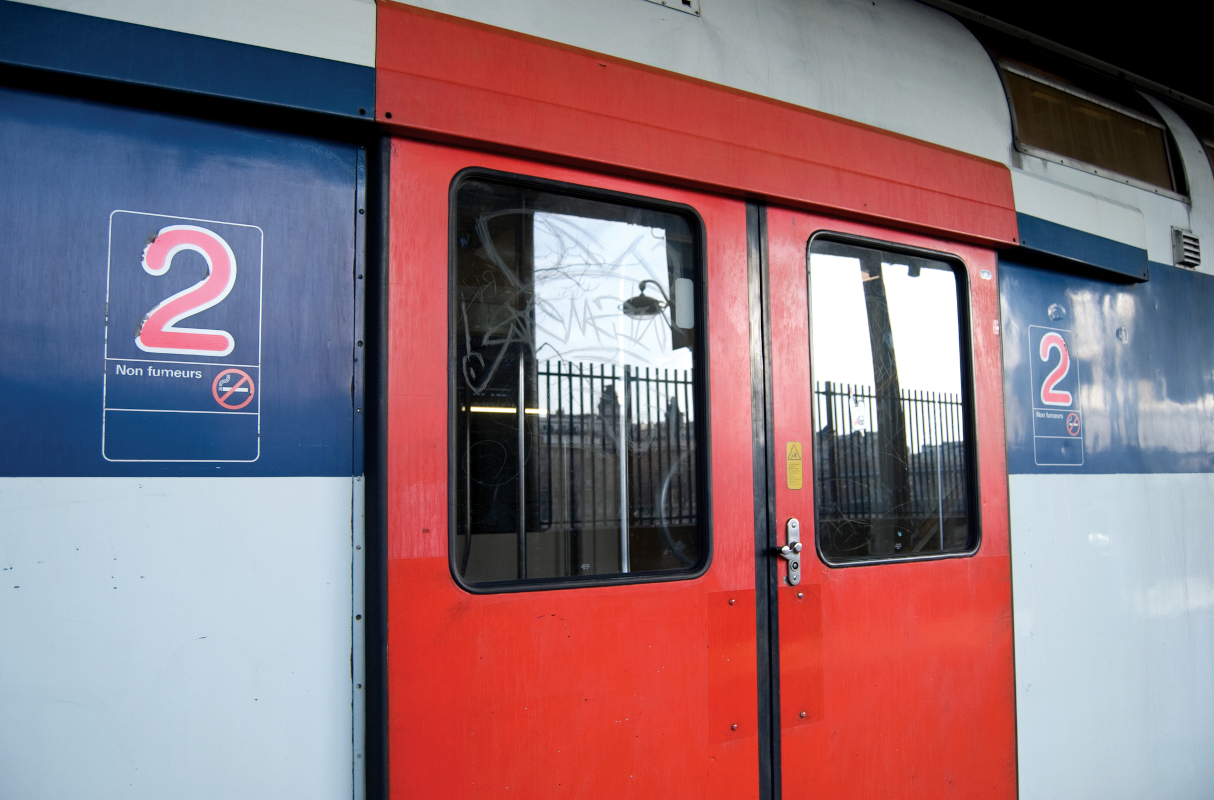
6. Let passengers leave the train first. Stand to the side of the doors before boarding.
7. Watch the station names. Many trains provide visual or audio announcements, but don’t rely on them exclusively.
8. Follow “Correspondance” signs when changing. These signs lead to connecting lines.
9. Follow “Sortie” signs when leaving. Large stations may have multiple numbered exits. Choosing the correct one can save a substantial walk above ground.
10. Keep your ticket or device available. You may need it at an exit gate or during a ticket inspection.
How Do Paris Metro Doors Open?
Doors on automated trains open automatically.
On some older trains, you must press a button or operate a small handle to open the door after the train has stopped.
Watch what other passengers do and don’t wait too long, since some station stops are brief.
Paris Escalator and Platform Etiquette
Stand on the right side of an escalator when you want to remain still.
Leave the left side open for people walking past.
On the platform, stay behind the marked edge and allow passengers to leave the train before you enter.
Don’t stop immediately after passing through a gate or reaching the top of an escalator. Move aside before checking your map or phone.
What Should You Do If the Gate Doesn’t Open?
Don’t push through the barrier or follow directly behind another passenger.
Try the correct reader again and check whether you selected the right virtual Navigo card on your phone.
If the card still fails, find a station agent or use the assistance intercom near the gates.
Passing without a confirmed validation can leave you without acceptable proof during an inspection.
How to Use the RER Without Boarding the Wrong Train
RER directions require one extra check because several trains using the same letter can separate onto different branches.
Check More Than the RER Letter
Before boarding, compare the destination screen with the place you need.
For Disneyland Paris, look for Marne-la-Vallée – Chessy.
For the usual Versailles route, look for Versailles Château – Rive Gauche.
For CDG Airport, check that the RER B train serves Aéroport Charles de Gaulle rather than the Mitry-Claye branch.
Check the Stations Served
Platform screens usually indicate the train’s destination and the stations it will serve.
Some trains run express over parts of a route or serve only one branch.
Don’t board based solely on the line letter or the direction in which the train appears to be moving.
Transferring Between the Metro and RER
You can transfer between the Metro and RER using the same Metro-Train-RER Ticket, provided the complete journey remains within the rail network and doesn’t exceed the two-hour limit.
You may need to validate at an internal gate during the connection.
This doesn’t normally deduct another ticket when the transfer is valid.
Transferring From the Metro or RER to a Bus
An ordinary rail ticket doesn’t include a transfer to a bus or tram.
You need a separate Bus-Tram Ticket after leaving the rail network.
How to Get From CDG Airport to Central Paris by RER B
Take RER B from Aéroport Charles de Gaulle 1 or Aéroport Charles de Gaulle 2 TGV using a €14 Paris Region Airports Ticket.
The ticket covers an eligible connecting Metro, RER or train journey, provided you remain inside the rail network.
Which CDG RER Station Do You Need?
Aéroport Charles de Gaulle 1 serves Terminal 3 directly and Terminal 1 through the airport’s free CDGVAL connection.
Aéroport Charles de Gaulle 2 TGV serves the Terminal 2 complex.
Follow airport signs for “Paris by train” or “RER B.” Don’t follow signs for TGV or Grandes Lignes unless you’re taking a national or international train.
Where Does RER B Stop in Central Paris?
Useful central stations include Gare du Nord, Châtelet – Les Halles, Saint-Michel – Notre-Dame, Luxembourg and Denfert-Rochereau.
Your best station depends on your hotel location and the Metro connection you need afterward.
Does the €14 Airport Ticket Include a Metro Connection?
Yes. You can connect from RER B to the Metro during the same uninterrupted airport journey, provided you remain inside the rail network.
You can’t leave the station, walk around Paris and continue later using the same airport ticket.
RoissyBus Ended in 2026
RoissyBus, which previously connected CDG Airport with the Opéra area, stopped operating permanently on March 1, 2026.
Older airport guides may still recommend it, but it’s no longer an available option.
Other Public Transport Options From CDG
Express bus line 9517 connects Roissypôle at CDG with Saint-Denis – Pleyel, where you can transfer to Metro Lines 13 and 14 or RER D.
The express bus uses a standard Bus-Tram Ticket rather than the €14 airport rail ticket.
Bus Lines 350 and 351 also connect CDG with parts of Paris. They cost less than RER B but take longer and are more affected by road traffic.
Is RER B the Best CDG Transfer for Everyone?
RER B can be a strong choice when you’re travelling alone or as a couple, have manageable luggage and are staying near a convenient RER or Metro connection.
A taxi or private transfer may be easier when you arrive late, carry several bags, travel with children, have limited mobility or need several changes before reaching your hotel.
Temporary August 2026 alert: RER B service is suspended between Gare du Nord and Bourg-la-Reine through August 6, 2026. Trains still operate between CDG and Gare du Nord, but people continuing toward stations south of Gare du Nord will need an alternative connection. Check the current Paris transport disruptions immediately before travelling.
How to Get From Orly Airport to Central Paris
Metro Line 14 provides the simplest direct rail connection between Orly Airport and central Paris.
A €14 Paris Region Airports Ticket is required for a single journey entering or leaving Aéroport d’Orly station.
Orly Airport by Metro Line 14
Line 14 connects Aéroport d’Orly with useful Paris stations including Gare de Lyon, Châtelet, Pyramides, Madeleine and Saint-Lazare.
From the airport, board a train in the direction of Saint-Denis – Pleyel.
Line 14 is automated, modern and wheelchair accessible. It can also be easier with wheeled luggage or a stroller than older Metro lines.
Orlyval and RER B
Orlyval connects Orly Airport with Antony station on RER B.
From Antony, you can continue toward central Paris on RER B.
The €14 airport ticket covers the eligible Orlyval and rail journey.
This route may suit accommodation near an RER B station, although Line 14 is simpler for many central Paris hotels.
Which Orly Route Is Better?
Choose the route with the easiest connection to your hotel rather than assuming one route will always be faster.
Line 14 may be preferable for Châtelet, Gare de Lyon, Madeleine or Saint-Lazare.
Orlyval and RER B may suit hotels near Luxembourg, Saint-Michel, Châtelet or Gare du Nord, particularly when Line 14 has service changes.
Paris Beauvais Airport isn’t connected to the Paris Metro or RER network. It requires a separate airport transfer, usually by coach or road transport.
How to Get From Paris to Versailles by RER C
Under normal service conditions, take RER C to Versailles Château – Rive Gauche.
This is the railway station closest to the Palace of Versailles, and a standard €2.55 Metro-Train-RER Ticket covers the journey.
Versailles Château – Rive Gauche isn’t the only railway station in Versailles.
Versailles Chantiers and Versailles Rive Droite are different stations and involve longer walks to the palace.
Where Can You Board RER C in Paris?
Depending on service conditions, useful central RER C stations include Saint-Michel – Notre-Dame, Musée d’Orsay, Invalides, Pont de l’Alma and Champ de Mars – Tour Eiffel.
Not every RER C train goes to Versailles Château – Rive Gauche.
Check the platform screen and train destination before boarding.
How Much Is the RER From Paris to Versailles?
The full-price fare is €2.55 each way under the current flat-fare system.
You no longer need the old distance-based Origin-Destination ticket for this journey.
If you begin on the Metro, the same Metro-Train-RER Ticket covers a valid transfer to RER C, provided you remain inside the rail network.
How Far Is the Station From the Palace?
Versailles Château – Rive Gauche is approximately a ten-minute walk from the palace entrance for many visitors.
Follow the signs toward the château, but keep a map available rather than depending only on the people leaving the station.
This is the route I used during my trip. Visiting Versailles took a large part of the day, so it needs to be considered when creating your Paris bucket list.
What If RER C Is Closed?
Check the official journey planner before leaving. Planned works frequently affect parts of RER C, particularly during summer.
One common alternative is Transilien Line N from Gare Montparnasse to Versailles Chantiers.
The walk from Versailles Chantiers to the palace is longer than the walk from Versailles Château – Rive Gauche, but the route may be more practical during a closure.
Another possibility is Transilien Line L from Gare Saint-Lazare to Versailles Rive Droite.
Temporary August 2026 alert: RER C service is suspended between Gare d’Austerlitz and Versailles Château – Rive Gauche through August 22, 2026. Use the official journey planner for the best alternative from your starting point. Remove or update this notice after the closure ends.
How to Get From Paris to Disneyland Paris by RER A
Take RER A toward Marne-la-Vallée – Chessy.
The station is beside Disneyland Paris, and a standard full-price Metro-Train-RER Ticket costs €2.55 each way.
I didn’t visit Disneyland Paris during my trip, so the directions and fares in this section are based on current official transport information rather than personal experience.
Where Can You Board RER A?
Central Paris stations served by RER A include Charles de Gaulle – Étoile, Auber, Châtelet – Les Halles, Gare de Lyon and Nation.
Choose the station that creates the simplest route from your accommodation.
Check the Correct RER A Branch
RER A divides east of Paris.
You need a train serving Marne-la-Vallée – Chessy.
Don’t board merely because the platform sign says RER A or because the train is travelling east.
Check the final destination and the list of stations served before entering.
How Long Does Paris to Disneyland Take?
The RER journey from central Paris usually takes approximately 35 to 45 minutes, depending on your departure station and the service pattern.
Add the time needed to reach the RER station from your hotel and the time spent waiting for the correct branch.
Should You Prepare the Return Ticket in Advance?
Load enough Metro-Train-RER Tickets for both journeys before leaving Paris or before entering the parks.
This can save you from buying another ticket when many visitors are returning to the station at the same time.
An unused second ticket doesn’t begin its two-hour validity period until you validate it for the return journey.
Check Service Works Before Your Disneyland Day
RER A maintenance can interrupt part of the route or require replacement transport.
Check the service the evening before and again before leaving your hotel.
Temporary August 2026 alert: RER A service will be suspended between Vincennes and Noisy-le-Grand – Mont d’Est from August 8 through August 23, 2026. This affects the normal route between central Paris and Disneyland. Replacement transport will operate, but the journey may take considerably longer.
Paris Metro Ticket Inspections, Fines and Rules Visitors Miss
Ticket inspections take place on Metro, RER, train, bus and tram services.
Inspectors may check your ticket inside a train, in a station corridor, near a transfer gate or before the final exit.
Validate Before Travelling
A ticket loaded onto a card or phone isn’t valid merely because you purchased it.
It must be validated correctly when entering the network or boarding the relevant vehicle.
Validate again when required during transfers or at exit gates.
Keep the Same Ticket, Card or Device
During an inspection, you must present the physical card, phone or watch used to enter.
A screenshot of a receipt, proof of payment or evidence that you intended to buy a ticket doesn’t replace the validated transport support.
What Can Paris Metro Fines Cost?
Travelling without a valid ticket or crossing a barrier without authorization can result in an immediate fine of up to €70.
The amount can increase when payment is deferred.
Different violations have different official amounts, so there isn’t one universal Paris Metro fine for every situation.
Don’t Use a Reduced-Fare Ticket Without Eligibility
Children aged 4 to under 10 can use the reduced Metro-Train-RER and Bus-Tram fares.
Children under 4 travel free under the applicable conditions.
Adults mustn’t use a child or other reduced-fare ticket unless they meet an official eligibility category and can provide any required proof.
What If Your Ticket or Phone Fails?
Find an agent before continuing through a gate or boarding without validation.
A machine error, damaged card or phone problem may be genuine, but you still need valid proof of travel if an inspection occurs.
Paris Metro With Luggage, Strollers, Children or Limited Mobility
The Paris Metro is useful, but older stations can include narrow gates, stairs, long corridors and changes between platforms that require more effort than the map suggests.
Using the Metro With Luggage
Look for a wider gate rather than trying to force a suitcase through a narrow turnstile.
Keep your suitcase in front of you when entering and avoid leaving it where it blocks train doors or station corridors.
A route involving one longer train journey may be easier than a theoretically faster route requiring three changes and several staircases.
Using the Metro With a Stroller
A lightweight folding stroller is easier to manage in older stations.
Use wider gates when available and keep children away from the platform edge while handling tickets and bags.
For certain journeys, an accessible bus, RER route or Metro Line 14 may be easier than an older Metro line with several transfers.
Paris Metro Wheelchair Accessibility
Don’t assume the complete Metro network is step-free.
Metro Line 14 is wheelchair accessible.
RER A and B provide much broader street-to-platform accessibility, although station-specific conditions, elevator failures and boarding assistance may still affect a journey.
Many older Metro stations remain inaccessible to independent wheelchair users.
Check the current route and elevator status before leaving, especially when an accessible connection is essential.
Limited Mobility and Long Interchanges
A station that looks convenient on the map can involve a substantial underground walk.
Châtelet – Les Halles, Montparnasse – Bienvenüe and other major interchanges may require long corridors between lines.
Consider remaining on one line for an extra station or choosing a bus when the alternative eliminates a difficult transfer.
This is also relevant when deciding whether to book the Eiffel Tower summit or second floor, since transport, queues and the walking already completed that day affect the overall experience.
Best Apps for the Paris Metro and RER
You don’t need several transport apps, but you should have at least one official source for route changes and service disruptions.
Île-de-France Mobilités
The official regional app provides route planning, network information, ticket purchases and Navigo Easy reloading on compatible phones.
Bonjour RATP
Bonjour RATP provides route planning, live network information and ticket services for compatible devices.
Google Maps and Citymapper
Both can be useful for door-to-door directions, walking routes and comparing transport options.
Use them alongside an official transport app when engineering works, strikes, closed stations or replacement services affect the network.
Save Important Information Offline
Save your hotel address, nearest station, airport route and booking details somewhere you can access without a live internet connection.
A phone is extremely useful while travelling, but essential confirmations shouldn’t exist only inside one app or email account.
The evening before departure, add route screenshots and offline confirmations to your night-before-flight checklist.
Should You Take Public Transport or a Taxi From a Paris Airport?
Comparing the Paris airport train with a taxi isn’t only about finding the lowest price.
Consider the complete journey from the terminal to the hotel door, including walking, transfers, stairs, luggage and the time you arrive.
Public Transport May Suit You When
You’re travelling alone or as a couple, your luggage is easy to manage, you arrive while services are running and your hotel is close to a direct RER or Line 14 station.
RER B and Line 14 avoid road traffic and cost €14 per adult for a standard airport journey.
A Taxi May Suit You When
You arrive late, travel with several people, carry heavy luggage, have limited mobility, need multiple public transport changes or want to reach the hotel as directly as possible.
Licensed Paris taxis use regulated fixed fares for direct journeys between Paris and CDG or Orly.
| Direct taxi journey | Official 2026 flat fare |
|---|---|
| CDG Airport to or from the Right Bank | €56 |
| CDG Airport to or from the Left Bank | €65 |
| Orly Airport to or from the Right Bank | €45 |
| Orly Airport to or from the Left Bank | €36 |
A booking supplement may apply when you reserve an official taxi rather than joining the airport taxi queue. Check the current regulated French taxi fares before travelling.
Use the official taxi rank outside the terminal. Ignore people who approach inside the arrivals hall offering an immediate taxi.
What About Uber, Bolt or a Private Transfer?
Ride-hailing prices change according to demand and traffic.
Check the final fare displayed in the app and confirm the vehicle’s license plate before entering.
A private transfer may cost more, but it can include a driver waiting in arrivals, flight monitoring, a larger vehicle or additional help with luggage.
There’s no universal winner. Advice that says everyone should always use public transport or everyone should take a taxi is one example of travel advice that can backfire.
What We Chose From the Airport to Our Paris Hotel
We stayed at Pullman Montparnasse, close to useful Metro and train connections.
We arrived in Paris at around 10 p.m. It was March and already dark.
My husband had business meetings planned for Monday, so reaching the hotel as quickly and conveniently as possible was our priority that evening.
That is why we chose a taxi from the airport.
Yes, it was probably the most expensive option available to us.
But we had included it in our budget, we didn’t want to manage luggage and public transport changes late at night, and the taxi took us directly to the hotel.
Had we arrived earlier, with different plans for the following morning or with a hotel next to a direct airport station, we might have chosen the RER.
This is why I wanted this article to give you all the available information rather than declare one option perfect for everyone.
Your best Paris airport transfer may be different from mine. It may even change between two visits because your flight time, hotel, luggage, budget or reason for travelling has changed.
Preparing the transfer before you fly can also reduce some of the uncertainty that explains why airports can feel so stressful.
Common Paris Metro and RER Mistakes
Checking only the line color. Confirm the line number or letter as well.
Ignoring the terminus. The same Metro line runs in two directions. Check the final station shown above the platform entrance.
Assuming every RER train serves every branch. Check the displayed destination and stations served.
Buying an airport ticket on a support containing ordinary rail tickets. The two products can’t coexist on the same individual Navigo card.
Buying an old special destination ticket for Versailles or Disneyland. The normal €2.55 Metro-Train-RER Ticket now covers both destinations.
Trying to use a rail ticket on a bus. Metro-Train-RER and Bus-Tram are separate single-ticket categories.
Using one physical Navigo Easy for several people. Each person needs a separately validated card or digital Navigo card.
Leaving the network during a transfer. Exiting normally ends the single rail journey.
Throwing away proof of travel too early. Keep your card, phone or eligible remaining paper ticket until you’re outside.
Pushing through a gate after a failed validation. Find an agent instead.
Relying on old prices or route advice. Fares, ticket formats and planned works change.
Choosing the fastest-looking route without checking stairs and corridors. The route with the fewest minutes isn’t always the easiest with luggage, children or limited mobility.
Paris Metro, RER and Airport Quick-Reference Table
Once you’ve understood the ticket system and the differences between the networks, this table provides a faster way to check the journeys most first-time visitors make.
| Journey | Main route | Destination to check | Ticket normally required |
|---|---|---|---|
| Central Paris journey | Metro, RER or suburban train | Depends on your route | €2.55 Metro-Train-RER Ticket |
| CDG Airport to Paris | RER B | Paris-bound RER B | €14 Paris Region Airports Ticket |
| Orly Airport to Paris | Metro Line 14 | Saint-Denis – Pleyel direction | €14 Paris Region Airports Ticket |
| Orly Airport via Antony | Orlyval and RER B | Antony, then Paris-bound RER B | €14 Paris Region Airports Ticket |
| Paris to Versailles | RER C under normal service conditions | Versailles Château – Rive Gauche | €2.55 Metro-Train-RER Ticket |
| Paris to Disneyland | RER A | Marne-la-Vallée – Chessy | €2.55 Metro-Train-RER Ticket |
Four Practical Paris Ticket Examples
There isn’t one ticket that will be best for every trip. These examples show how the calculation changes according to your itinerary.
Three Days in Central Paris
Imagine you take three Metro or RER journeys each day.
Nine standard tickets cost €22.95. A Navigo Easy card adds €2 when you aren’t using your phone.
Three Navigo Day passes would cost €36.90, so single tickets are the less expensive option.
One Intensive Day in Paris
If you make five full-price rail journeys in one day, individual tickets cost €12.75.
A Navigo Day pass costs €12.30 and also covers buses and trams.
If you only have a short visit, group attractions carefully. A one-day Paris itinerary can help you avoid unnecessary journeys across the city.
Four Days With Versailles
Suppose you make three ordinary rail journeys on three days and four journeys on your Versailles day.
That gives you 13 journeys at €2.55, for a total of €33.15.
An all-zone Navigo Week at €32.40 is slightly less expensive and also includes buses, trams and additional journeys.
It becomes an excellent option when the entire trip falls within one Monday-to-Sunday calendar week.
Paris Plus Disneyland
A round trip to Disneyland uses two standard €2.55 tickets, for a total of €5.10 per adult.
Add the tickets needed for your other Paris days and compare the total with Navigo Week.
Don’t buy Paris Visite solely because Disneyland is located in Zone 5. The ordinary flat-fare ticket already reaches Marne-la-Vallée – Chessy.
CDG Arrival, Four Paris Days and CDG Departure
Two individual airport tickets cost €28.
Add ten ordinary city journeys and the total becomes €53.50, excluding the cost of a Navigo Easy card.
A €32.40 all-zone Navigo Week may be substantially less expensive when the entire visit falls between Monday and Sunday and you can load the pass onto a compatible phone or Navigo Découverte.
If the trip crosses into a second calendar week, calculate the days separately before deciding.
Paris Metro and RER Checklist for First-Time Visitors
Check your arrival airport. CDG, Orly and Beauvais have different transport connections.
Save your hotel’s complete address. The neighborhood name alone isn’t enough.
Identify the nearest useful station. A hotel may be close to several stations, but one can provide a much easier airport or sightseeing route.
Count your likely journeys. Don’t buy a pass based only on the number of days in Paris.
Check the calendar week. Navigo Week always ends on Sunday.
Decide who will use a phone and who needs a physical card. Organize this before approaching the first gate with luggage.
Keep airport tickets separate. Don’t load them onto the same individual support as Metro-Train-RER Tickets.
Check the Metro terminus. Use it to choose the direction.
Check the RER branch destination. Don’t rely only on the line letter.
Validate correctly. Buying a ticket isn’t the same as validating it.
Keep proof until you leave. Don’t discard a ticket or close the relevant digital card too soon.
Check live traffic. Do this before travelling to an airport, Versailles or Disneyland.
Allow extra time. Large interchanges, stairs and unfamiliar exits can add more time than the train journey itself.
A broader set of trip-planning tips can help you place attractions in a logical order and avoid crossing Paris repeatedly.
Conclusion
The Paris Metro and RER can take you to almost every major place you’re likely to include during a first trip.
The current flat-fare system has made many journeys easier to understand. A standard €2.55 ticket now covers ordinary Metro, suburban train and RER travel throughout Île-de-France, including Versailles and Disneyland Paris.
The airport stations remain the important exception. CDG and Orly require the €14 Paris Region Airports Ticket, an eligible unlimited pass or another airport-valid product.
Once you understand the difference between the Metro and RER, choose directions by terminus, check RER branches and keep airport tickets on a separate support, the system becomes much less intimidating.
I used the Metro and RER throughout my trip and took the train to Versailles. For our late arrival, however, a taxi was the right choice for us.
That combination reflects how many people actually travel. You don’t have to use the least expensive option every time or commit to only public transport. You need the option that fits each part of your trip.
Once your transport is organized, you can focus on the places you came to see. The best museums in Paris, the best time to visit Paris and these interesting Paris facts can help with the next stage of your planning.

Paris Metro and RER FAQ
Is the Paris Metro easy for first-time visitors?
Yes. The Paris Metro becomes easier once you identify the line number and choose the direction using the final station, or terminus. Plan the route before entering, follow the correspondence signs during transfers and keep your ticket until you leave the station.
How much is a Paris Metro ticket in 2026?
A full-price Metro-Train-RER Ticket costs €2.55. A reduced ticket costs €1.30 for eligible passengers, including children aged 4 to under 10.
Can I use the same ticket on the Metro and RER?
Yes. A Metro-Train-RER Ticket covers eligible connections between the Metro, RER and suburban trains for up to two hours, provided you don’t leave the rail network.
Can I transfer from the Metro to a bus with the same ticket?
No. A standard rail ticket doesn’t include a transfer to a bus or tram. You need a separate Bus-Tram Ticket unless you’re using a pass or product that covers both networks.
Do Paris Metro zones still matter?
Zones still affect certain weekly, monthly and longer-term passes, but they don’t change the price of an ordinary Metro-Train-RER Ticket.
Can I use a normal Paris Metro ticket to Versailles?
Yes. A standard €2.55 Metro-Train-RER Ticket covers the journey to Versailles. The usual route is RER C to Versailles Château – Rive Gauche, although service works may require an alternative.
Which RER goes to Versailles?
RER C normally goes to Versailles Château – Rive Gauche, the station closest to the palace. Check current service information because planned works can close the route.
Can I use a normal Paris Metro ticket to Disneyland Paris?
Yes. A standard €2.55 Metro-Train-RER Ticket covers the RER journey to Marne-la-Vallée – Chessy.
Which RER goes to Disneyland Paris?
Take RER A toward Marne-la-Vallée – Chessy. Check that the approaching train serves this branch before boarding.
What ticket do I need from CDG Airport to Paris?
You need a €14 Paris Region Airports Ticket for RER B, unless you have a valid airport-inclusive pass such as an all-zone Navigo Week or Paris Visite.
What ticket do I need from Orly Airport to Paris?
You need a €14 Paris Region Airports Ticket when using Metro Line 14 or Orlyval with an eligible rail connection.
Does Navigo Day include CDG or Orly Airport?
No. Navigo Day covers unlimited zones 1 to 5 transport but excludes entry and exit at CDG and Orly airport stations and doesn’t cover Orlyval.
Does Navigo Week include Paris airports?
An all-zone Navigo Week covers RER B access to CDG and Metro Line 14 access to Orly. Orlyval and certain special airport services are excluded.
Can I put airport and Metro tickets on the same Navigo Easy?
No. A Paris Region Airports Ticket can’t coexist with Metro-Train-RER Tickets on the same individual Navigo Easy card. Use the existing tickets first or place the airport ticket on a separate support.
Does each person need a Navigo Easy card?
Each passenger needs a separately validated ticket. People travelling together normally need one physical Navigo Easy card per person.
Can several people travel using one iPhone?
Yes, on compatible Apple devices. The iPhone can hold several separate virtual Navigo cards, but each passenger must have an individual digital card and ticket. You must select and validate every card separately.
Can I tap my credit card directly at Paris Metro gates?
Don’t assume a standard bank card can replace a ticket at Metro or RER gates. You can use a card to pay at ticket machines, but you still need an accepted transport ticket or pass for validation.
Are old Paris paper tickets still valid?
Some previously purchased cardboard t+ and Origin-Destination tickets remain usable under limited transition rules until autumn 2026. Sales have ended, and eligible remaining tickets can be exchanged through January 14, 2027.
What happens if I forget to validate my ticket?
You can be treated as travelling without a valid ticket and may receive a fine. Buying or loading a ticket doesn’t replace the required validation.
Does the Paris Metro run all night?
No. Metro service normally begins at approximately 5:30 a.m. and finishes at around 1:15 a.m. On Friday and Saturday nights and before public holidays, service generally continues until approximately 2:15 a.m. Noctilien night buses operate after the Metro closes.
Is the Paris Metro suitable for luggage and strollers?
Luggage and strollers are allowed, but older stations can have stairs, narrow gates and long corridors. Use wider gates and consider Line 14, an accessible RER route, a bus or a taxi when several difficult transfers are involved.
Is the complete Paris Metro wheelchair accessible?
No. Line 14 is wheelchair accessible, but many older Metro stations aren’t step-free. RER A and B provide broader accessibility, although elevator status and boarding-assistance requirements should be checked for each journey.
More amazing articles for you:
Marrakech travel: discover the amazing Marrakech attractions you can't afford to miss
Man Receives 30-Year Ban from Airline: His Actions Forced an Entire Plane to Empty - And It Wasn’t H...
Unknown Ski resorts in Switzerland - where to ski in Switzerland
Things to do in Kathmandu: Your complete Kathmandu City Guide
Europe Ditches Old Border Checks: Biometric Entry/Exit System Goes Live - What Travelers Need to Kno...
How To Prepare For Your Next Big Trip
Must-Visit Attractions on the Camino Portuguese to Santiago de Compostela
I’m Sick and Tired of These Airplane Incidents. Aren’t You?

Violeta-Loredana Pascal is a communications expert, business mentor, and the founder of Earth’s Attractions and PRwave INTERNATIONAL. A pioneer in the Romanian digital PR landscape since 2005, she holds a degree in Communication and Social Sciences from SNSPA Bucharest. Violeta is a senior trainer at AcademiadeAfaceri.ro, where she leverages over 20 years of experience to teach professional courses in PR strategy and workplace productivity. By blending high-level business consulting with a passion for holistic travel and wellness, she empowers solopreneurs to overcome procrastination, build profitable brands, and design a life of purposeful adventure.