
Winter in Europe can be magical. Christmas markets fill historic squares with lights and music, parks look splendid in snow, ski resorts welcome winter sports enthusiasts, and outdoor thermal baths become especially inviting as temperatures drop. But Europe also has places where you can enjoy a pleasant January afternoon in a relatively light jacket.
As a European, I know how much the weather can vary between countries, regions, and months. Even two cities in the same country can experience very different winter conditions. And what you wear during your vacation can have a huge impact on how much you enjoy it.
You may be comfortable exploring Rome in jeans, a sweater, and a medium-weight coat, yet need thermals, insulated boots, and a much warmer jacket for a winter trip to Helsinki. There are also cities where you can experience sunshine, rain, wind, and temperatures close to freezing during the same vacation.
I’ve already shared my advice on Christmas market packing, but there’s plenty more to consider when planning what to wear in Europe in winter. You might spend hours exploring historic streets, visit museums, take day trips to the mountains, enjoy a spa, or travel through several countries with completely different climates.
In this article, I’ll share my tips on winter clothing for Europe, including coats, comfortable walking shoes, layering, travel outfits for December, January, and February, and what to pack for a week or two. I’ll also explain which clothes you may not need, so you don’t have to fill your suitcase with unnecessary items.
ID 338821687 © Zbynek Pospisil | Dreamstime.com
What Clothes Should You Wear in Europe in Winter?
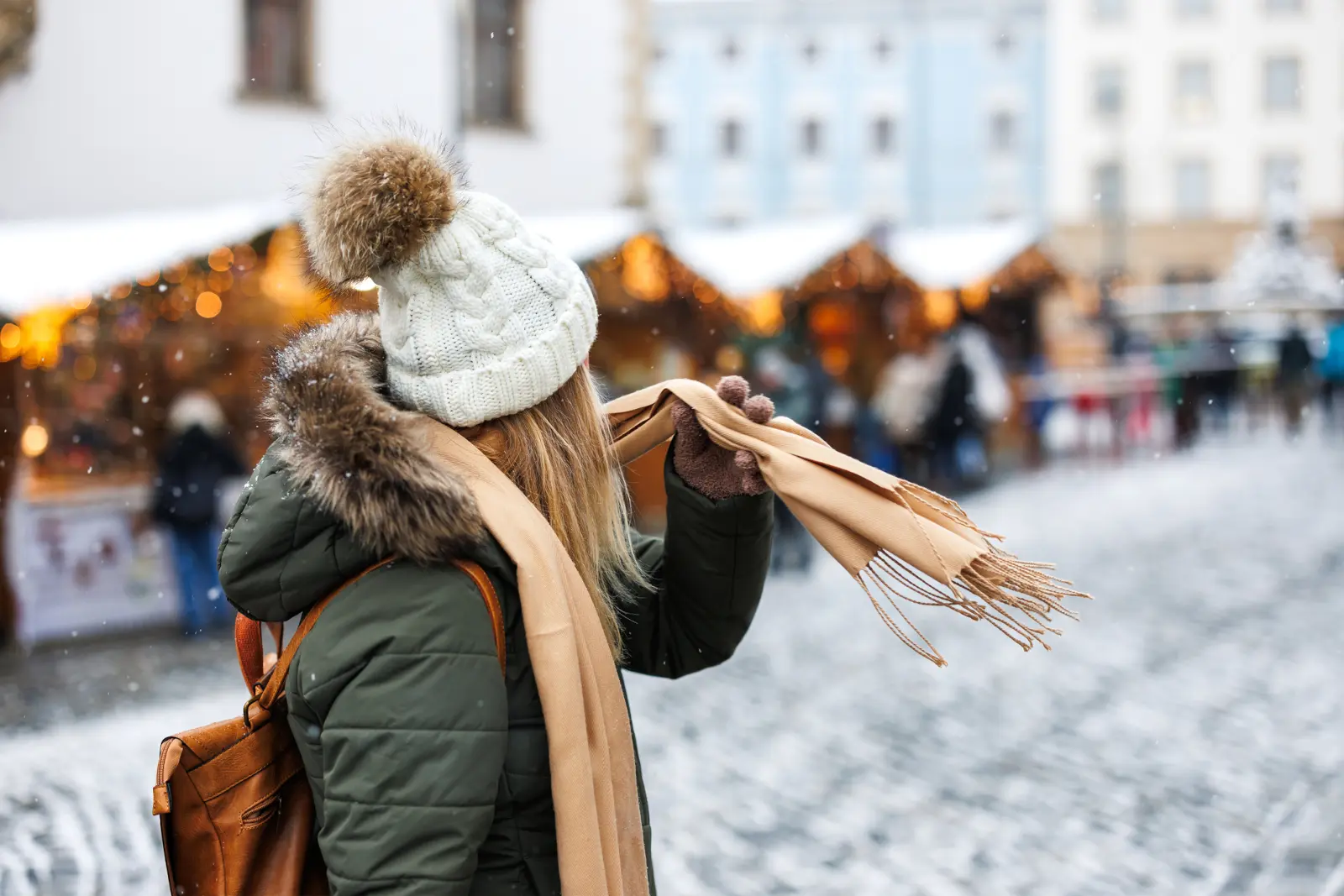
For most winter city trips in Europe, you’ll need a suitable coat, warm tops, comfortable trousers, practical walking shoes, and a few accessories. Colder destinations may require thermal underwear, insulated footwear, and additional protection against wind and freezing temperatures.
You should be able to remove a layer when you enter a heated building. I always consider the activities I’ll be doing, too. An outfit that’s comfortable for a day of sightseeing may not be warm enough for two hours spent standing outside in the evening.
Thermal Underwear and Base Layers: When Do You Need Them?
Thermal underwear can be incredibly useful during a European winter vacation, but you won’t necessarily need it every day or in every destination.
For colder cities such as Vienna, Prague, Kraków, or Helsinki, a thermal top adds warmth without taking up much space underneath your sweater. Thermal leggings can help when temperatures approach freezing, especially if you’re planning to spend several hours outside – eg like when you are visiting the Christmas markets.
Merino wool and synthetic thermal materials are both good options. Merino is popular because it offers warmth, handles moisture reasonably well, and tends to resist odors. Synthetic base layers are often less expensive, dry quickly, and come in several weights.
I always recommend choosing a comfortable fit that sits close to your skin without restricting movement. You’ll want to wear your other clothes over it without feeling squeezed.
For a relatively mild winter vacation in Lisbon or Rome, ordinary long-sleeved tops may be enough. If you’re sensitive to cold, lightweight thermals are still useful, particularly in the evenings.
One practical tip: don’t buy the thickest thermal underwear you can find without considering your itinerary. Heavy thermals can become uncomfortable if you’re spending much of your day inside museums, shops, and restaurants.
Sweaters, Cardigans, and Fleece Jackets
I like sweaters for winter travel because they’re comfortable, versatile, and easy to combine with different trousers or skirts. You can wear the same sweater with jeans while sightseeing and with smarter trousers for dinner.
For a week in Europe, two or three sweaters will generally be enough. A medium-weight wool sweater, a lighter knit, and perhaps a fleece or cardigan can cover different temperatures and activities.
Fleece jackets are useful for colder days, outdoor excursions, and casual sightseeing. A cardigan is convenient when you’re moving frequently between indoor and outdoor spaces because you can easily open it or remove it.
Thick knitted sweaters are lovely, but they take up a considerable amount of suitcase space. Before packing several, check how they fit underneath your coat. You may discover that one warm sweater and a couple of thinner ones give you more flexibility.
Consider the fabric, too. Wool and fleece can provide useful insulation, while cotton garments tend to absorb moisture and may take longer to dry. A cotton sweater isn’t automatically unsuitable for a winter city trip, especially in dry, mild weather, but I wouldn’t rely on one for a long excursion in wet, freezing conditions.
What Pants Are Best for Winter Travel in Europe?
Jeans are perfectly acceptable in European cities during winter. People wear them year-round, and there’s no reason to leave your favorite pair at home if they’re comfortable.
However, denim isn’t always ideal when the weather is cold and wet. Jeans can take a long time to dry, and they don’t provide much insulation on their own. If temperatures are near freezing, you may want to wear a pair of thin thermal leggings underneath.
Other useful options include wool-blend trousers, comfortable travel pants, lined trousers, and thicker leggings. For a city vacation, I’d choose two or three pairs that work with most of the tops I’m packing.
Make sure you can move comfortably, especially if your itinerary involves a lot of walking or climbing stairs. Some historic European destinations have uneven streets, steep sections, and plenty of steps.
For example, visiting Bran Castle in Romania involves a different kind of walking from spending an afternoon in a modern shopping district. Comfortable trousers and practical footwear will make the experience much more enjoyable.
Can You Wear Dresses and Skirts in Europe in Winter?
Of course! You can create beautiful winter outfits with dresses or skirts, especially if you enjoy dressing up for restaurants, museums, or evening walks.
A knitted dress with warm tights, comfortable boots, and a long coat works well in many European cities. For colder destinations, consider thermal tights or fleece-lined options.
If you’re planning to spend an entire day outdoors in freezing temperatures, make sure your legs will stay warm enough. A dress with thin tights may look lovely, but it won’t provide the same protection as warm trousers with thermal leggings underneath.
You can also pack one dress for several occasions. A simple knitted dress can work with ankle boots during the day and a different scarf or accessories in the evening.
Winter Accessories: Hats, Gloves, Scarves, and Warm Socks
Winter accessories take up little room in your suitcase and can make a noticeable difference during long days outside.
A scarf protects your neck from cold wind, while a hat helps keep your head and ears warm. Gloves are useful when you’re holding your phone, taking photographs, checking maps, or waiting for public transport.
I get cold easily, and my hands are often among the first things that become uncomfortable in low temperatures. I prefer warm gloves or mittens when I know I’ll spend several hours outdoors. For very cold weather, mittens can keep your fingers warmer, although they aren’t as convenient when you need to use your phone.
Touchscreen gloves are useful for sightseeing, but check how warm they actually are. Some are designed for mild weather and won’t provide much protection on a freezing evening.
Warm socks deserve attention as well. Wool or wool-blend socks are useful in colder destinations, particularly when you’re wearing boots. Make sure your shoes aren’t too tight with thicker socks, since cramped footwear can make your feet uncomfortable and reduce insulation.
If rain, snow, or slush is expected, carrying a spare pair of socks in your day bag can be a good idea. Wet feet are unpleasant, especially when you still have several hours of sightseeing ahead.
Wool Coat or Puffer Jacket: Which Is Better for Europe in Winter?
One of the most common questions about what to wear in Europe in winter is whether you need a heavy puffer jacket or whether a wool coat will be warm enough.
Both can work, but their performance depends on the material, construction, insulation, and weather conditions.
When a Wool Coat Works Well
A good wool coat can be comfortable for many winter city trips, including visits to Paris, London, Rome, Madrid, or other destinations where temperatures aren’t consistently below freezing.
Worn with a warm sweater, scarf, and suitable trousers, it can provide enough warmth for ordinary sightseeing in cool weather. Wool coats also work nicely with dresses, skirts, and smart-casual evening outfits.
However, not every wool coat is warm. Some are relatively thin, have little lining, or allow cold wind to pass through. Most aren’t designed for prolonged heavy rain, either.
Check the coat you already own. If it’s comfortable with a sweater underneath and offers enough protection for the temperatures you’re expecting, you may not need to buy another one.
When a Puffer Jacket or Insulated Parka Makes More Sense
For colder destinations, an insulated jacket or parka is often a practical choice. It can provide substantial warmth without requiring several thick sweaters underneath.
Longer coats help protect your hips and upper legs, which can be useful when temperatures drop below freezing or you’re standing outside for long periods.
If you’re visiting Northern Europe, spending time in snowy areas, or planning winter excursions, look closely at insulation, wind resistance, hood design, and weather protection.
Down jackets can provide excellent warmth for their weight, but down insulation loses effectiveness when it becomes wet unless the garment is designed to manage moisture. Synthetic insulation is another option, particularly when damp conditions are likely.
A puffer jacket isn’t automatically waterproof. Check the manufacturer’s specifications if you’re expecting persistent rain or wet snow.
What About Raincoats and Waterproof Shells?
For wet and windy cities, a waterproof outer shell can be very useful. You can wear it over a sweater or insulating jacket, as long as the layers fit comfortably together.
This combination works particularly well when you’re expecting changing temperatures. On a milder day, you might only need the shell over a long-sleeved top. When the weather becomes colder, add an insulating layer.
For example, a winter visit to Amsterdam may involve several hours of rain and wind without any snow. Keeping your clothes dry will be important, even if the temperature isn’t extremely low.
If you’re visiting several countries, I’d choose one main coat for the coldest part of the itinerary, then adjust the layers underneath. If your journey combines very mild weather with extreme cold, you may need different outerwear.
Best Shoes for Europe in Winter: Sneakers, Boots, and Waterproof Walking Shoes
Choosing winter shoes for Europe deserves as much attention as choosing your coat. You may spend hours walking through historic neighborhoods, exploring attractions, using public transport, and visiting places with cobblestone streets.
Rain and snow can make some surfaces slippery, and old stone paving may be uneven even in perfectly dry weather.
I always recommend choosing shoes that you’ve already worn comfortably for long walks. New boots that look wonderful in photographs won’t be much fun if they give you blisters halfway through your first sightseeing day.
Can You Wear Sneakers in Europe in Winter?
Yes, you can wear sneakers in Europe during winter, and they may be an excellent choice for mild, dry days.
If you’re visiting Rome, Lisbon, Barcelona, or Athens and the forecast looks pleasant, comfortable walking sneakers may be all you need for daytime sightseeing.
Leather or water-resistant sneakers can also work in cooler cities when the streets are dry or only slightly damp. Regular canvas or mesh sneakers are less suitable for prolonged rain, snow, or slush because they can become wet quickly.
When temperatures fall below freezing, think about insulation and grip as well. Many everyday sneakers aren’t designed for icy streets.
Do You Need Winter Boots for European Cities?
You don’t automatically need snow boots for a December trip to Paris or a February vacation in Rome. For colder Central European destinations, comfortable ankle boots or other closed walking shoes with weather protection and suitable soles may be enough. If snow and slush are likely, waterproof boots become more useful.
Insulated winter boots are a better choice for consistently freezing conditions, snowy destinations, and activities that involve extended time outdoors. Pay attention to the sole: waterproof boots won’t necessarily provide good grip on ice, and smooth leather soles can be slippery on wet paving.
If you’re expecting icy conditions, check whether local experts recommend suitable removable traction aids. Choose products designed for the surface and follow their instructions, especially when moving between outdoor and indoor areas.
Choosing Shoes for Cobblestones and Long Walking Days
Many European historic centers have cobblestones, uneven steps, polished stone, and narrow streets. Good fit, comfortable cushioning, and soles suited to the conditions are especially important when you’re walking for hours.
For a winter trip to Paris, for example, you may walk considerable distances while exploring museums and major attractions. If you’re following a Paris bucket list, choose your footwear based on the walking involved, not just the weather.
Try your shoes with the socks you’ll wear during the trip. If your toes feel cramped, thicker socks may make them even less comfortable. I would generally pack one reliable pair of sightseeing shoes and, if there’s enough space, a second pair for different conditions or evenings out.
Europe Winter Travel Outfits: What to Wear for Sightseeing and Evenings Out
ID 33612575 | Winter © Ekaterina Pokrovsky | Dreamstime.com
You can create plenty of winter travel outfits with a relatively small number of clothes. I like options that work during the day and can also be worn to dinner without changing everything.
The following combinations cover several common European winter situations. Adapt the coat, shoes, and accessories to the actual temperature and weather.
1. Winter Outfit for Rome, Lisbon, and Other Mild European Cities
For a mild winter afternoon, try a long-sleeved top, a comfortable sweater, straight-leg jeans or tailored trousers, a medium-weight coat, and walking sneakers.
Carry a scarf if the forecast includes wind, and bring rain protection when necessary. On sunny days, you may be comfortable removing the sweater while walking around.
For women who enjoy dresses, a knitted dress with tights, ankle boots, and a coat is another option. Men can combine dark jeans or chinos with a sweater, coat, and comfortable leather shoes or boots.
Don’t assume Southern Europe will always be warm, though. Madrid can have cold winter mornings, and cities such as Rome and Athens occasionally experience cold spells.
2. Winter Outfit for Paris, London, Amsterdam, and Brussels
For cooler, wetter conditions, I’d choose a long-sleeved top, sweater, weather-resistant coat, comfortable trousers, and waterproof or water-resistant walking shoes. A scarf is useful on windy days, while gloves and a hat may be welcome when temperatures fall.
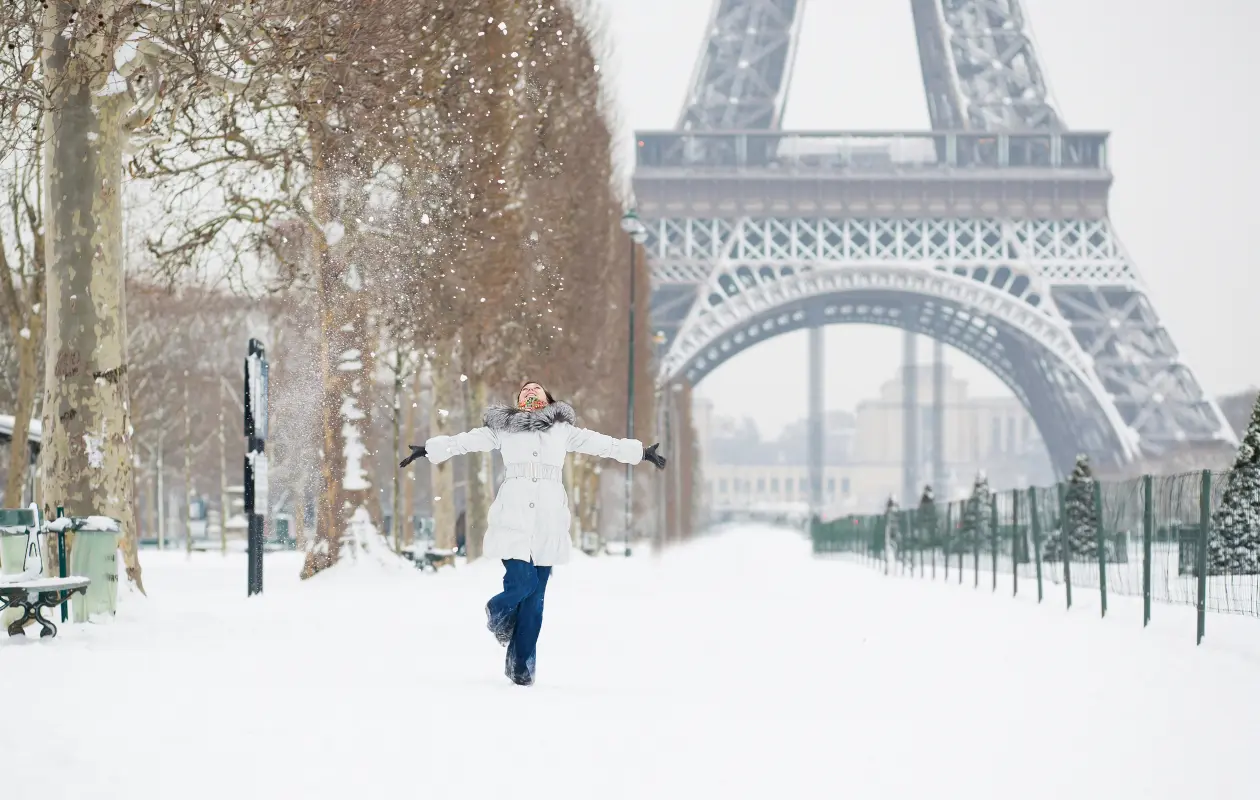
For Paris, you can combine practical clothing with a more polished look: dark trousers, a warm knit, a long coat, and comfortable boots. Check that the boots can handle your planned walking distances. Wind exposure also matters at elevated attractions. If you’re visiting the Eiffel Tower, bring a windproof coat and keep your scarf secure.
3. Winter Outfit for Vienna, Prague, Budapest, and Munich
For cold Central European cities, start with a thermal top if needed, add a warm sweater, and wear an insulated coat. Comfortable trousers, warm socks, and weather-appropriate boots complete the outfit.
When temperatures approach freezing, I’d have gloves, a scarf, and a hat available. Thermal leggings are useful for long sightseeing days or evenings outdoors.
If you’re visiting Vienna in December, you’ll probably combine outdoor attractions with museums, cafés, churches, and Christmas markets. You’ll appreciate being able to remove a layer when you go inside.
And if you’re exploring the historic center, remember that even familiar attractions can involve considerable walking. At St. Stephen’s Cathedral, climbing the South Tower involves 343 steps, so a heavy coat may feel uncomfortable during the ascent.
4. Winter Outfit for Stockholm, Helsinki, Oslo, and Other Cold Northern Cities
For freezing conditions, I’d choose a proper thermal base layer, insulating sweater or fleece, substantial winter coat, warm trousers, and suitable insulated boots.
Add a warm hat, scarf or neck gaiter, and gloves or mittens. If you’re planning to spend several hours outside, check that your footwear has adequate insulation and room for warm socks.
Conditions vary considerably across Northern Europe. Oslo’s coastal climate isn’t the same as inland northern Norway, and temperatures in Finnish Lapland can be much lower than in Helsinki.
For longer winter excursions, follow the equipment recommendations provided by your tour operator or local authorities.
5. Comfortable Winter Outfits for Long Sightseeing Days
When you’re walking for several hours, your clothes should allow easy movement and help you manage changes in body temperature.
I’d start with trousers that don’t restrict movement, a comfortable top, a sweater, and a suitable outer layer. Choose your shoes carefully, especially if you’re visiting a historic area with uneven paving or steep streets.
Walking quickly can warm you up faster than expected, even when it’s cold outside. If you begin sweating, adjust your layers before your clothes become damp. A small day bag/purse is useful for storing gloves, a scarf, or an extra sweater. You can also carry spare socks if wet weather is expected.
6. What to Wear for Dinner and Evenings Out in Europe
For most casual and mid-range restaurants, you won’t need formal clothing. Dark trousers, a nice sweater, comfortable boots, and a suitable coat work well in many cities.
A knitted dress with warm tights and boots is another option. You can also dress up a simple outfit with jewelry, a scarf, or other accessories that don’t take much space in your luggage. Check dress codes when booking high-end restaurants, formal performances, or special events. For a vacation in Italy, knowing a little about Italian restaurants can be useful when planning your evenings, especially if you’re visiting several different types of establishments.
What Do Europeans Actually Wear in Winter?
There’s no single European winter fashion style. What people wear in Milan, London, Bucharest, Paris, and Helsinki varies with local weather, personal preferences, and the occasion.
You’ll see wool coats, long puffers, leather boots, sneakers, jeans, scarves, knitted dresses, sportswear, and plenty of other combinations. In colder cities, practical winter clothing is completely normal.
If you prefer classic outfits, neutral colors such as black, navy, grey, camel, and cream are easy to mix and match. A dark coat, comfortable boots, and a few coordinating sweaters can provide several smart-casual combinations.
But there’s no reason to avoid your favorite colors or change your style just to look European. Wear what you enjoy, provided it’s suitable for the weather and your activities.
In Romania, for example, winter can bring freezing temperatures, snow, wind, and slush. During colder periods, practical coats and boots are common. If you’re exploring mountain destinations or castles outside Bucharest, check the local forecast carefully because the weather may be quite different from the capital.
Dressing for Heated Museums, Trains, and Restaurants in Europe
You may be freezing while waiting for a tram in Vienna, then feel uncomfortably warm a few minutes after getting on. The same thing can happen in museums, shopping centers, restaurants, and cafés, especially when they’re crowded.
In winter, I like to wear a short-sleeved top under my sweater, so I can take it off if necessary. A coat that’s easy to open is helpful, too. And if you’re visiting several indoor attractions, think about where you’ll put your hat, gloves, and scarf once you no longer need them. If you only plan to stay inside – going to malls, museums, or other indoor attractions- I think a short-sleeve shirt and a jacket are enough. Or at least they are for me – because it is usually hot enough inside.
Some museums have cloakrooms where you can leave your coat. For example, if you’re planning to spend several hours exploring Paris museums, check their coat and bag policies before you go. Carrying a heavy winter coat around an art gallery for three hours isn’t much fun.
Public transport brings its own challenges. On a crowded Paris Metro train, you may want to unzip your coat or remove your scarf, particularly if you’ve been walking quickly to reach the station.
Accommodation matters, too. If your shoes and clothes get wet, you’ll need somewhere to dry them. Don’t assume your hotel or rental apartment will have a tumble dryer. Heavy jeans and thick cotton sweaters can take a long time to dry, especially in a cool room. For longer trips, pack some clothes that dry reasonably quickly. Check your accommodation’s laundry facilities before you leave if you plan to wash clothes during your vacation.
What to Wear in Europe in December, January, and February

ID 46987383 | Winter © Kaprik | Dreamstime.com
Winter isn’t the same across Europe. December is associated with Christmas markets and festive trips, January often brings some of the coldest conditions in Central and Northern Europe, and February can still be very cold despite the longer days.
Southern Europe may have pleasantly mild afternoons during any of these months, although rain, wind, and chilly evenings remain possible.
What to Wear in Europe in December
December is a wonderful time to visit European Christmas markets, decorated city centers, and winter attractions. In Central Europe, you’ll want a warm coat and shoes suitable for cold, potentially wet conditions. Pack gloves, a scarf, and a hat for long evenings outside. The sun sets early across much of Europe in December, so the temperature may drop while you’re still exploring.
For Western European destinations, rain and wind protection can be particularly useful. In Southern Europe, a medium-weight coat, sweaters, and comfortable walking shoes may be sufficient on milder days. December is also a good month for city museums, festive events, and indoor attractions. If you’re still planning your itinerary, check the seasonal activities in the Munich markets or other destinations on your route.
What to Wear in Europe in January
For a January trip to Prague, Vienna, Budapest, Kraków, or other Central European destinations, I’d pack an insulated coat, warm sweaters, suitable footwear, and winter accessories. Thermal layers are useful when temperatures approach or fall below freezing.
For Northern European cities, check whether you need a warmer parka and insulated boots. The clothing required for Helsinki or Stockholm may differ considerably from what you’d wear in Lisbon or Rome.
In Southern Europe, you can often combine lighter outerwear with sweaters and trousers, although conditions vary from year to year. Cold spells and rainy days are still possible. January can also be a wonderful month for museums and slower city exploration. If you’re considering different destinations, the January to March travel guide covers visiting Europe during this quieter period.
What to Wear in Europe in February: Outfits, Shoes, and Packing Tips
If you’re researching Europe February travel outfits, check the destination before choosing your clothes. February is still winter, and conditions can be freezing in many Central and Northern European cities.
For Vienna, Prague, Budapest, or Berlin, pack a warm coat, sweaters, comfortable trousers, and suitable boots or walking shoes. Add thermals and accessories according to the expected temperature. In London, Paris, Amsterdam, and Brussels, a weather-resistant coat and shoes that can handle rain may be especially useful. For Southern European cities, lighter layers can work on milder afternoons, although you’ll still need warmer clothing for evenings.
February is a good time to build a flexible wardrobe. A long-sleeved top, sweater, coat, and comfortable trousers can work in several destinations, with warmer layers added when necessary. If your trip continues into March, check how the weather changes at your destination. Early spring can still bring cold mornings, rain, and even snow in some parts of Europe.
What to Wear for Special Winter Activities in Europe
A city sightseeing wardrobe will cover many activities, but winter adventures and outdoor experiences sometimes require additional clothing.
What to Wear to Christmas Markets in Europe
Christmas markets are one of my favorite European winter experiences. The lights, decorations, food, music, and atmosphere can make even a cold evening enjoyable. However, you’ll probably spend considerable time standing outside, browsing stalls, waiting in queues, and watching performances.
For colder destinations, wear a thermal top if needed, a warm sweater, an insulated coat, comfortable trousers, thick socks, and weather-appropriate boots. Gloves or mittens, a scarf, and a hat can make a big difference. Check the evening forecast before leaving your accommodation. It may be much colder at 8 p.m. than it was when you started sightseeing in the afternoon.
The Vienna Christmas markets are wonderful places to spend a festive day/evening – as are the ones in Munich, and the weather can be chilly. If you’re still choosing destinations, consider other Christmas markets across Europe.
What to Wear for Skiing and Mountain Excursions
Skiing requires specialized clothing designed for cold, snow, moisture, and physical activity. Proper base layers, an insulating midlayer, waterproof and breathable ski outerwear, gloves, and suitable ski socks are important.
You’ll also need appropriate safety equipment and accessories for your chosen activity. Check what your resort or instructor provides before buying or packing equipment. For mountain sightseeing without skiing, requirements depend on the elevation, weather, terrain, and how long you’ll be outdoors. A city coat and ordinary sneakers may be unsuitable for snowy mountain trails. Check the local forecast and any weather warnings before excursions. If you’re planning more demanding winter adventures, use equipment appropriate for the activity and follow local guidance.
What to Pack for Thermal Baths and Winter Spa Visits
Thermal baths are another wonderful winter experience, especially when you can enjoy warm water outdoors while the air is cold. For Budapest, pack swimwear and check the bath’s current requirements for towels, pool footwear, swim caps, and other accessories. Some items may be available to rent or purchase, but policies differ.
Bring warm clothing for the journey back to your accommodation. If you’ve washed your hair, dry it before heading outside in freezing weather. For sightseeing around the baths, your ordinary winter city clothes should be fine. Check these Budapest travel tips when planning your visit.
What to Wear for Northern Lights Tours in Europe
Northern Lights tours in Norway, Finland, Sweden, or Iceland can involve standing outside at night for several hours, sometimes in very low temperatures.
You’ll generally need thermal base layers, an insulating midlayer, a substantial winter coat or thermal suit, warm trousers, insulated boots, and proper protection for your head, hands, and neck. Regular city clothing may not be sufficient for prolonged exposure to Arctic winter conditions. Many organized tours offer or rent thermal clothing, so check what’s included before purchasing expensive gear. The operator should also provide guidance on the expected conditions and recommended equipment.
Do European Churches and Cathedrals Have Winter Dress Codes?
Some churches and religious sites require visitors to cover their shoulders and knees, and certain locations have additional rules. These requirements may apply year-round, including in winter.
Warm trousers, sweaters, and coats generally make complying easier, but check the official visitor information for the specific site. Keep in mind that historic churches may feel chilly inside, so you might still appreciate a sweater even after leaving the cold outdoors.
What to Pack for Different Winter Climates in Europe
Traveling between several European countries can complicate packing, particularly when temperatures vary considerably along your route.
You don’t need separate wardrobes for every city, though. Start with clothing suitable for the coldest part of your trip, then choose pieces you can mix and match in milder destinations.
London, Paris, and Rome
For a winter itinerary covering London, Paris, and Rome, I’d pack long-sleeved tops, sweaters, comfortable trousers, weather-resistant walking shoes, and a versatile coat.
Rain protection is useful for London and Paris, while lighter combinations may work in Rome on milder days. You’ll probably use the same trousers and sweaters throughout the trip. If the forecast shows cold weather in all three cities, choose a warmer coat. If Rome is considerably milder, you can adjust the layers underneath.
Vienna, Prague, and Budapest
For Vienna, Prague, and Budapest, an insulated coat, warm sweaters, comfortable boots, and winter accessories can serve you throughout the itinerary. Thermal layers are useful when temperatures fall below freezing, and shoes with appropriate grip are important if snow or ice is expected.
These cities have wonderful museums and indoor attractions, so plan clothing you can adjust throughout the day. If you’re spending several days in Budapest, a Budapest itinerary can help you plan the attractions and decide when you’ll need warmer outdoor clothing.
Southern Europe and Scandinavia on the Same Trip
Combining Rome, Barcelona, or Lisbon with Stockholm, Helsinki, or another colder Northern European destination requires more planning.
Your basic tops and trousers may work throughout the trip, but the northern portion could require a much warmer coat, thermal underwear, insulated boots, and substantial winter accessories. Don’t leave essential cold-weather equipment behind just to save suitcase space. If you’re expecting very low temperatures, pack appropriate clothing even if it means taking a larger bag.
What NOT to Pack for Europe in Winter
A winter suitcase can become very heavy if you pack for every weather condition you can imagine. Check your itinerary and forecast before deciding what to bring.
Too Many Bulky Sweaters
You probably won’t need a different oversized sweater for every day. Two or three versatile options can work with several outfits, and thinner insulating layers may be easier to pack. Choose clothes you can rewear comfortably, especially if you’re planning a longer trip.
Shoes That Aren’t Comfortable for Walking
Beautiful boots are tempting, but don’t make them your primary sightseeing shoes if you can’t walk comfortably in them for several hours. Check the fit, soles, and weather protection before departure. If you’ve recently bought a pair, wear it on several walks at home.
Heavy Snow Gear for Mild Destinations
You may not need insulated snow boots, a heavy winter parka, and several sets of thermal underwear for a short vacation in a relatively mild Southern European city. Check the weather and choose suitable clothes. If you’re visiting in late autumn or early December, the Europe fall packing advice may also help you decide what you need.
Clothes That Don’t Work Together
If you’ve packed five sweaters but only one works with your trousers and coat, you’ll probably end up wearing the same combination repeatedly.
Try your outfits before leaving. Make sure your coat fits over your warmest sweater, your trousers work with thermal leggings if necessary, and your shoes are comfortable with winter socks.
Expensive Equipment You Won’t Use
You don’t need to buy every winter travel product recommended online. Look at the clothes you already own and identify what’s missing. If you’re traveling to a moderately cold city, a suitable coat and comfortable weather-resistant shoes may be your main priorities. For very cold destinations and specialized winter activities, proper equipment is important. Check rental options if you only need certain items for a day or two.
Europe Winter Packing List for 7, 10, and 14 Days
ID 139677889 © Chernetskaya | Dreamstime.com
After choosing your coat, shoes, and basic clothing, you can decide how many items to bring.
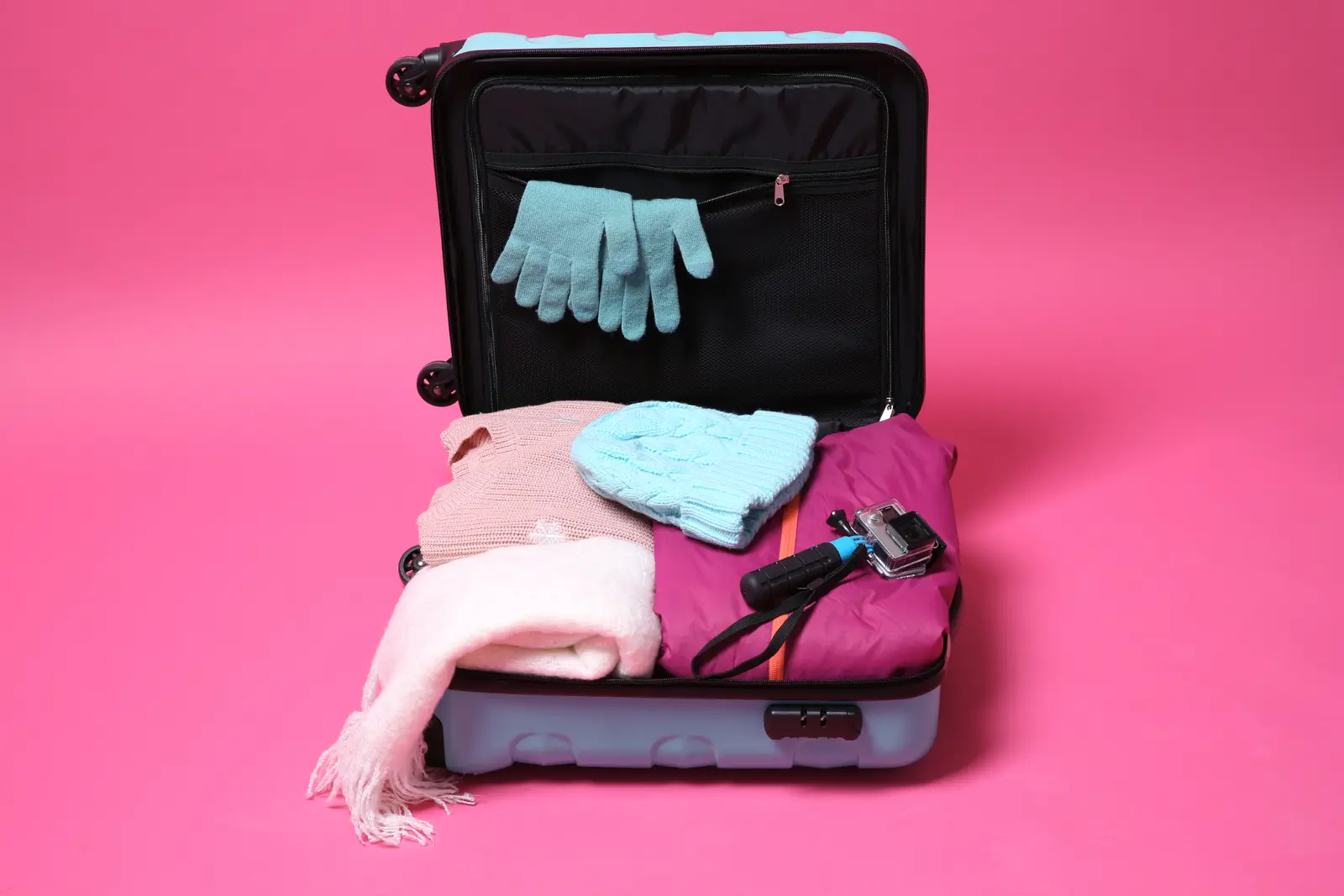
The packing list below is intended for ordinary winter city travel. It assumes you’ll mix and match outfits, rewear outer layers and sweaters, and have access to laundry on longer trips.
For very cold destinations, add the appropriate thermal clothing and accessories. If you won’t be able to do laundry during a 10- or 14-day trip, pack additional socks, underwear, and next-to-skin tops.
| Clothing | 7 Days | 10 Days | 14 Days |
|---|---|---|---|
| Winter coat | 1 | 1 | 1 |
| Sweaters or midlayers | 2–3 | 3 | 3–4 |
| Long-sleeved tops | 3–4 | 4–5 | 5–6 |
| Thermal tops, if needed | 1–2 | 2–3 | 2–3 |
| Trousers or jeans | 2–3 | 3 | 3–4 |
| Thermal leggings, if needed | 1–2 | 1–2 | 2 |
| Main walking shoes or boots | 1 pair | 1 pair | 1 pair |
| Optional second pair of shoes | 0–1 pair | 1 pair | 1 pair |
| Warm socks | 4–7 pairs | 6–9 pairs | 9–11 pairs (or more
up to 1/day, depending on your style) |
| Underwear | 7 sets | 10 sets | 14 sets |
| Sleepwear | 1 set | 1–2 sets | 1–2 sets |
| Hat, scarf, and gloves, if needed | 1 each | 1 each | 1 each |
For a seven-day vacation, you’ll probably be able to create enough combinations without packing many separate outfits.
For 10 or 14 days, laundry can help keep your suitcase manageable. If you’re packing light, choose clothes that dry reasonably quickly and can be worn several times.
You can also bring one dress or an additional smart-casual outfit if you have special plans. Adjust the quantities according to your preferences and activities.
Can You Pack for Two Weeks in Europe in Winter With Carry-On Luggage Only?
Yes, it’s possible, especially if you’re visiting cities with moderate winter weather and have access to laundry. Wear your main coat and heaviest shoes on the plane, and pack interchangeable clothing. Two or three sweaters, several tops, a few pairs of trousers, and suitable accessories can give you enough outfit combinations for a longer trip.
For freezing destinations, you may need bulkier clothing and insulated footwear, so carry-on-only travel can become more difficult. Check your airline’s baggage restrictions before deciding how much to bring. Cabin bag allowances vary by airline and fare, and some smaller bags won’t accommodate a full winter wardrobe.
What to Wear in Europe in Winter by Temperature
The temperature can help you decide how many layers to wear, but also check the wind, precipitation, and how long you’ll spend outside.
The combinations below are suitable starting points for everyday city sightseeing. Adjust them according to your comfort, the activities you’ve planned, and the local weather.
| Temperature | Suggested Winter Outfit |
|---|---|
| 10–15°C (50–59°F) | Long-sleeved top, sweater, medium jacket, comfortable trousers, closed walking shoes. |
| 5–10°C (41–50°F) | Long-sleeved top, warm sweater, suitable coat, trousers, comfortable shoes, scarf if needed. |
| 0–5°C (32–41°F) | Warm top or thermal layer, sweater or fleece, insulated coat, trousers, warm socks, gloves, and weather-appropriate shoes. |
| -5–0°C (23–32°F) | Thermal base layer, warm midlayer, insulated coat, suitable trousers, hat, gloves, scarf, and warm footwear. |
| Below -5°C (below 23°F) | Insulating thermal layers, substantial winter outerwear, warm trousers or thermal leggings, insulated boots, hat, gloves or mittens, and neck protection. |
A dry day at 5°C can feel quite different from a rainy, windy day at the same temperature. Standing still outdoors for an hour will also affect your comfort. As always, I am recommending you to check the forecast close to departure, then adjust your outfits for the coldest expected conditions.
What to Wear on the Plane to Europe in Winter
If you’re flying to Europe from the US or another distant destination, choose comfortable travel clothes that you can adjust during the flight.
I’d wear comfortable trousers, a long-sleeved top, and a sweater or cardigan. Keep your coat accessible for arrival, especially if you’re landing somewhere cold. Wearing your bulkiest footwear can save luggage space, but make sure the shoes are comfortable for the flight and airport transfers. You don’t have to keep a heavy winter coat on throughout the journey.
Carry your gloves, scarf, and hat somewhere accessible if you’re arriving in freezing weather. You may need them immediately after leaving the airport. If you have checked luggage, keep a few essentials in your cabin bag in case it arrives late. Check the recommended carry-on essentials, including medication, chargers, and items you may need during the journey.
Enjoy Your Winter Vacation in Europe
One thing I love about Europe is how different winter can be from one destination to another. You can visit Christmas markets in historic squares, admire snow-covered parks, explore beautiful museums, enjoy warm thermal baths, or spend a few days somewhere with mild winter sunshine.
Choose your clothes according to the destinations and activities you’ve planned. Check the weather, pack shoes you can walk in comfortably, and make sure you have enough protection for the coldest part of your trip.
And don’t worry about having a different outfit for every day. A few well-chosen clothes can give you plenty of combinations while leaving room in your suitcase for the things you actually want to bring home.
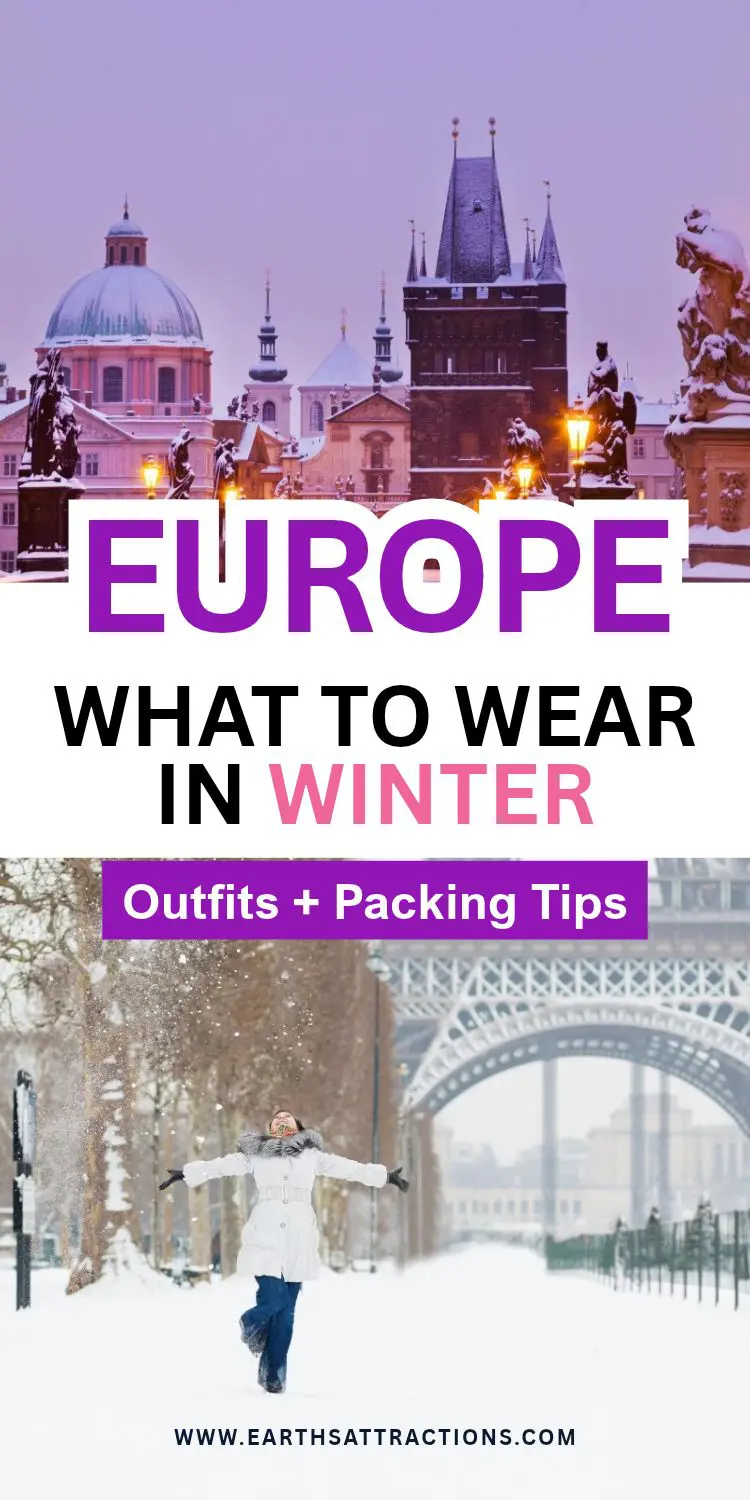
Frequently Asked Questions About What to Wear in Europe in Winter
What should tourists wear in Europe in winter?
For most winter city trips in Europe, pack a suitable coat, sweaters, long-sleeved tops, comfortable trousers, and weather-appropriate walking shoes. Add thermal underwear, warm socks, gloves, a scarf, and a hat for colder destinations. Your exact clothing choices should depend on the forecast and the activities you’ve planned.
Do you need a heavy winter coat in Europe?
Not everywhere. A medium-weight coat may be enough for mild winter days in Rome, Lisbon, or Barcelona. In colder destinations, especially when temperatures fall below freezing, a properly insulated coat may be necessary. Check the wind, rain, and expected time outdoors when choosing your jacket.
Should I bring a wool coat or a puffer jacket to Europe?
A wool coat can work well for cool city sightseeing, particularly when worn with a warm sweater. A puffer jacket or insulated parka is generally more useful in freezing conditions or for long periods outdoors. Check the garment’s insulation, wind resistance, and weather protection before deciding.
Can I wear jeans in Europe in winter?
Yes, jeans are suitable for many European winter vacations. You can wear thermal leggings underneath in colder conditions. If heavy rain or snow is expected, trousers that dry more quickly may be more comfortable because wet denim can stay damp for a long time.
Can you wear sneakers in Europe in December?
Yes, sneakers can be suitable for dry, mild December weather, particularly in Southern European cities. For rain, slush, snow, or icy conditions, choose footwear with appropriate weather protection and traction. Comfortable walking shoes are important if you plan to spend several hours sightseeing.
Do I need thermal underwear for Europe in winter?
Thermal underwear is useful for freezing temperatures, Northern European destinations, mountain excursions, and long outdoor activities. You may not need it during a mild winter city break. Lightweight thermal tops are a flexible option if you’re sensitive to cold or visiting several destinations with different climates.
What should I wear in Europe in January?
For colder Central and Northern European cities, pack an insulated coat, sweaters, thermal layers if needed, warm trousers, and suitable footwear. Gloves, a scarf, and a hat are useful in freezing conditions. In milder Southern European destinations, ordinary winter layers and a medium-weight coat may be sufficient.
What should I pack for Europe in February?
For a February trip to Europe, bring long-sleeved tops, sweaters, trousers, a suitable coat, and comfortable walking shoes. Add thermal underwear, insulated footwear, and warm accessories if you’re visiting colder destinations. For milder cities, lighter outerwear may work during the day, although evenings can still be chilly.
What shoes are best for walking in Europe in winter?
Choose comfortable walking shoes suited to the weather and surfaces you’ll encounter. Waterproof or water-resistant shoes are useful in rainy cities, while insulated winter boots may be necessary for snow and freezing temperatures. Check the soles for suitable grip, particularly if ice is expected.
Do I need snow boots for European cities in winter?
Not necessarily. Many European cities have winter days without snow, and comfortable walking shoes or ordinary boots may be sufficient. Snow boots become more useful when you’re expecting persistent snow, slush, or freezing conditions. For icy streets, choose footwear with suitable traction.
How many outfits should I pack for one week in Europe in winter?
For a seven-day winter city trip, two or three sweaters, three or four tops, two or three pairs of trousers, one coat, and suitable walking shoes can provide several outfit combinations. Add enough underwear and socks for your stay, plus thermal layers and accessories when the weather requires them.
Can I pack for 14 days in Europe in winter with only a carry-on?
Yes, if you pack versatile clothing, rewear sweaters and trousers, and plan laundry during your trip. Wear bulky outerwear during travel when practical and limit additional footwear. Very cold destinations may require more substantial clothing, so check whether a carry-on will accommodate everything you genuinely need.
How can I dress warmly in Europe without looking bulky?
Combine a lightweight thermal top with a warm sweater or fleece and a suitable insulated coat. Choose layers that fit comfortably together and allow you to move freely. A scarf, gloves, and hat can provide extra warmth without requiring another heavy jacket.
What should I wear to European Christmas markets?
For colder Christmas markets, wear a warm base layer, sweater, insulated coat, comfortable trousers, warm socks, and weather-appropriate boots. Add gloves or mittens, a scarf, and a hat. Check the evening temperature because you may spend several hours outdoors, including periods when you’re standing still.
What should I wear to see the Northern Lights in Europe?
Northern Lights excursions can involve prolonged exposure to very cold nighttime conditions. You’ll generally need thermal layers, insulated outerwear, warm trousers, insulated boots, and proper protection for your hands, head, and neck. Check your tour operator’s clothing recommendations and whether thermal suits or other equipment are provided.
Do European churches have winter dress codes?
Some churches and religious sites require covered shoulders and knees year-round. Additional rules may apply at individual locations. Winter trousers, sweaters, and coats usually make compliance easier, but check the official visitor requirements before your visit.
What should I wear on a long-haul flight to Europe in winter?
Wear comfortable trousers, a long-sleeved top, and a sweater or cardigan that you can remove during the flight. Keep your winter coat and accessories accessible for arrival. If you’re packing light, wear your bulkiest shoes to save luggage space, provided they’re comfortable for travel.
More amazing articles for you:

How to Explore Rishikesh: The Yoga Way

Top things to do in Houston for a first time visit

Top 10 famous cities to see in Italy

A local's guide to Kansas City

Insider's Guide to Toronto

150 City Nicknames Trivia Questions and Answers (Easy to Hard) - How Many Can You Get Right?

Munich Rathaus-Glockenspiel: Show Times, Best Viewing Spot and What to Expect

Compelling reasons to visit Naples, Italy this year

Violeta-Loredana Pascal is a communications expert, business mentor, and the founder of Earth’s Attractions and PRwave INTERNATIONAL. A pioneer in the Romanian digital PR landscape since 2005, she holds a degree in Communication and Social Sciences from SNSPA Bucharest. Violeta is a senior trainer at AcademiadeAfaceri.ro, where she leverages over 20 years of experience to teach professional courses in PR strategy and workplace productivity. By blending high-level business consulting with a passion for holistic travel and wellness, she empowers solopreneurs to overcome procrastination, build profitable brands, and design a life of purposeful adventure.