
I love traveling in Europe in the fall. The hottest summer weather is usually behind us, walking around cities is more comfortable, and many destinations have fewer crowds than during peak summer. I’ve taken autumn trips to the seaside, cities and mountains, and even my honeymoon was in the mountains in October.
Living in Europe has also taught me why a generic Europe fall packing list can go wrong very quickly. In my own country, I can be perfectly comfortable in a T-shirt and trousers in one city while someone elsewhere needs a jacket on the same day. Across Europe, the differences are much greater.
September in Rome isn’t October in Vienna, and neither needs the same clothes as Amsterdam in November. Early September and late September can feel different too, especially once you move between regions.
My husband travels around Europe for work even more often than I do, so between his business trips and our vacations, we’ve packed for warm Mediterranean cities, Central European weather, mountain trips, and colder northern destinations. The main lesson is simple: there is no universal packing list for Europe in fall.
Your exact dates, destination, altitude, planned activities and forecast should decide what goes in the suitcase. This guide covers what to pack for Europe in September, October and November, what to wear in different parts of Europe, how many clothes you really need, which jacket and shoes to choose, how to manage several climates on one trip and how to pack lighter without leaving behind something you’ll actually need.
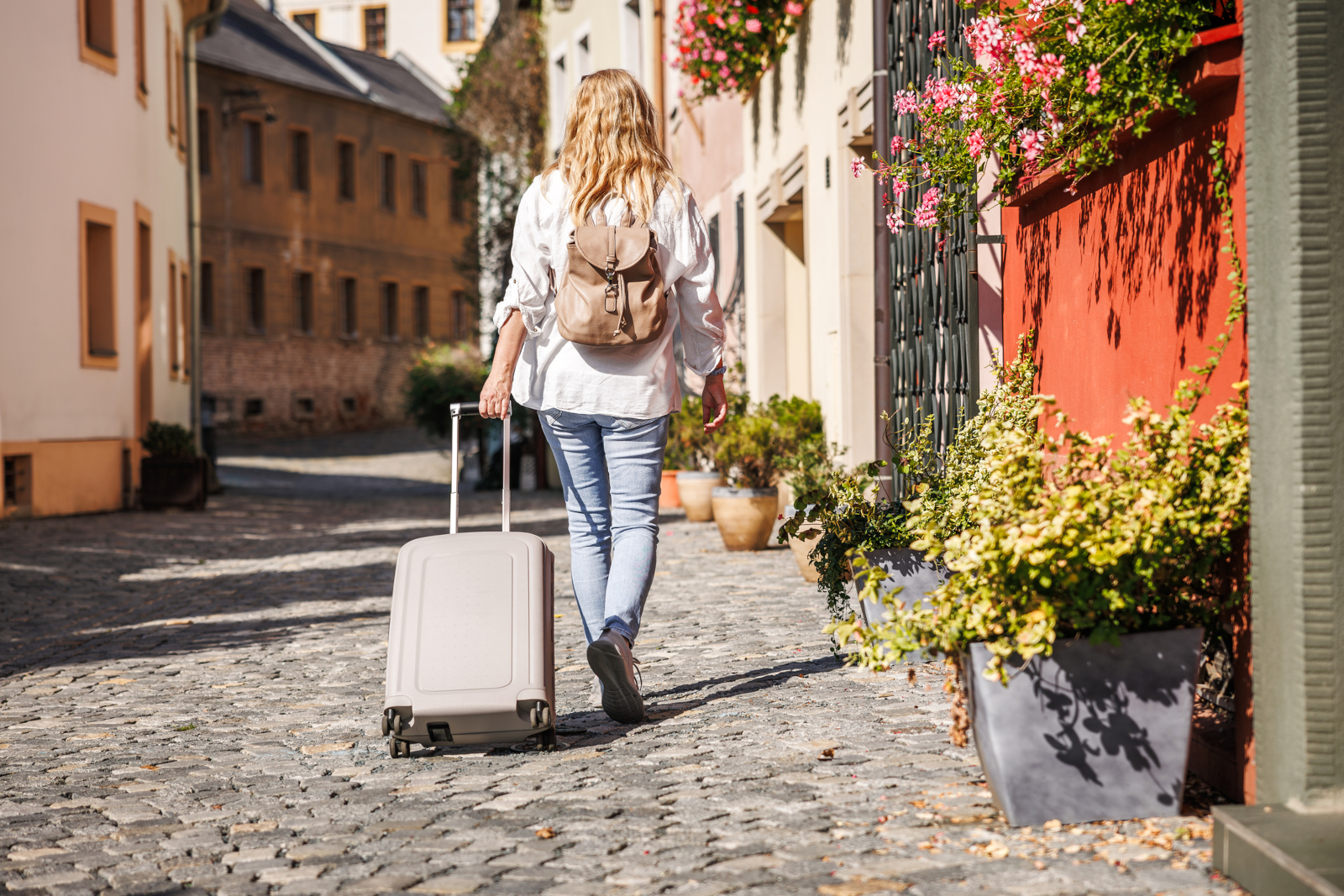
ID 306832702 ©Zbynek Pospisil | Dreamstime.com
What to Pack for Europe in September
September is the month when a single Europe packing list makes the least sense. Southern destinations can still feel like summer, while parts of Central and Northern Europe may already require proper autumn layers.
Southern and Mediterranean Europe in September
For destinations such as Rome, Sicily, Lisbon, Athens, the Greek islands, Malta and much of coastal Spain, keep a good part of your summer wardrobe. T-shirts, breathable tops, lightweight trousers, dresses or skirts, comfortable sneakers and sandals can all still be useful.
Add one cardigan, light sweater or lightweight jacket for evenings and cooler days. A swimsuit still belongs in the suitcase if you’re heading to the Mediterranean, staying somewhere with a pool or visiting a spa.
Sun protection shouldn’t disappear just because the calendar says September. You’ll still spend hours outside, and sunny days remain common in many southern destinations.
Italy alone covers several very different climates, so the exact places in Italy on your itinerary should guide what you bring rather than the country name alone.
If churches or other religious sites are part of your plans, check their dress requirements before leaving. They usually require shoulders, knees or both to be covered, even when it’s warm outside.
Western and Central Europe in September
For places such as Paris, Vienna, Munich, Prague and Budapest, clothes you can add and remove during the day work best. A short-sleeve top under a cardigan or light sweater gives you more flexibility than filling the suitcase with heavy autumn clothes.
I wouldn’t bring several bulky sweaters. One or two lighter midlayers are easier to combine and easier to carry once the afternoon warms up.
We walk a lot on our European trips, and September is still a month when footwear needs to survive long sightseeing days. A Munich itinerary, for example, can easily involve hours on foot between attractions, museums and neighborhoods.
Northern Europe in September
For Scandinavia, the Baltic countries, Scotland and other cooler destinations, shift the packing list toward long sleeves, warmer midlayers and an outer layer that can handle wind and rain.
Sandals become far less useful; closed walking shoes and warmer socks usually earn more suitcase space. A city like Copenhagen requires a very different September wardrobe than a Mediterranean island. Long periods outside should influence your choices more than what you’ll wear inside restaurants or museums, especially if your Copenhagen plans include plenty of walking.
Early September vs Late September
Your exact dates are important. Early September can extend summer in many areas, while the final week of the month can bring cooler mornings, colder evenings, and more unsettled weather.
I wouldn’t pack a winter wardrobe for late September simply because autumn has officially begun. Check the actual forecast close to departure and add warmth only where you need it.
September Packing Verdict
| Item | September advice |
|---|---|
| Short-sleeve tops | Yes, especially in Southern and Central Europe |
| Long sleeves | Bring some, with more for northern destinations |
| Sweater or cardigan | Usually 1-2 |
| Warm winter coat | Usually no for city trips; check northern and mountain destinations |
| Rain protection | Worth bringing |
| Sneakers | Yes |
| Boots | Usually optional |
| Sandals | Useful for warm southern destinations |
| Swimsuit | Useful for beach, island, pool, spa and thermal-bath trips |
What to Pack for Europe in October

ID 118789667 ©Lordn7 | Dreamstime.com
October is the hardest fall month to pack for because it sits right in the transition between mild autumn days and genuinely cold weather.
I love October trips, but I know how quickly conditions can change. Our honeymoon was in the mountains in October, where we needed proper warm layers, while a trip to southern Italy, Greece, or Spain at the same time could require much lighter clothes.
Southern and Mediterranean Europe in October
In Rome, Athens, southern Spain, Malta and many Mediterranean areas, short sleeves may still be useful during the day. The safest approach is a transitional wardrobe: short and long sleeves, trousers, one or two midlayers, closed walking shoes and a light or medium jacket.
If Rome is on your itinerary, comfortable shoes deserve more attention than whether every outfit looks different. You can spend hours moving between neighborhoods, archaeological sites and piazzas.
Lisbon creates a similar footwear problem for another reason: hills and cobbled streets. Good grip and comfort become more useful than another pair of shoes packed for variety.
Western and Central Europe in October
October in Paris, Vienna, Munich, Budapest, Prague or Amsterdam calls for real layering. Bring long-sleeve tops, one or two sweaters or similar midlayers, trousers and an outer layer that fits comfortably over the clothes underneath.
Early October can still produce mild afternoons. Later in the month, colder mornings and evenings become more likely, so checking the forecast shortly before leaving is more useful than relying on monthly averages.
Amsterdam is a good reminder to look at wind and rain as well as temperature. A mild day can feel very different once you’re walking beside canals in damp, windy weather.
Northern Europe in October
For Scandinavia, Scotland, the Baltic countries and other colder areas, I’d pack as though autumn has properly arrived. Warm midlayers, a weather-resistant outer layer, closed shoes and warm socks become more important.
A scarf takes little room and can be useful when temperatures drop in the evening or the wind picks up.
Do You Need a Coat in Europe in October?
Usually yes, but the type of coat depends on where you’re going. A light jacket may be enough for Rome or Athens, while Copenhagen, Tallinn or a mountain destination can require something much warmer.
Look at the coldest temperatures you’ll encounter, not only the daytime high. Long evenings outdoors, wind and rain can change what you’ll want to wear too.
Do You Need Thermal Underwear in Europe in October?
For most October city trips in Southern and much of Western Europe, probably not. Thermals can be useful later in the month in colder parts of Central and Northern Europe, for mountain trips or if you’ll spend a long time outdoors and you get cold easily.
Thin thermals make more sense when they replace bulk. If you’re packing them in addition to several heavy sweaters and a large coat, they won’t save much space.
Sneakers or Waterproof Shoes in October?
Comfortable sneakers are still my first choice for many dry city trips. Water-resistant or waterproof footwear becomes more useful when the forecast is consistently wet, your itinerary includes muddy parks or paths, or you’re going somewhere where damp autumn weather is common.
Whatever you choose, check the sole. Wet smooth paving, old stone and fallen leaves can all become slippery.
October Packing Verdict
| Item | October advice |
|---|---|
| Short-sleeve tops | Still useful, especially in the south and for layering |
| Long sleeves | Yes |
| Sweater or cardigan | Usually 1-2 |
| Jacket or coat | Yes; weight depends on destination |
| Rain protection | Yes |
| Walking sneakers | Yes if conditions suit them |
| Water-resistant shoes or boots | Useful for wetter and colder trips |
| Scarf | Useful, especially in Central and Northern Europe |
| Thermal layer | Usually optional; more useful for colder or outdoor-heavy trips |
What to Pack for Europe in November

ID 71979695 ©Anyaberkut | Dreamstime.com
By November, a fall packing list can start looking like an early-winter packing list in Central and Northern Europe. Southern Europe remains milder, but you’ll still need more layers than you would in September.
Southern Europe in November
For much of the Mediterranean, start with trousers, long-sleeve tops, a sweater and a medium outer layer. A T-shirt can still work under other layers and may be comfortable during a mild afternoon.
You usually don’t need the same heavy coat you’d take to Scandinavia or a cold Central European city. Rain and wind deserve more attention, though, so don’t look at temperature alone.
Western and Central Europe in November
Paris, Vienna, Munich, Prague, Budapest and Amsterdam are firmly in warm-layer territory. A warm coat, long sleeves, a sweater, comfortable closed shoes, and warmer socks make a better base than trying to build several outfits around different jackets.
Budapest is a good November example because the same day can include exposed walks beside the Danube and time inside thermal baths. If baths or a hotel spa are on your itinerary, pack your swimsuit even if your suitcase includes a winter coat.
Northern Europe in November
Warm outerwear becomes much more important. Depending on your destination and forecast, gloves, a scarf, hat and thermal base layer may all be useful.
Your own cold tolerance counts too. Someone who’s comfortable at 8°C may dress very differently from someone who already feels cold at 15°C.
Do You Need Thermals in Europe in November?
For many Southern European city trips, probably not. They become far more useful in colder destinations, mountains and itineraries where you’ll be outdoors for long periods.
A thin thermal layer under clothes you’re already bringing usually works better than adding another bulky sweater.
Packing for Christmas Markets in Late November
Some European Christmas markets open in November, and how you spend your day changes what you’ll want to wear. Walking through a city keeps you warmer than standing outside after sunset for a couple of hours.
Warm socks, gloves, a scarf, and a coat that keeps you comfortable while standing still become much more useful. Check which Christmas markets in Europe are actually open during your dates before packing around the idea.
November Packing Verdict
| Item | November advice |
|---|---|
| Short-sleeve tops | Useful mainly as base layers or in warmer southern destinations |
| Long sleeves | Yes |
| Sweaters or midlayers | Usually 1-2 |
| Warm coat | Often needed in Central and Northern Europe |
| Water-resistant footwear | Very useful for wet destinations |
| Scarf, gloves and hat | Depends on destination and cold tolerance |
| Thermal layer | Useful for colder areas, mountains and long outdoor evenings |
| Swimsuit | Pack one for thermal baths, spas or hotel pools |
How Many Clothes Do You Actually Need for Europe in Fall?
You don’t need one complete outfit for every day. Tops can be combined with the same trousers, sweaters can be reworn and longer trips become much easier once you plan a laundry stop.
I prefer building a small rotation around pieces that work together. It leaves room for weather-specific items instead of filling the suitcase with clothes I’ll wear once.
| Item | 7-day trip | 10-day trip | 14+ days with laundry |
|---|---|---|---|
| Tops | 4-5 | 5-6 | 5-6 |
| Bottoms | 2-3 | 3-4 | 3 |
| Sweaters or midlayers | 1-2 | 2 | 2 |
| Main outer layer | 1 | 1 | 1 |
| Underwear | 7 | 10 | 7-8 |
| Socks | 5-7 pairs | 10 pairs | 6-8 pairs |
| Main shoes | 2 pairs | 2 pairs | 2 pairs |
Adjust those numbers to your habits, your activities and whether you can do laundry. Someone attending a business dinner or formal event will have different needs from someone spending ten days sightseeing.
For a one-week trip, a repeatable packing process makes final prep faster because you choose the essentials first instead of adding clothes until the suitcase is full.
Which Jacket or Coat Should You Pack for Europe in Fall?
Outerwear can take up more suitcase space than almost anything else, so choose it after you’ve checked your itinerary, not before.
| Trip conditions | Outerwear that usually makes sense |
|---|---|
| Warm September in Southern Europe | Cardigan, light jacket or very light rain layer |
| Mild city trip with occasional rain | Light waterproof or water-resistant jacket, trench or shell |
| Cool October in Central Europe | Medium jacket with room for a sweater underneath |
| Cold November city trip | Warmer insulated coat or another cold-weather outer layer |
| Wet and windy destination | Weatherproof hooded outer layer |
| Mountain itinerary | Clothing selected for the local elevation and forecast |
Do You Need Two Coats?
For most city trips, I would rather pack one useful outer layer and change what I wear underneath it. A T-shirt or base layer, long-sleeve top or sweater, and outer jacket give you several levels of warmth without taking up half the suitcase.
Two coats make more sense when your itinerary has genuinely different requirements, such as a warm Mediterranean stop followed by a cold Nordic destination, or a formal event where your sightseeing jacket isn’t suitable.
What Are the Best Shoes for Europe in Fall?
The best fall shoes for Europe are shoes you can comfortably walk in for hours and that suit the weather you’ll actually encounter. They don’t have to be boots simply because it’s autumn.
For many city trips, I pack comfortable walking shoes or sneakers as my main pair and choose the second pair for the destination. In wet or colder weather, that may be a water-resistant ankle boot. For a warm September trip, it may be sandals or another breathable shoe.
Cobblestones Change the Equation
Old European streets can be uneven even when they’re dry. Add rain, smooth stone or wet leaves and grip becomes more important.
I’ve walked enough historic cities to care much more about how shoes feel after several kilometers than how they look in the hotel mirror. Buda, for example, includes hills, cobblestones and a lot of time on your feet, which becomes obvious once you look at a full Buda itinerary.
Don’t Break In New Shoes During the Trip
New boots that feel comfortable for ten minutes at home can become painful after a full sightseeing day. Wear them before the trip and test them on longer walks.
I keep blister patches or simple bandages with me because even shoes I’ve worn before can start rubbing after a much longer day than usual.
How to Pack for Several European Climates on One Trip
A multi-country fall trip creates the hardest packing problem. Rome plus Vienna, Lisbon plus Amsterdam, or Athens plus Copenhagen can put several versions of autumn into one itinerary.
I use the coldest stop as the upper limit of the wardrobe, then build the warmer-weather outfits from the lighter pieces underneath. For colder stops, think in three removable layers: your normal top or base layer, a sweater or other midlayer, and the outer jacket or coat.
If Amsterdam requires a sweater and coat but Lisbon doesn’t, the T-shirts and trousers you wear in Portugal can become the base of the colder outfits later in the trip.
Avoid packing one complete wardrobe for the warm destination and another complete wardrobe for the cold one. You’ll duplicate too much.
The same approach works when combining cities and mountains. Pack normal city clothes, then add only the technical or warm pieces the mountain part of the trip genuinely requires.
Can You Pack Carry-On Only for Europe in Fall?
Yes. A 7-, 10- or even 14-day Europe fall packing list can fit into carry-on luggage if you rewear clothes, plan laundry and avoid filling the bag with bulky outerwear and extra shoes.
Fall is harder than summer because sweaters, coats and boots take up space quickly. If my bag were too full, I’d remove the third pair of shoes first, then duplicate sweaters, oversized toiletries and clothes packed for unlikely weather.
Check Your Airline Before You Pack
European airlines don’t share one universal cabin-bag size or weight allowance. Dimensions, weight limits, personal-item rules and fees depend on the airline and fare you’ve booked.
Check the operating airline’s current carry-on luggage size rules before you choose the suitcase, and measure the bag including its wheels and handles.
Use Space Efficiently Without Confusing Volume With Weight
Compression cubes and other space-saving packing techniques can reduce volume, especially for soft clothing, but they don’t reduce the suitcase’s weight.
If your airline has a strict weight allowance, squeezing one more sweater into the same space can still leave you over the limit.
Wear the Bulkiest Pieces in Transit
Your coat, heavier shoes and bulkiest sweater don’t have to take up suitcase space on travel day. Wear them when practical and keep lighter pieces in the bag.
Once you arrive, historic centers can create another luggage problem. Stairs, older hotels and cobblestones can make a heavy rolling suitcase less convenient than expected, so it’s worth understanding the reality behind stories about rolling suitcases in Europe before arriving with an enormous case.
Keep Flight Essentials Separate
Your travel-day bag shouldn’t require you to unpack your suitcase at the airport. Documents, medication, chargers, a layer, water bottle and the other carry-on essentials you need in transit should be easy to reach.
If you’re bringing a power bank, check your airline’s current battery rules before flying, especially where it must be stored and whether onboard use is allowed.
Umbrella, Rain Jacket or Both?
There isn’t one correct answer for every fall trip. Your destination, wind, rain forecast and the amount of time you’ll spend outdoors should decide.
| Conditions | What usually works best |
|---|---|
| Warm destination with occasional showers | Compact umbrella or very light rain layer |
| Wet and windy destination | Hooded weatherproof jacket |
| Long outdoor sightseeing days | Rain jacket or shell that leaves your hands free |
| Mostly museums, restaurants and public transport | Compact umbrella may be enough |
| Mountain activities | Proper weather protection suitable for the activity |
I learned the umbrella lesson on my first trip to Paris. Rain started on our first day and I hadn’t packed one, so I bought an umbrella near the hotel. I still have my “Paris umbrella,” but I’d rather use that suitcase space intentionally next time than buy another one because I forgot it.
Fall Travel Essentials People Often Forget
Clothing gets most of the attention when people decide what to pack for Europe in fall, yet small forgotten items can be more annoying to replace.
I keep sunglasses even on autumn trips because a cool day can still be very bright. Lip balm and hand cream become more useful as the air gets colder. Medication, chargers, an appropriate plug adapter, a reusable bottle and a small power bank are useful on long sightseeing days.
A day bag should have enough room for the layer you remove at lunchtime. It sounds minor until you’re carrying a sweater and jacket in your hands for three hours. If rain is likely, having somewhere to put a damp umbrella without soaking everything else is useful too.
Pack a swimsuit when your hotel has a pool or spa, when you’re visiting thermal baths, or when September beach weather is still realistic. It’s easy to mentally file swimwear under “summer” and forget it on a cold-weather spa trip.
Chargers, medication and other forgotten travel items are among the easiest things to leave behind, so I check them before closing the suitcase.
What NOT to Pack for Europe in Fall
Several Heavy Sweaters
Bulky knits take up a lot of room and give you fewer temperature combinations. One or two thinner midlayers usually offer more flexibility than several oversized sweaters.
Multiple Coats You Probably Won’t Wear
Choose one main outer layer whenever your itinerary allows it. Add warmth underneath rather than filling the suitcase with different jackets for every possible temperature.
Brand-New Shoes
Wear them at home first. A Europe trip can easily involve much more walking than your normal routine.
Shoes With Smooth, Slippery Soles
A dry floor at home won’t tell you how they’ll behave on wet paving, stone or fallen leaves. Check the tread before packing them for a fall walking trip.
An Outfit for Every Day
Rewear bottoms and sweaters. If you’re traveling for two weeks, one planned laundry stop uses far less suitcase space than fourteen complete outfits.
Clothes for Weather You Aren’t Likely to Encounter
Don’t pack a Scandinavian November wardrobe for southern Spain in early September just in case. The reverse can be equally uncomfortable: a suitcase filled only with summer clothes won’t help much during a cold Central European trip later in fall.
Too Many Shoes
Two pairs cover most city trips. A third pair makes sense when your activities genuinely require something different, such as hiking, a formal event or beach footwear.
Full-Size Toiletries You Won’t Finish
Decant what you need or use smaller containers. Toiletries become surprisingly heavy when every bottle is full.
Check These Things Before You Close Your Suitcase
Check every destination separately. A multi-city forecast tells you far more than looking only at the weather for the first stop.
Look at mornings and evenings, not only daytime highs. Your coldest moment may be when you’re walking to breakfast or returning to the hotel after dinner.
Check rain and wind. Mild temperatures can feel much colder during a wet or windy day.
Check your activities. Museum days, coastal walks, mountain excursions and hours at a Christmas market don’t require the same clothes.
Check laundry options. One planned wash can remove several days’ worth of clothing from a longer packing list.
Check your airline’s current baggage rules. Don’t pack around what another carrier allowed on a previous trip.
I do this final review close to departure rather than relying only on what the weather normally does that month. My night-before-flight checklist helps with the last practical checks once the clothes are packed.
Europe Fall Packing Guide at a Glance
Once you’ve worked through your month, destination and activities, this table gives you a final overview of how the packing level changes across Europe from September to November.
| Destination type | September | October | November |
|---|---|---|---|
| Mediterranean and much of Southern Europe | Light clothing, short sleeves, walking shoes, one light layer | Light and medium layers, closed shoes, light jacket, rain option | Long sleeves, sweater, medium jacket, closed shoes, rain protection |
| Western and Atlantic Europe | Light layers, sweater, light weather-resistant outer layer | Long sleeves, warmer midlayer, jacket, rain protection | Warm layers, warmer coat, weather-resistant footwear |
| Central Europe | Short and long sleeves, sweater, light jacket | Layers, medium jacket, closed shoes, scarf optional | Warm coat, sweater, closed shoes or boots, scarf and possibly gloves |
| Northern Europe, Scandinavia and Baltic destinations | Long sleeves, sweaters, weatherproof outer layer | Warm layers, warmer coat, rain and wind protection | Cold-weather clothing, insulated outerwear, warm accessories |
| Alps and mountain destinations | Check elevation and the local forecast separately. Mountain conditions can be very different from the nearby city. | ||
Complete Europe Fall Packing Checklist
Use this as a final check rather than an instruction to bring every item. Your month, destination and itinerary decide which optional pieces deserve space.
| Category | Item | When to pack it |
|---|---|---|
| Clothing | Short-sleeve tops | September, Southern Europe and layering |
| Clothing | Long-sleeve tops | Most fall trips |
| Clothing | Sweater, cardigan or midlayer | Almost every fall trip |
| Clothing | Trousers, jeans or other preferred bottoms | Most trips |
| Outerwear | Light jacket | Warmer September and October trips |
| Outerwear | Warm coat | Cold October trips and many November destinations |
| Rain | Umbrella | City trips with manageable rain and wind |
| Rain | Weatherproof jacket | Wet, windy or outdoor-heavy itineraries |
| Shoes | Comfortable walking shoes | Every sightseeing trip |
| Shoes | Water-resistant shoes or boots | Wet and cold destinations |
| Accessories | Scarf | Cooler October and November trips |
| Accessories | Gloves and hat | Cold November, Northern Europe and mountains |
| Warmth | Thermal layer | Cold destinations and long periods outside |
| Sun | Sunglasses and sun protection | Especially September and Southern Europe |
| Optional | Swimsuit | Beaches, spas, pools and thermal baths |
| Health | Medication and blister care | Every trip as needed |
| Tech | Phone, cables, adapter and power bank | As required for your devices and destination |
| Day bag | Bag with room for removed layers | Especially useful during changeable weather |
Conclusion: Pack for Your Europe Trip, Not for a Season Label
The biggest packing mistake is treating September, October and November as one season with one wardrobe.
A September beach vacation, an October Central European city break and a November Christmas-market trip require different clothes. Your destination, exact dates, altitude, activities and the latest forecast tell you far more than the word “fall.”
I enjoy this season because Europe offers so many different experiences at once. You can still find warmth in the south, walk through cities surrounded by autumn colors farther north, spend time in the mountains or start seeing Christmas markets by late November.
Pack pieces you can combine, prioritize comfortable shoes, choose outerwear for the coldest realistic part of your itinerary and make the final adjustments after checking the forecast. You’ll carry less and have far more useful clothes once you arrive.
Frequently Asked Questions About Packing for Europe in Fall
What should I pack for Europe in September?
Pack a mix of warm-weather clothes and light layers. Southern and Mediterranean destinations may still require T-shirts, sandals and swimwear, while Central and Northern Europe usually call for long sleeves, a sweater and a light jacket. Late September can be noticeably cooler than early September.
What should I pack for Europe in October?
An October Europe packing list should include short and long sleeves for layering, trousers, one or two midlayers, comfortable closed shoes, rain protection and a jacket suited to your destination. Southern Europe may remain mild, while Central and Northern Europe can require much warmer outerwear.
What should I pack for Europe in November?
November generally requires warmer clothes: long sleeves, sweaters, closed footwear and a warmer coat across much of Central, Western and Northern Europe. Gloves, a scarf, a hat, or a thermal layer can be useful for colder destinations, mountain trips, and long evenings outdoors. Southern Europe usually requires lighter layers.
Do I need a coat in Europe in October?
Usually yes, although the type of coat varies. A light jacket may be enough for a warm Mediterranean trip, while northern destinations and colder Central European cities may require medium or warm outerwear, especially later in October.
Do I need thermal underwear for Europe in October?
Not for most October city trips in Southern and much of Western Europe. Thermals become more useful later in the month in colder parts of Central and Northern Europe, in the mountains, or when you’ll spend long periods outdoors.
Do I need a winter coat in Europe in November?
A winter or well-insulated coat is often useful in Central and Northern Europe in November, but it can be excessive in warmer Mediterranean destinations. Check the forecast for the coldest stop on your itinerary before choosing your outerwear.
Can I wear sneakers in Europe in fall?
Yes. Comfortable, broken-in sneakers work very well for many European city trips. Choose a pair with good grip and enough support for long walking days. If the forecast is very wet or cold, water-resistant shoes or boots may be more practical.
What shoes should I wear in Europe in fall?
Choose broken-in walking shoes with good grip. Sneakers work well for many city trips, while water-resistant shoes or ankle boots become more useful in colder or wetter weather. Smooth soles are a poor choice for wet cobblestones and uneven historic streets.
Do I need waterproof shoes in Europe in fall?
Not for every trip. They become useful when rain is frequent, your itinerary includes muddy parks or trails, or you’ll spend long periods outside. For a mostly dry city break, comfortable walking shoes may be more useful than heavy waterproof boots.
Can I pack for two weeks in Europe in a carry-on?
Yes. Build roughly a one-week clothing rotation, rewear outer layers and bottoms, limit shoes to two pairs when possible and plan at least one laundry stop. If you’re washing clothes during the trip, bring items you already know will dry reasonably quickly.
How many outfits do I need for 10 days in Europe?
You don’t need ten complete outfits. Around five or six tops, three bottoms, two midlayers, one main outer layer and two pairs of shoes can provide plenty of combinations for many 10-day fall trips. Adjust the quantities for formal events, sports and access to laundry.
What should I pack if I’m visiting both Southern and Northern Europe?
Build the wardrobe around the colder destination, then use the lighter pieces as standalone outfits in the south and as base layers farther north. One versatile coat, two midlayers and lighter tops usually work better than packing separate warm-weather and cold-weather wardrobes.
More amazing articles for you:
10 Awesome Things to Do in Wanaka, New Zealand
How To Choose A Honeymoon Destination You and Your Bride Will Love
Where to Stay in Vienna for First-Time Visitors: Best Districts by Budget, Trip Length, and Transpor...
A local's guide to Koh Samui, Thailand
Munich Itinerary for 5 Days: A Realistic Plan That Worked for Us
Most visited museums in the world
A Basic Itinerary for the “Banana Pancake Trail”
The Dos and Don'ts of Camping: A Beginners Guide

Violeta-Loredana Pascal is a communications expert, business mentor, and the founder of Earth’s Attractions and PRwave INTERNATIONAL. A pioneer in the Romanian digital PR landscape since 2005, she holds a degree in Communication and Social Sciences from SNSPA Bucharest. Violeta is a senior trainer at AcademiadeAfaceri.ro, where she leverages over 20 years of experience to teach professional courses in PR strategy and workplace productivity. By blending high-level business consulting with a passion for holistic travel and wellness, she empowers solopreneurs to overcome procrastination, build profitable brands, and design a life of purposeful adventure.