After spending our first day discovering the lively, flat streets of Pest, we were excited to explore the Buda side of Budapest, known for its hills, history, and panoramic views. Buda feels like a completely different world – quieter, greener, and more atmospheric, with cobblestone streets and centuries-old landmarks perched above the Danube.
We planned to explore Buda entirely on foot, starting from a peaceful park and slowly working our way uphill to the castle, museums, and famous lookout points. Along the way, we passed statues, fountains, and quiet corners that most visitors rush past – and while the day didn’t go exactly as expected (hint: rain and sore feet), it ended up being one of the most memorable parts of our trip.
This one day in Buda itinerary focuses on walking the Castle District and surrounding hills, mixing famous landmarks with quieter stops, photo spots, and real-world pacing.
Also, this walking itinerary is perfect if you only have one day in Buda and want to cover both the must-sees and some lesser-known gems. Below is exactly how our day unfolded – plus honest tips, route suggestions, and what I’d do differently next time.
A Quiet Start in Tabán Park: History in Miniature
This stop is part of a relaxed Buda walking itinerary that starts below the Castle District and gradually climbs uphill.
We started our day on the Buda side with a peaceful stroll through Tabán Park – a lush green space just below the Castle District. We hadn’t planned anything specific for this first stop, but it turned out to be one of those unexpected travel moments that quietly set the tone for the day. It was early, and the park was calm, with just a few joggers and locals passing through.
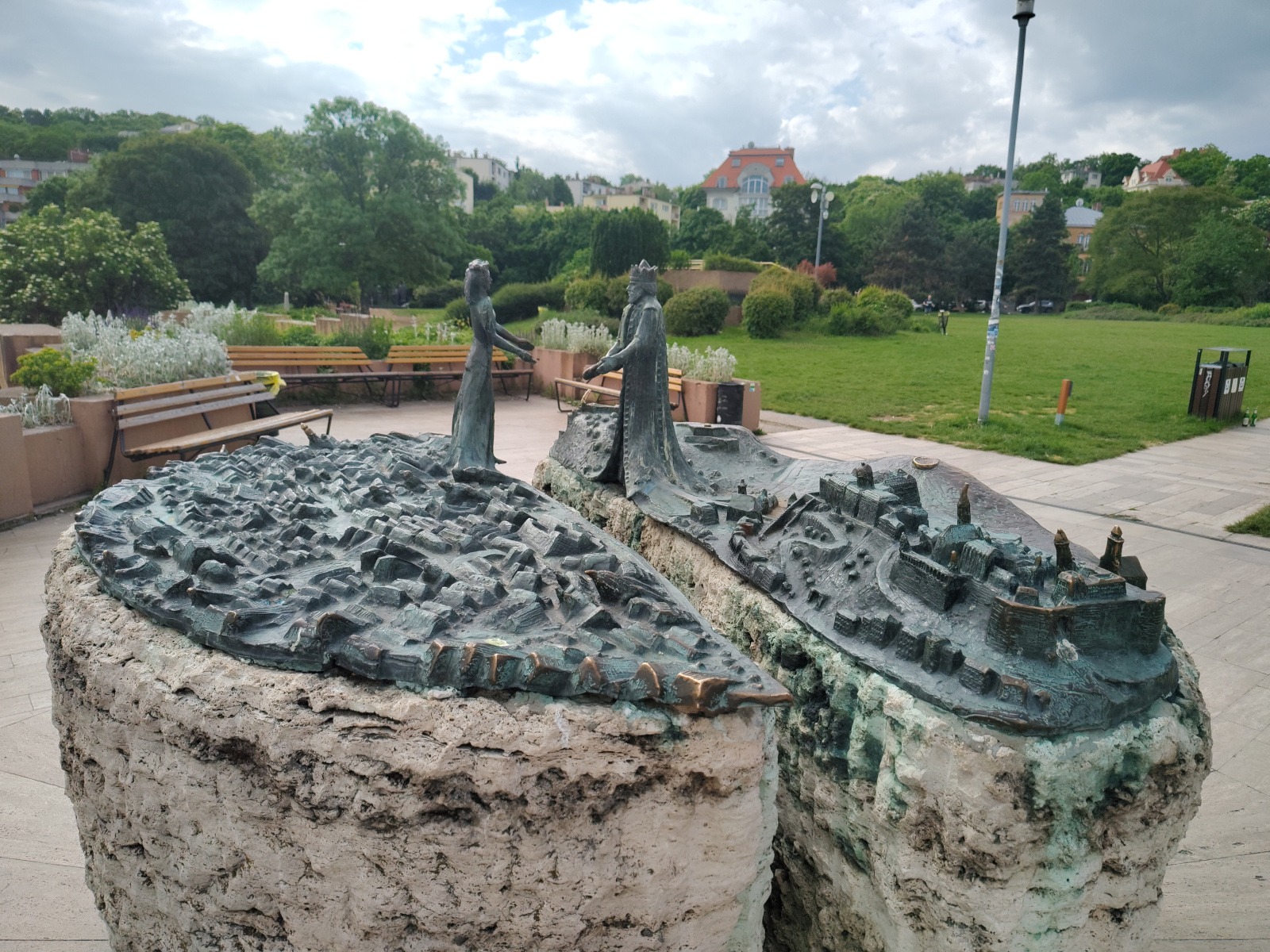
One of the first things we noticed was a bronze sculpture mounted on stone. At first glance, it looked like a decorative map, but as we got closer, we realized it was a miniature relief of the city, with two bronze figures reaching toward each other: The Prince of Buda and the Princess of Pest.
The sculpture shows the symbolic handshake between Buda and Pest, representing the unification of the two cities (along with Óbuda) into modern-day Budapest in 1873. I love when art tells a story like this – especially when it’s integrated into public spaces.
From there, we walked further into the park and started getting glimpses of the incredible city views. On one side, you can see the rooftops and rolling hills of Buda; on the other, Pest stretches out across the river, dotted with towers and bridges. The Elizabeth Bridge and Inner City Church of Our Lady stood out right away — and we took a moment to enjoy the panorama before heading uphill toward Buda Castle.
A Thoughtful Pause at the Garden of Philosophers
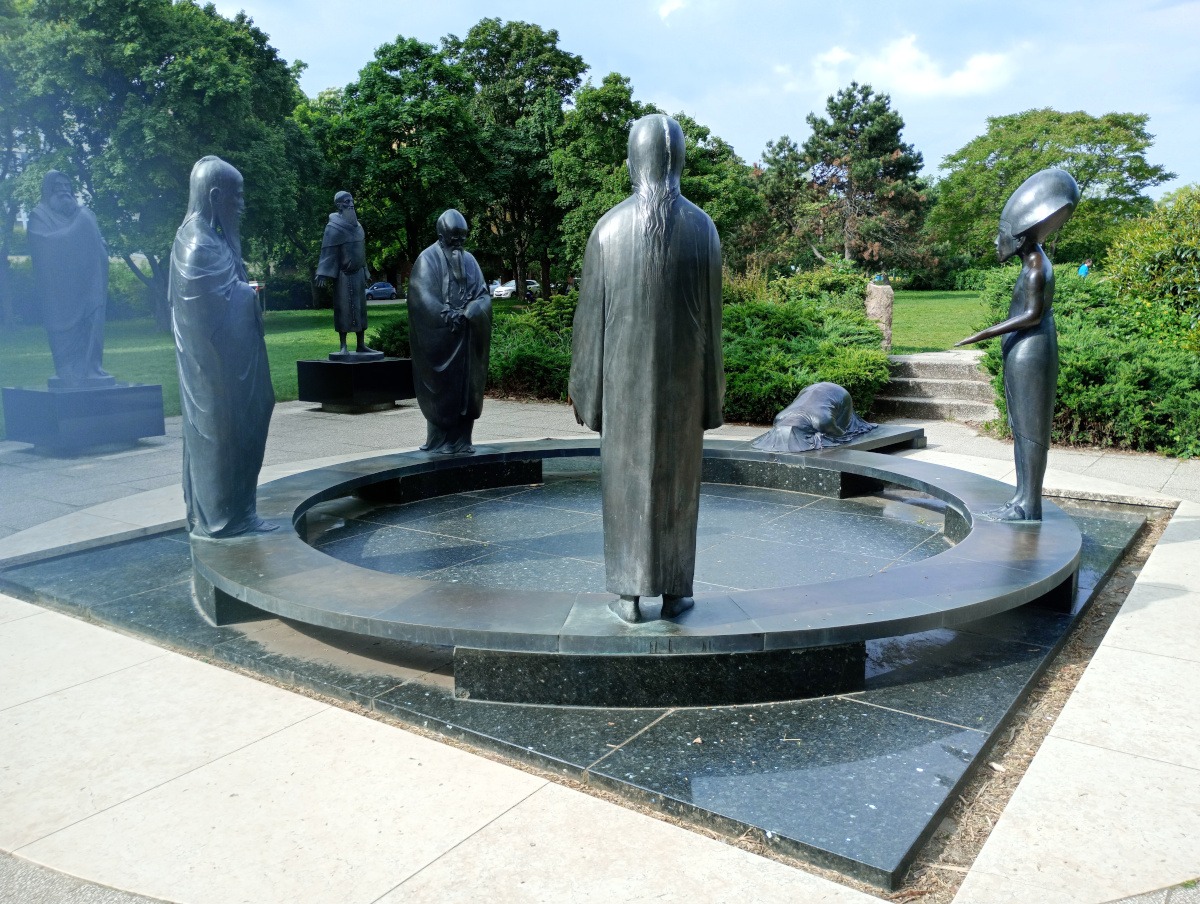
Just a short walk uphill from Tabán Park, we stumbled upon a place that felt completely different from everything around it – the Garden of Philosophers (Filozófusok kertje). We hadn’t planned this stop, but I’m glad we didn’t miss it. It’s quiet, uncrowded, and deeply thought-provoking. It was inaugurated in 2001, created by Nándor Wagner, a Hungarian sculptor who spent much of his life in Japan.
The centerpiece features a circle of five life-size statues – Jesus, Buddha, Laozi, Abraham, and Akhenaten – standing around a small golden sphere. These five represent the world’s major religions and the search for a common divine link.
Nearby, three other figures watch on: Mahatma Gandhi, Bodhidharma, and Saint Francis of Assisi. What stood out to us was the diversity – the arrangement brings together different traditions and time periods, encouraging reflection without saying a single word.
We spent a few minutes walking among the statues, reading the name plaques, and taking in the peaceful surroundings. There’s a beautiful symbolic message here – that wisdom, compassion, and dialogue can transcend borders and beliefs.
This was something I discovered while wandering through the park – not something that was on our itinerary (as was the Buda and Pest – monument mentioned above) – which made this – actually, these discoveries more interesting and fun!
You also get a few glimpses of the city skyline between the trees, but the real reward here is the feeling of calm and quiet curiosity.
This spot isn’t on most tourist lists, but it should be. If you’re visiting Buda and want something reflective and different – especially before heading into the busier Castle District – the Garden of Philosophers is worth a detour.
Starting at the Finish Line: The Hidden Fountains of the Bazaar
Most people end their Buda Castle trek here, but arriving on foot from the park meant we got to see the “grand finale” first. It was a crisp, windy spring day, and while the water wasn’t flowing yet, the silence actually made the sculptures feel a bit more regal – like they were frozen in time just for us.
The Triton Fountain
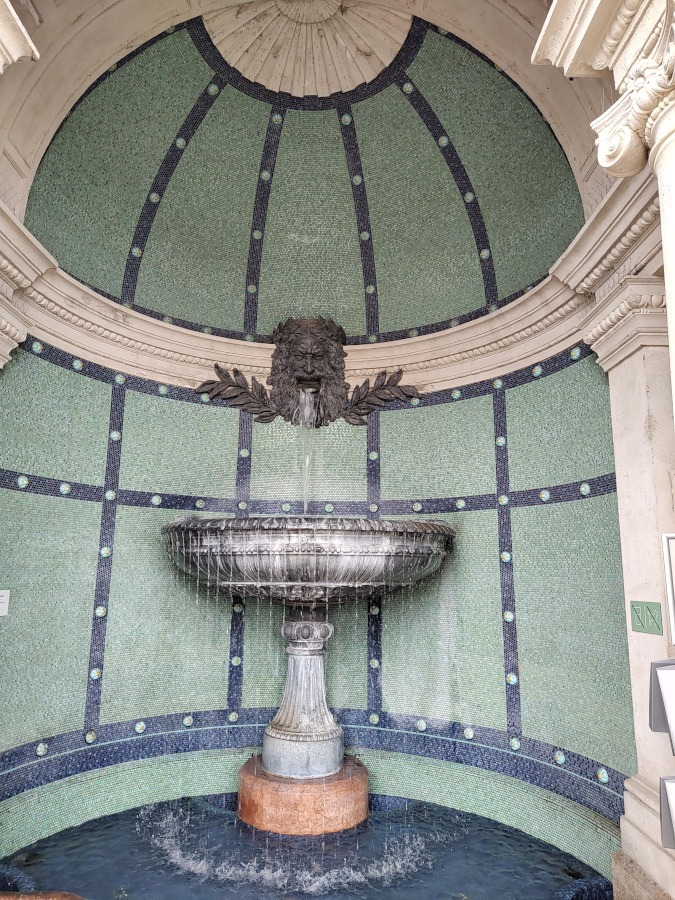
Our first discovery was tucked into a gorgeous, semi-circular alcove. You might mistake the face for Hercules, but this is actually a Triton mask.
The teal-tiled mosaic background is stunning; it gives the whole alcove a Mediterranean feel that contrasts perfectly with the heavy stone of the castle.
If we talk symbolism, in mythology, Tritons are the messengers of the deep. The lion-like features on the mask represent strength and protection, acting as a guardian of the palace’s water supply. The laurel leaves spreading from the mouth symbolize victory and honor, suggesting that even the wild forces of the sea are “tamed” to serve the beauty of the gardens.
The Nereid Fountain
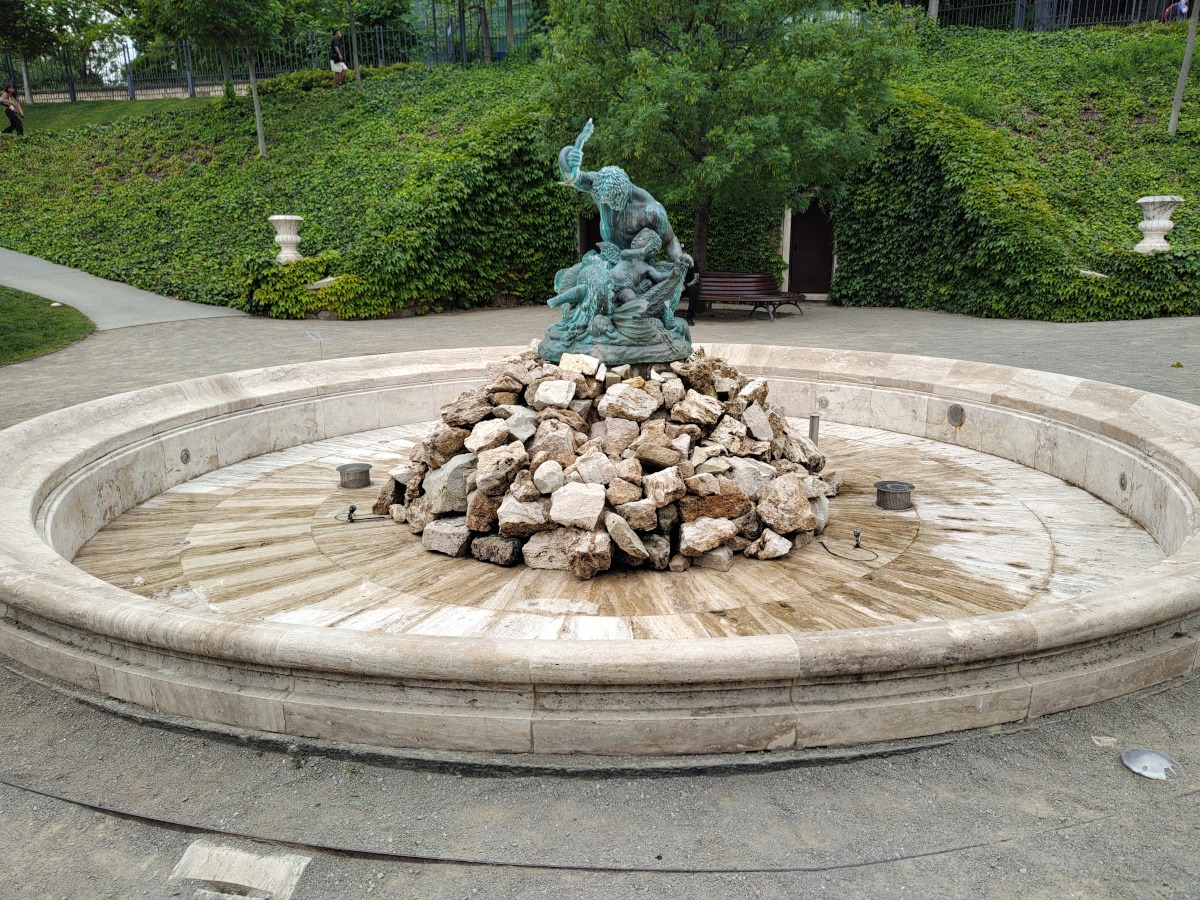
A little further along, we stumbled upon a much more intense scene. Often called the Nereid Fountain, this bronze masterpiece sits on a rugged pile of stones that makes it look like it was plucked straight from the riverbed.
You’ll see a powerful male figure (a Triton) wrestling a serpent, while a Nereid (a sea nymph) reclines below.
My online research revealed that this isn’t just a random myth; it’s a classic allegory for Order over Chaos. The muscular figure represents the human (or divine) ability to conquer the “monsters” of the wild – symbolized by the serpent – to protect beauty and peace, represented by the nymph.
The rough, unpolished rocks at the base are intentional. They represent the limestone cliffs of Buda, grounding these mystical sea creatures in the local landscape.
Clark Ádám Square & The Chain Bridge
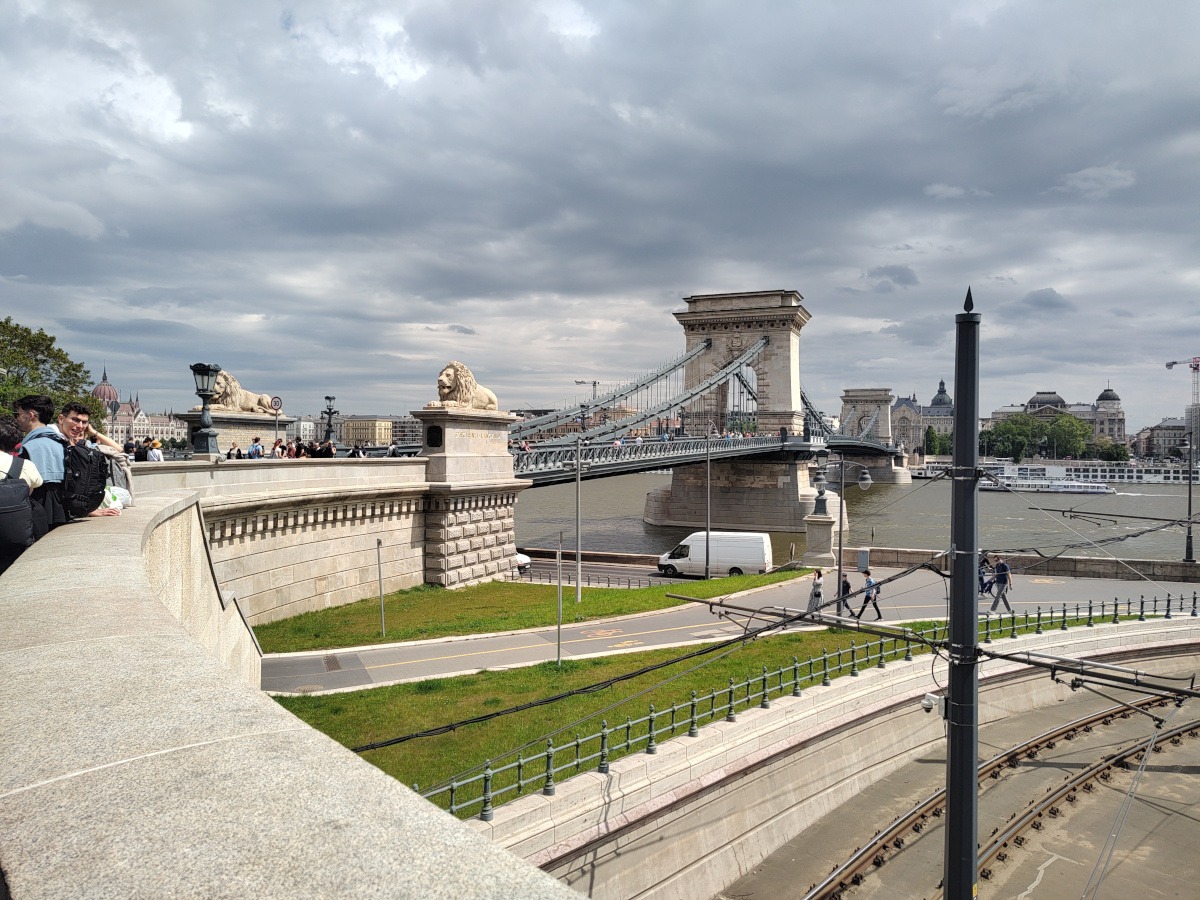
Eventually, our walk brought us down to Clark Ádám Square – a bustling hub right at the foot of the Chain Bridge. This bridge is easily Budapest’s most iconic landmark, and it’s impossible to miss with those two massive stone lions standing guard at the entrance.
Fun fact about those lions: local legend says the sculptor, János Marschalkó, was so confident in his work that he challenged anyone to find a flaw. When a spectator shouted that the lions had no tongues, the poor sculptor was reportedly so distraught that he jumped into the Danube! (In reality, the lions do have tongues; they’re just tucked down and can’t be seen from the street level. And don’t worry – the sculptor lived a long, happy life afterward.)
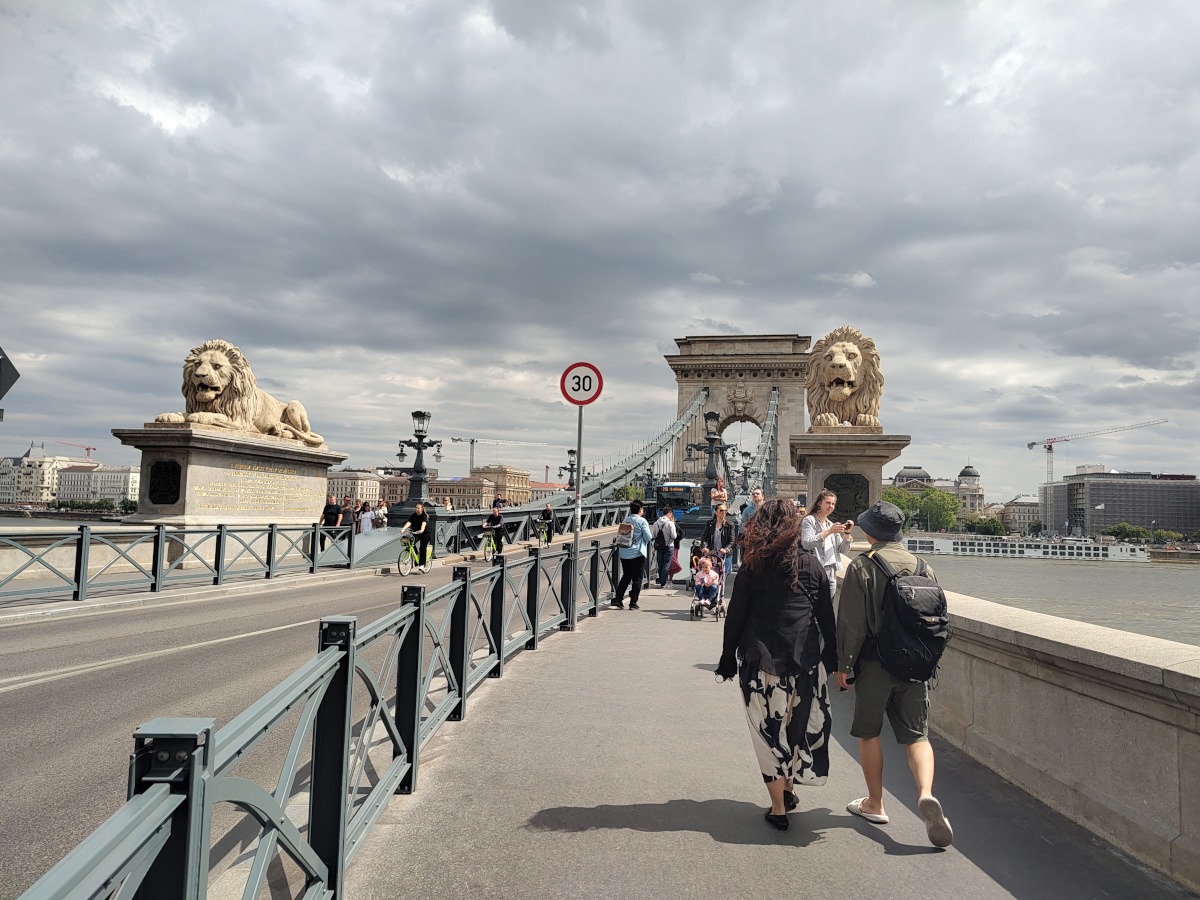
Standing in the square, you get a postcard-perfect view: the Danube flowing by, the Hungarian Parliament shimmering in the distance, and the bridge stretching toward the Pest side. We took a short break here just to soak it all in.
This square is more than just a photo op; it’s a major decision point for any traveler. Right behind the Zero Kilometre Stone – an abstract sculpture marking the starting point from which all road distances in Hungary are measured – you’ll find the lower station of the Budavári Sikló. This is the historic funicular that whisks you straight up to the Castle District.
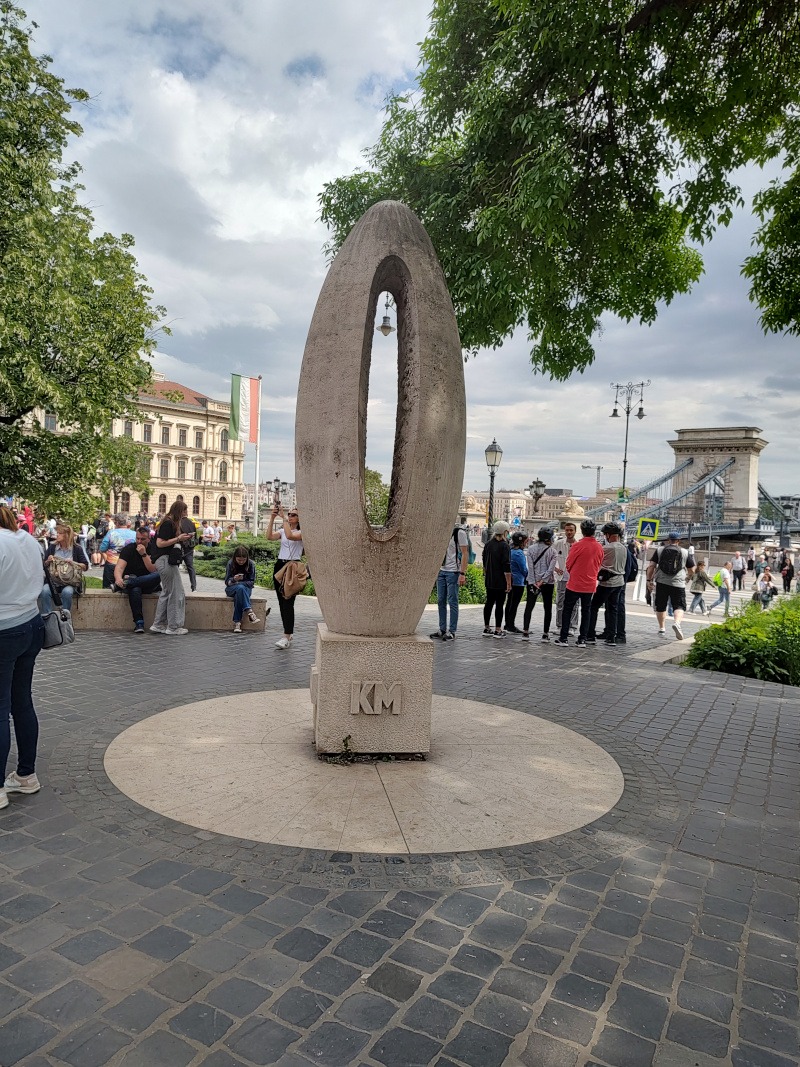
However, when we arrived, the queue for the funicular was winding way down the street. Not wanting to spend too much time in line, we opted for the hop-on, hop-off sightseeing bus instead, which has a major stop right in the square. We figured it would give us more flexibility and save our legs for more exploring later. (Spoiler: I’ll let you know at the end whether this turned out to be the best choice, but at that moment, it felt like the smarter way to go!)
Whether you choose the scenic funicular, walk up the hill, or hop on a bus, this is a great orientation point when visiting Buda. You get a feel for the city’s layout, and the energy around the bridge really pulls you in.
Matthias Church and Fisherman’s Bastion: A Classic Buda Highlight
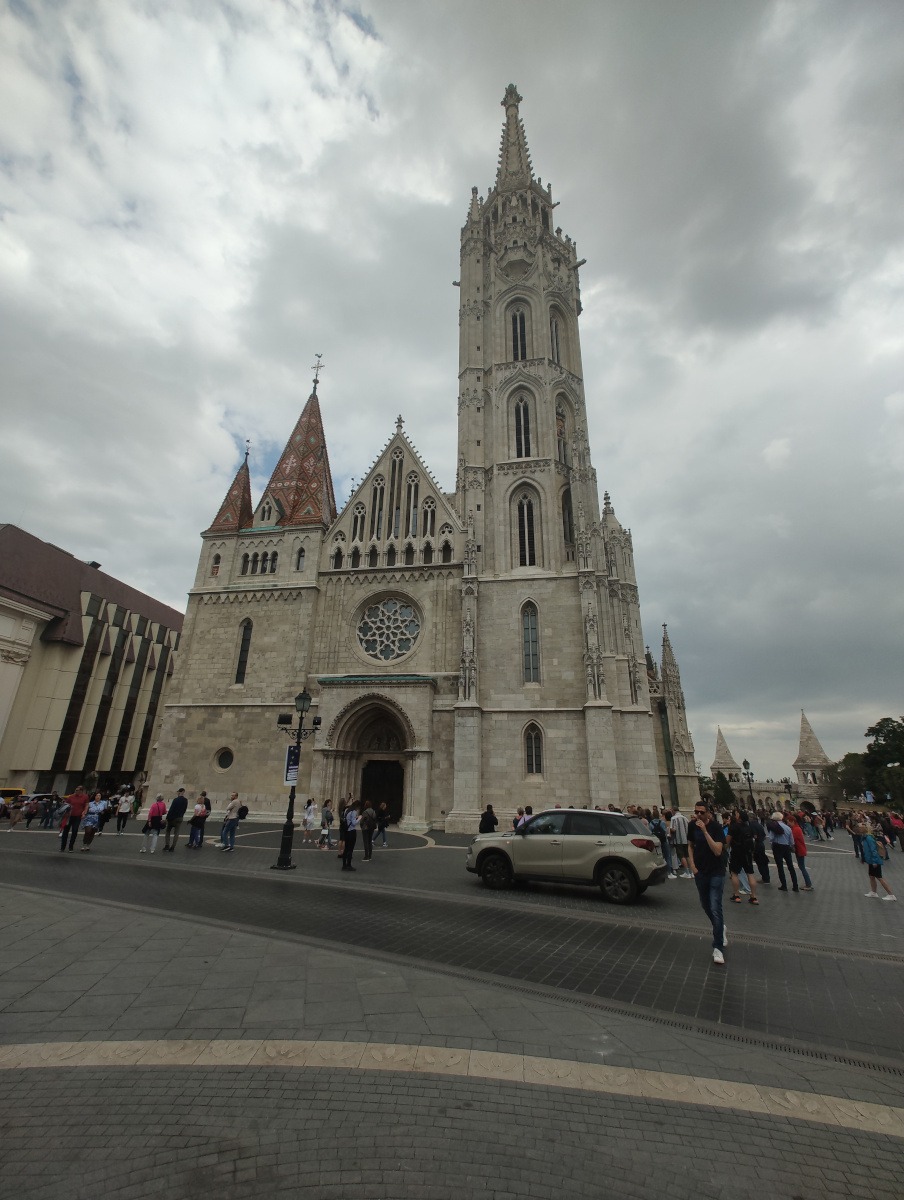
This area is the centerpiece of any Buda Castle itinerary and one of the most photographed parts of Budapest.
Our first major stop after getting off the bus was Matthias Church (Mátyás-templom), and even if you’ve seen it in photos, nothing prepares you for how intricate it looks up close.
The roof, covered in colorful Zsolnay ceramic tiles, is a work of art in itself. In fact, those specific tiles (Zsolnay) are used on many of Budapest’s most beautiful buildings, including the Great Market Hall.
The exterior is a stunning blend of Gothic and Neo-Gothic styles, and it’s definitely one of those spots where you’ll find yourself taking photos from every possible angle.
We debated going inside, but we decided to stick to the exterior and explore the surrounding square instead. If you love ornate religious art or want to see the Ecclesiastical Art Museum inside, the ticket is worth it – just be ready for some crowds and a bit of a squeeze.
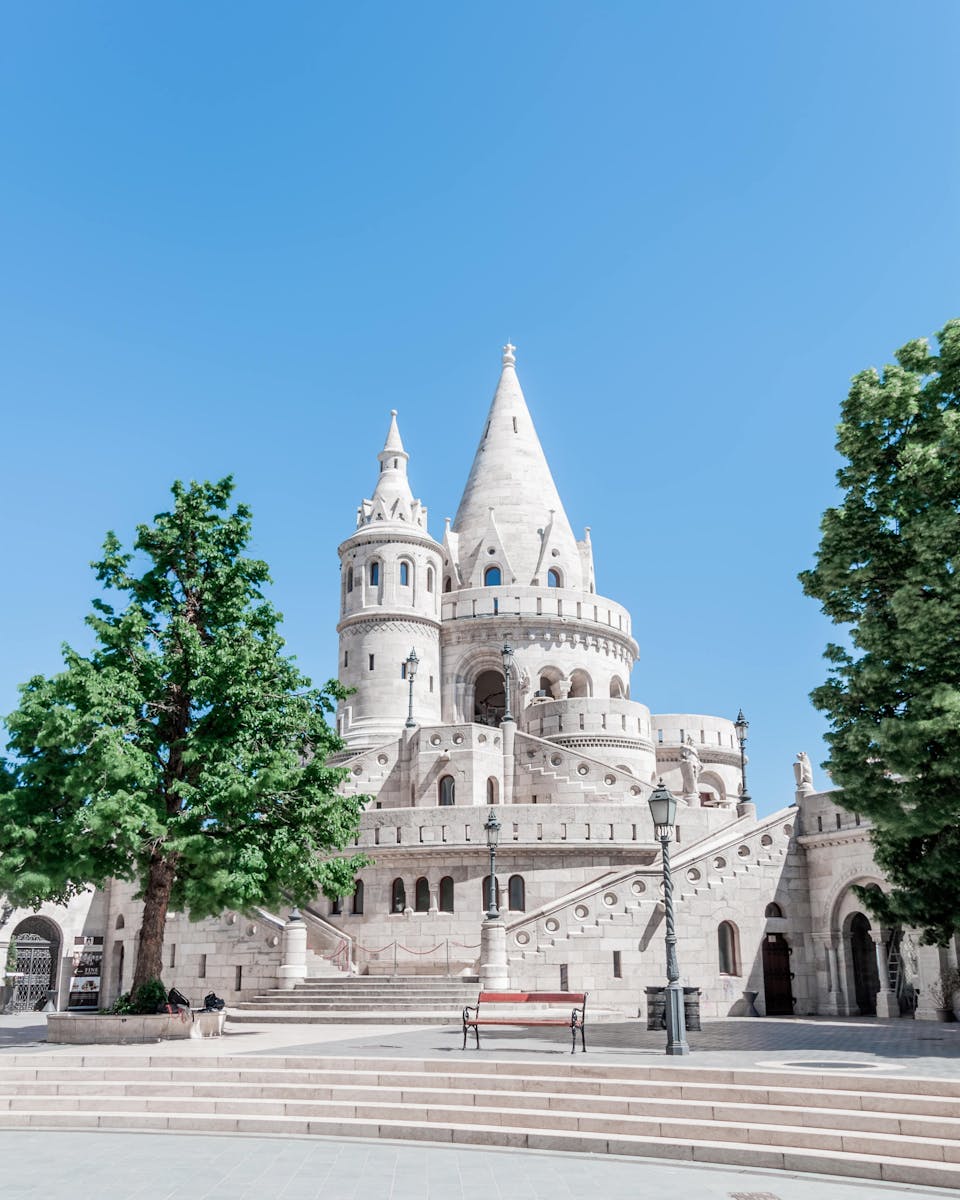
Right next to the church is Fisherman’s Bastion (Halászbástya), which looks like something straight out of a fairy tale. The photo above is a stock photo because ours are grey and packed with people. It was starting to rain and the clouds made everything gray.
It’s a maze of white stone staircases and towers that offer the most famous panoramic views of Budapest, with the Parliament Building sitting perfectly across the Danube.
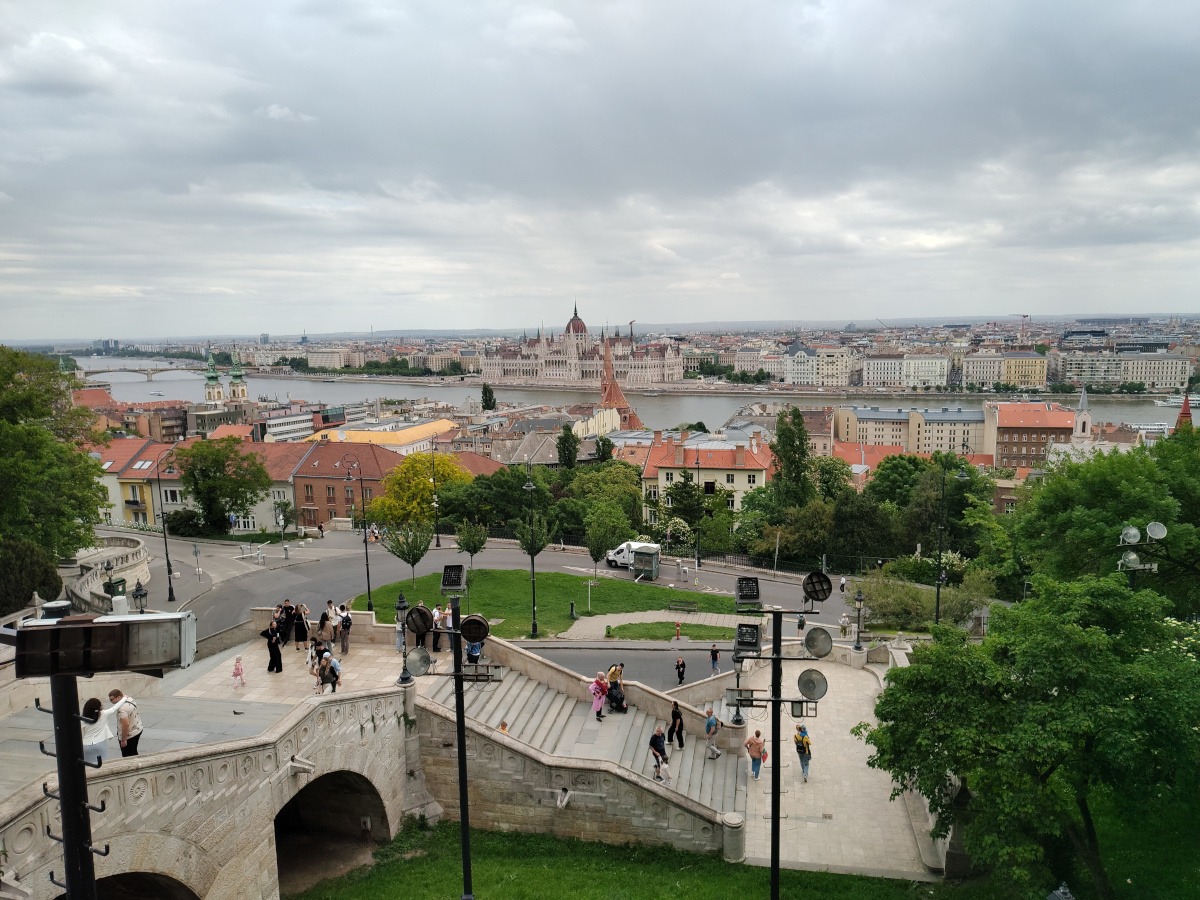
While the lower walkways are free (where the photo above was taken), the upper lookout terraces require a small fee.
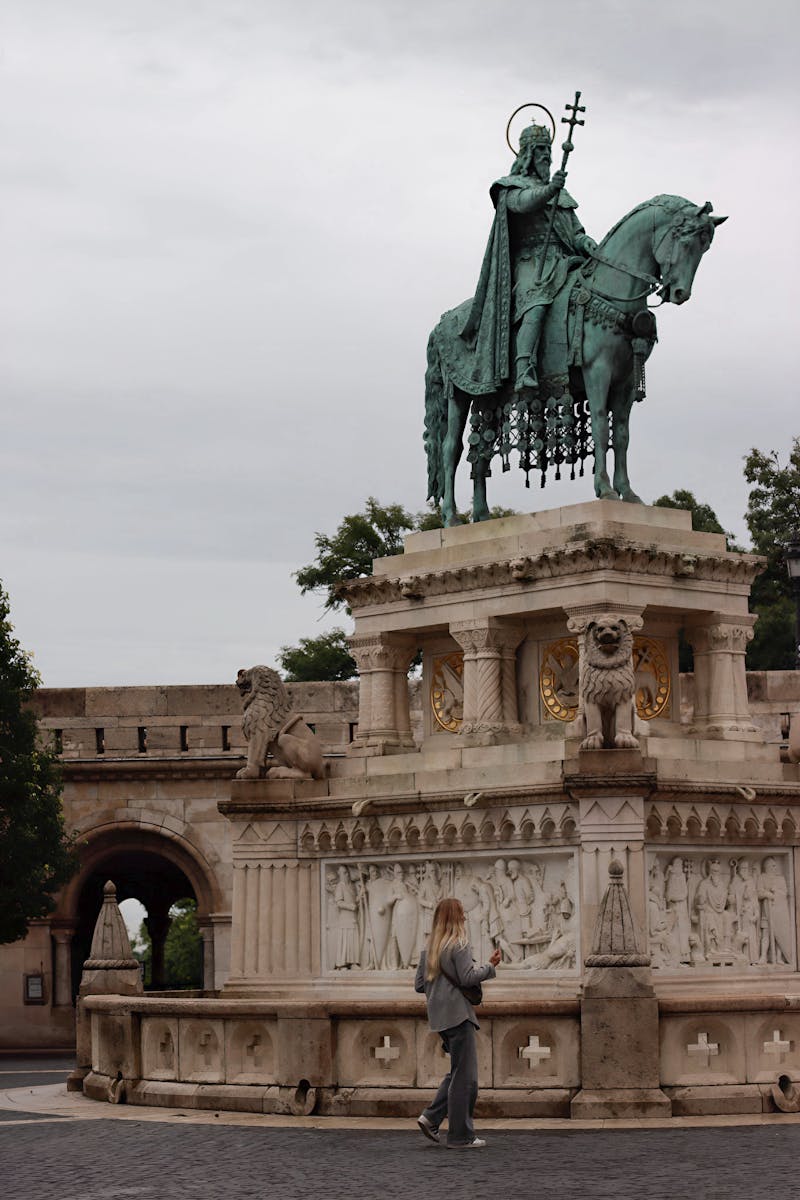
We also passed the equestrian statue of Saint Stephen, the first King of Hungary, who stands tall on an ornate pedestal between the church and the towers. Between the architectural details and the sweeping views of the city, this is one of those “must-see” spots that actually lives up to the hype. The photo below is stock for the same reason: mine is too gray due to the weather.
A Quiet Moment at the Mary Magdalene Tower
As we wandered away from the bustling crowds of Fisherman’s Bastion, the atmosphere shifted. The narrow, cobbled streets led us to a much quieter corner of the Castle District, where the Mary Magdalene Tower (Mária Magdolna-torony) stands. It’s a tall, reddish-stone structure that cuts a striking figure against the sky – partly restored and partly left as a haunting ruin.
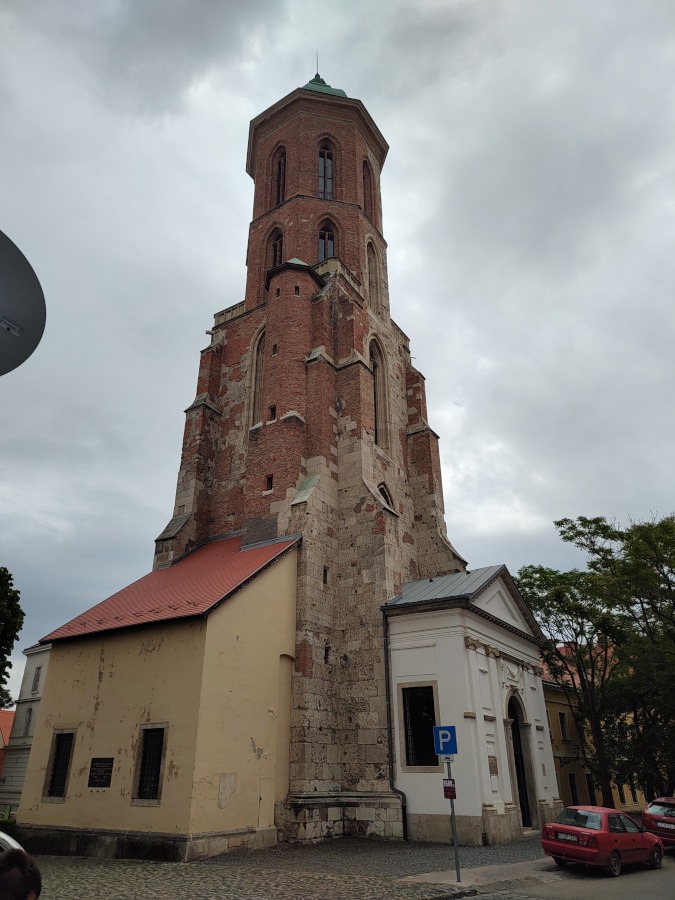
This tower is the sole survivor of the Church of Mary Magdalene, which dates back to the 13th century. Historically, it was a significant site as it was one of the only churches where the local Hungarian-speaking population could worship during the medieval period.
Sadly, the church was heavily damaged during the siege of Budapest in WWII. Rather than rebuilding the entire nave, the city chose to preserve the tower as a standalone monument to resilience. You can still see the raw, exposed stonework and the traces of where the rest of the building once stood.
I will add that not everyone from the bus stopped here. This was the least crowded stop on the tour.
And you can see a different side of the city from here:
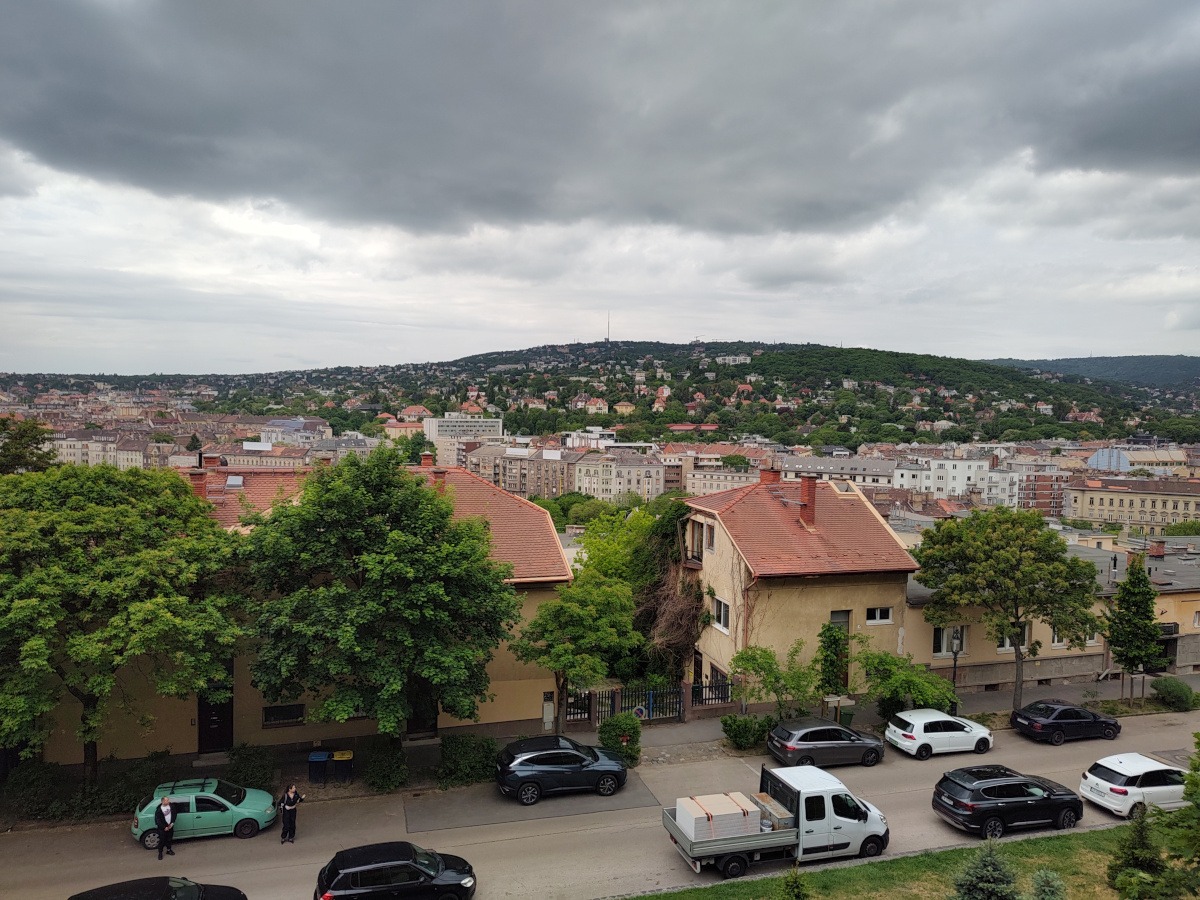
We decided not to head inside – though there is a small exhibition and the option to climb to the top for a different perspective of the city – because we were enjoying the rare peace and quiet. There were no lines and no crowds, just a sense of weight and history that you don’t always feel at the bigger landmarks.
If you’re exploring the Castle District on foot, this is an easy and rewarding detour. It adds a deeper, more emotional layer to the Budapest story – one defined by war, survival, and careful rebuilding.
Buda Castle Upper Terrace: The Turul, the Views, and the Palace Fountain
After a short walk from our bus stop, we reached the upper terraces of Buda Castle. It was noticeably busier here – a mix of school groups, guided tours, and families all vying for the perfect photo – but the panoramic view from this vantage point made the crowds easy to ignore.
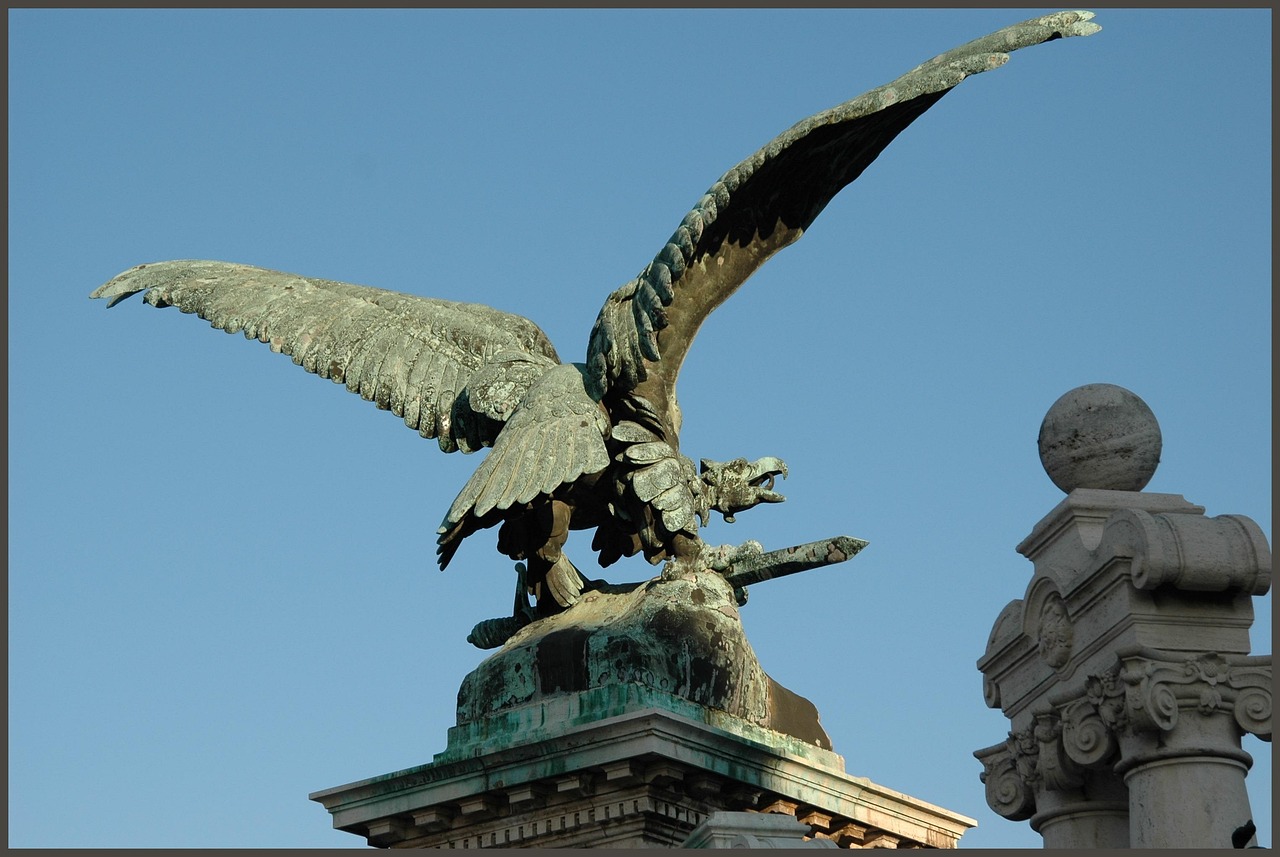
One of the first things that caught our eye was the Turul statue. This massive bronze bird, a mythical creature from Hungarian legend associated with the nation’s origins and protection, is perched dramatically on a high neo-Baroque pedestal.
With its wings outstretched and a sword clutched in its talons, it looks as though it’s standing guard over the Danube below. There was even a wooden staircase nearby that allowed us to climb a bit higher for an even better perspective of the grounds.
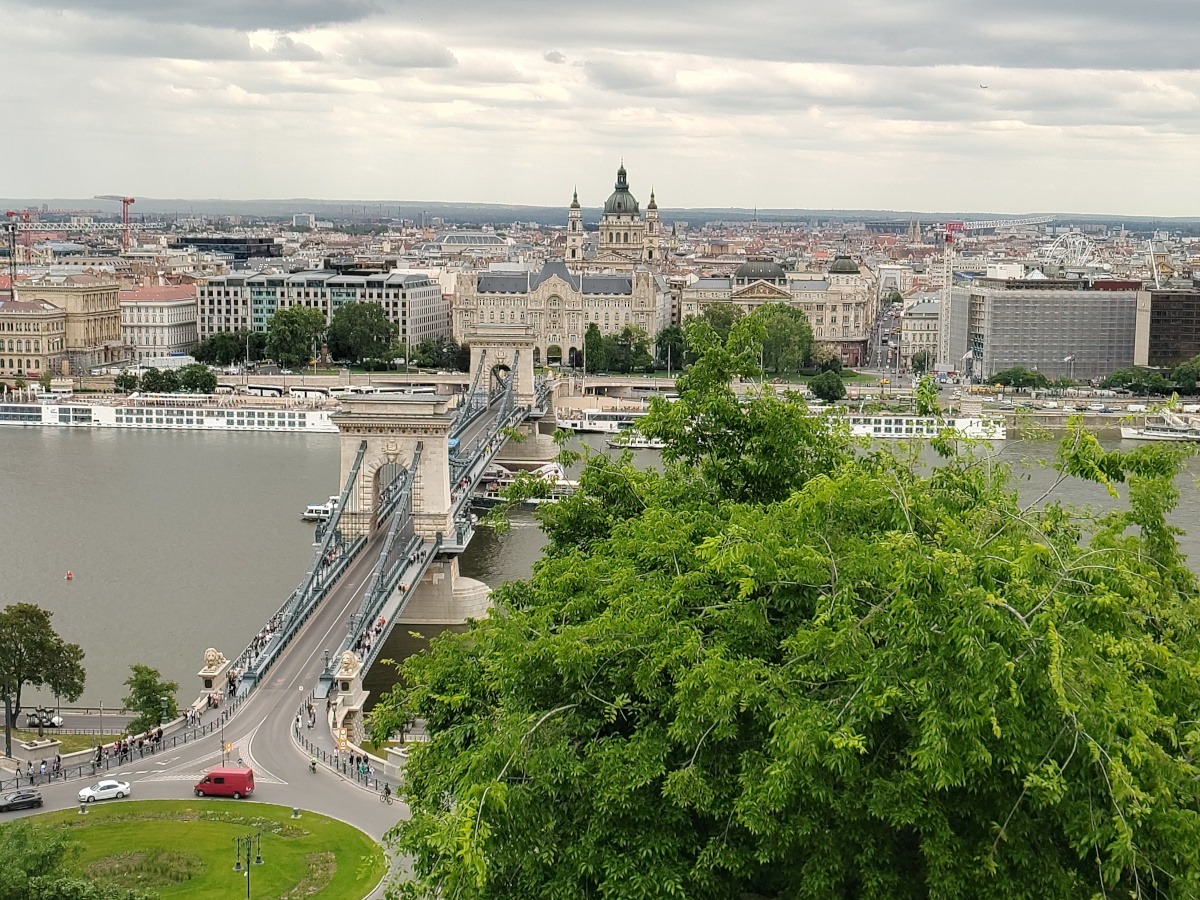
The view from these terraces is truly the “money shot” of Budapest. From here, you can see the Chain Bridge stretching across the water and St. Stephen’s Basilica rising high above the rooftops on the Pest side. It’s one of those iconic angles you see on every postcard, and seeing it in person absolutely lives up to the hype.
As a note, it is VERY crowded here. EVERYONE wants to take pictures – both of themselves and of the view. It is actually quite difficult to be photographed without someone passing between you and the person taking the photo.
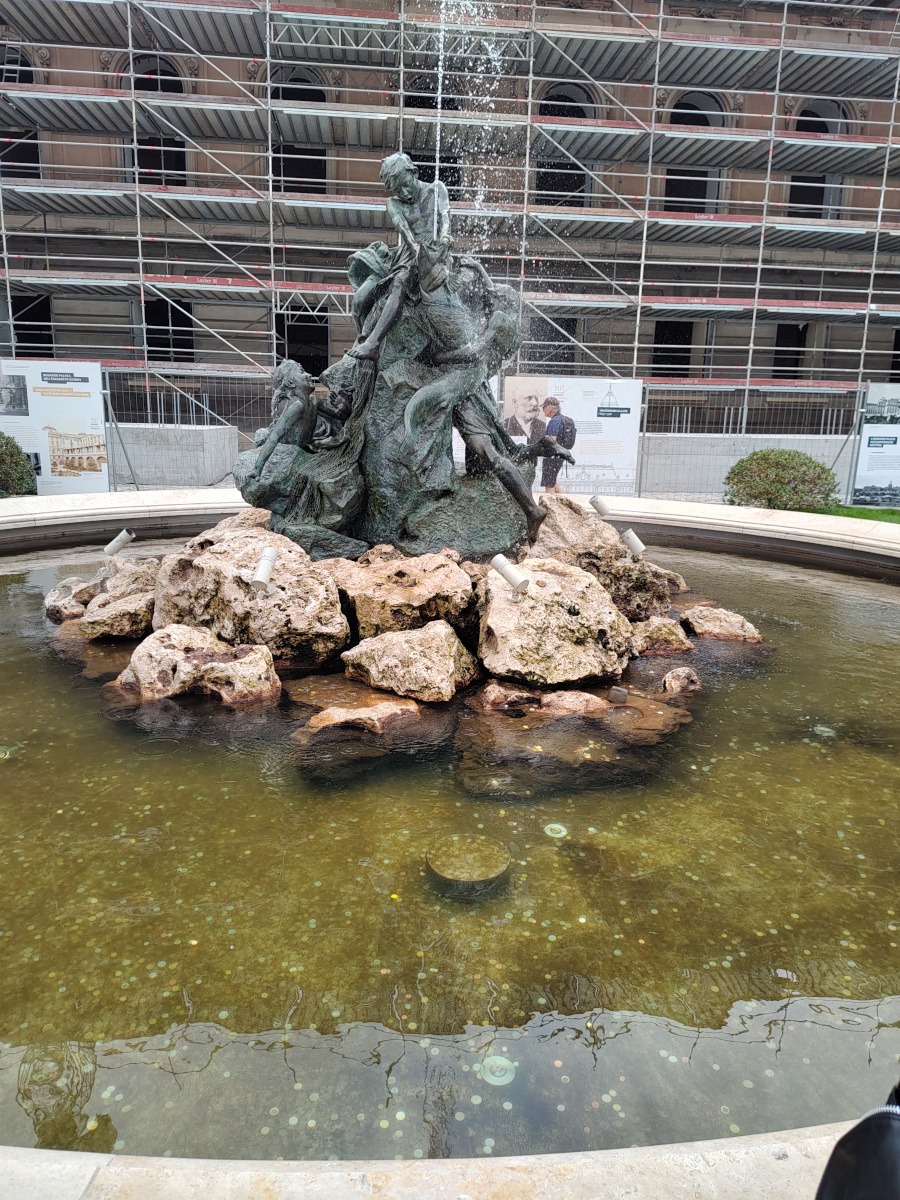
Before we moved on toward the museums, we stopped by the Fishing Children Fountain (Halászó gyerekek kútja). It features charming bronze figures of children struggling with a net full of fish.
While it’s a bit more whimsical and less “monumental” than the Turul, it provides a lovely moment of calm against the grand backdrop of the castle façade.
Oh, and yes, you spot it: there are coins in the fountain.
Buda Castle Museums: What’s Inside (and Why We Skipped Them This Time)

ID 30694902 ©Mdorottya | Dreamstime.com
By the time we reached the central courtyard of Buda Castle, the clouds had rolled in and so had the fatigue. We’d already walked quite a bit, and our feet were starting to protest.
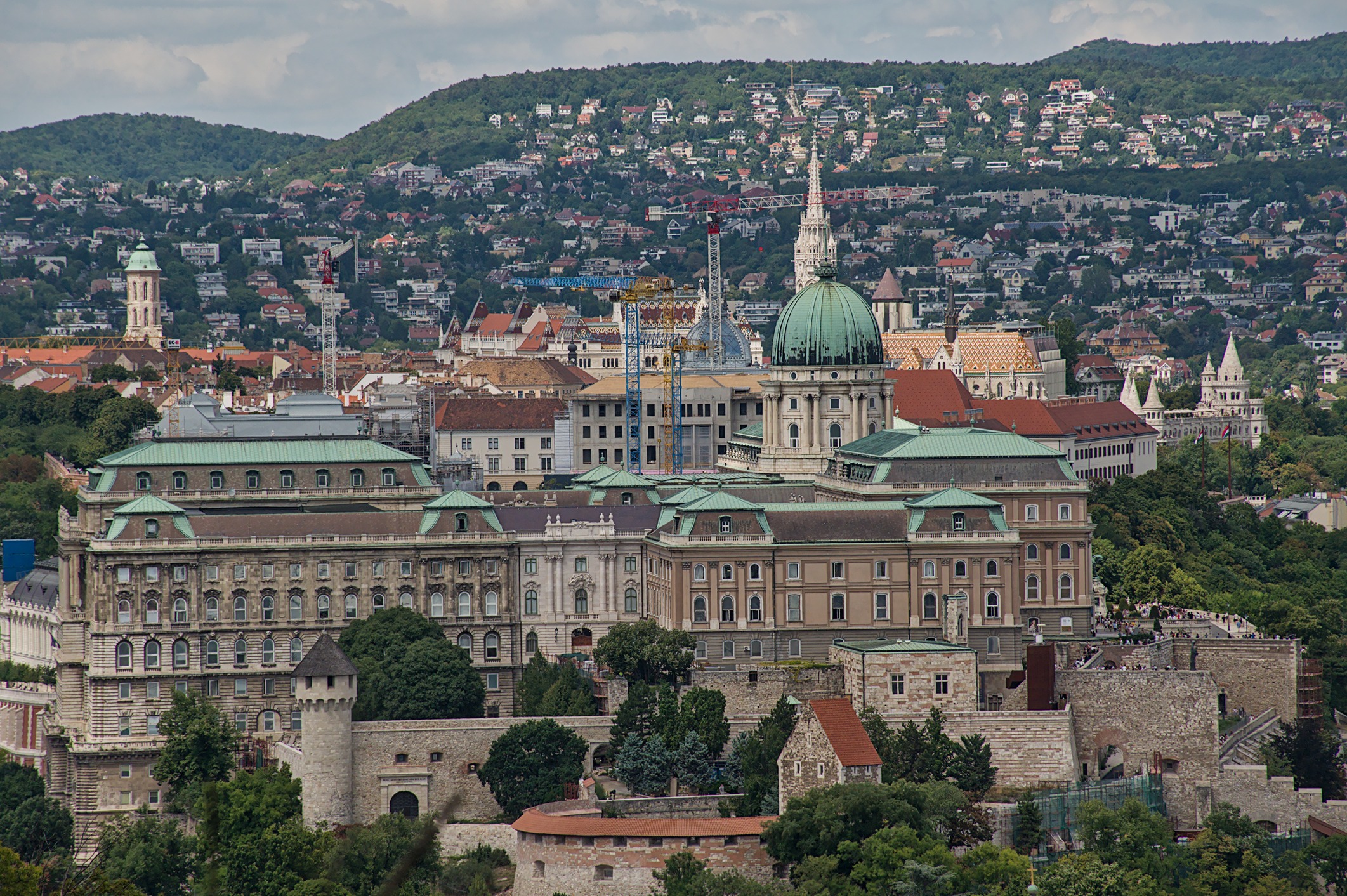
Still, we paused to admire the monumental equestrian statue of Prince Eugene of Savoy, one of the military leaders credited with defending Europe from Ottoman expansion. The statue stands dramatically in front of the Royal Palace dome, making it one of the most scenic spots in the entire Castle District.

If you’re visiting Buda Castle and have the energy (and dry weather), this is where you’ll find the main cultural attractions:
- Hungarian National Gallery – This spans centuries of Hungarian visual art, from medieval altarpieces and Gothic woodcarvings to 19th-century Romanticism and modern works. The building itself is just as impressive as the art inside.
- Budapest History Museum (Castle Museum) – Located in the southern wing, it takes you through the city’s turbulent history, including the medieval palace ruins and the beautifully restored St. Stephen’s Hall.
- National Széchényi Library – The national library of Hungary, housing millions of items including rare manuscripts and early maps. It’s a quieter, more academic stop, but fascinating if you love history.
There are also various temporary exhibitions throughout the year, and the castle courtyards are free to explore even if you don’t buy tickets for the museums.
As much as we wanted to go inside, we were soaked – the rain had finally caught up with us – and we were honestly in need of a break. We decided to skip the museums this time, but they’re high on the list for our next visit. If you’re better prepared or have more time, these museums are an excellent way to dive deeper into Budapest’s identity.
We headed toward the hop-on hop-off bus stop to make our way back down the hill. We didn’t stop again at the Triton Fountain (at the Várkert Bazár) or the Matthias Fountain, since we’d already seen them earlier in the day.
A Rainy Goodbye and a Souvenir Stop Before Heading Home
After leaving the castle grounds and reboarding the hop-on hop-off bus, we made our way back to Clark Ádám Square – the same spot where we’d earlier debated between the funicular and the bus. Except now the skies had opened up completely. It was pouring rain.
We dashed into one of the souvenir shops near the Kilometer Zero monument, trying to wait out the worst of the storm. While we were there, we picked up a few small gifts – magnets, a paprika sauce – the kind of things that don’t take up space in your luggage but still bring memories flooding back months later.
My husband came to pick us up from there, and it was time to say goodbye to Budapest – at least for now. We were heading back to Romania, with a stop planned in Timișoara to break up the 11-hour journey. It was already afternoon, we were tired and slightly damp, but full of everything we’d seen, learned, and walked through in just one day on the Buda side.
Was the Hop-On Hop-Off Bus Worth It? And the End Of Our Day in Buda Side of Budapest
ID 399619606 ©Kristof Lauwers | Dreamstime.com
Looking back, I’m glad we chose the hop-on hop-off bus instead of waiting in line for the funicular. It saved us time and gave us a bit more flexibility, especially with the changing weather. Plus, we saw all the other places, including the photo spots.
That said, if you’re traveling with kids or want the iconic castle hill climb experience, the funicular is the best choice. We actually plan on taking it the next time! By the way, if you are planning a trip to Budapest, read this article with tips on what to know before visiting Budapest, as it will prove very useful!
We didn’t manage to visit the museums inside Buda Castle – we were too tired, the rain got serious, and our feet needed mercy. But that just gives us a reason to come back – we anyway have a few more Hungarian dishes to try!
Buda has a different rhythm than Pest. It’s not just about checking off landmarks – it’s about walking, pausing (a lot more than in Pest), and letting the history reveal itself slowly. If you’re planning a trip to Budapest, I highly recommend giving Buda its own day. You won’t regret it.
Frequently Asked Questions About Spending One Day in Buda
Is one day enough to explore Buda?
Yes, one day is enough to explore Buda if you focus on the Castle District, nearby parks, viewpoints, and a few quieter landmarks. Walking helps you see more than you expect, but pacing is key.
Is this Buda itinerary walkable?
Yes. This Buda walking itinerary is doable entirely on foot, though there are hills. Comfortable shoes are essential, especially if you explore the Castle District and surrounding viewpoints.
What are the must-see stops on a one day in Buda itinerary?
Key stops include Tabán Park, the Garden of Philosophers, Matthias Church, Fisherman’s Bastion, the Buda Castle terraces, and viewpoints over the Danube.
Is Buda better than Pest for sightseeing?
Buda and Pest offer very different experiences. Pest is flatter and busier, while Buda is greener, more historic, and ideal for a slower, scenic day of walking.
Photo sources (other than mine or Dreamstime): 1, 2