
It starts the same way for so many people now.
You’ve checked in. You’ve cleared security. You’re finally at the gate, passport in hand, boarding pass ready – when a staff member points to your carry-on and asks you to place it in the metal baggage sizer.
It doesn’t slide in.
Not by much. Just a little resistance. A wheel catches. The frame doesn’t close.
And suddenly, your cheap flight isn’t cheap anymore.
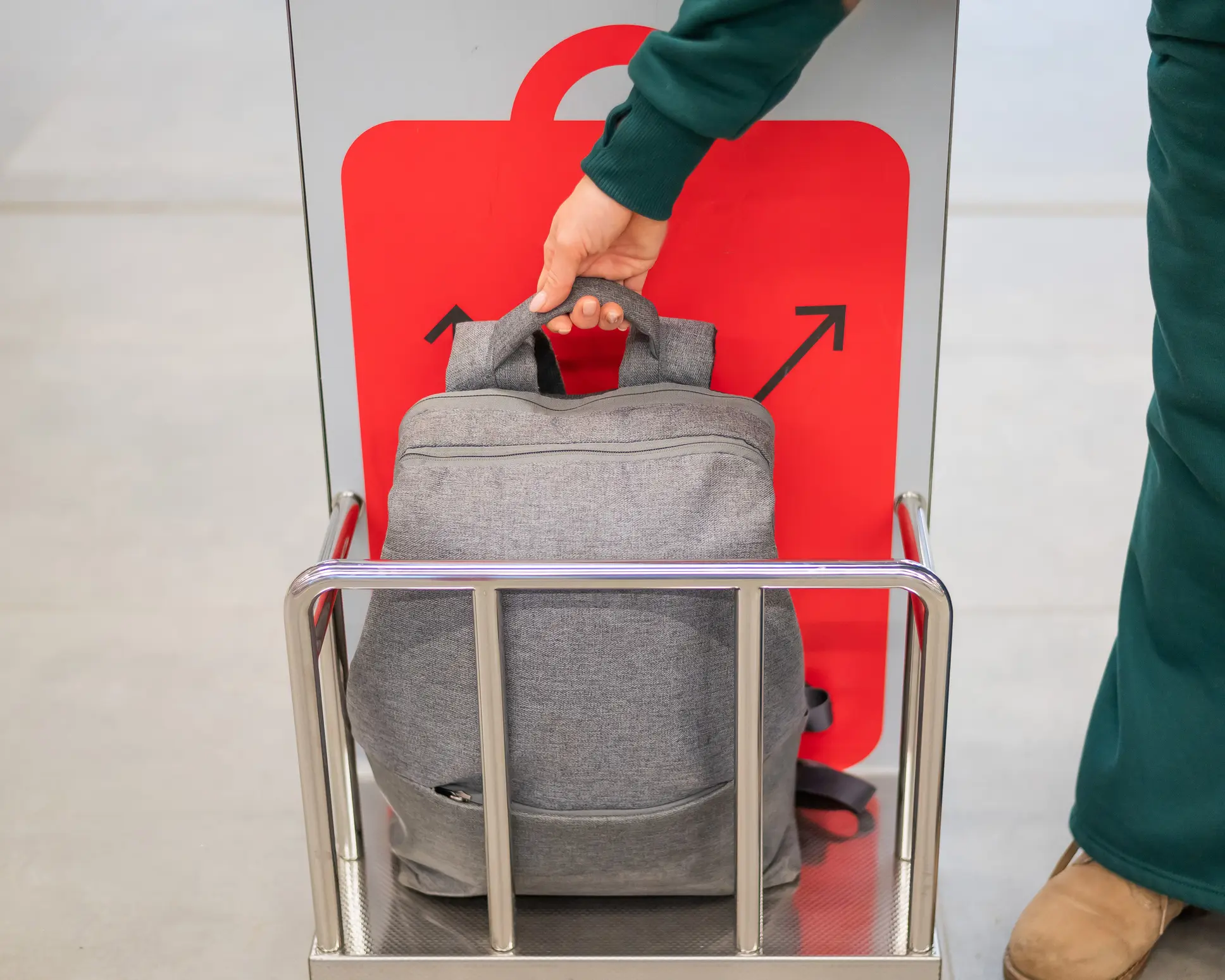
ID 209980333 ©Insidestudio | Dreamstime.com
That exact moment is what triggered one of the most talked-about airport videos in recent months: a passenger, faced with an extra fee because his trolley suitcase didn’t meet airline requirements, calmly removed the wheels on the spot.
No shouting. No dramatic confrontation. Just a very literal solution to a very modern problem.
Some people applauded him. Others shook their heads. Many simply thought: “I get it.”
This reaction isn’t accidental. Incidents like this keep resurfacing because they sit at the intersection of three forces shaping modern air travel: aggressively unbundled fares, increasingly strict cabin baggage enforcement, and travelers who are far more price-sensitive than they were a decade ago. When those forces collide at the gate, improvisation becomes almost inevitable.
What Happens If Your Carry-On Is Too Big at the Gate?
If your carry-on bag does not fit inside the airline’s metal baggage sizer – including wheels and handles – you may be required to pay a gate baggage fee or check the bag into the hold.
Gate fees are typically significantly higher than fees paid during booking. In some cases, the charge can exceed the original ticket price.
Airlines measure external dimensions, not interior storage space. That means wheels, handles, rigid frames, and corner protectors all count toward the maximum allowed size.
This is why even a small difference – sometimes just one centimeter – can trigger a fee.
2026 Update
Airlines across Europe and the United States have increasingly emphasized strict enforcement of cabin baggage dimensions, particularly at boarding gates. Everyone should assume that external measurements will be checked carefully.
What actually happened at the gate
The passenger’s carry-on bag was deemed non-compliant with cabin baggage size rules – specifically because the wheels pushed it beyond the allowed dimensions.
Rather than pay the additional gate fee, the man chose an alternative solution. He removed the wheels from the suitcase so it would fit into the airline’s baggage sizer.
This wasn’t the first time – and it might not be the last
If the story felt oddly familiar, that’s because it was.
In 2023, a remarkably similar incident went viral involving a passenger flying with easyJet. At Palma de Mallorca airport, a traveler was filmed tearing off not just the wheels, but also the handle of his carry-on suitcase after being told it didn’t meet cabin baggage requirements.
That incident sparked the same debate: clever workaround or pointless destruction?
Different airport. Same underlying pressure.
And that’s the key point.
These aren’t isolated acts of “travel rebellion.” They’re symptoms of a system that increasingly puts passengers in last-minute, high-stress financial decisions.
And there was another incident with a passenger removing the wheels of the suitcase in 2024. And these are just the ones that I found rapidly.
What’s striking isn’t the creativity of these moments – it’s their repetition. When the same behavior appears across different airlines, different countries, and different years, it stops being a “viral oddity” and starts looking like a pattern.
In other words, passengers aren’t suddenly becoming more rebellious or reckless. They’re responding to a system that has narrowed their options to a few high-pressure choices made at the worst possible moment: pay immediately, comply creatively, or risk not flying at all.
Why travelers do this (and why it resonates so strongly)
From the outside, removing suitcase wheels looks absurd.
From the inside – when you’re standing at the gate with a line of passengers behind you and a staff member explaining that your options are “pay now” or “don’t board” – it feels different.
Low-cost airlines have reshaped how people fly. Base fares are cheaper than ever, but they come with strict limits, especially around cabin baggage. The smallest personal-item dimensions are enforced down to the centimeter, and the penalties for exceeding them are often far higher at the gate than during booking.
By the time travelers reach boarding, they’ve already invested time, money, and emotional energy into the trip. Paying a sudden fee – sometimes close to the price of the original ticket – feels less like a policy and more like a punishment.
So people improvise.
They squeeze jackets into duty-free bags. They wear extra layers. They redistribute weight between pockets. And occasionally, they do something drastic – like dismantling the suitcase itself.
Not because it’s elegant. But because it feels like taking agency back in a moment where agency is limited.
Airline policies are clearly written, but gate enforcement often feels harsher than fees paid during booking. The timing – just before boarding – makes the cost feel more abrupt, which is why reactions are often emotional.
That emotional mismatch is why a €40 fee paid in advance might feel acceptable – but the higher fee demanded at boarding feels infuriating. It’s not ONLY about the amount. It’s about when and how the decision is forced.
Do Wheels and Handles Count in Carry-On Size Measurements?
One of the reasons these incidents spark outrage is that many travelers genuinely don’t realize how baggage size is calculated.
Airlines don’t measure “storage space.” They measure external dimensions.
That means wheels, handles, corner protectors, rigid frames – all of it counts.
EasyJet explicitly states that its free under-seat cabin bag allowance (45 x 36 x 20 cm) includes handles and wheels. Ryanair allows a free personal item of up to 40 x 30 x 20 cm, while Wizz Air’s free cabin bag is 40 x 30 x 20 cm (always check their official website for the latest sizes!)
And the fees? Ryanair’s gate baggage fee can reach €69.99/£69.99. EasyJet charges up to £48 at the gate for oversized cabin bags. These fees are intentionally higher than advance booking costs to discourage last-minute surprises.
This is why gate fees feel punitive: not just because of the amount, but because of when and how they are imposed. Gate fees are deliberately higher than booking charges because they are designed as deterrents. From the airline’s perspective, this encourages compliance earlier in the journey. From the passenger’s perspective, it feels punitive, especially when the cost rivals or exceeds the ticket price itself.
Over the years, I’ve seen this play out repeatedly with friends and fellow travelers flying low-cost airlines – cases where checking a bag at the gate ended up costing more than the flight itself.
How Airlines Measure Carry-On Bags
Airlines use rigid metal baggage sizers placed at check-in counters and boarding gates. Your bag must fit fully inside the frame without forcing it.
Important details:
- The bag must slide in easily.
- Wheels and handles must fit inside the frame.
- The bag cannot be tilted to reduce depth.
- Staff may check size at boarding, even if it was not checked at check-in.
If the bag does not comply, passengers are typically charged a gate fee and the bag is checked into the aircraft hold.
Why do these moments go viral every single time
The reason this story spreads so quickly isn’t because people want to remove suitcase wheels.
It combines several things the modern traveler already dreads: unpredictability, public scrutiny, money pressure, and rules that feel rigid in human situations.
There’s also a symbolic layer. Watching someone physically alter their luggage to comply with a rule feels like a protest – not loud, not ideological, but very visible. It’s a reminder that when systems become inflexible, people don’t always comply quietly.
They adapt.
The part no one wants to think about at the gate: the real risks of doing this
Here’s where reality quietly catches up with virality.
Removing wheels or handles is not a harmless hack. Suitcases are designed as integrated structures. Wheels aren’t just accessories – they distribute weight, absorb impact, and protect the base shell.
Once you remove them, several things can happen.
The suitcase may crack along the bottom seam after being dragged through terminals. The exposed plastic edges can split further with every curb, escalator, or baggage belt. Inside, the lack of structural support increases the risk of damaged contents.
There’s also the immediate risk at the airport itself. Broken plastic can leave sharp edges. Loose parts can become trip hazards. And there’s no guarantee the modified suitcase will still be accepted – especially if it now looks unstable or unsafe.
There’s also a downstream effect most people don’t consider: a damaged or structurally weakened suitcase is far more likely to fail later in the journey, when it may be checked involuntarily due to a full cabin. At that point, the traveler has lost both the wheels and the protection they were designed to provide.
And then there’s the math that people don’t always do in the moment.
A gate baggage fee feels outrageous – until you factor in the cost of replacing a broken suitcase mid-trip, often at airport prices. What looked like a victory can quietly become more expensive than just paying the fee would have been.
There’s also a practical aftermath few viral clips show: navigating a multi-day trip with a compromised suitcase. Dragging a wheel-less hard shell through train stations, uneven sidewalks, and hotel corridors quickly turns from a symbolic victory into a daily inconvenience. What felt like a clever solution at the gate can quietly degrade the entire travel experience.
Why airlines enforce this so strictly now
To understand why these situations keep happening, it helps to zoom out.
Ancillary fees – baggage, seat selection, priority boarding – are no longer a source of income for low-cost airlines. They’re central to the business model. That makes enforcement critical.
Reports from The Guardian have highlighted how airlines like Ryanair incentivize staff to identify oversized cabin bags. Whether travelers agree with that approach or not, it explains why gate checks have become more frequent and less flexible.
From an operational perspective, consistency matters. If one oversized bag goes through, the next passenger expects the same treatment. Strict enforcement simplifies the process – even if it creates friction.
From a traveler’s perspective, though, that friction is exactly what turns ordinary boarding into viral theater.
What’s often overlooked is that ground staff don’t have the same flexibility passengers assume they do. At the gate, consistency is operationally more important than discretion, especially for airlines built on rapid turnaround times.
There’s also a logistical reality behind the scenes. Cabin space is finite, boarding delays are expensive, and disputes at the gate cascade into missed departure slots. Strict enforcement, however frustrating, is often a blunt tool used to protect operational efficiency.
The quiet lesson most experienced travelers have already learned
Seasoned travelers tend to watch these videos with a kind of weary recognition.
Not because they plan to copy the behavior, but because they’ve already adjusted to the system.
They choose soft-sided backpacks over hard-shell trolleys. They buy bags that are clearly under the maximum size, not exactly at it. They assume wheels will be measured. They pack with margin.
And most importantly, they know their fare.
Because the real surprise isn’t being told your bag is too big – it’s realizing too late that the ticket you bought never included a larger carry-on in the first place.
How to Avoid Carry-On Size Problems at the Airport
To reduce the risk of unexpected gate fees:
- Measure your bag including wheels and handles.
- Choose bags slightly under the maximum size, not exactly at it.
- Review your ticket type carefully – some fares include only a small personal item.
- Consider soft-sided bags that compress more easily.
- Check the airline’s official website before departure, as size limits can change.
Being proactive is usually far cheaper than resolving a dispute at the gate.
Pay attention to the sizes and rules
Airline baggage rules aren’t going away. If anything, they’re getting tighter.
The real choice for travelers isn’t whether to fight them creatively at the gate – it’s whether to design their travel habits so those moments never happen.
That means understanding what “carry-on” really means today. Measuring bags the way airlines measure them. And accepting that sometimes, convenience features like spinner wheels come with hidden costs.
Because while removing suitcase wheels makes for a memorable video, most travelers would rather arrive at their destination with their luggage – and their sanity – intact.
The real lesson here isn’t about suitcase wheels or clever workarounds. It’s about how modern air travel rewards preparation and punishes assumptions, often harshly, and often at the worst possible moment.
And if there’s one thing this story proves, it’s that the real battle of modern flying doesn’t happen in the air.
It happens at the gate.
Note: I wanted this article to show what leads to such behaviour and why it is understandable, but also what the risks are and why this happens. I did not want to make it about X or Y and the videos themselves. However, if you are curious, here are the videos and articles mentioned:
– https://www.instagram.com/reel/DSPnKoxD-_s/
– https://www.canarianweekly.com/posts/VIDEO-Passenger-rips-wheels-off-suitcase-to-avoid-70-Ryanair-baggage-charge
– https://www.instagram.com/reel/C7PPYFeqUbN/
– https://www.businessinsider.com/passenger-ripped-handle-wheels-off-carryon-avoid-paying-fee-easyjet-2023-8
– https://www.youtube.com/shorts/mkeU8C_xygU
– more people removing wheels: 1: https://www.tiktok.com/@user7565842879441/video/7583361845956742455 , 2: https://www.tiktok.com/@lavanguardia/video/7371837754008784161
Frequently Asked Questions About Carry-On Size Rules
Do airline carry-on measurements include wheels and handles?
Yes. Airlines measure the total external dimensions of a carry-on bag, including wheels, handles, corner protectors, and any rigid frame elements. The measurement refers to the full outside size of the suitcase – not just the internal storage space. If wheels extend beyond the allowed dimensions, the bag may be considered oversized.
What happens if my carry-on is too big at the gate?
If your carry-on does not fit inside the airline’s baggage sizer, you will usually be required to pay a gate baggage fee and check the bag into the aircraft hold. Gate fees are often higher than fees paid during booking, and payment is typically required immediately in order to board the flight.
Can I remove the wheels from my suitcase to make it fit?
Some passengers have attempted to remove suitcase wheels at the airport to reduce the bag’s external dimensions. However, doing so can weaken the structural integrity of the suitcase and does not guarantee that airline staff will accept the modified bag. It may also create safety or durability issues during the rest of the trip.
Are gate baggage fees more expensive than booking fees?
In most cases, yes. Airlines frequently charge significantly higher fees at the airport or boarding gate than during online booking. This pricing structure is designed to encourage passengers to prepay for baggage rather than resolving size issues at the last minute.
How can I avoid carry-on size problems at the airport?
To avoid unexpected fees, measure your bag including wheels and handles before traveling. Choose luggage that is slightly smaller than the airline’s maximum limit rather than exactly at the threshold. Always verify your ticket type and baggage allowance on the airline’s official website before departure.
Do different airlines have different carry-on size limits?
Yes. Carry-on size limits vary by airline and fare type. Always check the official baggage policy of your specific airline before traveling, as dimensions and fees can change.
Photo source: Pexels



I now only fly with two new 13 gallon trash bags in my carry on. If the airlines give me a headache about the size I dump all my clothes into the double sacked trash bags and stomp it into their under sized baggage checker and leave the carry-on at the gate for them to dispose of. I can always by another one for 5 bucks at a garage sale. Now it is their headache. They make no money and have a mess to clean up to boot. If everyone did this, the BS highman behavior of the airlines would stop really quickly.