Updated July 2026: September climate averages, recurring seasonal events, and practical travel information reviewed.
September can feel like several seasons at once in Europe. Southern destinations often hold on to summer heat, the Mediterranean and Aegean remain warm enough for swimming, and many cities become easier to explore once the hottest weeks have passed. Around the Alps and in Central Europe, mornings and evenings may already feel distinctly autumnal.
That variety makes September a useful month for travellers who are still deciding between a beach holiday, a cultural city break, or a trip that combines urban sightseeing with lakes, vineyards, mountains, or volcanic landscapes. It isn’t automatically quiet or inexpensive everywhere, especially during the first half of the month, but it can offer a more comfortable alternative to July and August.
The ten destinations below suit very different trips. Some are best for warm-water swimming, others for food and harvest traditions, and a few are here for travellers who would rather have mild sightseeing weather than another week of intense summer heat.
The temperatures below are long-term monthly averages rather than forecasts. Conditions vary from year to year and can change considerably between the beginning and end of September, so check the weather, event dates, and seasonal transport schedules shortly before travelling.
Seville, Spain
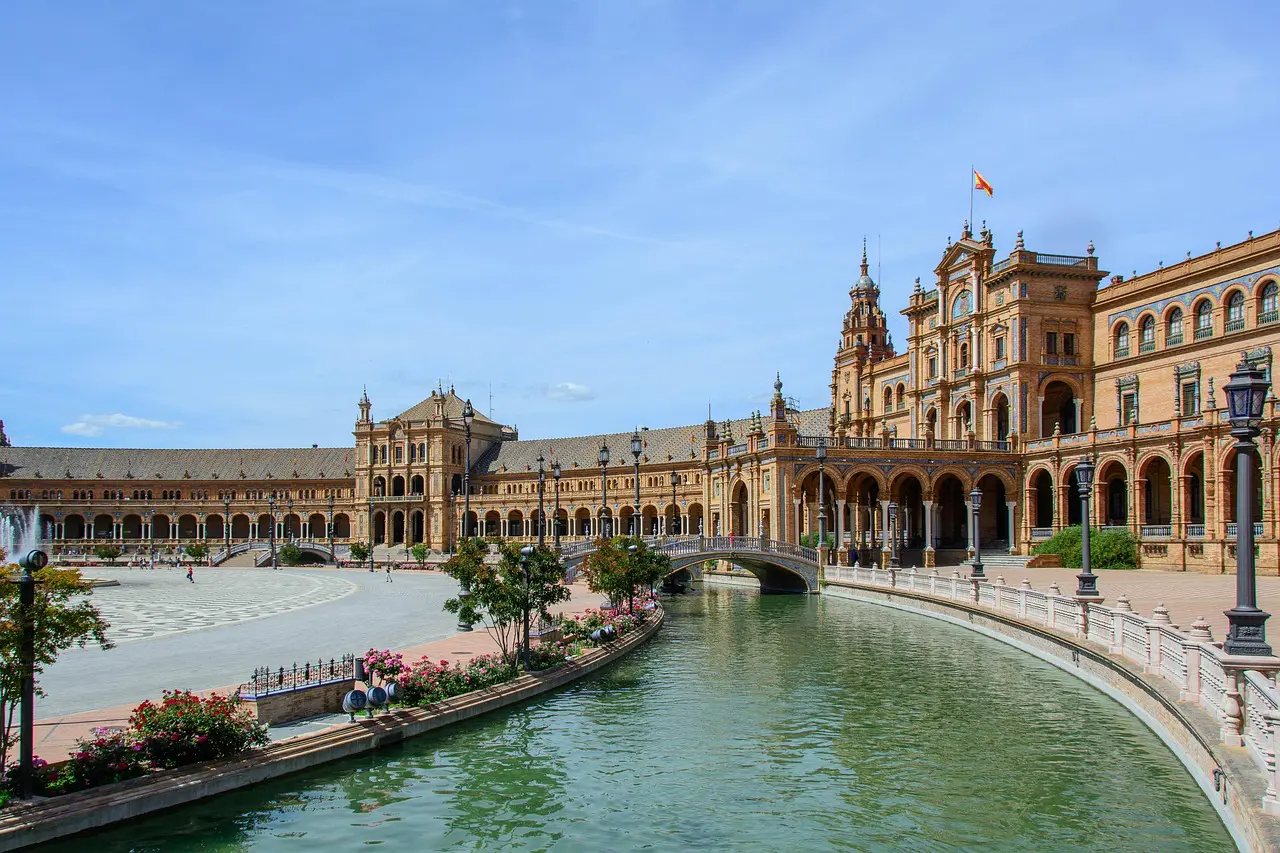
Best for: architecture, tapas, flamenco, and travellers who still want genuine summer warmth.
Typical September weather: average daytime highs are around 32°C (90°F), while nighttime lows are close to 18°C (64°F). Heatwaves can push afternoon temperatures higher, particularly early in the month.
How long to stay: three or four nights for Seville itself, or five to seven days if you want to add Córdoba, Jerez, or some of Andalusia’s white villages.
Seville in peak summer is beautiful, but it is also famously hot. September is generally easier than July and August, although the first part of the month can still feel intensely summery. Travellers who struggle with high temperatures may prefer the second half of September and should still plan the most demanding sightseeing for the morning.
You can explore Seville Cathedral and La Giralda, the Real Alcázar, the colourful Plaza de España, and the streets of Barrio Santa Cruz. This Seville travel guide includes famous attractions, places to eat, and less obvious corners of the city.
Evenings are better suited to outdoor tapas, a flamenco performance, or a walk beside the Guadalquivir River. September is also a good month for a day trip to Córdoba or Jerez.
Jerez traditionally celebrates its grape harvest during the first half of September with wine tastings, cultural events, vineyard visits, music, and activities connected to the region’s sherry production. Exact dates change each year, so check the official programme before arranging a trip around the festival.
Before you book: September is cooler than midsummer, but it is not cool in the ordinary sense of the word. Afternoon heat can still be tiring, and popular attractions remain busy. A hotel with effective air conditioning and a flexible daily schedule can make a considerable difference.
Lisbon, Portugal
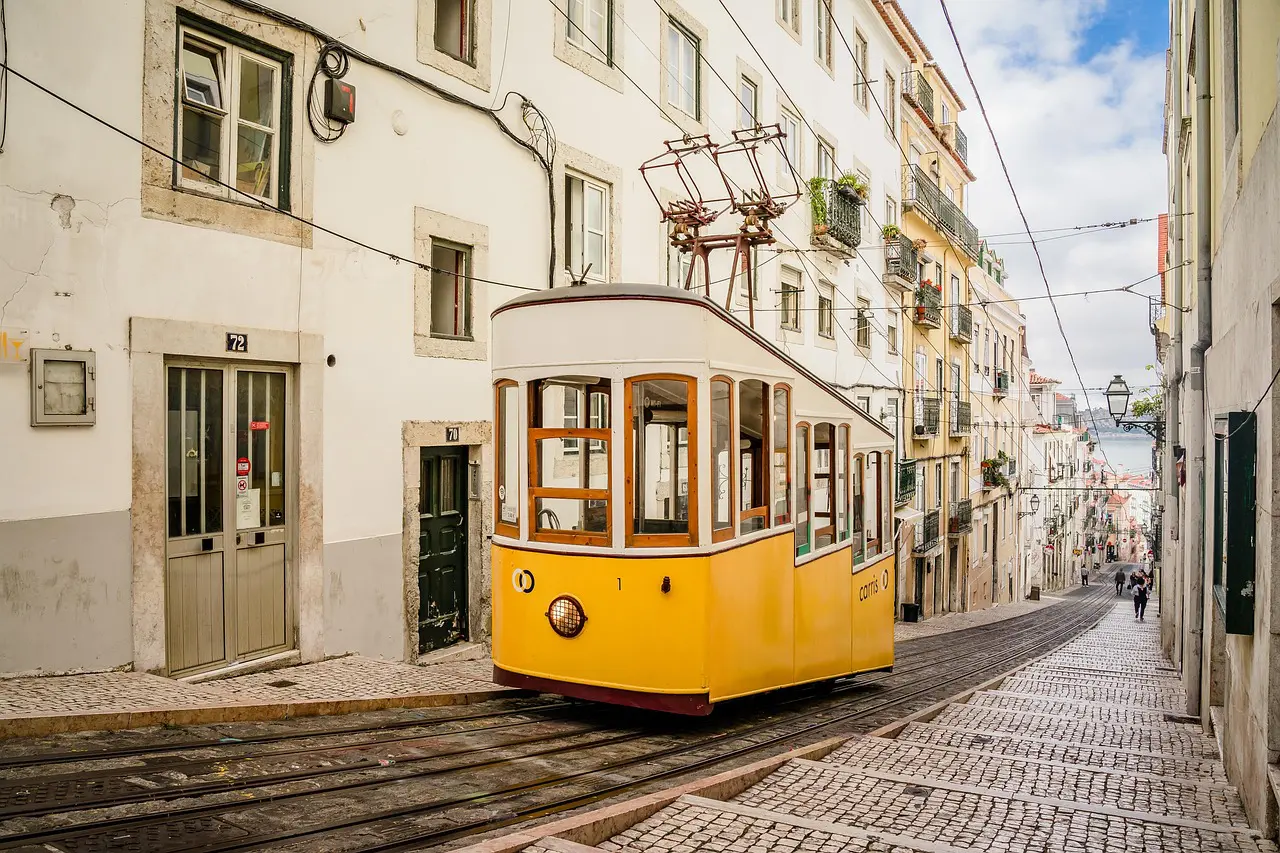
Best for: city sightseeing, food, viewpoints, historic neighbourhoods, and day trips.
Typical September weather: average daytime highs are around 27°C (81°F), with nighttime lows near 18°C (64°F). The sea around the Lisbon coast is usually about 20°C (68°F), which many swimmers find brisk.
How long to stay: three full days for Lisbon, or four to six days if you also want to see Sintra, Cascais, or nearby beaches.
Portugal’s capital is appealing throughout the year, but September still brings warm days, long evenings, and plenty of time for outdoor exploration. Crowds often begin to ease after the busiest summer period, particularly later in the month, although Lisbon’s famous viewpoints, trams, and monuments can remain busy.
Alfama, Baixa, Chiado, Bairro Alto, and the riverfront around Praça do Comércio each show a different side of the city. A ride on tram 28 is popular, but queues and crowded carriages are common. An early start gives you a better chance of boarding before the busiest part of the day.
Don’t miss Belém, where you can see Belém Tower, the Jerónimos Monastery, and monuments connected to Portugal’s maritime history. This complete Lisbon guide includes more attractions, neighbourhoods, and practical inspiration for a longer stay.
September also overlaps with the vindima, or grape harvest, in Portuguese wine regions. In the Alentejo, some estates offer harvest visits, tastings, grape picking, or traditional grape-stomping experiences. The harvest is not limited to one fixed calendar month, and visitor activities vary by estate, grape variety, and growing conditions, so advance reservations are important.
If you’re looking for a more premium experience, luxury Portugal travel options in and around the city include private guided tours, cruises on the Tagus, and exclusive day trips to Sintra or the vineyards of the Alentejo region.
Before you book: Lisbon is warm in September, but its Atlantic water is much cooler than the sea around Greece, Sicily, or southern Italy. The city’s hills and polished cobblestones also make supportive shoes more useful than they might seem when looking at a map.
Skiathos, Greece
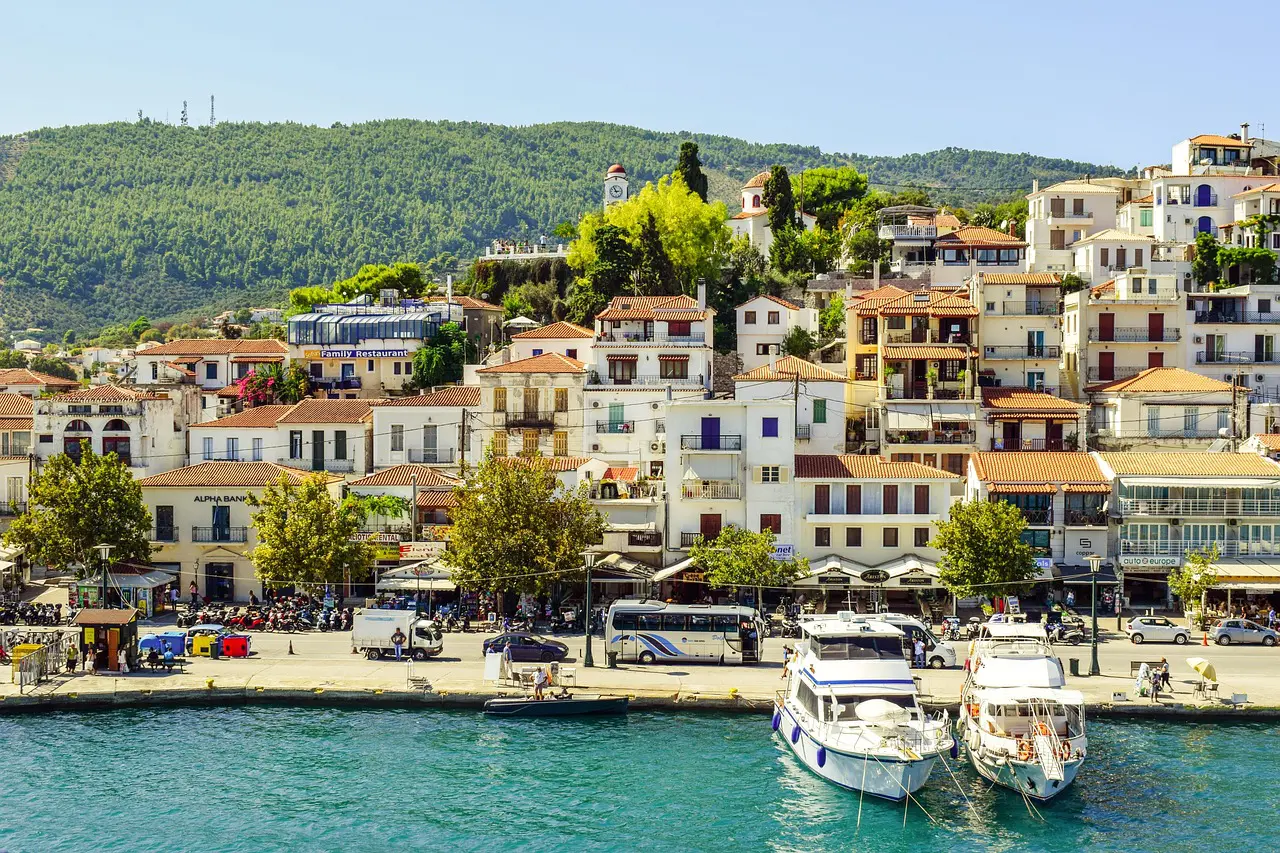
Best for: beaches, swimming, boat trips, forested scenery, and a relaxed island holiday.
Typical September weather: average daytime highs are around 26°C (79°F), while the sea is commonly around 24–25°C (75–77°F). Occasional rain becomes more likely as the month progresses.
How long to stay: five to seven nights gives you time for beaches, Skiathos Town, a boat excursion, and slower days without moving accommodation.
By September, the Aegean has had the entire summer to warm up, which is one reason Skiathos remains attractive for swimming after the peak holiday weeks. The weather is often sunny and warm, although no month can guarantee uninterrupted blue skies.
High-season prices may begin to soften, making it a useful period for travellers looking for cheap Greek holidays without giving up beach time. Prices and availability still depend on the week, flight route, and accommodation, so compare exact dates rather than relying on September always being cheaper.
The island has more than 60 beaches. Koukounaries is one of the best known and has facilities nearby, while Lalaria is reached by boat and depends on suitable sea conditions. Skiathos Town offers waterfront tavernas, winding lanes, whitewashed houses, and an active harbour, while inland paths lead through pine-covered landscapes.
September usually feels calmer than July and August, particularly later in the month. Before travelling, also check the latest Greece travel rules, especially when your route includes ferries, domestic connections, or more than one island.
Before you book: seasonal flights, ferries, boat excursions, and beach services may run less frequently as the month moves toward October. Confirm both arrival and departure options before paying for accommodation, especially when your trip depends on a particular ferry connection or direct charter flight.
Amalfi Coast, Italy
Best for: coastal views, historic towns, swimming, food, scenic boat journeys, and famous hiking routes.
Typical September weather: average daytime highs are generally around 26–27°C (79–81°F), while the sea remains close to 24–25°C (75–77°F). Rain becomes more likely than in July and August, particularly later in the month.
How long to stay: four or five days for two or three coastal towns, or a week when you also want to include Capri, Pompeii, Naples, or a slower beach day.
If you’re after coastal beauty paired with culture and excellent food, the Amalfi Coast continues to deliver in September. Positano, Ravello, and Amalfi remain lively, and the sea is usually warm enough for swimming.
The coast may be less intense than during the highest summer weeks, but it should not be described as empty. Popular towns, buses, ferries, viewpoints, and restaurants can remain crowded, especially during the first half of September and on weekends.
You can travel between coastal towns by ferry when services and sea conditions allow, explore terraced landscapes and lemon groves, or plan a day trip to Capri or Pompeii. Ferry journeys provide excellent views and avoid some road traffic, but sailings can be delayed or cancelled when conditions at sea deteriorate. Keep the bus timetable or another land-based option available as a backup.
September can also be more comfortable for hiking the Path of the Gods than the hottest part of summer. The route is still famous and can be busy, so starting early gives you cooler conditions and a better chance of a quieter trail. Bring water, sun protection, and footwear suitable for uneven ground.
Food is part of the appeal, but restaurant customs may differ from those at home. These Italian dining rules explain meal times, coffee habits, coperto, tipping, and several details visitors often discover only after sitting down.
Before you book: the Amalfi Coast has steep streets, long staircases, uneven surfaces, and limited road space. Choose your accommodation location carefully, especially when anyone in your group has mobility limitations or finds repeated climbs difficult.
Ljubljana and Lake Bled, Slovenia
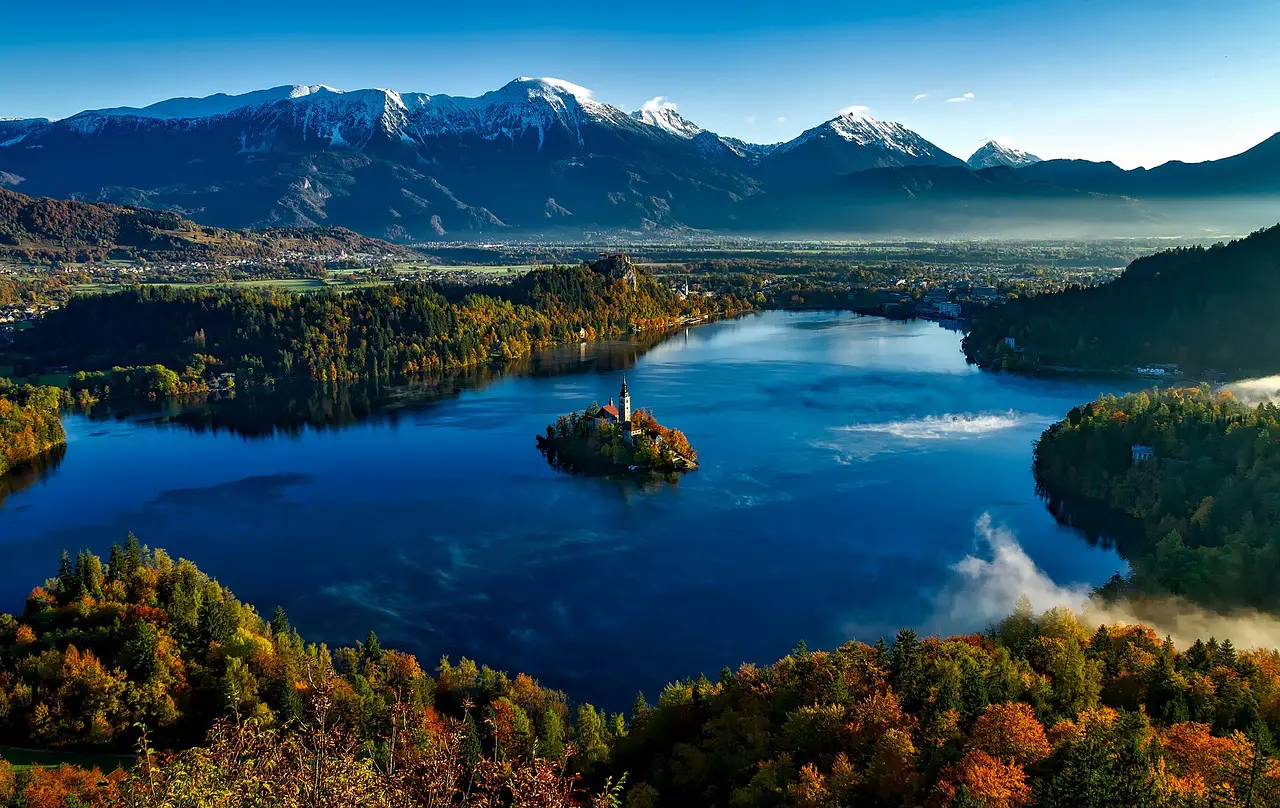
Best for: a city-and-nature trip, lakes, easy urban sightseeing, food markets, walking, and alpine scenery.
Typical September weather: Ljubljana usually has daytime highs around 20–22°C (68–72°F) and nighttime lows near 10–11°C (50–52°F). Lake Bled and the surrounding alpine region may feel cooler, especially in the morning and after sunset.
How long to stay: four or five days for Ljubljana and Lake Bled, or six to seven days if you also want Lake Bohinj and part of Triglav National Park.
Slovenia offers a very different September trip from the warmer destinations above. Ljubljana is compact, green, and easy to explore, with riverfront cafés, pedestrian streets, markets, bridges, and hilltop castle views. A detailed Ljubljana guide can help you plan both the famous attractions and places beyond the main sightseeing route.
From Ljubljana, it is a relatively short journey to Lake Bled. You can walk around the lake, rent a boat, visit Bled Castle, or continue toward Lake Bohinj and Triglav National Park for more mountain scenery.
September may still bring pleasant afternoons, but cooler mornings, rain, and rapid temperature changes are all possible. This is a destination where layers and a waterproof outer layer deserve space in your luggage.
Travellers visiting Bohinj in the second half of September may also encounter the traditional Kravji Bal, or Cows’ Ball. Usually held on the third Sunday of September, the event celebrates the return of cattle and herders from the high alpine pastures with decorated animals, local food, music, and regional traditions. Check the current year’s date before arranging transport or accommodation around it.
Before you book: Ljubljana and Lake Bled are better choices for mild days and early-autumn scenery than for guaranteed heat. Mountain weather can change quickly, and some outdoor plans may need a flexible alternative.
Sicily, Italy
Best for: beaches, ancient sites, volcanic scenery, street food, Baroque towns, and travellers who want both culture and warm water.
Typical September weather: Palermo has average daytime highs around 27°C (81°F) and nighttime lows near 19°C (66°F), while sea temperatures around Sicily are commonly close to 25°C (77°F). Coastal conditions differ from the mountains and the higher slopes of Mount Etna.
How long to stay: at least seven days for one part of the island. Ten days or more gives you a more realistic chance to combine several cities, archaeological sites, beaches, and inland stops.
Sicily remains warm enough for a beach holiday in September, but it offers far more than a final swim before autumn. Palermo and Catania bring markets, architecture, churches, and energetic street life. The Valley of the Temples, Syracuse, Taormina, Mount Etna, Noto, Ragusa, and the island’s smaller coastal towns can fill a much longer trip.
September also overlaps with the vendemmia in several Sicilian wine areas. Harvest timing varies by altitude, grape variety, and weather, so winery experiences and local festivals are not held on identical dates every year. Around Etna, the combination of vineyards, lava landscapes, and cooler elevation makes a striking contrast with the coast.
Sicily is much larger than it appears on a small map. Choosing one base for the entire island can result in long travel days, so divide the trip by region. Palermo is a useful base for northwestern Sicily, and these day trips from Palermo include places that add beaches, history, and smaller towns to a city stay.
For a broader list that reaches beyond Sicily, these places to see in Italy may help you decide whether to keep the trip entirely on the island or combine it with another region.
Before you book: September can still be hot, especially in exposed archaeological sites, and driving times are often longer than first-time visitors expect. Decide which part of Sicily matters most before booking flights and accommodation.
Vienna, Austria
Best for: palaces, museums, coffeehouses, classical music, architecture, and mild city-break weather.
Typical September weather: average daytime highs are around 21–22°C (70–72°F), while nighttime lows are generally close to 11–13°C (52–55°F). Early September may still bring warm afternoons, but evenings become cooler as the month progresses.
How long to stay: three or four full days for Vienna, or five to six days if you want a day trip to the Wachau Valley, Bratislava, or another nearby destination.
Vienna in September is a good choice for travellers who want to spend long days sightseeing without southern Europe’s strongest heat. Schönbrunn Palace, the Hofburg, Belvedere Palace, St. Stephen’s Cathedral, the Ringstrasse, museums, markets, and traditional coffeehouses give you plenty to do in both sunshine and rain.
If this is your first visit, these Vienna travel tips cover public transport, tickets, cafés, museums, palaces, and details that can shape the daily itinerary. You can also use this guide to the city’s famous Vienna landmarks when deciding which historic buildings deserve priority.
Wine is another reason to consider September. Vienna has vineyards within the city limits, traditional Heuriger wine taverns, and an annual Wine Hiking Day that is usually held toward the end of the month. The exact weekend changes, so confirm the dates before building the trip around it.
September is also a comfortable time to visit the Prater, walk through palace gardens, or take a trip into the Wachau before temperatures fall further. The city’s museums make bad-weather days easy to reorganise without losing an entire day.
Before you book: Vienna’s temperature can change quickly within the same week. Bring layers, and do not rely on a warm afternoon to predict the evening. Popular exhibitions, performances, and palace time slots may still need advance booking.
Munich and Bavaria, Germany
Best for: city sightseeing, museums, Bavarian culture, lakes, mountain day trips, and one of Europe’s largest annual festivals.
Typical September weather: Munich averages daytime highs around 19–20°C (66–68°F) and nighttime lows near 9–10°C (48–50°F). Warm spells are possible, along with rain and much cooler days.
How long to stay: three days for Munich’s main sights, or five to seven days when you want museums, palaces, and at least one Bavarian day trip.
Munich gives you two very different September experiences. Earlier in the month, the city can feel like a relaxed late-summer base for parks, markets, museums, and trips toward Bavaria’s lakes and mountains. During the second half, Oktoberfest transforms the atmosphere and brings far greater demand for accommodation and transport.
The historic centre includes Marienplatz, the Rathaus-Glockenspiel, Frauenkirche, St. Peter’s Church, Viktualienmarkt, and the Munich Residenz. BMW Welt and BMW Museum, the Deutsches Museum, Nymphenburg Palace, and Motorworld München provide enough variety for several days. This Munich itinerary shows how those attractions can fit into a realistic trip.
Oktoberfest begins in the second half of September and continues into early October. It includes large and small tents, food, music, parades, traditional clothing, and fairground rides. Travellers who want to attend should book early. Those who are not interested in the festival may prefer the beginning of September, when hotel demand is usually easier.
Bavaria also opens the door to Neuschwanstein Castle, Salzburg, Berchtesgaden, Königssee, and other day trips, although trying to fit too many into one short stay can leave very little time for Munich itself. Before planning, read these things to know before visiting Munich, including Sunday closures, public transport, cash, and local etiquette.
Before you book: the dates of Oktoberfest affect far more than the festival grounds. Accommodation prices, availability, crowded trains, and the general pace of the city can change sharply. Check the annual dates even when you have no intention of attending.
Istria, Croatia
Best for: Adriatic swimming, colourful coastal towns, food, wine, truffles, cycling, and a road trip that combines the coast with hill towns.
Typical September weather: Rovinj has average daytime highs around 25°C (77°F) and nighttime lows near 14°C (57°F). The sea is usually about 23–24°C (73–75°F), although cooler weather becomes more possible later in the month.
How long to stay: five to seven days gives you time for Rovinj, Pula, Poreč, coastal stops, and at least one inland town such as Motovun or Grožnjan.
Istria suits travellers who want the Adriatic without building an itinerary around a long list of islands. Rovinj’s old town, Pula’s Roman amphitheatre, Poreč and its Euphrasian Basilica, small beaches, vineyards, olive groves, and inland villages can all fit into one regional trip.
Early September often still supports swimming and boat outings, while the later part of the month begins to lean toward food and autumn experiences. White truffle season starts in September, although the strongest festival calendar and peak availability often extend into October and November. Event dates vary, and weather conditions affect the truffle harvest.
A car gives you the easiest access to inland Istria, but coastal towns can have limited parking and pedestrian historic centres. Travellers with children may also recognise the region from this guide to water parks in Europe, which includes Istralandia near the Adriatic coast. Check its seasonal opening calendar before including it in a September plan.
Before you book: Istria can still feel summery at the start of September, but beach weather becomes less dependable toward the end. Keep one or two inland food, history, or wine options available in case a planned sea day turns cloudy or windy.
Tenerife, Spain
Best for: dependable warmth, swimming, volcanic landscapes, stargazing, hiking, family attractions, and travellers who want a beach option beyond the Mediterranean.
Typical September weather: coastal daytime highs are commonly around 27°C (81°F), while the sea is close to 24°C (75°F). The south is generally sunnier and drier than the north, and conditions near Mount Teide can be dramatically cooler than at sea level.
How long to stay: seven days gives you enough time to combine beaches with Mount Teide, towns, viewpoints, and at least one longer excursion.
Tenerife is the warmest-weather choice on this list for travellers who are less concerned with a traditional mainland-European city break. Southern resorts such as Costa Adeje and Los Cristianos provide beaches and easy holiday facilities, while the north has greener scenery, historic towns, and a different atmosphere.
Mount Teide changes the entire scale of the trip. You can leave a warm coast and reach high-altitude volcanic terrain where temperatures are far lower, wind is stronger, and weather conditions require different clothing. La Laguna, La Orotava, Garachico, Anaga Rural Park, and the island’s black-sand beaches add variety beyond the resort areas.
This list of places to see in Spain includes Teide National Park and many mainland alternatives if you are deciding between the Canary Islands and a wider Spanish trip. Families and water-park fans may also want to consider Siam Park, but opening details and ticket conditions should always be checked directly before travelling.
Before you book: “Tenerife weather” is not one uniform forecast. The north, south, mountains, and exposed coastal areas can feel very different on the same day. Check the forecast for the exact part of the island you plan to visit rather than relying only on the temperature at your resort.
Early September vs Late September in Europe
Early September usually gives beach travellers the strongest chance of summer-like temperatures, warm water, longer seasonal schedules, and fully operating coastal businesses. It can also bring crowds and prices that remain close to August levels in popular destinations.
Late September often feels calmer, but conditions become less predictable. Seville and Tenerife may remain hot, while Vienna, Munich, Ljubljana, and the alpine region can feel much cooler. Rain becomes more likely in several destinations, and some island flights, ferries, boat tours, and beach services may operate less frequently.
The timing of major events can reverse the usual crowd pattern. Munich becomes markedly busier once Oktoberfest begins, Vienna’s wine events draw visitors on specific weekends, and harvest celebrations can increase demand in wine regions. Check the calendar for your exact dates rather than treating all of September as one uniform shoulder season.
Where Is Warm in Europe in September?
Among these ten destinations, Tenerife offers some of the most dependable coastal warmth, while Seville normally has the highest daytime temperatures but no beach. Skiathos, Sicily, and the Amalfi Coast combine warm air with sea temperatures that remain inviting for many swimmers.
Lisbon stays pleasantly warm for city exploration, but the nearby Atlantic is noticeably cooler. Istria can still support a beach holiday, especially earlier in September, while Vienna, Munich, Ljubljana, and Lake Bled are better for mild sightseeing than guaranteed heat.
Can You Swim in Europe in September?
Yes, swimming is usually comfortable in many Mediterranean and Aegean destinations during September. Skiathos, Sicily, and the Amalfi Coast often have sea temperatures around 24–25°C (75–77°F). Tenerife is also close to 24°C (75°F), while Istria commonly remains around 23–24°C (73–75°F).
The Atlantic coast near Lisbon is a different experience. Water temperatures around 20°C (68°F) are manageable for some swimmers and too cold for others. Wind, waves, currents, and local beach flags still require attention even when the air feels hot.
What Travellers Often Get Wrong About Europe in September
September is not one season across the continent. A traveller in Seville may still be arranging the day around strong heat while someone in Munich or near Lake Bled is reaching for a jacket after sunset.
September is not automatically quiet. Early September remains busy in many coastal destinations, and major events can make particular cities more crowded than they were a few weeks earlier.
Lower prices are not guaranteed. Flights and hotels may cost less than in August, but festivals, limited island connections, weekend demand, and popular warm-weather destinations can keep rates high.
Summer transport may change before the weather does. Ferries, charter flights, boat excursions, beach facilities, and mountain services can reduce their schedules even while temperatures still feel summery.
A festival can increase demand. Harvest celebrations, Oktoberfest, and wine events are excellent reasons to travel, but they may also make accommodation scarcer on specific dates. For more possibilities, see these September festivals in Europe.
Easy September Trip Combinations
Seville, Córdoba, and Jerez: allow five to seven days. Seville deserves the largest share, Córdoba can be visited on a day trip or overnight stay, and Jerez adds sherry culture and harvest-season events.
Lisbon, Sintra, and Cascais: four to six days gives you a city base, a palace-filled day in Sintra, and time near the Atlantic without changing hotels repeatedly.
Ljubljana, Lake Bled, and Lake Bohinj: allow five to seven days, particularly when you want walks, changing weather, and time in both the capital and the alpine region.
Vienna and the Wachau Valley: four or five days gives you a substantial city break and one day for vineyards, Danube scenery, and smaller towns outside the capital.
Munich and the Bavarian Alps: five to seven days allows several city attractions and one or two regional trips. During Oktoberfest, leave extra time for crowded transport and pre-booked plans.
Rovinj and inland Istria: use one coastal base for beaches and old-town evenings, then add Motovun, Grožnjan, wineries, or truffle-focused experiences by car.
Which September Destination Should You Choose?
Choose Seville when food, architecture, flamenco, and warm evenings matter more than beach time, and you are comfortable arranging sightseeing around the heat.
Choose Lisbon for a varied city break with historic neighbourhoods, viewpoints, food, river scenery, and easy day trips.
Choose Skiathos when swimming, beaches, tavernas, boat excursions, and a slower island schedule are the main reasons for the trip.
Choose the Amalfi Coast for dramatic coastal scenery, famous towns, warm sea temperatures, hiking, and a trip where the journey between places is part of the attraction.
Choose Ljubljana and Lake Bled for a cooler city-and-nature combination with compact sightseeing, alpine scenery, lakes, and the possibility of extending the trip into Triglav National Park.
Choose Sicily when you want beaches and warm water without giving up archaeology, cities, food, volcanic scenery, and a trip that can easily last more than a week.
Choose Vienna for palaces, museums, coffeehouses, wine culture, and mild days that suit long hours of city sightseeing.
Choose Munich and Bavaria for a mix of historic streets, major museums, regional day trips, and the atmosphere of Oktoberfest when your dates overlap with it.
Choose Istria for an Adriatic road trip that combines swimming, Roman history, colourful coastal towns, vineyards, and early truffle season.
Choose Tenerife when reliable warmth, volcanic landscapes, beaches, and a wide range of outdoor activities matter more than a classic European city-break atmosphere.
Travellers planning their first European trip may also find useful ideas in this guide to the best European cities for first-time visitors.
What to Pack for Europe in September
For Seville, Lisbon, Skiathos, the Amalfi Coast, Sicily, Istria, and Tenerife, pack breathable daytime clothing, sun protection, a hat, comfortable walking shoes, and a light layer for evenings. Swimwear still belongs in the suitcase for the island and coastal destinations.
For Vienna, Munich, Ljubljana, Lake Bled, and any mountain excursion, add warmer layers and a lightweight waterproof jacket. Tenerife also requires a warmer layer when you plan to visit Mount Teide, where altitude changes the temperature sharply.
Footwear deserves particular attention. Lisbon has steep cobbled streets, the Amalfi Coast has stairs and uneven paths, Sicily’s archaeological sites can be exposed and rough underfoot, and alpine routes require more support than city shoes. Before closing your suitcase, this list of commonly forgotten travel items can help you catch the small essentials that are easiest to leave behind.
More September and Autumn Travel Ideas
Your exact travel dates may point you in another direction. A trip later in autumn opens up a different range of European cities to visit in October, while travellers looking for changing leaves can explore the best places for autumn colours in Europe.
For a completely different September journey, these places to visit in Asia in September include islands, mountain regions, deserts, and culturally rich destinations across the continent.
Which European Destination Is Calling Your Name?
September offers several versions of Europe within a single month. You can swim in warm Aegean or Mediterranean water, spend evenings over tapas in southern Spain, explore palaces in mild Central European weather, follow harvest traditions through wine regions, or choose volcanic landscapes in the Canary Islands.
The strongest choice depends on your dates and on what you want from the trip. Check the climate, current transport schedules, major events, and the amount of walking involved before booking. A destination that suits early September may feel quite different three weeks later.

Frequently Asked Questions About Europe in September
Is September a good month to visit Europe?
Yes. September can offer warm weather, swimmable seas in southern destinations, more comfortable city sightseeing, harvest events, and a gradual reduction in summer crowds. Conditions vary widely by region and by week.
Where is warmest in Europe in September?
The Canary Islands, southern Spain, the Greek islands, Sicily, Cyprus, Malta, and other southern Mediterranean destinations are among the warmer choices. On this list, Tenerife offers dependable coastal warmth, while Seville generally has the highest daytime temperatures.
Is the sea warm enough for swimming in Europe in September?
It often is around Greece, southern Italy, Sicily, Croatia, the Canary Islands, Cyprus, Malta, and other Mediterranean or Aegean destinations. Atlantic water near Lisbon remains cooler, even when the air feels summery.
Is Europe cheaper in September than in July and August?
It can be, especially after the busiest school-holiday period, but there is no fixed percentage and no guarantee. Prices depend on the destination, events, weekends, flight capacity, and how early you book.
Is early or late September better for Europe?
Early September is generally better for warm sea temperatures, beach services, and summer transport schedules. Late September may bring cooler sightseeing weather and fewer visitors, along with a higher chance of rain and reduced seasonal services.
Which European destinations are best for a September city break?
Lisbon, Vienna, Munich, Seville, and Ljubljana all suit city breaks, but they offer very different temperatures. Lisbon and Seville remain warm, Vienna and Ljubljana are milder, and Munich may be especially busy once Oktoberfest begins.
What should I pack for Europe in September?
Pack layers. Southern destinations still require summer clothing and sun protection, while Central European and alpine destinations need warmer evening layers and rain protection. Comfortable shoes are essential for every destination in this guide.
More amazing articles for you:
The best guide to Mahabalipuram, Tamil Nadu, India
The Black Sea in March in Several Gorgeous Photos
Fascinating Easter Traditions and Customs from Around the World
A Newlywed Couple Tried a Viral Flight Hack on Their Honeymoon - And Triggered a Massive Debate. Oth...
They Set Out With No Idea What Was Waiting for Them - What Followed May Be the Most Beautiful Thing ...
15 Travel Habits Making Your Trip More Expensive Than It Should Be - And the Fixes Seasoned Traveler...
100 Incredible Things to See in Italy: From Iconic Landmarks to Hidden Gems You’ll Fall in Love With
What’s the Best “City” in Argentinian Patagonia?

Violeta-Loredana Pascal is a communications expert, business mentor, and the founder of Earth’s Attractions and PRwave INTERNATIONAL. A pioneer in the Romanian digital PR landscape since 2005, she holds a degree in Communication and Social Sciences from SNSPA Bucharest. Violeta is a senior trainer at AcademiadeAfaceri.ro, where she leverages over 20 years of experience to teach professional courses in PR strategy and workplace productivity. By blending high-level business consulting with a passion for holistic travel and wellness, she empowers solopreneurs to overcome procrastination, build profitable brands, and design a life of purposeful adventure.