Imagine this: You’re on a sun-drenched beach in Italy or Spain, the Mediterranean breeze is perfect, and you’re halfway through building a majestic sand fortress with your family. Suddenly, a local official approaches – and instead of admiring your architecture, they hand you a fine that costs more than your seafood dinner.
It sounds like a joke, but beach-use fines for tourists in Italy and Spain have become a real issue in recent years. Several Mediterranean destinations now enforce local beach ordinances that regulate digging, sand structures, and other activities that can obstruct public beach access or create safety hazards. From the coast of Tenerife to the shores of the Adriatic, municipalities are tightening enforcement – meaning even a simple bucket and spade can sometimes lead to legal trouble.
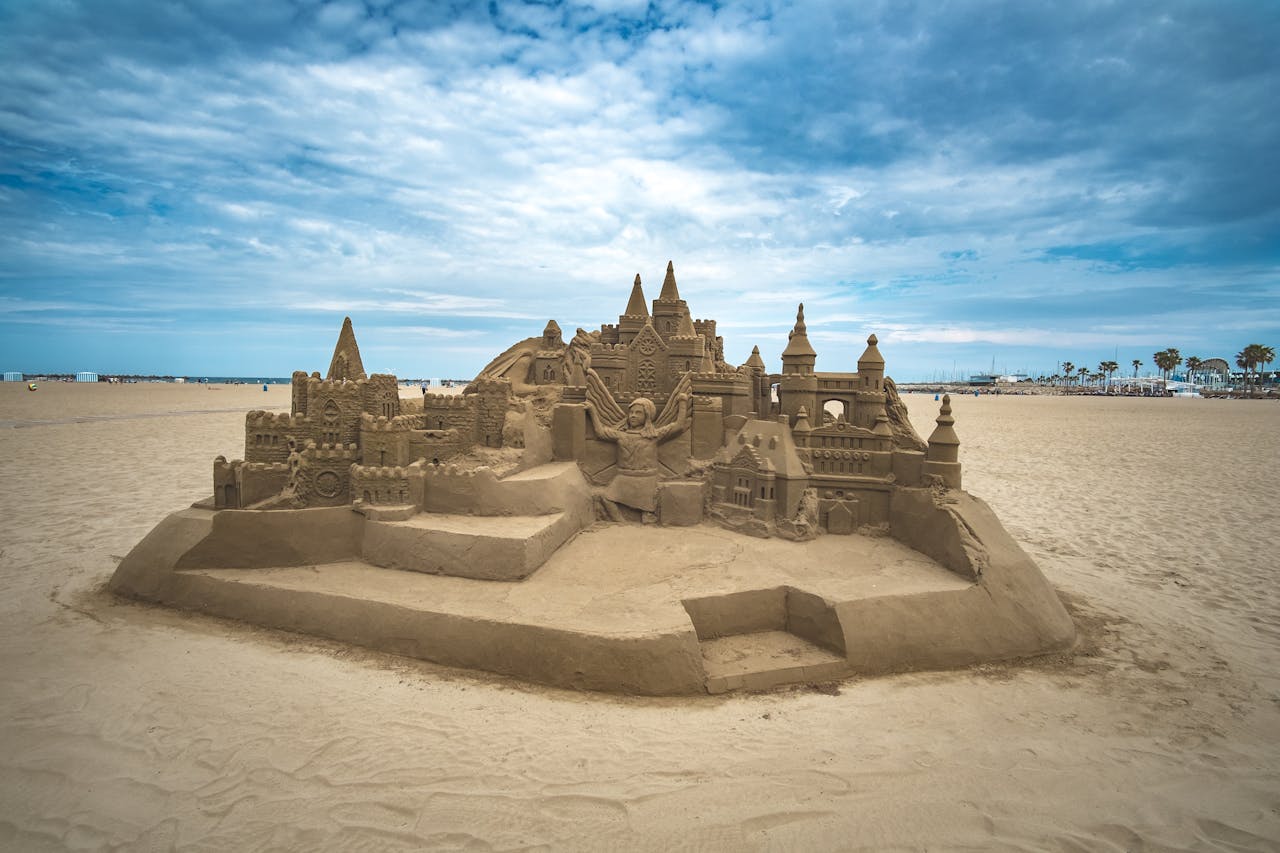
If you are planning a trip to the Mediterranean this year, you need to know where the “bucket and spade” could get you into legal trouble.
The Rise of “Micro-Erosion”: Why Your Sandcastle is a Threat
To most of us, a sandcastle is a harmless childhood memory. Local authorities often justify these rules by citing beach maintenance concerns, dune protection in sensitive areas, and the need to keep shorelines stable under heavy tourist pressure.
While casual sand play is rarely a measurable erosion factor on its own, municipalities argue that large-scale digging and structures can interfere with routine beach maintenance and natural sediment patterns.
When we dig deep holes or pile up large mounds of sand, we disrupt the natural “packing” of the shoreline. This seemingly minor change makes it easier for waves and wind to carry sand away, preventing the beach from naturally replenishing itself. In places like Eraclea, Italy, and Benidorm, Spain, where millions of tourists visit annually, the cumulative effect of thousands of sandcastles can lead to significant beach degradation over time.
The Safety Factor
Beyond the environment, there is a safety issue. Deep holes left by sand-sculptors can be “invisible traps” for evening joggers or emergency vehicles patrolling the beach at night.
Furthermore, large artificial obstacles on groomed tourist beaches can interfere with routine sand redistribution and cleaning operations carried out by municipalities overnight.
Italy: Where Sand Art Meets Strict Laws
Italy, home to so many amazing places to visit, has some of the most specific beach regulations in the world. If you follow travel news, you might remember the viral stories about La Pelosa Beach in Sardinia, where tourists are now fined €100 for using fabric towels (because they “steal” sand) and must use rigid straw mats instead.
But the rules against sandcastles are even older and, in some places, even stricter.
1. Eraclea (Near Venice)
The town of Eraclea made international headlines after travel media reported local bylaws discouraging sandcastle construction and deep holes on certain beaches. Earlier reports referenced fines in the €200–€250 range for violations, although enforcement practices can vary by season and municipality.
2. Jesolo and the Adriatic Coast
In nearby Jesolo, the focus is often on keeping the “shoreline corridor” clear. While small children building tiny mounds are rarely targeted, anyone creating “monumental” structures that obstruct the view or the path of others can face warnings or fines.
Spain: Fines Up to €1,500 for “Sand Architecture”
Spain’s Ley de Costas (Coastal Law) establishes that beaches form part of the public maritime-terrestrial domain. Within this framework, municipalities adopt local beach-use ordinances that regulate activities ranging from commercial installations to structures that obstruct public beach access. In some tourist hotspots, these ordinances have been applied to large-scale sand structures.
1. Benidorm (Levante Beach)
In 2016, Benidorm’s Town Hall voted to ban sand structures on its famous Levante Beach. While a small bucket-and-spade castle with a toddler is usually ignored, “professional” sand artists or those building large, elaborate structures without a permit can be fined up to €150.
2. The Canary Islands (Arona and Adeje)
In popular parts of Tenerife, such as Arona and Arica, organized sand-sculpture events or large-scale sand works typically require municipal authorization, particularly on mechanically cleaned tourist beaches. The reason here is twofold: protecting the volcanic sand and ensuring that the beaches remain accessible for cleaning crews and emergency services at night.
3. Galicia: The Heavy Hitters
In northwest Spain (Galicia), enforcement typically comes from municipal beach-use ordinances. For example, Vigo’s beach ordinance classifies serious infractions with fines of €751–€1,500, including conduct that involves an environmental alteration that affects public safety/sanitation or creates beach-use hazards.
This type of ordinance is common across Galician coastal cities, where local councils regulate beach occupation, safety, and environmental management under municipal police powers.
In practice, that means small children’s play is unlikely to be targeted, but large-scale excavations or structures that create hazards or obstruct beach operations could be sanctioned under the ordinance’s broader safety and public-use provisions.
How to Avoid a Fine: A 2026 Beach Checklist
You don’t have to give up on beach fun entirely, but you do need to play by the new rules. If you’re visiting Mediterranean beaches in 2026, follow these practical steps to avoid fines and keep your trip budget-friendly:
- Check the Signage: Almost every “protected” beach now has large signs at the entrance. Look for icons showing a crossed-out shovel or sandcastle.
- Small is Safe: Usually, the “spirit” of the law is to stop massive structures and deep pits. If you’re with kids, keep the castle small and – most importantly – level it before you leave.
- Fill Your Holes: The biggest fines often come from “abandoned” holes. If you dig, fill it back in before you head to dinner.
- The “Mat” Rule: If you are in Sardinia (especially La Pelosa), remember the mandatory straw mat rule. Using a towel directly on the sand is a guaranteed way to get a €100 fine in 2026.
- Permit for Professionals: If you are a serious sand sculptor, many Spanish towns allow you to apply for a “temporary artist permit” at the local Town Hall.
The “Sand Theft” Warning: Don’t Take it Home
While building a castle might cost you €250, taking the sand home as a souvenir is far worse. In Sardinia, “sand theft” is a serious crime. Every year, tourists are stopped at Alghero or Cagliari airports with bottles of white sand in their luggage.
Fines for taking sand, shells, or pebbles start at €500 and can go as high as €3,000 for larger quantities. In 2026, airport security uses advanced scanners specifically calibrated to detect the density of sand in suitcases.
In Italy, beaches are part of the protected coastal public domain, and removing natural materials is treated as an environmental offense under regional protection laws.
| Location | Offense | Potential Fine (2026) |
| Eraclea, Italy | Building any sandcastle/hole | €250 |
| Benidorm, Spain | Large structures/No permit | €150 |
| Stintino, Italy | Using a towel on the sand | €100 |
| Sardinia (General) | Taking sand/shells home | €500 – €3,000 |
| Vigo, Spain | Urinating in the sea | €750 |
Note: Fine ranges and enforcement practices are set by municipal ordinances and may change by season. Always check signage at beach entrances.
Respecting the “Blue” Economy
It’s easy to look at these rules and feel like “fun” is being regulated out of existence. However, as tourism numbers hit record highs in 2026, these measures are the only way to ensure that these beautiful beaches still exist in twenty years.
By following the local ordinances – whether it’s using a straw mat or keeping your sandcastle modest – you’re helping to preserve the very beauty you traveled so far to see.
Searching for up-to-date tourist fine rules in Italy or Spain? Local beach signage and municipal tourism websites publish current ordinances each season. Bookmark this guide before your trip to avoid unexpected penalties.
Planning a trip to Italy soon? You might want to check out my deep dive into the travel mistakes that could get you fined (or worse).
FAQ: Beach Fines and Sandcastle Rules in Europe
Can you really get fined for building sandcastles in Europe?
Yes – in certain European beach destinations, local municipal ordinances restrict large sand structures or deep holes if they obstruct public beach use or create safety hazards. Small children’s sand play is rarely targeted, but large-scale excavations or professional sand sculptures may fall under enforcement rules depending on the town.
Are sandcastle bans part of national law in Spain or Italy?
No. In most cases, restrictions come from local municipal beach-use ordinances, not national law. National coastal laws (such as Spain’s Ley de Costas or Italy’s coastal protection framework) give municipalities authority to regulate beach activities locally.
Which European destinations are known for sand structure fines?
Reported enforcement has occurred in parts of Eraclea (Italy), Benidorm (Spain), Tenerife (Spain), and Vigo (Galicia) – mainly targeting large sand structures or deep holes that interfere with safety, cleaning, or public access.
Can small children still build sandcastles?
In practice, yes. Enforcement generally focuses on large-scale excavations or professional-style sand sculptures, not casual family play. However, local signage always takes priority.
How high can beach fines reach in Spain and Italy?
Depending on the municipality, fines for serious beach-use violations can range from around €100 to €1,500, while environmental offenses such as removing protected sand or shells in Italy can reach €3,000.
How can travelers avoid beach fines?
Check posted beach signage, avoid digging deep holes, keep sand structures small, level any holes before leaving, and follow local equipment rules (such as mandatory straw mats in parts of Sardinia).
Do these rules change often?
Yes. Municipal beach ordinances are updated seasonally. Always check official tourism or municipal websites before visiting.
Final Note
Beach-use regulations in Italy, Spain, and other Mediterranean destinations are set at the municipal level and may change from season to season. The examples and fine ranges referenced in this guide reflect recently reported enforcement practices and published local ordinances, but they should not be treated as fixed legal advice.
Before traveling, always check official municipal tourism websites, local beach signage, or tourist information offices for the most current rules in your destination. Enforcement intensity can vary by town, time of year, and beach management policies.
When in doubt, follow posted signs and keep beach activities respectful of local regulations – it’s the simplest way to avoid unexpected fines and enjoy your trip stress-free.
Photo source: Pexels