If you like winter and trivia, you’re in the right place! I like winter too: the beautiful white landscapes, Christmas, Saint Nicholas, and the local traditions that make the season special. I even enjoy those freezing mornings when the snow outside makes everything look different.
I’ve already shared December trivia, Christmas trivia, and New Year trivia. This time, I wanted something that you can enjoy throughout winter, including January and February, when the holiday decorations are already packed away.
These 120 winter trivia questions and answers cover snow, winter weather, wildlife, food, movies, geography, sports, and traditions around the world. Use them for a family game night, a classroom activity, an office party, or a fun evening with friends. Each question has a direct answer, with no multiple-choice options. Give yourself one point for every correct response, and start with the easy round before tackling the harder questions.
ID 17290571 ©Digitalpress | Dreamstime.com
35 Easy Winter Trivia Questions and Answers for Kids and Adults
We’ll begin with easy winter trivia questions that work well for children, adults, and families playing together. The answers aren’t in the questions, though, so you’ll still have to think a little.
Snow and Winter Weather Trivia
Everyone has a strong opinion about the weather, so winter weather trivia is a friendly place to start. I love the chance of snow, even when the forecast doesn’t deliver.
1. What’s the shortest day of the year in the Northern Hemisphere called?
Answer: The winter solstice. It usually falls on December 21 or 22, when the Northern Hemisphere gets the least daylight of the year.
2. How many sides does a typical snowflake have?
Answer: Six. Ice crystals form with six-fold symmetry, which is why snowflakes share that hexagon-like shape.
3. What’s the name for the thin, nearly invisible layer of ice that makes roads dangerously slippery?
Answer: Black ice. It looks like plain wet pavement, which is exactly why drivers get caught out.
4. What do you call the sharp, pointy ice formations that hang from roofs and gutters?
Answer: Icicles. They form when melting water runs down and refreezes drip by drip.
5. Which month begins meteorological winter in the Northern Hemisphere?
Answer: December. Meteorologists count December 1 as the start of winter, while the astronomical season begins later.
6. What common kitchen ingredient do road crews spread to melt ice on roads?
Answer: Salt. It lowers water’s freezing point, so ice melts at temperatures where it would normally stay solid.
Winter Sports Trivia
From a living-room couch or a snowy slope, these winter sports trivia questions cover the games people actually watch every few years. Take a guess even if you’ve never held a hockey stick.
7. Which sport has players sweeping the ice in front of a sliding granite stone?
Answer: Curling. The sweeping changes how far the stone travels and how much it curves.
8. What do you call the sport of gliding down a snowy mountain on two long runners attached to your boots?
Answer: Skiing. It’s one of the most popular winter sports in the world, from Alpine resorts to the Rockies.
9. In ice hockey, what do players hit instead of a ball?
Answer: A puck. It’s a hard rubber disc about three inches across.
10. Which footwear with metal blades lets you glide across a frozen rink?
Answer: Ice skates. The metal blades let skaters glide and turn across the ice.
11. Which Olympic event sends athletes flying off a huge ramp, with judges scoring both distance and style?
Answer: Ski jumping. Jumpers can soar well over 100 meters on the large hill.
Winter Animals Trivia
Plenty of animals have clever tricks for surviving the cold, and these winter animals trivia questions stick to the ones most people have at least heard of.
12. Which flightless birds huddle together in Antarctica to survive the freezing winter?
Answer: Penguins. Emperor penguins pack tightly together and rotate positions so no one stays on the cold outer edge for long.
13. What’s the word for the deep, sleep-like state some animals enter to get through the coldest months?
Answer: Hibernation. Groundhogs and many bats slow their heart rate and live off stored fat.
14. Which antlered animal of the far north is called a caribou in North America?
Answer: The reindeer. Both names describe the same species, which has been herded in Lapland for centuries.
15. What color does a snowshoe hare’s fur turn in winter so predators can’t spot it?
Answer: White. Its brown summer coat is replaced with a white coat that blends into the snow.
16. Which small bird with a bright orange-red chest is a classic winter symbol in the UK and often appears on greeting cards?
Answer: The robin. European robins stay active through British winters and are easy to spot in gardens.
Winter Holidays and Traditions Trivia
Between February’s weather-predicting rodent and the Dutch steamboat arrival, winter holidays and traditions trivia keeps you guessing at what a holiday actually looks like.
17. Which February 2 holiday has a famous furry forecaster in Pennsylvania called Phil?
Answer: Groundhog Day. If Phil sees his shadow, the tradition says winter will last six more weeks.
18. Which Jewish festival of lights lasts eight nights and is marked by lighting a menorah?
Answer: Hanukkah. One more candle is lit each night until all of them are burning.
19. What’s the name of the holiday celebrated on December 26 in the UK, Australia and other Commonwealth countries?
Answer: Boxing Day. It’s a public holiday known for sales, football and leftovers.
20. Which Dutch gift-bringer arrives by steamboat each November?
Answer: Sinterklaas. The tradition is the root of the modern Santa Claus figure.

ID 262352421 ©Vetre Antanaviciute-meskauskiene | Dreamstime.com
21. What kind of calendar has a little door to open for each day leading up to Christmas?
Answer: An Advent calendar. Most have 24 doors, hiding chocolate, toys or small surprises.
Winter Movies, TV and Books Trivia
Plenty of people can name winter movie trivia answers faster than they can name their own neighbors. For more cozy films, there’s also a full Christmas movie trivia, but these five are about the season itself.
22. What’s the name of the snowman who loves warm hugs in Disney’s Frozen?
Answer: Olaf. Elsa and Anna built him, and he dreams of a summer vacation.
23. Which 2013 animated Disney film won the Academy Award for Best Animated Feature in 2014?
Answer: Frozen. It also won Best Original Song.
24. In which 1990 comedy is eight-year-old Kevin accidentally left behind when his family flies to Paris?
Answer: Home Alone. Kevin defends the house against two burglars using homemade traps.
25. Which TV series made “Winter is coming” its most famous warning?
Answer: Game of Thrones. It’s the motto of House Stark.
26. Which C. S. Lewis novel takes four siblings into a magical world where a witch has made it always winter?
Answer: The Lion, the Witch and the Wardrobe. It is one of the best-known books in The Chronicles of Narnia.
Winter Food and Drink Trivia
Soup, spice, and melted cheese make this the tastiest set of winter food trivia in the quiz. Don’t answer on an empty stomach. I also enjoy seeing seasonal foods at the Munich Christmas markets, where the variety goes well beyond sweet treats.
27. Which warm drink is often topped with marshmallows or whipped cream after a day in the snow?
Answer: Hot chocolate. It’s the classic way to warm up after sledding or ice skating.
28. What spiced, heated red-wine drink do people sip at European winter markets?
Answer: Mulled wine. It’s usually flavored with cinnamon, cloves, and orange.

ID 62027603 | Christmas ©Julia Sudnitskaya | Dreamstime.com
29. What spiced cookie, often cut into a little person with icing buttons, is a winter favorite?
Answer: Gingerbread. The flavor comes from ginger, cinnamon and molasses or honey.
30. Which Swiss dish of melted cheese, eaten with bread cubes on long forks, is a classic after a day on the slopes?
Answer: Fondue. It’s traditionally shared from one communal pot.
More Easy Winter Activities and Snow Facts
Before the medium round, here are five more familiar winter trivia questions that are great for family games and younger players.
31. What winter shelter is traditionally built from blocks of compacted snow?
Answer: An igloo. Its snow walls help insulate the space inside.
32. What is the name of the activity in which dogs pull a sled across snow?
Answer: Dogsledding. It has long been used for transportation in northern regions.
33. What is the name of the outdoor activity in which people walk over snow using broad frames attached to their boots?
Answer: Snowshoeing. Snowshoes spread weight over a larger area, helping people avoid sinking deep into the snow.
34. What do you call the white coating of tiny ice crystals that forms on grass or windows during a cold night?
Answer: Frost. It can develop when water vapor deposits directly as ice on a sufficiently cold surface.
35. Which popular winter pastime involves riding a toboggan or sled down a snowy hill?
Answer: Sledding. It’s a familiar activity for families in many snowy regions.
50 Medium Winter Trivia Questions and Answers
The next 50 medium winter trivia questions include weather, wildlife, films, food, geography, and Olympic sports. Most are familiar enough to work for adults and families, but you might need a little time to recall the answers.
Winter Science and Weather Trivia
Anyone who’s ever stood in a freezing wind has felt a little of this firsthand. For more brain-teasers from the natural world, the science trivia has a whole section on Earth and weather.
36. What’s the name of the measure that explains why a cold day feels even colder when it’s windy?
Answer: Wind chill. It describes how fast-moving air steals heat from exposed skin.
37. What Latin name is used for the northern lights?
Answer: Aurora borealis. The name combines Aurora, the Roman goddess of dawn, with Boreas, the Greek god of the north wind.
38. By about how many degrees is Earth’s axis tilted?
Answer: About 23.5 degrees. That tilt is what gives us seasons and longer nights in winter.
39. In which month does meteorological winter begin in Australia?
Answer: June. Seasons are flipped in the Southern Hemisphere, so winter runs from June through August.
40. What rare storm combines heavy snowfall with lightning and thunder?
Answer: Thundersnow. It happens when the atmosphere is unstable enough for thunderstorms while temperatures stay cold.
41. At what temperature does water freeze on the Fahrenheit scale?
Answer: 32°F, which is 0°C.
42. Which vitamin does your body make from sunlight, which is why short winter days can leave some people low on it?
Answer: Vitamin D. Sunlight on the skin triggers its production.
Winter Olympics Trivia
The 2026 Milan Cortina Games add some recent results to the familiar Olympic stories. These questions mix the newest Games with some history that sports fans will recognize.
43. Which two Italian cities shared hosting duties for the 2026 Winter Olympics?
Answer: Milan and Cortina d’Ampezzo. The Games spanned northern Italy, from the city to the Dolomites.
44. Which country won the most gold medals at those Games?
Answer: Norway. It won 18 gold medals, the most it has ever won at a single Winter Olympics.
45. How many interlocking rings appear on the Olympic flag?
Answer: Five. The Olympic rings symbolize the union of the five continents and athletes from around the world.
46. What nickname is given to the US hockey team’s 1980 upset over the Soviet Union at Lake Placid?
Answer: The Miracle on Ice. The US team of amateur and collegiate players defeated the favored Soviet team.
47. Which Olympic sport pairs a long-distance race on snow with rifle shooting?
Answer: Biathlon. Missing a target means penalty loops or added time.
48. Which figure skating jump is named after the skater who first performed it in 1882?
Answer: The Axel. It’s named for Axel Paulsen and is the only jump that begins moving forward.
49. How many athletes ride in the biggest bobsled used at the Games?
Answer: Four. The four-man bob is the largest sled in the program.
50. Which French Alpine town hosted the international winter sports event later recognized as the first Winter Olympics?
Answer: Chamonix. The event was originally called International Winter Sports Week.
Animals and Nature in Winter Trivia
ID 69961159 ©Abeselom Zerit | Dreamstime.com
A few winter animals trivia questions go beyond the usual suspects, for those who think they’ve got the polar bears covered.
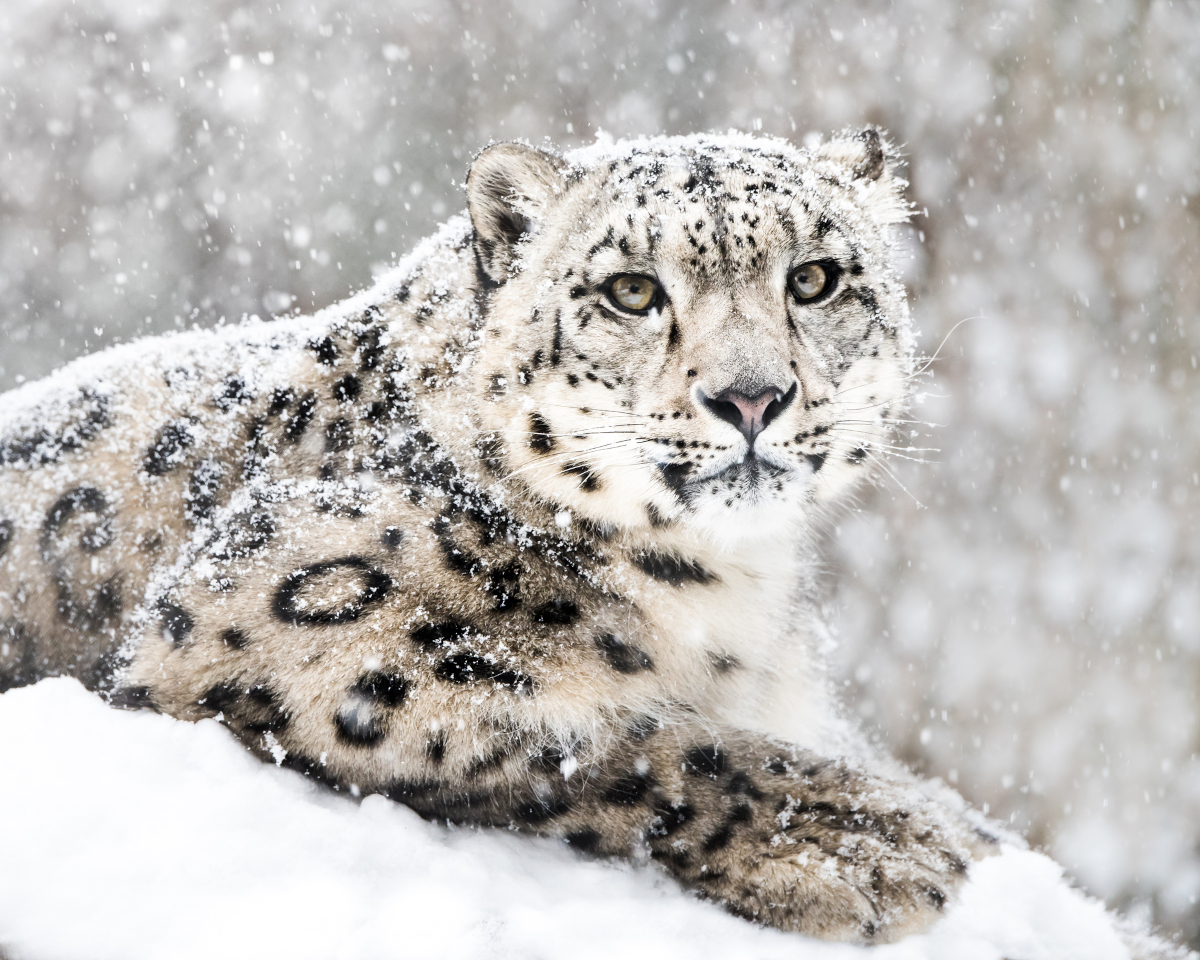
51. Which big cat, nicknamed the “ghost of the mountains,” lives in the cold, high peaks of Central Asia?
Answer: The snow leopard. Its thick fur and long tail help it survive in extreme cold.
52. Which Arctic whale has a long spiral tusk and is nicknamed the “unicorn of the sea”?
Answer: The narwhal. The tusk is actually an elongated tooth.
53. Which Japanese primates are famous for soaking in hot springs to survive snowy winters?
Answer: Japanese macaques, also called snow monkeys. Famous groups bathe in the hot springs of Nagano.
54. Which migratory birds commonly fly in V-shaped formations that can save energy during long journeys?
Answer: Geese. Birds can benefit from the airflow created by birds flying ahead.
55. Which small predator’s coat turns white in winter, and is then known as an ermine?
Answer: The stoat. Its white winter fur was once prized by royalty.
56. Which sled dog breed, often recognized by its striking blue eyes, comes from Siberia?
Answer: The Siberian husky. Not every husky has blue eyes, but plenty do.
Winter Holidays Around the World Trivia
Winter holidays around the world trivia has a lot to say about gifts, witches and cheese. Readers in Australia and the rest of the Southern Hemisphere get winter in June, so the summer trivia might fit your current weather better, while the New Year traditions around the world go further into the end-of-year customs. I also enjoy the atmosphere around the Vienna Christmas markets and their different traditions.
57. Which kindly witch from Italian folklore is said to bring gifts to children around Epiphany?
Answer: La Befana. She flies on a broomstick and fills stockings with candy, or coal for the naughty.
58. Which three figures bring gifts to Spanish children on January 6?
Answer: The Three Kings, or Los Reyes Magos. In many Spanish homes, January 6 matters more than Christmas Day.
59. What cake with a hidden charm is eaten around January 6 in France, with the finder crowned king or queen for the day?
Answer: The galette des rois. It’s a flaky almond cake with a small porcelain figure baked inside.
60. What’s the name of the big New Year’s Eve party Edinburgh is famous for?
Answer: Hogmanay. It features street parties, fireworks and the Scottish custom of first-footing.
61. Which mountain range in New South Wales is the heart of Australian skiing?
Answer: The Snowy Mountains. They’re home to Mount Kosciuszko, the country’s highest peak.
62. Which Japanese city hosts a famous February festival with giant snow and ice sculptures?
Answer: Sapporo. The Sapporo Snow Festival draws millions of visitors to Hokkaido.
63. Which city in Finnish Lapland, right on the Arctic Circle, calls itself the official hometown of Santa Claus?
Answer: Rovaniemi. Visitors can cross the Arctic Circle line and visit the Santa Claus Village.
64. Which Swiss resort town hosts the World Economic Forum every January?
Answer: Davos. It is also a popular ski destination.
Winter Music, Books and Pop Culture Trivia
Songs and stories shape how we remember winter, so these questions lean on culture over science. If winter music gets you humming, the Christmas song trivia goes much deeper, and the movie trivia covers the rest of the screen.
65. Which Tchaikovsky ballet, staged around the world every December, features a Sugar Plum Fairy?
Answer: The Nutcracker. It premiered in Saint Petersburg in 1892.
66. Which Vivaldi work contains a famous concerto called “Winter”?
Answer: The Four Seasons. Each of the four violin concertos is paired with a sonnet.
67. Which classic British animated story follows a snowman who comes to life and takes a boy flying to the North Pole?
Answer: The Snowman. It was based on Raymond Briggs’s 1978 picture book and is a TV favorite every winter.
68. Which Swedish pop group sang the New Year’s Eve favorite “Happy New Year”?
Answer: ABBA. The song came out in 1980 and has been a December 31 staple ever since.
69. Which animated TV series began with a Christmas special in 1989?
Answer: The Simpsons. The special was titled “Simpsons Roasting on an Open Fire.”
70. Which Jack London novel follows a dog named Buck through the Klondike gold rush?
Answer: The Call of the Wild. It’s one of the best-known stories set in a brutal northern winter.
Winter Food Trivia From Around the World
Another round of winter food trivia, this time with treats you might only know if you’ve traveled or have a very good aunt.
71. Which tall, domed Italian sweet bread filled with candied fruit is a winter holiday staple?
Answer: Panettone. It originated in Milan.
72. Which German spiced honey cookies, often heart-shaped, are sold at Christmas markets?
Answer: Lebkuchen. Nuremberg is especially well known for them.
73. Which Alpine dish features melted cheese scraped over boiled potatoes?
Answer: Raclette. The name comes from a French word meaning “to scrape.”
74. Which Spanish almond nougat is a classic winter sweet?
Answer: Turrón. It’s especially popular around Christmas and comes in soft and hard varieties.
75. What sticky maple treat is made by pouring hot syrup onto fresh snow?
Answer: Maple taffy. It’s a classic in Quebec and the northeastern United States.
More Winter Weather, Geography and Traditions
These medium winter quiz questions add some useful science and geography, plus cold-weather traditions. Most of the answers should feel familiar once you hear them.
76. What causes lake-effect snow around places such as Buffalo, New York?
Answer: Cold air passing over relatively warmer lake water. The air picks up moisture and can produce heavy snow downwind.
77. Which US state contains Denali, the highest mountain in North America?
Answer: Alaska. Denali is part of the Alaska Range.
78. Which mammal uses its wide, flat tail to steer through water and also stores food near its lodge for winter?
Answer: The beaver. It can swim beneath ice to reach branches stored underwater.
79. What is the name of the process in which snow or ice turns straight into water vapor without melting first?
Answer: Sublimation. It can contribute to a snow cover shrinking even in below-freezing conditions.
80. What do scientists call ground that remains frozen for at least two consecutive years?
Answer: Permafrost. It occurs in many Arctic and high-altitude regions.
81. Which city in France hosts an annual festival of lights in December known as the Fête des Lumières?
Answer: Lyon. Buildings and public spaces feature light installations during the festival.
82. What is the name of the Japanese mountain route famous for towering snow walls that can rise beside the road in spring?
Answer: The Tateyama Kurobe Alpine Route. Its famous Snow Wall Walk opens after crews clear deep winter snow.
83. Which winter sport has competitors travel headfirst down an ice track on a small sled?
Answer: Skeleton. It differs from luge, where athletes typically lie feet-first.
84. The Matterhorn rises along the border of which two European countries?
Answer: Switzerland and Italy. Its distinctive summit lies on their shared border.
85. Which annual Alaskan sled dog race is associated with a route between Anchorage and Nome?
Answer: The Iditarod. Its route is roughly 1,000 miles, though the exact distance varies by course.
35 Hard Winter Trivia Questions and Answers
Now for the final round! These hard winter trivia questions for adults cover famous records, history, places, science, and sports. They require more specific knowledge, but the answers still relate to well-known people, events, and winter phenomena.
Extreme Winter Weather and Records Trivia
When people ask about the coldest, snowiest and most extreme, snow trivia questions get serious. Expect numbers.
86. What temperature was recorded at Vostok Station in Antarctica in July 1983, the lowest directly measured air temperature on Earth?
Answer: −89.2°C (−128.6°F), recorded on July 21, 1983.
87. In which US state did Prospect Creek record a temperature of −80°F in January 1971?
Answer: Alaska. It remains the lowest officially recorded air temperature in the United States.
88. Which Siberian village, nicknamed the “Pole of Cold,” is among the coldest permanently inhabited places on Earth?
Answer: Oymyakon. Winter temperatures there often fall below −50°C.
89. Which Washington state ski area holds the world record for snowfall in a single season, at 1,140 inches?
Answer: Mount Baker, in the 1998–99 season. That’s roughly 95 feet of snow.
90. What is the name of the large region of cold air and low pressure surrounding the poles?
Answer: The polar vortex. Disruptions to the polar vortex can sometimes be associated with outbreaks of unusually cold weather farther south.
91. Which Atlantic current system transports warm water toward northwestern Europe?
Answer: The Gulf Stream and its northeastward extension, the North Atlantic Current. Ocean circulation is one influence on the region’s climate.
Winter Olympics and Winter Sports Trivia for Experts
Serious sports fans have been waiting for this set of winter sports trivia. Expect names, places, and a few surprises.
92. What’s the name of the famous Dutch ice-skating race of about 200 kilometers across frozen canals and lakes in Friesland?
Answer: The Elfstedentocht. It’s held only when the ice is thick enough, which can mean waiting years.
93. Which Czech athlete won gold in both snowboarding and alpine skiing at the same 2018 Games?
Answer: Ester Ledecká. She won the super-G and the parallel giant slalom at PyeongChang.
94. Which 1993 Disney comedy was inspired by Jamaica’s first bobsled team at the 1988 Calgary Games?
Answer: Cool Runnings. It’s a loose retelling of a real story.
95. Which Scandinavian town hosted the 1994 Winter Olympics, held just two years after the previous Games?
Answer: Lillehammer. It was the first time the Winter Games were moved off the same-year cycle as the Summer Games.
96. What’s the name of the trophy awarded each year to the NHL champion?
Answer: The Stanley Cup. It dates back to 1892 and is one of North America’s oldest trophies.
97. In alpine skiing, which event has racers weaving quickly between closely spaced gates down the course?
Answer: Slalom. It’s one of the most technical events in the sport.
Arctic and Winter Animals Trivia
For those who think they’ve mastered winter animals trivia, here’s a few that need a second thought.
98. Which North American frog can freeze solid in winter and thaw back to life in spring?
Answer: The wood frog. Its body produces natural antifreeze to protect its cells.
99. Which bird migrates from the Arctic to the Antarctic and back, making one of the longest journeys of any animal?
Answer: The Arctic tern. It can cover tens of thousands of kilometers each year.
100. Which grouse-like bird turns white in winter and burrows into snow to keep warm?
Answer: The ptarmigan. Feathered feet act like snowshoes.
101. Which small Arctic rodent is falsely believed to jump off cliffs in mass suicides?
Answer: The lemming. The myth was spread by a 1958 Disney nature film.
Winter Geography Trivia
When you think about the coldest corners of the map, winter geography trivia goes from the Arctic to the edge of the world. If you’d like to test yourself further, the geography trivia and the travel trivia are packed with records and places.
102. Which Swedish village hosts the original Icehotel, rebuilt from ice and snow every winter?
Answer: Jukkasjärvi. It sits in Swedish Lapland, far above the Arctic Circle.
103. Which Canadian city hosts a winter carnival billed as the world’s largest, with a snowman mascot called Bonhomme?
Answer: Quebec City. The carnival has been celebrated for generations and runs in January and February.
104. Which Arctic archipelago is home to the Global Seed Vault, where crop-seed backups are stored inside a mountain?
Answer: Svalbard. The vault uses its remote Arctic location and surrounding rock to help protect the collections.
105. What’s the largest island in the world, mostly covered by an enormous ice sheet?
Answer: Greenland. Roughly four-fifths of it is buried under ice.
106. Which country has Reykjavík as its capital?
Answer: Iceland. Reykjavík is one of the northernmost capitals of an independent country.
Winter History and Culture Trivia
Winter shaped some of history’s most dramatic moments, and this round of winter history trivia goes for explorers, paintings and poems. For US-flavored winter destinations, the US travel trivia has plenty more.
107. Which Norwegian explorer led the first expedition to reach the South Pole in 1911?
Answer: Roald Amundsen. His team reached the pole in mid-December, using sled dogs.
108. What was the name of Ernest Shackleton’s ship, crushed by Antarctic ice in 1915?
Answer: Endurance. Remarkably, the whole crew survived after an epic journey.
109. Which river did George Washington cross on Christmas night in 1776?
Answer: The Delaware River. The crossing set up a surprise attack on Trenton the next morning.
110. Which Flemish painter created the winter scene Hunters in the Snow in 1565?
Answer: Pieter Bruegel the Elder. It’s one of the most famous winter landscapes in art.
111. Which American poet wrote “Stopping by Woods on a Snowy Evening”?
Answer: Robert Frost. The poem was published in 1923.
Winter Traditions and Food Trivia, Hard Edition
ID 157343004 ©Azurita | Dreamstime.com
A last set of winter traditions trivia, with a few dishes and customs that may be unfamiliar but are worth knowing.
112. Which Scandinavian fish dish, soaked in lye, is traditionally served around Christmas?
Answer: Lutefisk. It’s made from dried whitefish, often cod.
113. What’s the name of the Japanese heated table with a blanket draped over it, used to keep legs warm in winter?
Answer: A kotatsu. Families gather around it for meals, tea and napping.
114. Which fast-food chicken chain has become a Christmas tradition in Japan?
Answer: KFC. Many families order a festive bucket well in advance.
115. Which Romanian dish of cabbage leaves stuffed with minced meat and rice is a staple of winter holidays?
Answer: Sarmale. It’s often served with polenta and sour cream.
Five Final Winter Challenges
For the final five hard winter trivia questions, think about famous sporting moments and the science behind unusual cold-weather sights.
116. What optical phenomenon creates luminous vertical columns above lights on very cold nights?
Answer: Light pillars. They occur when light reflects from ice crystals in the atmosphere.
117. Which American speed skater won five gold medals at the 1980 Winter Olympics?
Answer: Eric Heiden. He won every men’s speed-skating event at Lake Placid.
118. What weather condition occurs when a layer of warmer air sits above colder air near the ground?
Answer: A temperature inversion. It can trap air pollution in valleys during cold weather.
119. Which American figure skater won Olympic gold in Innsbruck in 1976 and inspired a popular short hairstyle?
Answer: Dorothy Hamill. Her distinctive haircut became widely imitated.
120. Which mountain in Japan is famous for its near-symmetrical cone and often snow-capped summit?
Answer: Mount Fuji. It is Japan’s highest mountain.
How Many Winter Trivia Questions Did You Get Right?
You made it through all 120 questions! I hope a few answers surprised you, even if you already knew a lot about snowy places, famous winter movies, or the Winter Olympics. If you kept score, here’s a little way to compare your result.
0–30 correct: Winter Beginner. Plenty of new facts to remember for the next game.
31–60 correct: Snow Day Explorer. You’ve got the basics and a few more challenging answers too.
61–90 correct: Winter Trivia Fan. That’s a strong score across many different subjects.
91–110 correct: Winter Expert. You know your winter history, science, and popular culture.
111–120 correct: Winter Trivia Champion. Very impressive, especially if you got the final questions without guessing!
How to Use These Winter Trivia Questions at Home, Work or School
For a family game night, take turns reading the questions out loud. Younger players can begin with the easy winter trivia questions, while adults and teenagers can try the medium and hard rounds. One point per correct answer keeps the game simple, and nobody needs special equipment.
At an office gathering, divide everyone into small teams and ask a selection from several subjects so one person doesn’t have an advantage in every round. For classrooms, pick questions that match your students’ ages. You can also use ten questions at a time during a winter-themed activity, without having to work through the entire article in one day.
If you enjoy geography and unusual places, the geography trivia and travel trivia offer more questions. For science fans, you can try the science trivia too.
Conclusion
One thing I enjoy about winter trivia is how many different subjects it covers. You might know every movie question and still be surprised by a fact about a bird, a lake, or an Olympic athlete. I hope you enjoyed the questions, and I’d love to know your score and which answer surprised you.
Frequently Asked Questions About Winter Trivia
What are good winter trivia questions for adults?
Questions about winter movies, Olympic sports, famous snowy places, winter food, and interesting weather phenomena work well for adults. A good set mixes familiar cultural references with a few harder facts, so everyone has an opportunity to answer.
Are these winter trivia questions suitable for kids and families?
Yes. The first 35 easy winter trivia questions work well for families, while older children and adults can try the medium round too. You can skip any question that seems too difficult for younger players.
What winter trivia questions work for an office party?
For a winter trivia game at work, choose around 20 to 30 questions covering several subjects. A balanced mix of movies, sports, winter geography, and everyday weather works well for a group with different backgrounds and interests.
Can I use these questions after Christmas?
Absolutely. Most of the collection is about winter weather, animals, winter sports, foods, places, and popular culture. It’s suitable for January and February as well as December, and it includes topics beyond Christmas and New Year celebrations.
What are some challenging winter trivia topics?
Try unusual weather phenomena, famous explorers, Winter Olympic history, Arctic wildlife, and winter traditions from other countries. The hard questions in this collection focus on names and facts that readers may recognize without needing specialist training.
More amazing articles for you:
Chernobyl today: the ultimate travel guide to visiting Chernobyl, Ukraine
Stop Doing This: The 5 Travel Mistakes Ruining Your Budget
Dream Destinations For Theater Fans
Outdoor Photography Adventures - What’s Really Needed to Get the Ultimate Mother Nature Shot?
What to Prepare for When Heading Off on a Cruise
A quick guide to cool Berlin
10 Events Where New Yorkers Can Make New Friends
Waiting for a flight? Here are 35 things to do while waiting at the airport

Violeta-Loredana Pascal is a communications expert, business mentor, and the founder of Earth’s Attractions and PRwave INTERNATIONAL. A pioneer in the Romanian digital PR landscape since 2005, she holds a degree in Communication and Social Sciences from SNSPA Bucharest. Violeta is a senior trainer at AcademiadeAfaceri.ro, where she leverages over 20 years of experience to teach professional courses in PR strategy and workplace productivity. By blending high-level business consulting with a passion for holistic travel and wellness, she empowers solopreneurs to overcome procrastination, build profitable brands, and design a life of purposeful adventure.