
The United States is home to some of the world’s most iconic buildings – structures that don’t just dominate skylines, but tell the story of America itself. From soaring Art Deco skyscrapers to futuristic museums, historic estates, and bold modern masterpieces, these buildings capture the country’s creativity, ambition, and spirit.
And yes, we recognize them immediately when we see their pictures online, or we instantly know where the action in a movie takes place, just by seeing such a famous landmark. (As you already know, I often make movie references.)
Whether they symbolize freedom, innovation, resilience, or artistic brilliance, each one has a story worth discovering. And while some are instantly recognizable, others are architectural gems that deserve a place on every traveler’s bucket list.
In this curated guide, I’m sharing 15 of the most iconic buildings in the USA – and why they matter (yes, it is more than just a list of famous buildings and pictures).
These aren’t just structures – you’re about to explore some of the most iconic buildings in the United States to visit, including famous American buildings worth visiting for travelers planning a cultural or architecture-focused trip.
You’ll find the history behind each landmark, insider tips for visiting, the moments that made them famous, and what makes them truly unforgettable today.
I am also adding some extra inspiration!
If you love architecture, American culture, or simply discovering places with a story, this is the perfect list to inspire your next trip.
Whether you’re looking to build your own US architecture itinerary or simply curious about architectural masterpieces in the USA you shouldn’t miss, this list will guide you through the highlights.
This guide covers the most iconic buildings in the USA, including famous American architecture, historic landmarks, and must-see buildings that belong on every traveler’s U.S. itinerary.
The 15 Most Iconic Buildings in the USA – And Why They Matter
1. Empire State Building – New York, NY
Why It’s Iconic
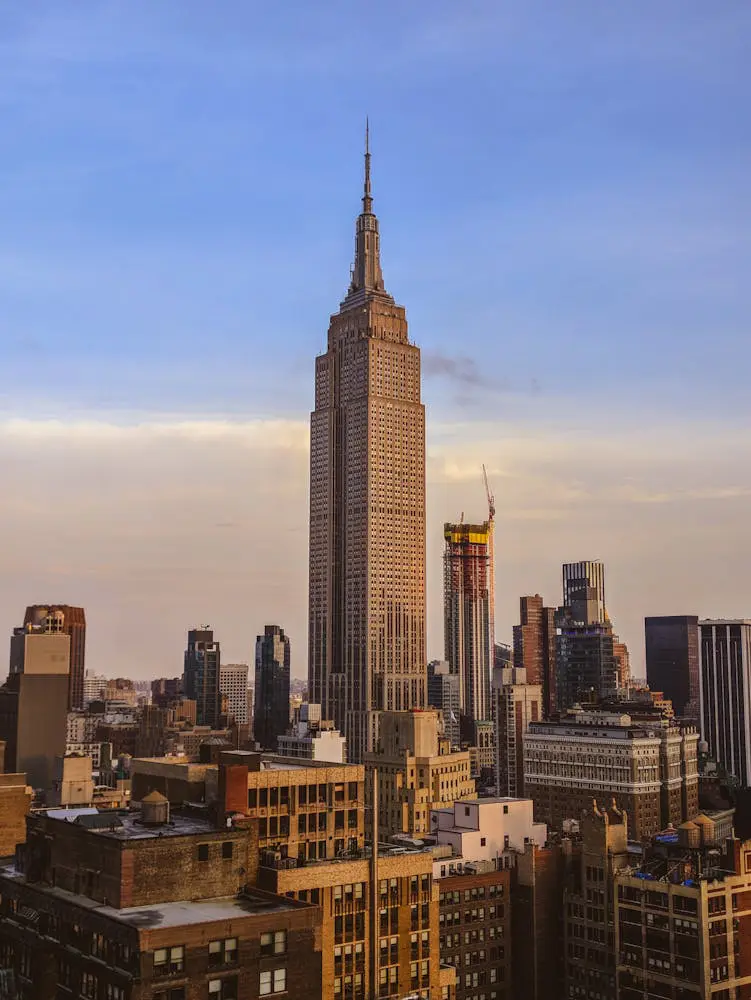
The Empire State Building isn’t just a skyscraper – it’s the building that defined the New York skyline. With its Art Deco beauty and sky-piercing silhouette, it remains one of the most recognizable structures on the planet.
It’s also one of the most photographed buildings in the United States, especially during sunset and blue hour, and you can explore it (a tour). You can include it on your 3-day itinerary
The Story Behind It
Completed in 1931 during the Great Depression, the Empire State Building was a marvel of engineering – and a symbol of American resilience. Workers finished it in just over a year, a record at the time.
It quickly became a cultural icon thanks to movies like “King Kong,” and for decades, it held the title of tallest building in the world. Today, its lighting displays mark celebrations, milestones, and global events, keeping it relevant and beloved by millions.
How to Visit
Book skip-the-line tickets for sunset (the most magical time). The 86th-floor and 102nd-floor observatories offer jaw-dropping 360° views. Arrive early in the day or after 9 PM to avoid heavy crowds.
2. The White House – Washington, D.C.
Why It’s Iconic
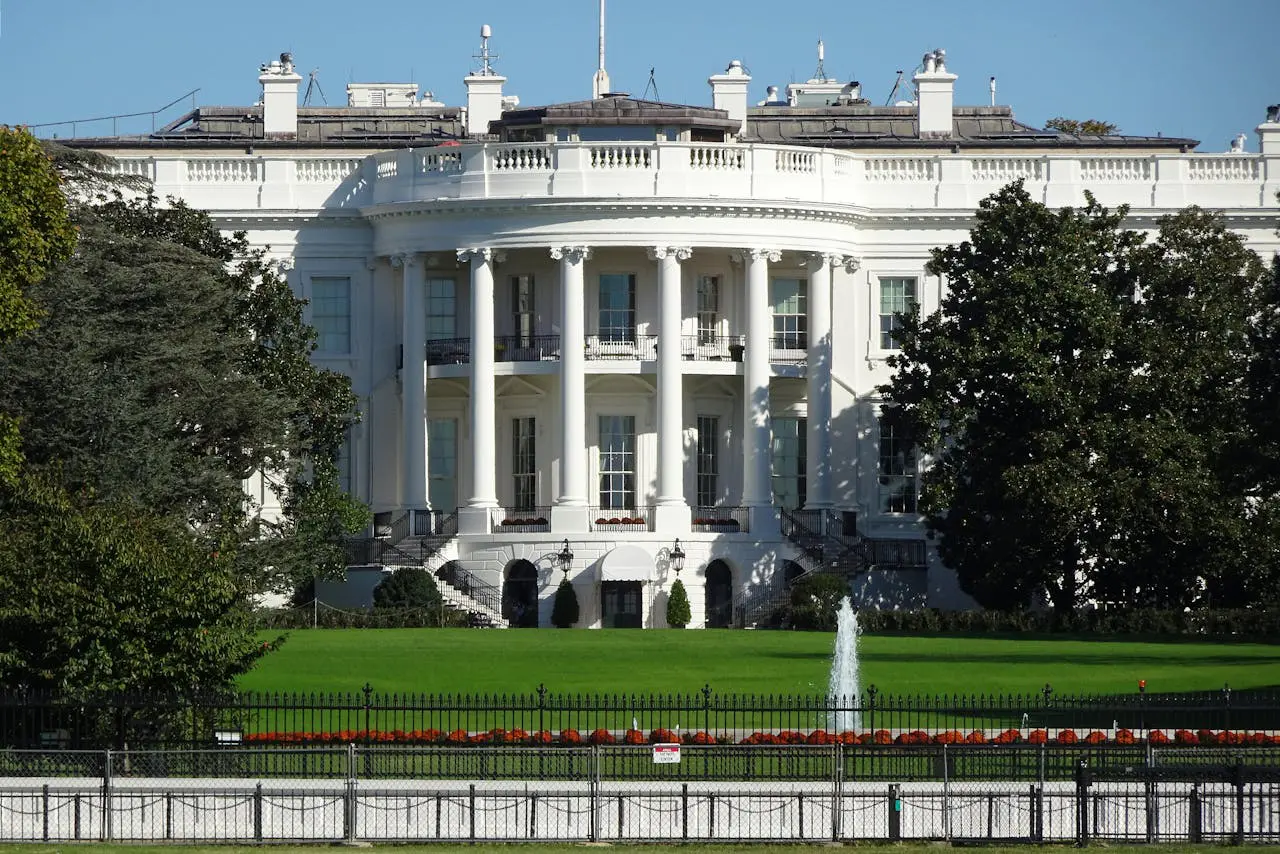
The White House is the world’s most famous residence – the official home and workplace of every U.S. president since John Adams. George Washington was the one who oversaw its construction, while John Adams was the first president to reside in the building, moving in in 1800.
Obviously, Washington, D.C. is one of the cities you have to visit in the US – and this building is iconic (no one on earth can argue).
The Story Behind It
Designed by Irish architect James Hoban, the White House has witnessed more history than almost any other American building.
It burned during the War of 1812, was rebuilt, expanded, redesigned, and adapted over centuries. Inside, decisions that shaped global politics were made. To Americans, it represents leadership, democracy, and national identity.
It’s also among the most important buildings in American culture and history, shaping national decision-making for centuries.
How to Visit
Tours must be requested through a Member of Congress (or an embassy for international visitors) at least 21 days in advance. Even without going inside, the exterior views from Pennsylvania Avenue and Lafayette Square are fantastic.
3. Golden Gate Bridge – San Francisco, CA

Why It’s Iconic
The Golden Gate Bridge is the most photographed bridge in the world. Its bright International Orange color and sweeping Art Deco lines make it a masterpiece of American engineering. Yes, it is a bridge, not a building – but it is so iconic that I am including it on this list of architecture symbols of the USA.
The Story Behind It
Opened in 1937, the Golden Gate Bridge connected San Francisco to Marin County, transforming the region. Its construction was a daring feat – workers battled fog, winds, and treacherous currents. At the time, it was the longest suspension bridge ever built.
Beyond its engineering significance, it became a cultural symbol of the American West, freedom, and innovation.
How to Visit
Walk or bike across for unforgettable views. Popular viewpoints include Battery Spencer, Marshall’s Beach, and Crissy Field. Mornings usually offer the clearest conditions.
It remains one of the famous buildings in America with the best views, perfect for photography lovers.
4. Statue of Liberty – New York, NY

Why It’s Iconic
Lady Liberty stands as a global symbol of freedom, hope, and new beginnings. For millions of immigrants, it was the first glimpse of America.
Among iconic US landmarks that are actually buildings, Lady Liberty stands unmatched in symbolism – you should book a cruise and see it.
Yes, I know, it is a statue, not a building, but it is a symbol for the US, so I am including it here. There are more than 15 iconic buildings included in this article – so the number in the title is still accurate.
The Story Behind It
Gifted by France in 1886 and designed by Frédéric Auguste Bartholdi, the statue was assembled on what was then Bedloe’s Island. Its internal structure was engineered by Gustave Eiffel (yes, the Eiffel Tower Eiffel!). Over time, the Statue of Liberty became synonymous with American ideals. It remains one of the most powerful visual symbols of the United States.
How to Visit
Book pedestal or crown access in advance – crown tickets often sell out months ahead. Ferries depart from Battery Park (NYC) and Liberty State Park (NJ).
5. Willis Tower (Sears Tower) – Chicago, IL
Why It’s Iconic
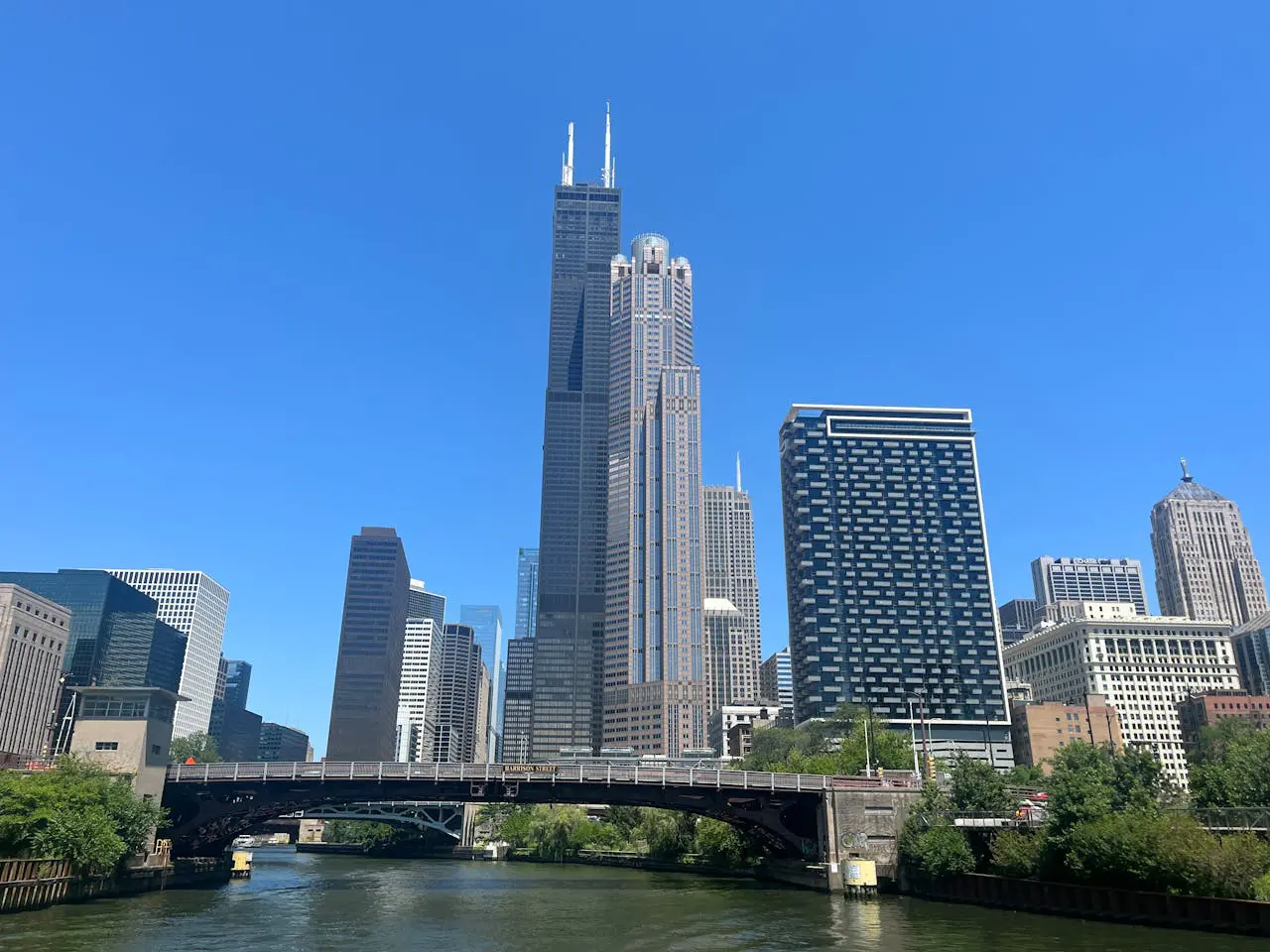
For 24 years, the Willis Tower was the tallest building in the world – and it remains a defining symbol of Chicago’s skyline.
It’s one of the iconic American skyscrapers you should see once, especially if you’re fascinated by engineering feats. You can enjoy the skydeck too – or you can take a Chicago river cruise and see many of the landmarks and amazing buildings. Chicago has a lot to offer to all its visitors!
The Story Behind It
Completed in 1973, its bundled-tube design by engineer Fazlur Rahman Khan revolutionized skyscraper construction worldwide. The building became an emblem of Chicago’s architectural dominance.
Today, the Skydeck’s glass boxes (The Ledge) draw millions who want the thrill of standing 1,353 feet above the city.
How to Visit
Visit the Skydeck for spectacular views; sunset is especially dramatic. Buy timed tickets to skip lines. For fewer crowds, come early in the morning.
6. The U.S. Capitol – Washington, D.C.

Why It’s Iconic
The Capitol is the architectural heart of American democracy – home to the U.S. Congress and the seat of legislative power. And, because I mentioned movies, if I were to list the movies that featured the Capitol, this would be a veeeeeeeeeeeeery long article:D
The Story Behind It
Construction began in 1793, and the iconic cast-iron dome was added during Abraham Lincoln’s presidency. Over centuries, the Capitol has hosted inaugurations, historic debates, and key moments that shaped the nation. Its Neoclassical design and symbolism make it one of the most photographed government buildings in the world.
It is widely recognized as one of the historic buildings that shaped American history, especially during pivotal legislative moments.
How to Visit
Free tours are available through the Capitol Visitor Center. Bookings are recommended. Explore the Rotunda, Crypt, and historic chambers.
7. Chrysler Building – New York, NY
Why It’s Iconic
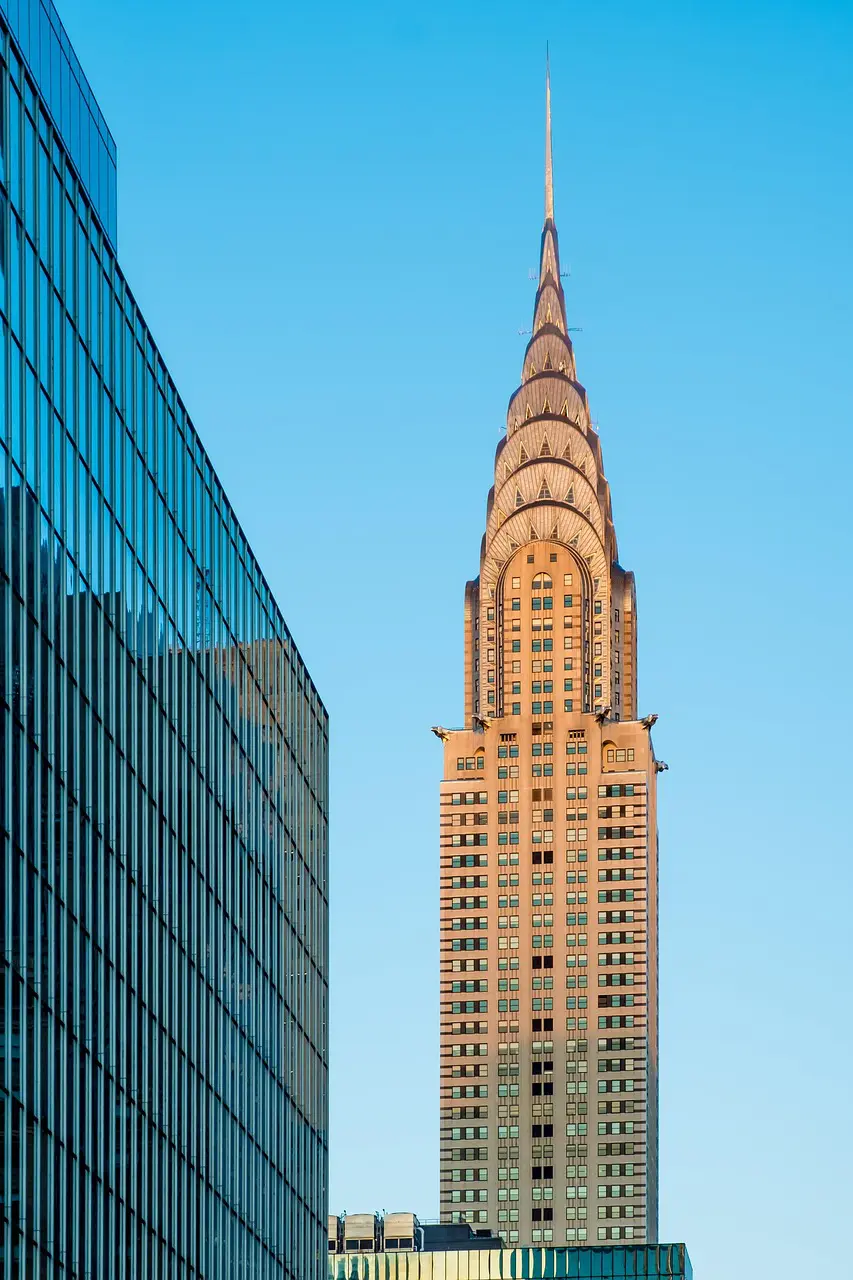
This shimmering Art Deco skyscraper remains one of the most beautiful buildings ever created – and a crown jewel of New York’s skyline. All locals’ guides to NYC include this so you should not miss it.
The Story Behind It
Completed in 1930, the Chrysler Building briefly held the title of the tallest building in the world. Designed by architect William Van Alen, the tower features stainless-steel eagles, hubcap-inspired ornaments, and a dazzling sunburst crown – all symbols of the machine age.
It remains one of the famous American buildings with interesting stories, from its secret spire construction to its Art Deco innovations.
The building was personally commissioned and financed by Walter P. Chrysler, the founder of the Chrysler Corporation, who intended it to serve as the company’s headquarters and as a legacy for his family. He paid for the project out of his own pocket, ensuring full control over the design and future ownership.
Its bold style, meticulous details, and dramatic spire cement its status as one of the greatest examples of Art Deco architecture ever built.
How to Visit
You can admire it from street level (Lexington Ave & 42nd St). The lobby is sometimes open during business hours, offering a glimpse of its Art Deco interiors.
8. Fallingwater – Mill Run, PA
Why It’s Iconic
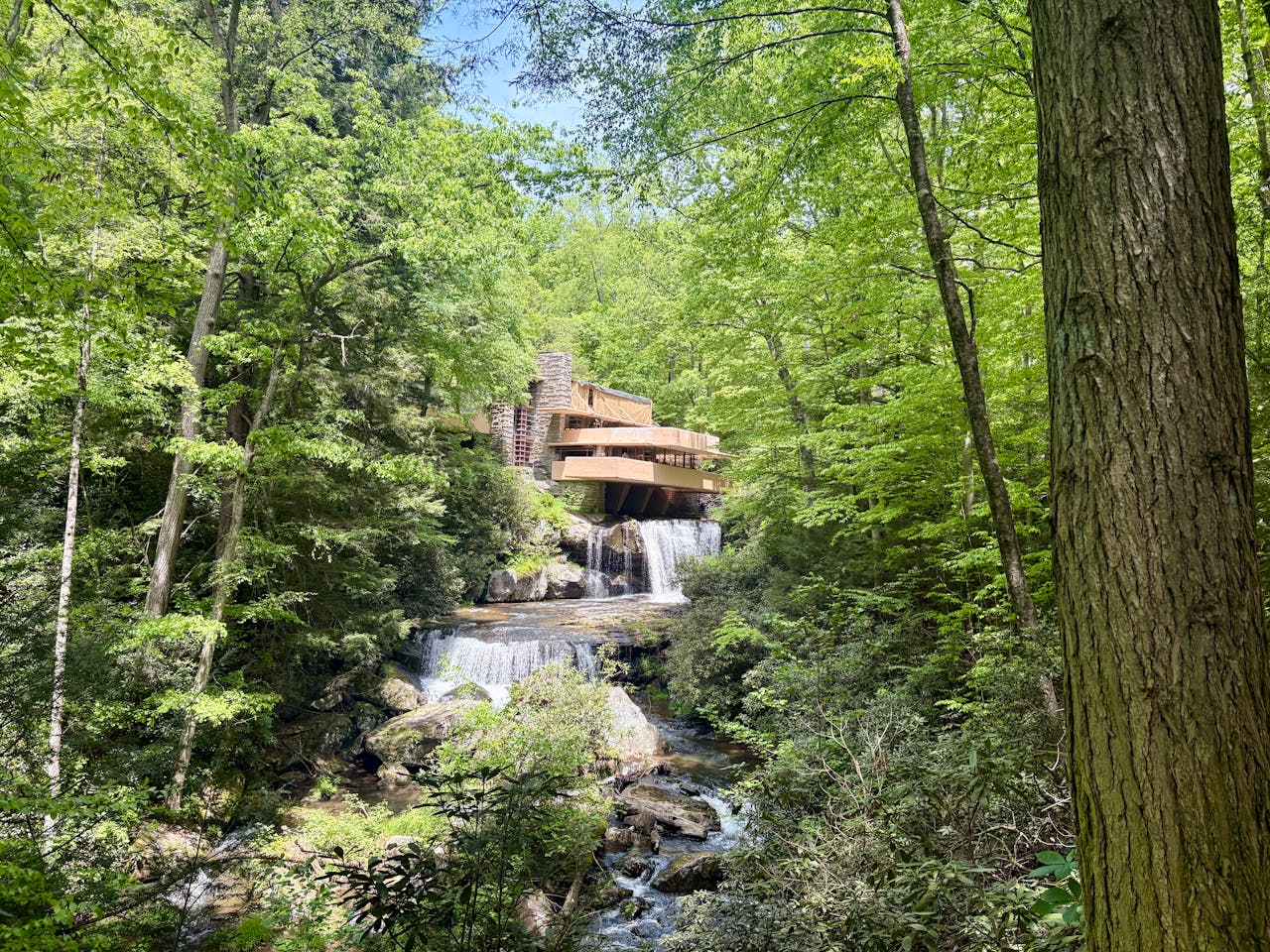
Fallingwater is one of the world’s most celebrated homes – a masterpiece of organic architecture by Frank Lloyd Wright.
It is universally celebrated as one of the architectural masterpieces in the USA, blending nature and design seamlessly.
The Story Behind It
Built in 1935 for the Kaufmann family, Fallingwater integrates seamlessly with its natural surroundings. Wright designed the house over a waterfall, blending stone, concrete, and glass with the forest.
It redefined modern architecture and remains one of the most influential houses ever built.
How to Visit
Tours book out weeks in advance – reserve early. Photography is restricted inside, but the exterior views are extraordinary. Best visited in spring or fall.
9. Walt Disney Concert Hall – Los Angeles, CA
Why It’s Iconic
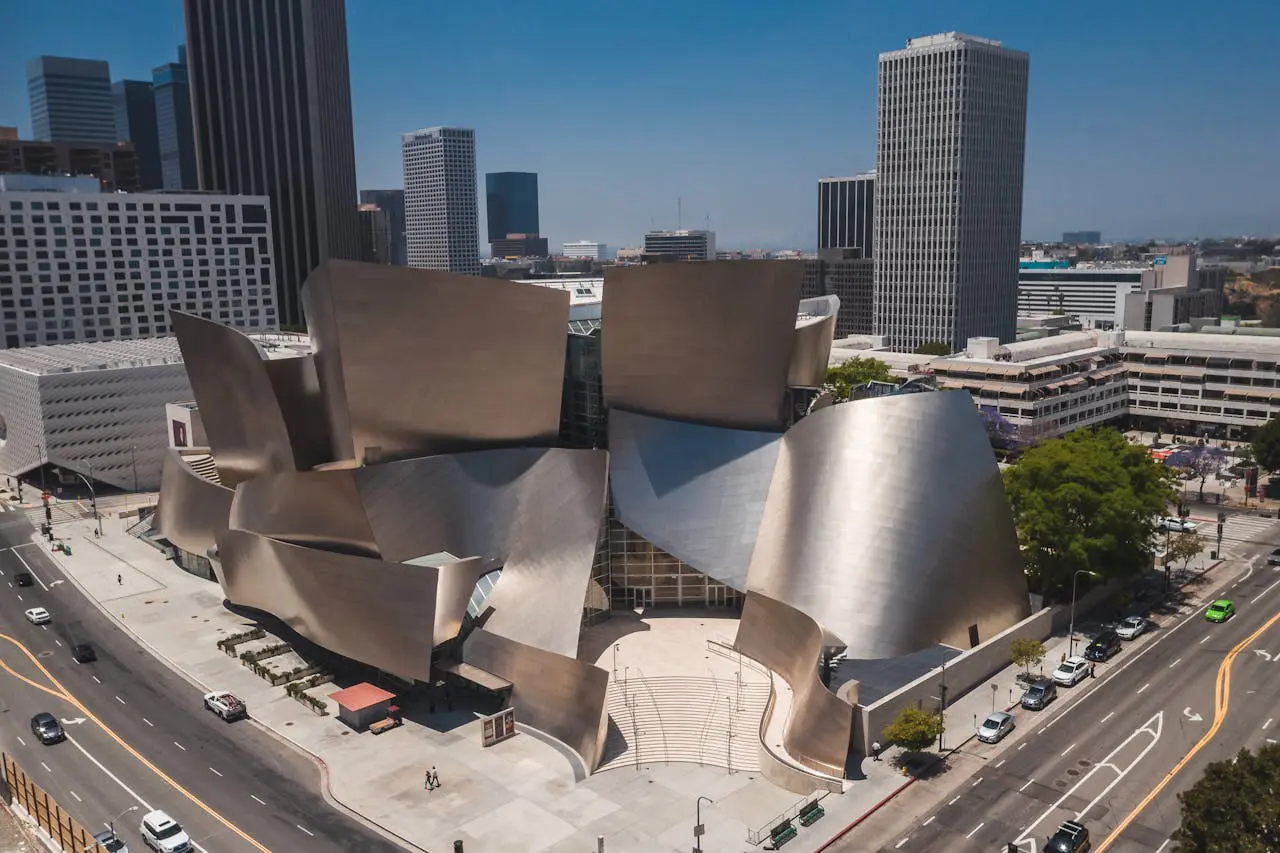
With its sweeping stainless-steel curves, this Frank Gehry masterpiece is instantly recognizable – a symbol of creativity in downtown LA.
And, speaking of Los Angeles, I have to add that there are many amazing things to do in the city, as well as some cool natural wonders to see near L.A.
The Story Behind It
Opened in 2003, the Walt Disney Concert Hall was funded by Lillian Disney in memory of Walt. Gehry’s bold, sculptural design reshaped LA’s cultural landscape.
Inside, the acoustics are considered among the best in the world, making it both an architectural and musical triumph.
Among modern icons, it also stands out as one of the world-famous buildings located in the United States for architecture lovers.
How to Visit
Take a self-guided audio tour (free). Evening concerts offer a chance to experience the hall’s incredible acoustics. Photographers love it at golden hour.
10. Metropolitan Museum of Art (The Met) – New York, NY
ID 92733850 ©Eileen Tan | Dreamstime.com
Why It’s Iconic
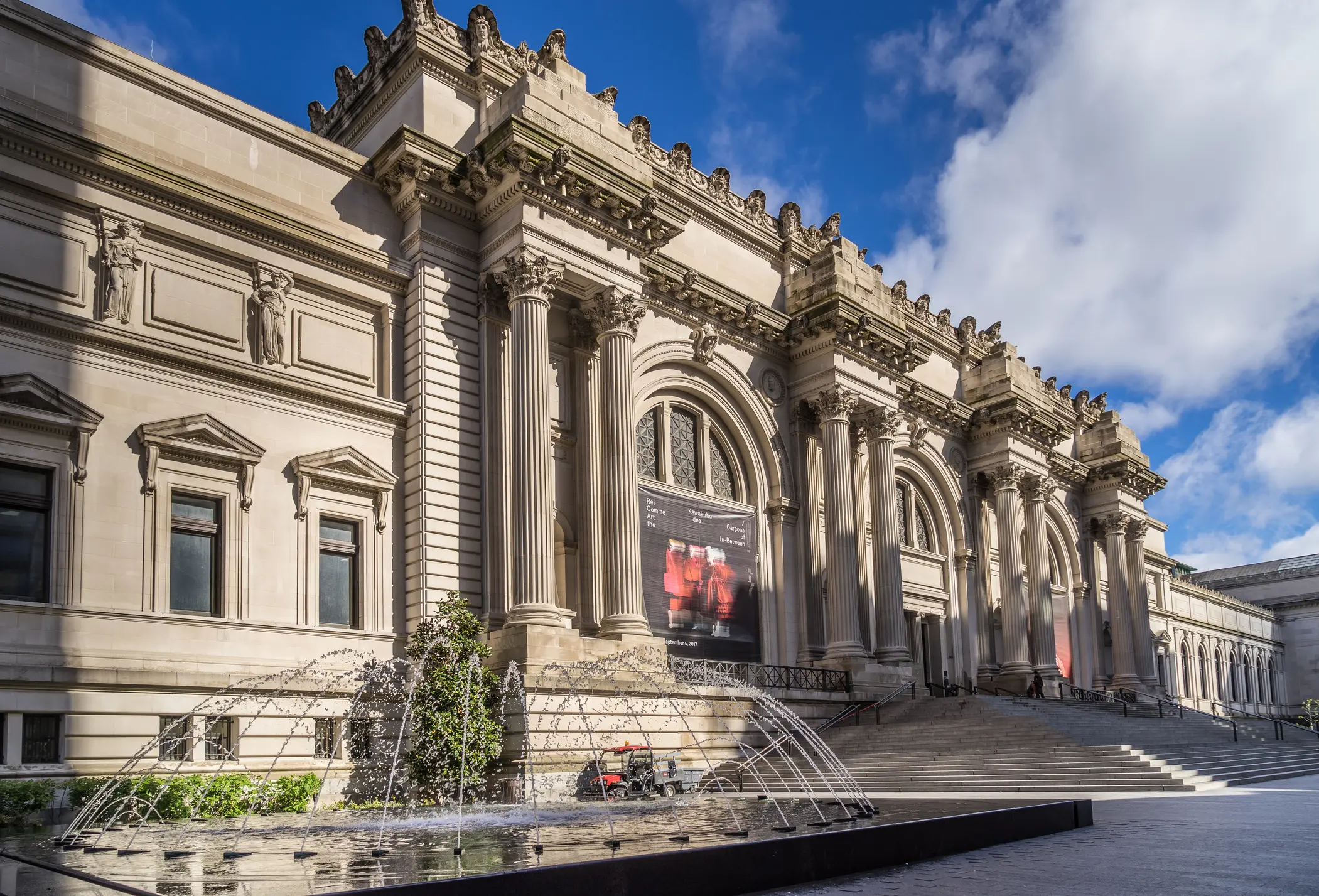
The Met is the largest art museum in the Americas and one of the most famous museum buildings in the world. Make sure you buy your skip-the-line ticket in advance 🙂
The Story Behind It
Opened in 1870, the museum’s Fifth Avenue façade with its grand steps is iconic in itself. Inside, the Met holds over two million works of art from every corner of the globe. Beyond its galleries, the building symbolizes New York’s intellectual and cultural power.
How to Visit
Arrive early to avoid crowds. Don’t miss the rooftop garden for skyline views. General admission is mandatory for out-of-state visitors ($30 for adults), but is pay-what-you-wish for residents of New York State, New Jersey, and Connecticut, as well as for students from those states.
As one of the famous US buildings you can tour inside, it offers endless galleries, exhibitions, and cultural discoveries.
11. The Alamo – San Antonio, TX
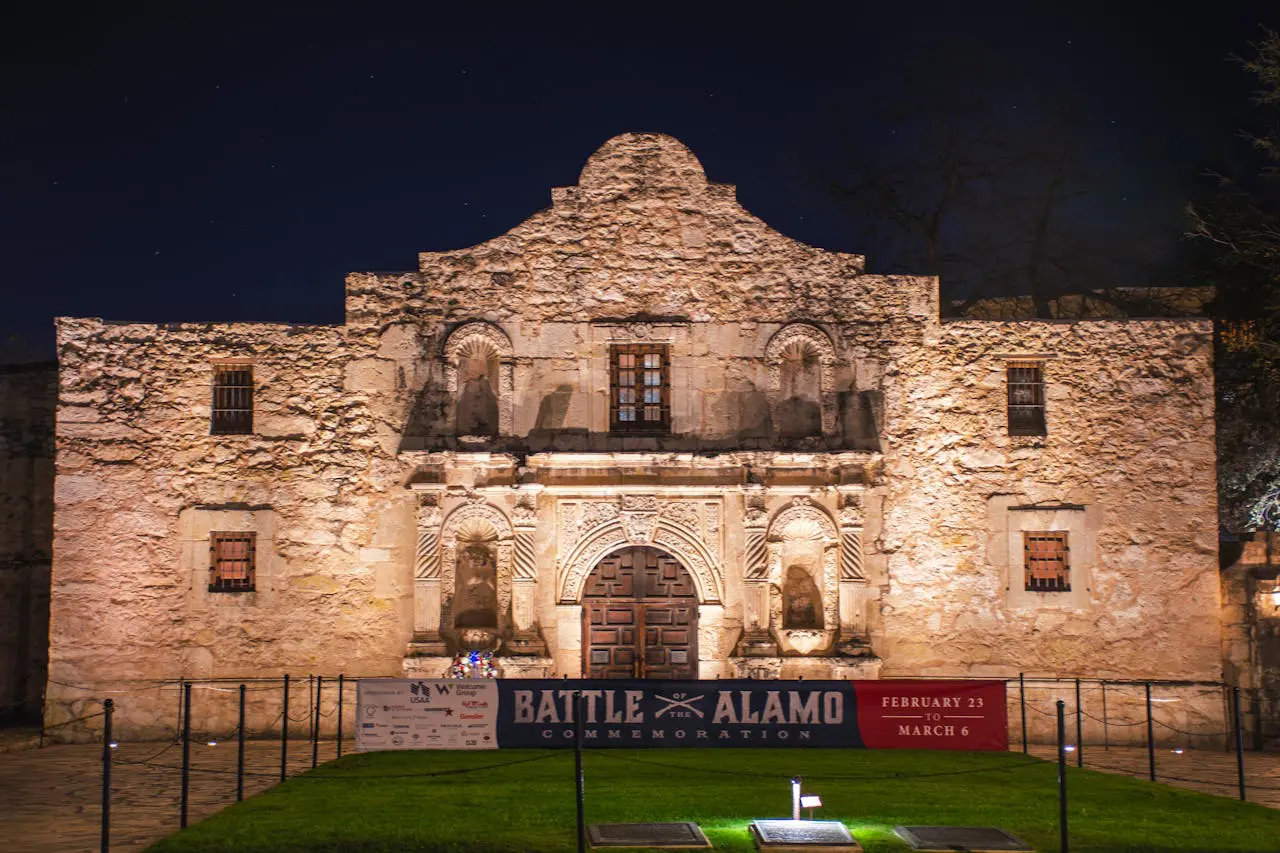
Why It’s Iconic
The Alamo is a symbol of courage and independence – a small mission that became one of the most important historic sites in the United States.
It remains one of the most important buildings in American culture and history, especially for those interested in independence movements.
The Story Behind It
Built in the 18th century as a Spanish mission, the Alamo gained fame during the Texas Revolution. In 1836, a small group of defenders, including Davy Crockett and James Bowie, held out for 13 days against the Mexican Army.
“Remember the Alamo” became a rallying cry for Texan independence.
How to Visit
Admission is free, but timed entry reservations are recommended. Visit early to avoid crowds and heat. Combine with the San Antonio River Walk.
12. Hearst Castle – San Simeon, CA
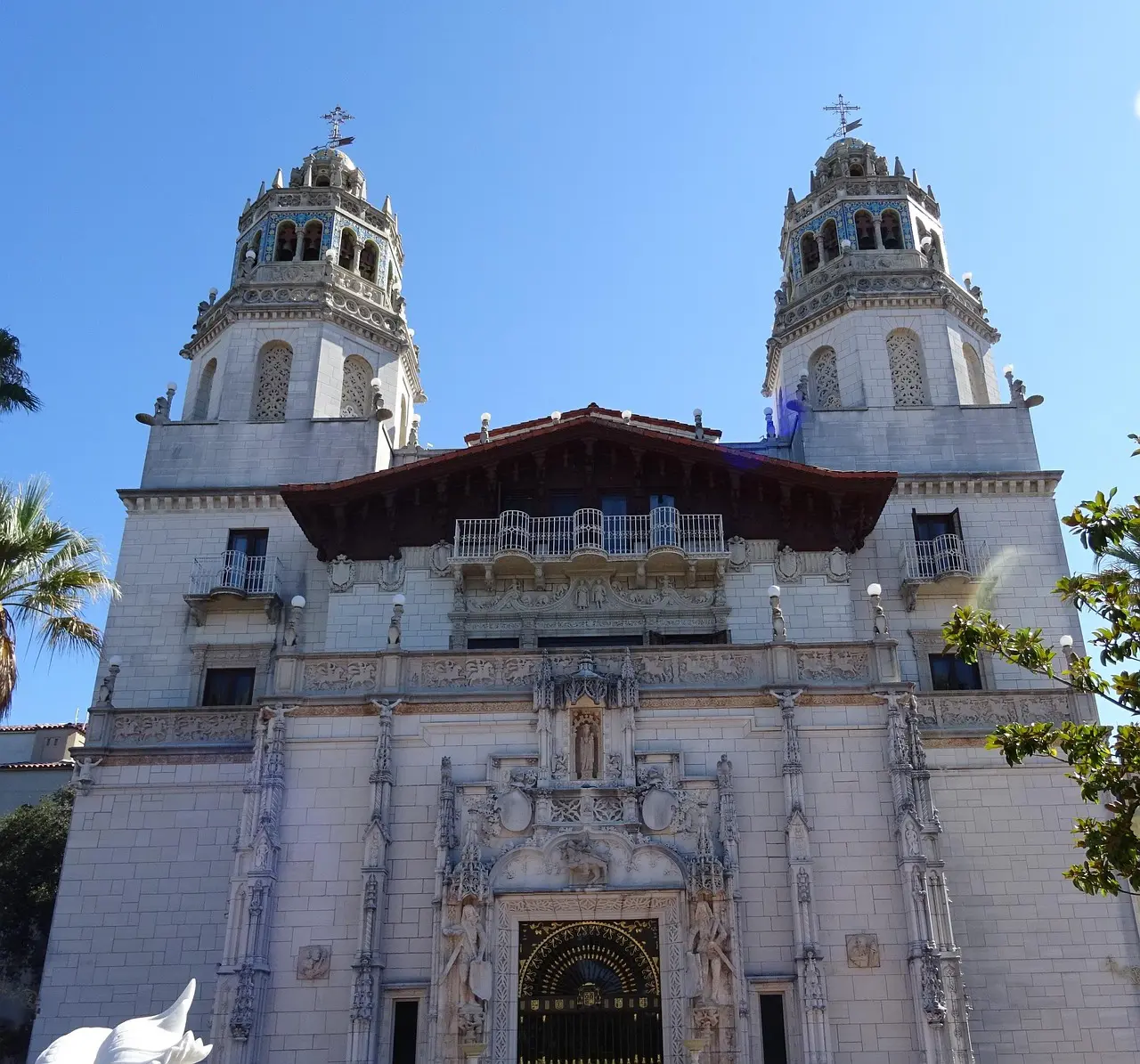
Why It’s Iconic
Hearst Castle is a lavish architectural fantasy – Mediterranean Revival meets Hollywood glamour on a hill overlooking the Pacific.
With sweeping coastal landscapes, it’s also one of the famous buildings in America with the best views, making it a top pick for photographers.
The Story Behind It
Built by newspaper magnate William Randolph Hearst and architect Julia Morgan starting in 1919, the estate became a gathering place for Hollywood stars, politicians, and international guests. With opulent rooms, sweeping terraces, and the famous Neptune Pool, it’s a symbol of American excess, artistry, and ambition.
How to Visit
Several tours are available; the Grand Rooms Tour is best for first-timers. Reserve ahead, especially in summer. Sunset tours are stunning.
13. The Biltmore Estate – Asheville, NC
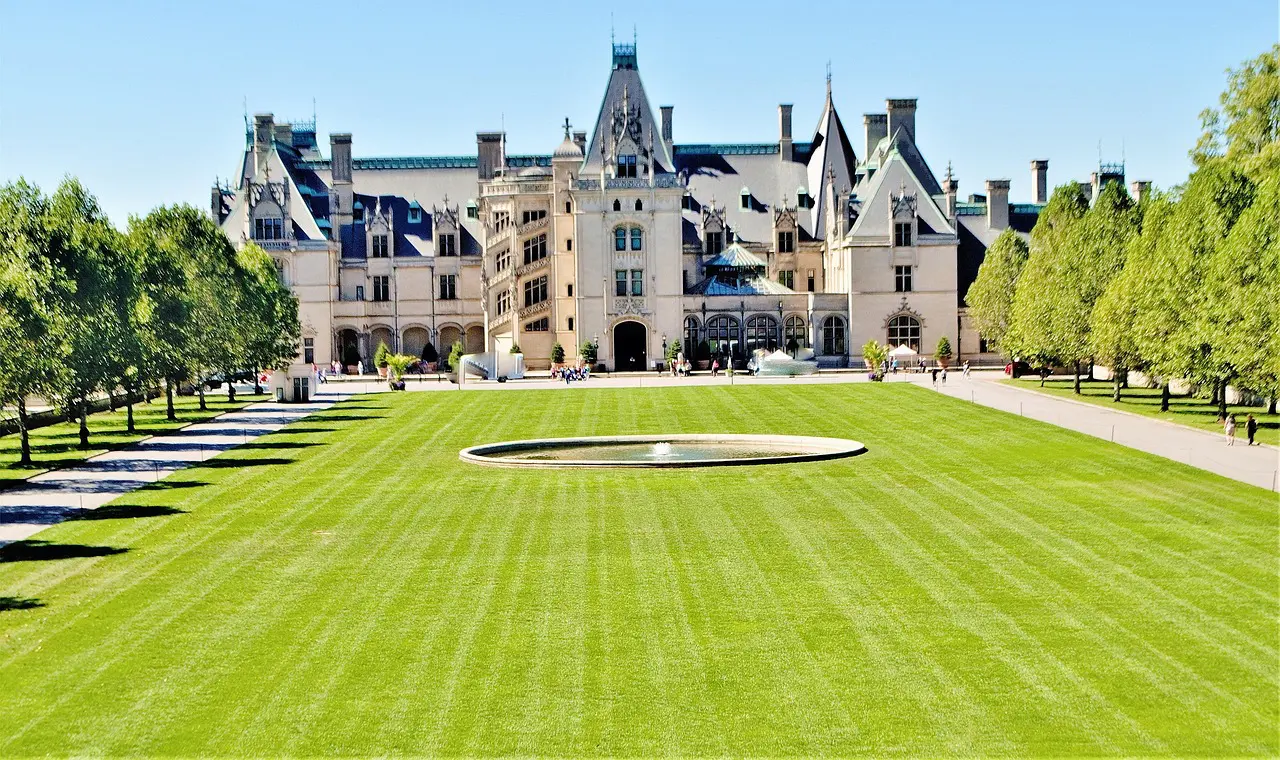
Why It’s Iconic
America’s largest privately owned home is a Gilded Age masterpiece known for its grandeur and beauty.
It’s one of the best iconic buildings to add to your USA travel bucket list, especially for Gilded Age enthusiasts.
The Story Behind It
Built by George Vanderbilt in the late 1800s and designed by architect Richard Morris Hunt, the Biltmore blends French Renaissance style with American luxury. The estate includes a winery, gardens by Frederick Law Olmsted (Central Park’s designer), and 250 rooms filled with art, books, and antiques.
How to Visit
Book tickets in advance during peak season. The gardens are spectacular in spring, and the Christmas season is magical with elaborate decorations.
14. Space Needle – Seattle, WA
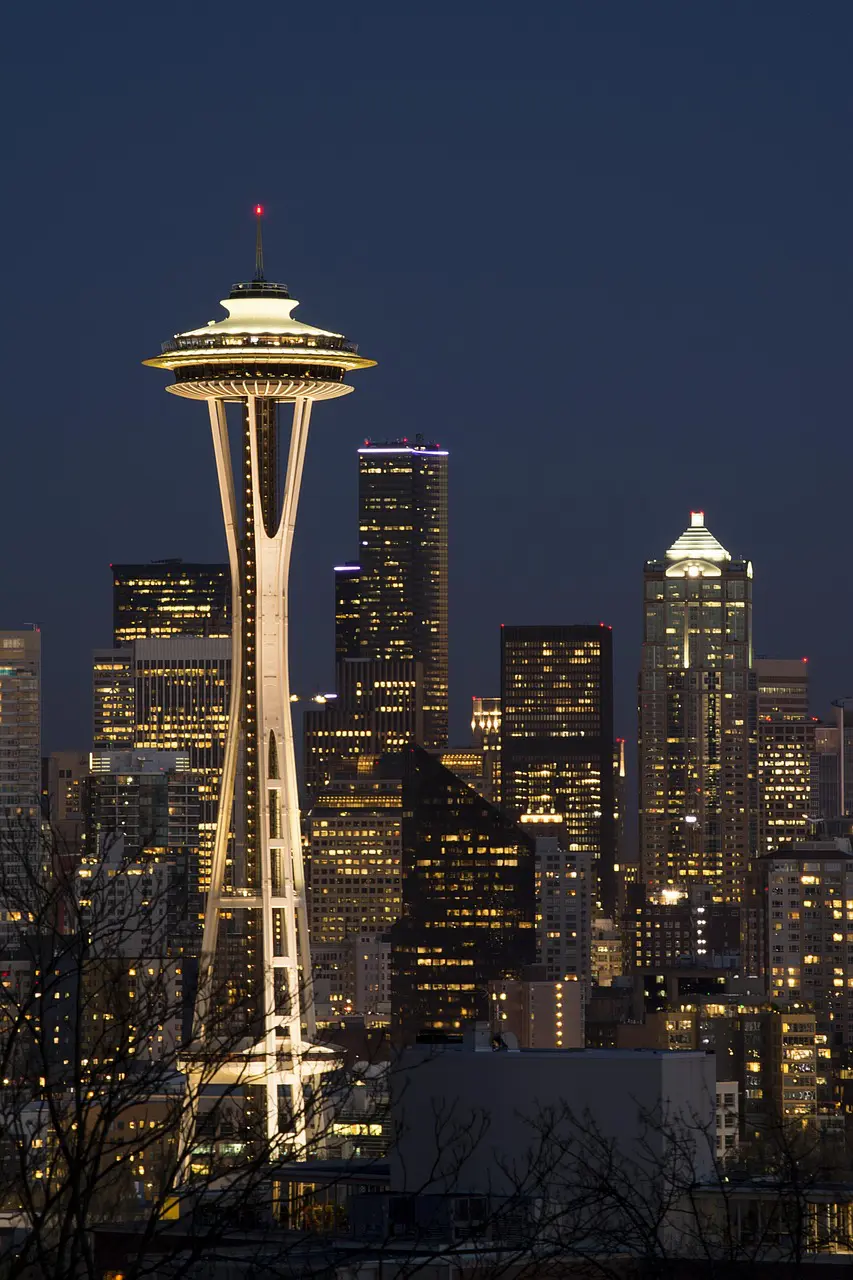
Why It’s Iconic
A futuristic icon from the 1962 World’s Fair, the Space Needle is a symbol of Seattle and mid-century optimism.
Featured in Frasier (I love this TV series!) and Grey’s Anatomy (I watch it too, on Disney+), and also instantly recognizable from Sleepless in Seattle and 10 Things I Hate About You, the Space Needle is one of the most filmed landmarks in the Pacific Northwest.
As one of the most iconic buildings in the United States to visit, it offers unforgettable skyline views.
The Story Behind It
Designed as a vision of the “space age,” the Needle’s saucer-shaped top and slender legs were revolutionary at the time. After a major renovation, it now features the world’s first rotating glass floor, offering unbelievable views of the city, Puget Sound, and Mount Rainier.
How to Visit
Purchase timed tickets before visiting. Pair your visit with Chihuly Garden and Glass next door. For fewer crowds, go early morning.
15. One World Trade Center – New York, NY
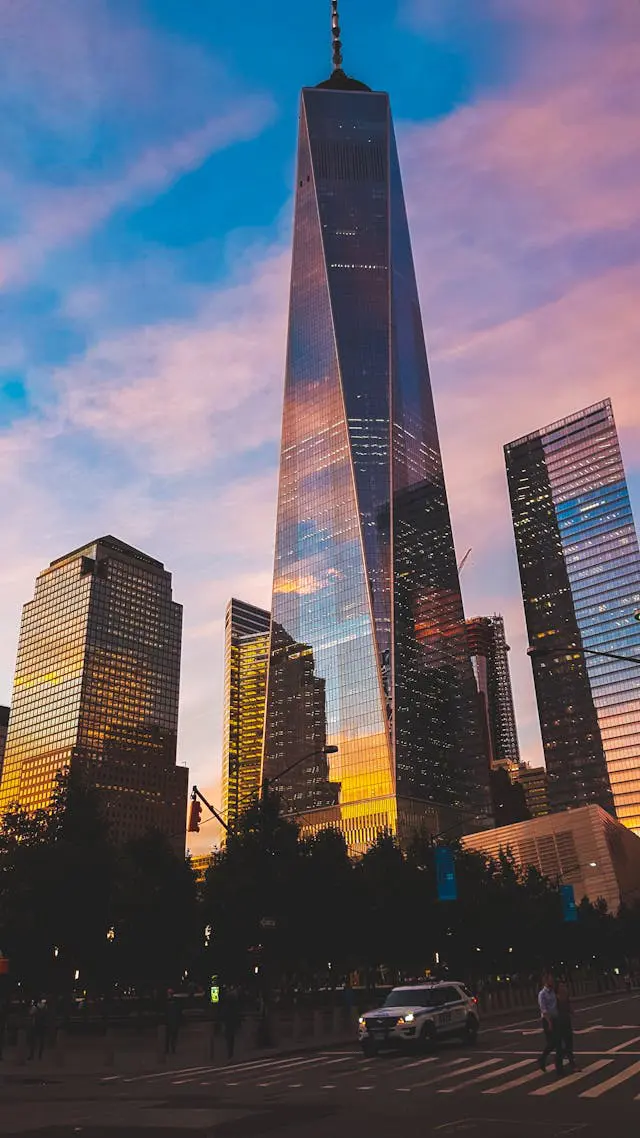
Why It’s Iconic
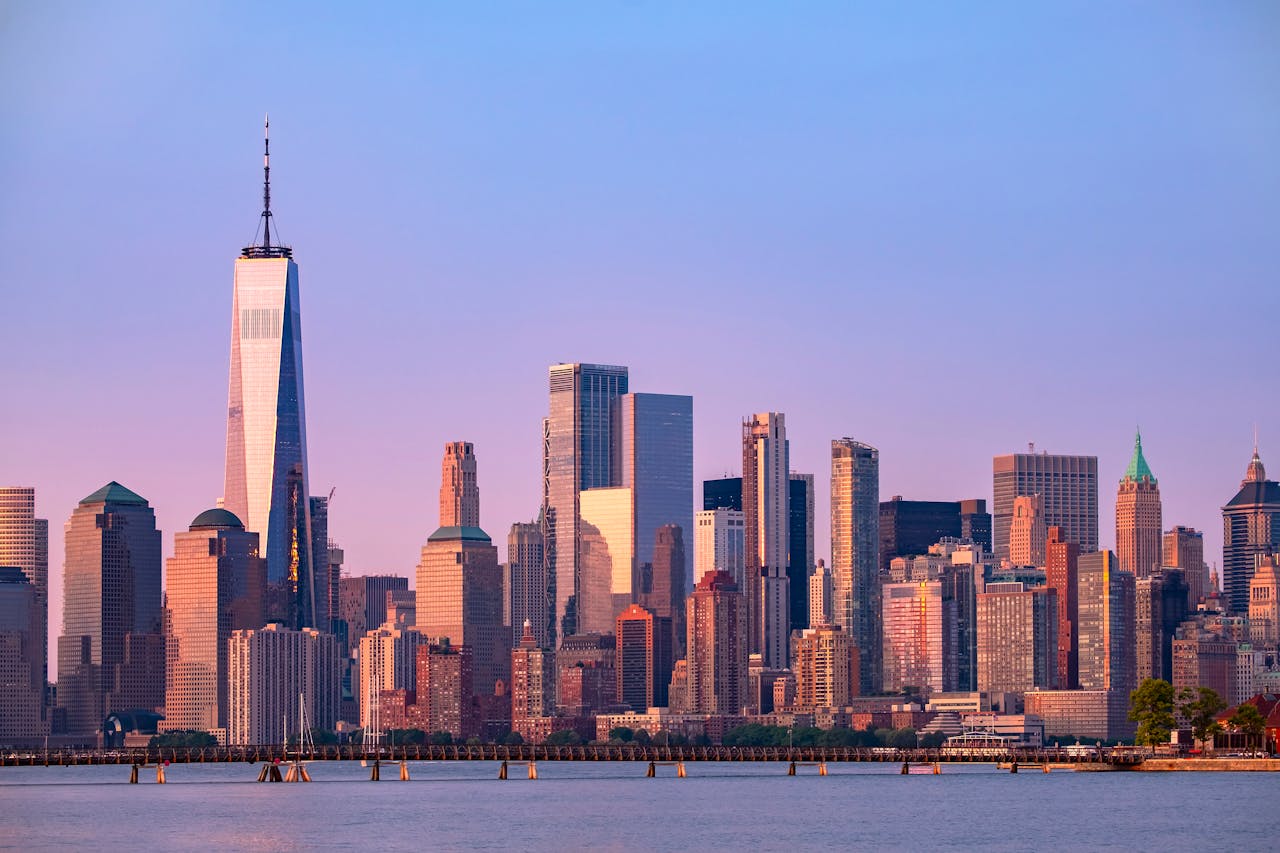
Standing 1,776 feet tall, One World Trade Center is the tallest building in the United States – and a powerful symbol of resilience and renewal.
It’s one of the most powerful examples of American buildings that symbolize freedom and innovation, especially in contemporary architecture.
NYC has so much to offer to all its visitors – including 23 free attractions!
The Story Behind It
Built on the site of the original Twin Towers, One World Trade Center opened in 2014. Its design incorporates themes of strength, light, and remembrance.
Together with the 9/11 Memorial and Museum, it forms a deeply emotional and significant landmark that honors those lost while looking toward the future.
You can see why I had to include it in this list of the most iconic buildings in the USA!
How to Visit
Visit the One World Observatory for panoramic views. Buy skip-the-line tickets, especially on weekends. Spend time at the 9/11 Memorial pools afterward – they’re incredibly moving.
Other Iconic Buildings Worth Adding to Your USA Bucket List
If you want to explore even more famous buildings in America you can visit for free or with minimal cost, here are additional options.
While the 15 landmarks above are the most famous and influential, the United States has many other architectural gems that deserve a closer look. If you’re planning a trip or love discovering remarkable buildings, add these to your list:
1. One Vanderbilt – New York, NY
A striking new addition to Manhattan’s skyline, with the Summit observation deck offering mirrored rooms and incredible views.
2. The Guggenheim Museum – New York, NY
Frank Lloyd Wright’s spiraling masterpiece – iconic inside and out.
3. The Library of Congress – Washington, D.C.
A stunning blend of marble, mosaics, and gilded details. One of the most beautiful libraries in the world.
4. The Gateway Arch – St. Louis, MO
A stainless-steel architectural marvel symbolizing westward expansion.
5. The Bellagio Hotel – Las Vegas, NV
Known for its dancing fountains and elegant Italian-inspired design.
6. The Broad Museum – Los Angeles, CA
A contemporary architecture icon with its honeycomb “veil” façade.
7. New York Public Library (Main Branch) – New York, NY
Flanked by its famous lion statues, this Beaux-Arts gem is a must for architecture and book lovers.
8. Monticello – Charlottesville, VA
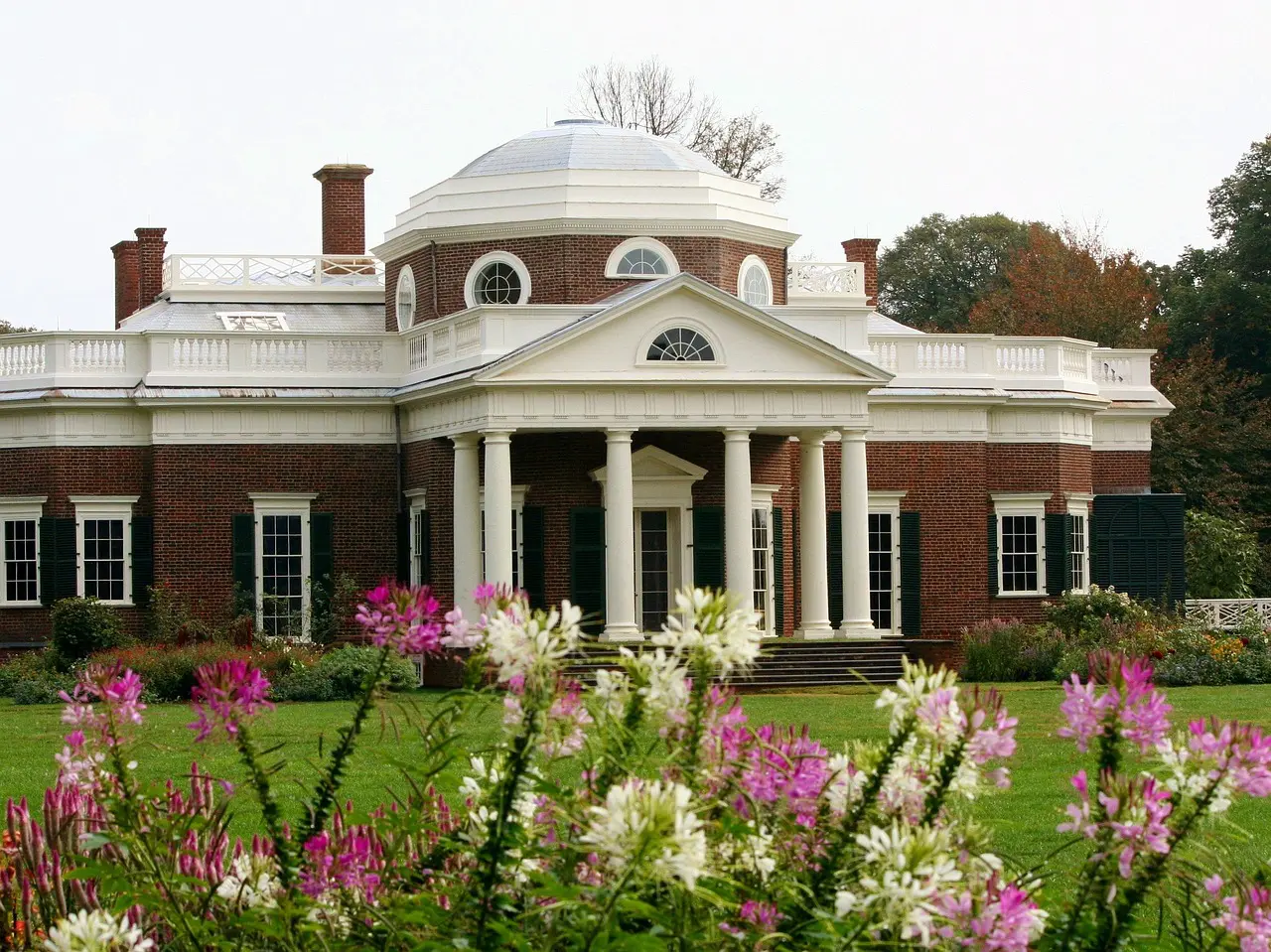
Thomas Jefferson’s historic home, known for its classical design and inventive features – and yes, you can visit it.
9. Graceland – Memphis, TN
Elvis Presley’s beloved home – quirky, iconic, and full of personality.
10. Hoover Dam – Nevada/Arizona
An engineering feat of the 1930s with monumental Art Deco details rarely talked about.
11. The United States Supreme Court – Washington, D.C.
A commanding Neoclassical structure with one of the most photographed staircases in the country.
12. The Hollywood Bowl – Los Angeles, CA
An instantly recognizable outdoor amphitheater with incredible acoustics.
Tips for Visiting Iconic Buildings in the USA
Exploring America’s most iconic buildings is an unforgettable experience, but a little planning can make your visit smoother, more enjoyable, and even more affordable.
Whether you’re seeing skyscrapers, historic estates, museums, or engineering marvels, these tips will help you make the most of every stop.
1. Book tickets early for popular attractions
Many famous buildings – like the Empire State Building, One World Observatory, and the Statue of Liberty – use timed-entry systems.
Booking ahead ensures:
- better pricing
- shorter wait times
- access to premium areas (rooftops, crown/pedestal, inside tours)
Pro tip: Early morning and late evening slots are the least crowded.
2. Check security requirements before you go
Government buildings (the U.S. Capitol, White House, and Supreme Court) and major landmarks have strict security rules.
This often means:
- arriving earlier
- bringing minimal belongings
- avoiding prohibited items (large bags, liquids, sharp objects)
Your visit will go much faster if you come prepared.
3. Use city passes to save money
If you’re visiting multiple attractions in major cities like New York, Chicago, or Washington, D.C., consider:
- CityPASS
- Go City
- Explorer Pass
These can reduce total admission costs by 30–50% and often include skip-the-line access.
4. Visit early in the day for the best photography
Iconic buildings photograph beautifully during:
- golden hour (sunrise and sunset)
- soft morning light
- twilight “blue hour” (the short period of twilight just before sunrise or right after sunset when the sky turns deep blue and soft, cool light makes buildings look especially dramatic and photogenic.)
For indoor museums and historic homes, early mornings also mean fewer crowds and cleaner photos.
5. Look for guided tours to deepen your experience
Some buildings – like the Biltmore Estate, Fallingwater, or Hearst Castle – are best experienced with a guide.
Tours often include:
- access to exclusive rooms
- stories and secrets you won’t find on signs
- local context and historical background
Great for architecture fans.
I like tours too – not only for the architecture bits, but also for the history and culture ones. Plus, sometimes, if I am on a tight schedule, a guided tour is far better than an audio guide or a solo visit.
6. Check accessibility details ahead of time
Most iconic buildings in the USA are accessible, but older or historic ones may have limitations.
Verify:
- elevator availability
- ramp access
- wheelchair seating
- stair-only areas
Many sites offer accessibility maps online.
7. Protect yourself from weather changes
From fog at the Golden Gate Bridge to sudden rain in New York or intense sun in California, weather impacts visibility and comfort.
Check the forecast before visiting open-air platforms or historic outdoor sites.
If the weather looks bad, consider indoor icons like The Met or the New York Public Library.
8. Allow extra time for security and queues
Especially at:
- skyscraper observatories
- national historic sites
- major museums
- high-traffic attractions
Even with reserved tickets, you may encounter lines. Build in a buffer so you’re not rushed.
9. Wear comfortable shoes
Many iconic buildings involve:
- long corridors
- stairs
- large museum galleries
- walking across bridges or plazas
Comfortable shoes are essential, especially in cities like New York and Washington, D.C.
10. Combine nearby attractions for a smoother itinerary
Bundling landmarks saves time and helps you see more in one day. For example:
- Empire State Building + Bryant Park + NY Public Library
- The Capitol + Library of Congress + Supreme Court
- Space Needle + Chihuly Garden and Glass
- Golden Gate Bridge + Crissy Field + Palace of Fine Arts
This is one of the easiest ways to plan a U.S. architecture itinerary and see multiple famous American buildings in a single day.
This is one of the easiest ways to maximize your trip.
This is also one of the simplest ways to understand how to plan a US architecture itinerary without feeling overwhelmed.
11. Look for free experiences and viewpoints
Not everything iconic requires a ticket.
Examples:
- views of the Golden Gate Bridge from Battery Spencer
- exploring the National Mall in Washington, D.C.
- New York’s best architecture from rooftops, parks, or the High Line
This is ideal for budget-friendly trips.
If you’re traveling on a budget, these free viewpoints offer amazing angles of iconic U.S. buildings without paying for admission.
12. Visit at off-peak seasons for a completely different experience
Shoulder seasons (April–May and September–October) offer:
- fewer tourists
- better weather
- lower prices
- more pleasant walks between attractions
Winter offers excellent deals in many cities, though outdoor icons may be chilly.
My Conclusion
From historic symbols like the White House and the Alamo to modern marvels like One World Trade Center and Walt Disney Concert Hall, these iconic buildings reveal the creativity, ambition, and cultural diversity that define the United States.
Whether you’re planning a U.S. architecture itinerary or simply looking for the most famous buildings in America to add to your travel bucket list, each landmark offers something unforgettable.
These remarkable places highlight why these buildings are considered iconic in the USA, reveal stories behind the most famous US buildings, and show how American architecture evolved through iconic buildings that continue to shape the nation.
Which of these iconic buildings in the USA would you like to see first? Let me know in the comments!
FAQ: Iconic Buildings in the USA
What is the most iconic building in the United States?
The Empire State Building is widely considered the most iconic building in the United States thanks to its Art Deco design, historical significance, and its long-standing status as a symbol of New York City. The White House, Statue of Liberty, and One World Trade Center also frequently top the list because of their cultural and political importance.
What is the most visited building in America?
The Lincoln Memorial, Empire State Building, and Statue of Liberty rank among the most visited buildings and monuments in the U.S. Large museums like The Metropolitan Museum of Art also receive millions of visitors every year. For indoor attractions specifically, the Empire State Building consistently draws huge crowds.
What is the tallest building in the USA?
One World Trade Center in New York City is the tallest building in the United States, standing at 1,776 feet (541 meters). It was completed in 2014 and symbolizes resilience and renewal following the events of 9/11.
What is the oldest famous building in the USA?
The Fairbanks House in Massachusetts (1641) is the oldest surviving timber-frame house in North America. Among iconic public buildings, the San Miguel Chapel in Santa Fe (early 1600s) is often considered the oldest. Many historic structures, including the Alamo, represent early chapters of American history.
What are the most famous buildings in New York?
New York City is home to several world-famous buildings, including the Empire State Building, Chrysler Building, Statue of Liberty, The Met, One World Trade Center, Rockefeller Center, and Grand Central Terminal. These landmarks define the skyline and attract millions of visitors each year.
What are the best cities in the USA for architecture lovers?
The top U.S. cities for architecture enthusiasts include:
- New York City – Art Deco, modern skyscrapers, iconic landmarks
- Chicago – birthplace of the modern skyscraper
- Washington, D.C. – neoclassical monuments and museums
- Los Angeles – innovative contemporary architecture
- San Francisco – Victorian homes and major engineering marvels
These cities offer a mix of historic, cultural, and modern architectural styles.
How many iconic buildings should I visit on a USA trip?
It depends on your itinerary, but most travelers visit 3–5 major landmarks per trip. If you’re touring a big city like New York, Chicago, or Washington, D.C., you can easily see multiple iconic buildings in a single day with smart planning.
What is the difference between an iconic building and a landmark?
A landmark can be a building, natural wonder, bridge, monument, or culturally significant site.
An iconic building is specifically a structure – often historic, architectural, or symbolic – recognized worldwide.
Examples:
- Iconic building: Empire State Building
- Landmark: Grand Canyon
Are these iconic buildings accessible to visitors?
Most iconic buildings in the USA offer visitor-friendly access, including elevators, accessible entrances, and detailed accessibility information online. However, older historic sites like Fallingwater or The Alamo may have limitations, so it’s best to check ahead.
What is the best time of year to visit iconic buildings in the USA?
Spring and fall offer pleasant weather, thinner crowds, and ideal lighting for photography. Summer is the busiest season, while winter (especially January–February) brings fewer visitors and better deals in many cities.
Photo sources, except Dreamstime: 1, 2, 3, 4, 5, 6, 7, 8, 9, 10, 11, 12, 13, 14, 15, 16