It was my first time leaving the country – and it almost turned into a security incident.
I am sharing what happened because this could happen to you too, almost anywhere – and because I later discovered that there are simple ways to prevent it.
We had planned everything around a bigger trip – Germany, a friend’s wedding – but decided to stop in Vienna for a day and a half. A dream come true for me – visiting Vienna – even if only for a short period.
It was morning, and before heading to Germany, we decided to make a short stop at one of Vienna’s attractions that may not be on everyone’s itinerary.
We showed up, bought tickets on the spot, and joined the line for the guided tour.
The line moved slowly but constantly. We were getting closer to the security check. A few more people were scanned, their bags were searched, and then we would be ready to start the tour.
You know the drill: phones, wallets, and bags in trays. A quick scan. A step forward. Done.
Then it was my turn.
I placed my purse on the tray, walked through the scanner, and stepped forward, already thinking my husband would grab my things.
But before I could move on, I heard:
“Ma’am, please come back.”
For a split second, I thought I had misheard. I looked at the security officer – a woman – basically not believing that she was calling me.
But yes, it was me.
I turned around. The line had paused. People were waiting. Watching.
The security officer gestured toward the screen.
“There is something suspicious in your bag.”
Mind you – I know they need to be thorough, but I also know everyone prefers it when everything goes smoothly!
Anyway, they showed me the image.
A shape. Clear. Recognizable.
A pair of scissors.
They handed me my bag and asked me to check.
So I did what felt natural in that moment – and probably unexpected to them.
I reached inside.
I took out the scissors.
And at the exact same time, I pulled out an adhesive bandage.
Then, without thinking twice, I lifted my leg slightly and showed them the back of my ankle.
Blisters. A small wound covered with an adhesive bandage – the real reason those scissors were there.
I explained.
There was a pause.
And then, just like that, the atmosphere relaxed. The line started moving again. I was allowed through – with everything in my bag.
No problem. No escalation.
Just a moment that could have gone very differently.
Because here’s the thing: I had zero harmful intent. It was clear from how surprised I was when they asked me to return for further questions about the contents of my bag.
But intent is not what security evaluates first.
They see shapes. Patterns. Possibilities.
And sometimes, that’s enough to stop everything.
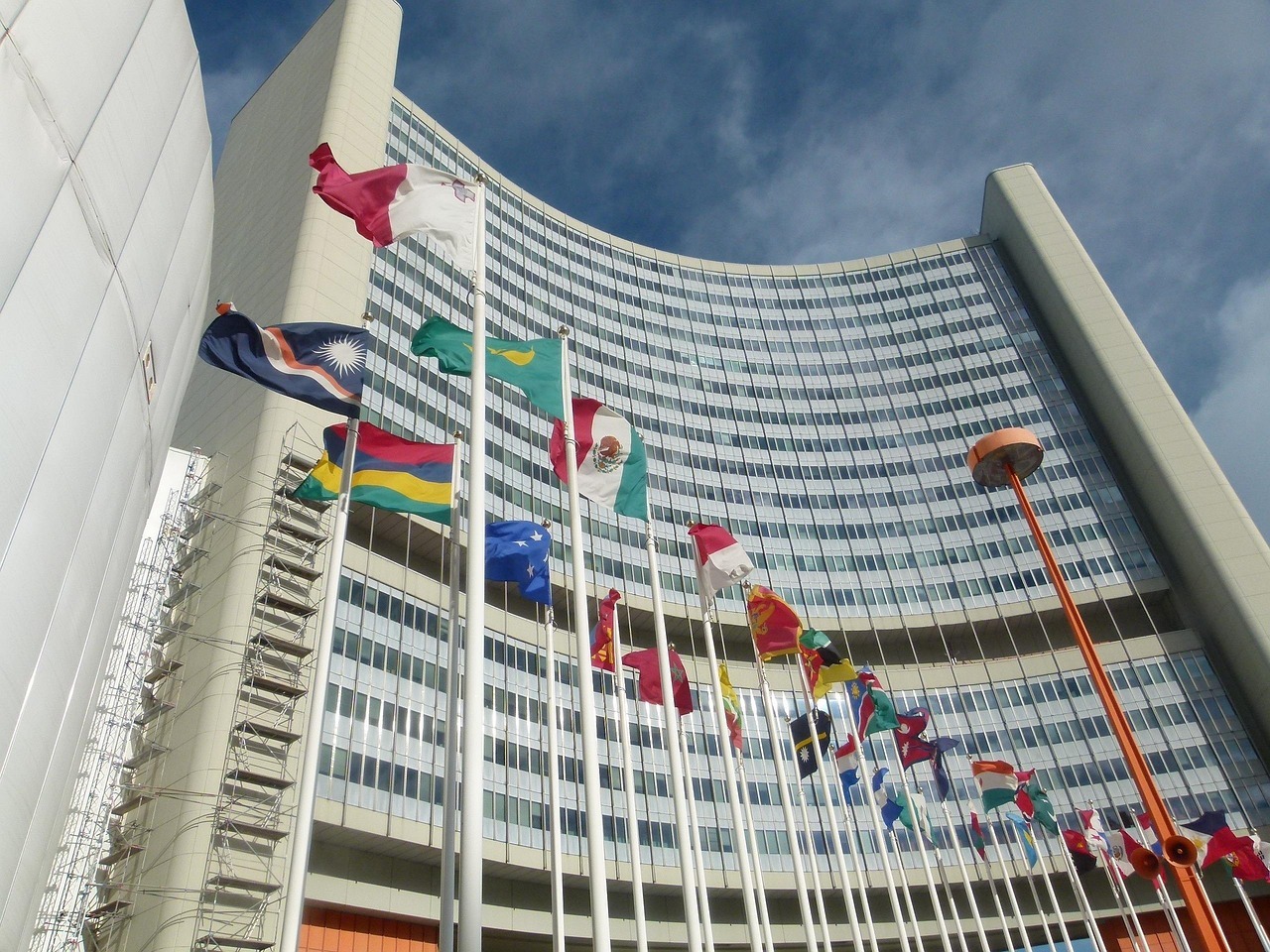
We continued our visit to the Vienna International Centre (VIC), the United Nations centre in Vienna. The tour was interesting and the experience memorable, but that moment stayed with me far longer than anything else we saw that day.
Because it wasn’t about the scissors.
It was about how easily something ordinary can become suspicious in the wrong context. In fact, as I will share below, I had another such experience involving a completely different item years later.
While the original grainy film photos are lost to time, the memory of that security guard’s face is burned into my brain forever.
There is a lesson here. The experience changed how I pack for places with strict security, and I am sharing it so that you can arrive prepared. I wouldn’t necessarily call what happened my mistake, but I would pack differently today.
VIC may not be among the Vienna landmarks that every visitor plans to see, but it was an interesting experience for us. I’m glad my husband wanted to visit it and that we included it in our trip.
Quick Info: Current UN Vienna Security and Visitor Requirements
Information checked against the official UN Vienna visitor FAQ in July 2026. Requirements can change, so verify them again before your visit.
-
- Bring an original official photo ID: Visitors must bring an accepted physical identification document. A photograph or digital copy on your phone does not replace the original document required for entry. Before an international trip, use this travel document checklist to confirm that your passport, identification, visa, and other documents are ready.
-
- Allow time for security: All visitors go through security screening. The UN recommends arriving at least 15 minutes before the scheduled tour because the checkpoint can become busy.
- Leave sharp tools behind: The current UN Vienna FAQ specifically mentions sharp tools and toy weapons as examples of legal items that are prohibited inside. According to the FAQ, legal but prohibited items are returned at the end of the tour.
- Bring an empty refillable water bottle: Your refillable bottle must be empty when you enter. A drinking-water fountain is available inside, so you can refill it after passing security.
- Do not photograph security staff or installations: Do not take photos or videos of entrance checkpoints, security equipment, or security personnel.
- Check the current rules before leaving your hotel: Tour availability, entrance requirements, accepted identification, and security procedures may change.
Water rules are not the same at every secure attraction. The sip test is not the current rule stated for visitors to the VIC. However, it is used elsewhere. The United States Holocaust Memorial Museum in Washington, D.C., for example, allows visitors to bring bottled water but tells them to keep it in their hand and be ready to take a sip while passing through security.
Security Screening Triggers: What Actually Stops the Line Even When You’re Innocent
What triggers a security bag search? A bag may be selected for additional screening because it contains a prohibited item, an object triggers an alarm, several items overlap on the scan, or an officer cannot identify something clearly. Even an item that is normally permitted may need to be inspected before you are allowed to continue.
You might think that problems occur only when something clearly prohibited is involved.
But the situation can be more complicated. Security screening – whether at an airport, government building, or high-security location such as the United Nations Office at Vienna – cannot establish why you are carrying something simply by scanning your bag.
If an item cannot be identified clearly, it may need to be checked manually. That alone is enough to interrupt the normal flow, whether you are entering an airport or a museum.
Why harmless items trigger security checks and why your bag gets searched
Security screening is intended to identify objects quickly and determine whether anything needs a closer look. When objects overlap, are hidden beneath other belongings, or cannot be recognized clearly, an officer may need to inspect the bag manually.
Below are several categories of items that can lead to additional screening. As you will see, many of them are more common than you might expect.
It is a good idea to save this list for later. I would also recommend reading these tips for visiting Vienna before your trip.
1. Small Sharp Objects You Forgot You Had
You may forget that you have one of these objects in your bag or purse. When it appears on a scanner, however, security may need to check it.
Typical examples include:
- Nail scissors – as seen above 😀
- Small grooming kits
- Tweezers with pointed ends
- Compact sewing kits
I agree that these items can be dangerous. Even with a small pair of nail scissors like mine, you could still hurt someone.
If you’re unsure what else might trigger a security check, I’ve put together a detailed guide to prohibited items in luggage, including lesser-known restrictions that still catch many people off guard.
Small scissors may be allowed in some travel situations, but that does not mean they are accepted at every secure attraction. The current UN Vienna FAQ lists sharp tools among the items prohibited inside the VIC, although legal prohibited items are returned at the end of the tour.
2. Items That Resemble Something Else on a Scanner
Certain everyday items can prompt questions because of their shape, position, or proximity to other objects.
-
- A deodorant spray is an aerosol container and may need to be inspected if the officer cannot immediately confirm what it is.
-
- A power bank may require a closer look as an electronic device containing a battery. If you travel with battery-powered luggage, check the current smart luggage rules before flying.
- Cables and chargers can obscure other objects when they are tangled or packed on top of them.
I experienced a similar situation during a visit to a presidential building. The contents of my bag were entirely routine, yet my deodorant triggered a manual check because the officer could not immediately identify it on the scan. It could have been pepper spray or another restricted aerosol.
See, I told you I have more funny stories 😀
This happened in my country, Romania, but the same item could easily raise questions at a secure attraction in Vienna, Paris, or elsewhere.
3. Everyday Medical or Personal Care Items
Personal-care products and medical essentials may also lead to questions, particularly when several different items are packed together.
Common examples include:
- Adhesive bandages
- Medication blister packs
- Small bottles, creams, or hygiene products
- Compact first-aid tools
There is nothing unusual about carrying these items. However, when medication packs, small bottles, metal objects, and electronics overlap, individual objects may be harder to identify.
What is obvious to you is not necessarily obvious on the screen. Your explanation comes after the scan. The scan comes first.
4. “Prepared for Anything” Bags
People like me, who prefer to pack more extensively – often with good reason – tend to carry a wider variety of compact items. Each object may have a clear purpose, but a bag containing many tools, electronics, cables, containers, and backup items can take longer to inspect.
This often includes:
- Multiple small tools
- Backup or “just in case” items
- Compact kits designed for different situations
From a practical standpoint, this can be efficient. From a screening perspective, however, several overlapping objects may be harder to identify individually.
Keeping the contents organized does not guarantee that your bag will not be checked, but it can make an inspection simpler if security needs a closer look.
How to Pass Security Checks Faster: Practical Travel Security Tips
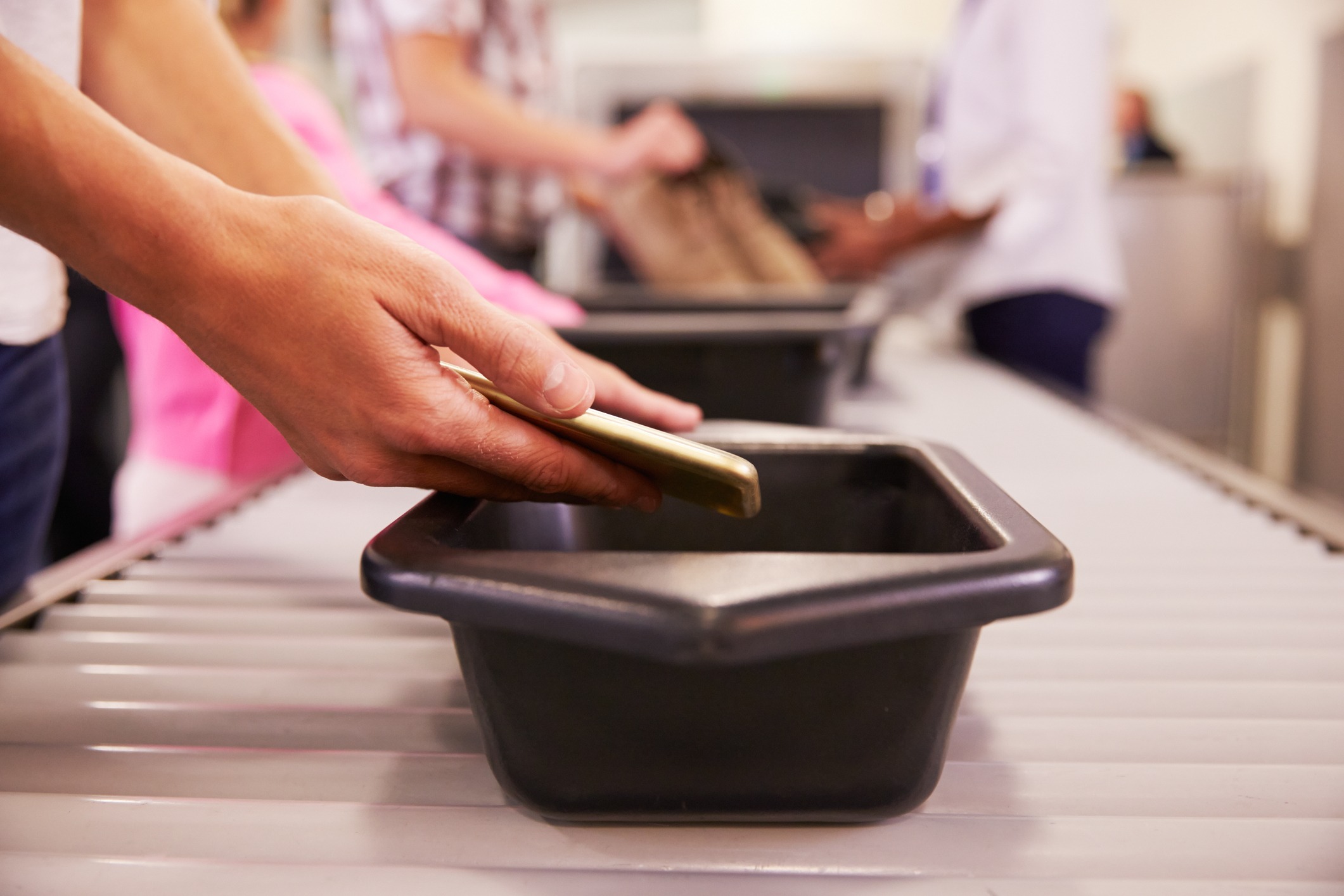
ID 67495187 © Monkey Business Images | Dreamstime.com
Reducing delays at a security checkpoint is not about hiding anything. It is about packing belongings in a way that makes them easier to inspect.
You do not need an empty bag or an extreme packing system. It is simply useful to think about more than whether an item is technically allowed. Consider whether it could be confused with something else or hidden beneath other belongings.
Do a brief scan-based check before security
A short review can help you notice items you may otherwise forget. Before entering a checkpoint, ask yourself:
-
- Is there anything in my bag that may be difficult to identify? Keep electronics, metal objects, sprays, and small containers reasonably separated.
- Are there small sharp items I may have forgotten?
- Are sprays, electronics, or tools grouped in a way that hides their shape?
- Am I carrying something permitted at an airport but prohibited at this particular attraction?
This is not about removing everything that might attract attention. It is about making the contents easier to understand.
Avoid placing several dense or complicated objects directly on top of one another. For example, a power bank packed beneath cables, metal tools, and containers may be harder to identify than the same items packed separately.
This does not automatically force a bag inspection, but it can make additional screening more likely if the image is unclear.
Expect questions and respond efficiently
Being stopped for a check does not necessarily indicate that you have done anything wrong. It may simply mean that an item needs to be identified.
The most useful response is straightforward:
- Wait for instructions
- Answer the question directly
- Show the requested item
- Avoid reaching into the bag before being told to do so
A calm, direct response is more useful than a long or defensive explanation. Let the officer tell you what needs to be checked, then provide the item or information requested.
In many cases, seeing the object resolves the question faster than hearing a lengthy explanation. That is what happened to me: I showed the scissors, the bandage, and the blister they were intended for.
As a note, I would have been fine with security keeping the scissors until the end of the tour. Keep in mind that this happened around 20 years ago. Today, the initial reaction might be the same, but I would not expect to take the scissors inside with me.
Be aware of the specific environment
Security standards vary depending on the location.
Always check the prohibited-items list for the place you intend to visit. Government buildings, international organizations, parliaments, embassies, museums, and airports can have very different rules.
An item allowed in your airline carry-on may still be refused at a high-security attraction. The reverse can also happen: a museum may allow an item that cannot be carried onto an aircraft.
Security also begins with your documents. A damaged passport, peeling laminate, unreadable information, or another identification problem can create complications before your trip even begins.
You should also know what can happen when someone is denied boarding because a required document is missing, invalid, expired, or not accepted.
A Recent Case Shows How an Ordinary Device Can Look Very Different at Security
My experiences were resolved quickly, but a case reported in Australia in May 2026 shows how much further the same type of misunderstanding can go.
Avalon Airport was evacuated after security officers detected what appeared to be a suspicious combination inside a passenger’s bag. It was eventually identified as an electrical laser hair-removal device packed beside a cylindrical hot-chocolate container.
The bomb-response unit inspected the items, and the passenger was questioned before being released without charge.
Police said that receiving clearer information about what was inside the bag earlier might have shortened the response. The passenger later said he had remained civil and understood why authorities needed to investigate.
This was a far more serious interruption than anything that happened to me, but the starting point was similar: ordinary objects appeared very different without context.
How an item is packed – and how quickly its purpose can be confirmed – can affect how long the check takes.
The Golden Rule of Security Etiquette
While we focus heavily on the objects inside our bags, our response during an inspection can influence how smoothly the conversation proceeds.
Security officers inspect large numbers of people and bags. Being calm, organized, and prepared to follow instructions makes the process easier for everyone.
My top etiquette tips:
-
- Wait for a clear instruction: Do not start searching through your bag until the officer asks you to.
- Answer only what is being asked: A direct explanation is usually more useful than a long account of why the item is there.
- Clear the tray area: Once you have collected your belongings, move to the designated repacking area so the line can continue.
- End politely: A simple “Thank you” after the inspection is enough.

ID 24693992 ©Digitalpress | Dreamstime.com
What I Learned From Being Stopped at Security
Travel rarely goes exactly as planned, and security checks are one place where a small item can cause an unexpected delay.
In my case, it was a pair of nail scissors that I was carrying because of painful blisters. On another occasion, it was an ordinary deodorant that looked questionable on the screen.
Neither situation became serious, but both changed how I pack before visiting a place with controlled access.
I now check for forgotten sharp objects, keep electronics and personal-care items reasonably organized, and look at the specific rules for the building rather than relying only on airport regulations.
That does not guarantee that a bag will never be searched. It simply reduces the chance that I will arrive with something I should have left at the hotel.
If the security line stops when your bag reaches the scanner, stay calm and wait for instructions. The item may be harmless, but the officer still needs to identify it before allowing you to continue.
And yes, the slightly embarrassing travel moments are often the ones you remember 20 years later.
FAQ: Security Checks, Bag Screening, and Visiting the UN in Vienna
Do you need ID to visit the UN in Vienna?
Yes. Visitors to the Vienna International Centre must bring an accepted original official identification document, such as a national ID card, passport, or driving licence. A photograph or digital copy is not accepted in place of the physical document.
Do visitors go through security at the Vienna International Centre?
Yes. Visitors must pass a security check before entering the VIC. The UN recommends arriving at least 15 minutes before the scheduled tour because security can become busy.
Can I bring a water bottle to the UN in Vienna?
You can bring an empty refillable water bottle. A drinking-water fountain is available inside, so you can refill the bottle after passing through security.
The current information does not say that VIC visitors should bring a filled bottle and take a sip from it during screening.
Do any attractions ask visitors to take a sip from a water bottle?
Yes. Some secure attractions have different rules. The United States Holocaust Memorial Museum in Washington, D.C., allows bottled water but advises visitors to keep the bottle in their hand and be ready to take a sip while passing through security.
Always check the rule for the specific building you are visiting rather than expecting the same procedure everywhere.
Can I bring nail scissors to the UN in Vienna?
I would not bring them. The current UN Vienna FAQ lists sharp tools among the legal items prohibited inside the VIC. According to the FAQ, legal but prohibited items are returned at the end of the tour, but leaving them at your hotel will help you avoid an unnecessary delay.
Why do harmless items trigger security checks?
Harmless items can trigger additional screening because officers need to identify what appears on the scanner. Small sharp objects, aerosols, electronics, tangled cables, medical supplies, and overlapping belongings may all require a closer look.
Why can deodorant trigger a manual bag check?
A deodorant spray is a pressurized aerosol container. Depending on its position and the surrounding objects, an officer may need to inspect it manually to confirm what it is.
What items commonly slow down security checks?
Items that may lead to additional screening include small scissors, nail tools, pointed tweezers, sewing kits, aerosol sprays, power banks, chargers, tangled cables, medication blister packs, small bottles, creams, and pouches containing many different objects.
How should I pack my bag before visiting a high-security attraction?
Keep your belongings reasonably organized and easy to inspect. Avoid burying small tools, electronics, aerosols, and personal-care products beneath several other objects.
Most importantly, remove sharp tools and other items prohibited by the particular attraction, even when those items may be allowed elsewhere.
Are airport security rules the same as government-building security rules?
No. Airport rules, government-building rules, embassy rules, parliament rules, museum rules, and international-organization visitor rules can differ significantly.
An item that passes airport security may still be questioned, held, or refused at a high-security attraction.
What should I do if security asks to inspect my bag?
Stay calm, wait for clear instructions, and show the item the officer asks to see. Do not start searching through your bag before being told to do so.
A direct answer and visible confirmation of the object are usually more useful than a long explanation.
Can security confiscate small personal items?
Policies vary. A location may refuse an item, hold it until the end of the visit, require you to remove it from the property, or ask you to dispose of it.
At the Vienna International Centre, the current visitor FAQ says that legal but prohibited items, including sharp tools and toy weapons, are returned at the end of the tour.
What is the easiest way to avoid delays at security?
Check your bag before entering the line. Look for forgotten sharp objects, sprays, power banks, tangled cables, tools, and anything prohibited by the specific venue.
The goal is not to travel with an empty bag. It is to avoid carrying something unnecessary that could delay your entry.
Is the UN Vienna tour worth visiting?
Yes, especially if you are interested in international organizations, diplomacy, architecture, or places in Vienna that go beyond the usual tourist route.
The Vienna International Centre may not be the first landmark most visitors choose, but it can be a memorable stop if you want a different type of Vienna experience.
Can I bring a small first-aid kit through security?
That depends on what is inside and the rules of the building. Basic bandages and medication may be accepted, but scissors, blades, or other sharp tools may be prohibited.
Keep the contents organized, carry medication in its original packaging when possible, and check the venue’s rules before visiting.
Why does a cluttered bag increase the chance of inspection?
When several objects overlap, individual items may be harder to identify on the scan. That can lead to a manual check even when all the contents are harmless.
More amazing articles for you:
The Arc de Triomphe du Carrousel in Paris
That Beach Outfit Could Cost You $1,650 - Cities Where Tourists Are Fined for Wearing Swimwear
A Local's Guide to Minneapolis–Saint Paul
A Newlywed Couple Tried a Viral Flight Hack on Their Honeymoon - And Triggered a Massive Debate. Oth...
British Airways Starlink Wi-Fi Rules: What Inflight Voice Calls Mean for Passengers (a Passenger Eti...
Visit Winterfell Castle and more epic locations on your Irish Game of Thrones tour
Stay, Fly, Pay: The Unexpected Factors Influencing Airfare and Accommodation Prices
21 Tips to Avoid Motion Sickness #infographic

Violeta-Loredana Pascal is a communications expert, business mentor, and the founder of Earth’s Attractions and PRwave INTERNATIONAL. A pioneer in the Romanian digital PR landscape since 2005, she holds a degree in Communication and Social Sciences from SNSPA Bucharest. Violeta is a senior trainer at AcademiadeAfaceri.ro, where she leverages over 20 years of experience to teach professional courses in PR strategy and workplace productivity. By blending high-level business consulting with a passion for holistic travel and wellness, she empowers solopreneurs to overcome procrastination, build profitable brands, and design a life of purposeful adventure.