
I’ve loved animals for as long as I can remember. Growing up, I always had an animal around, and even now I have animals at home. I spent countless hours watching TV shows and documentaries about wildlife and going through animal encyclopedias, fascinated by species I knew and others that seemed almost unbelievable.
I don’t consider myself an expert, but I can definitely say that the animal world is amazing. There always seems to be another behavior, adaptation or strange piece of anatomy to discover. It’s the same curiosity that makes a good science trivia challenge or a round of human body trivia so much fun.
These 200 animal trivia questions and answers move from easy to medium and hard before finishing with some of the weirdest and most surprising facts in the animal kingdom. They’re suitable for adults, families, older kids, classrooms, game nights or simply testing yourself when you feel like finding out how much animal knowledge you’ve picked up over the years.
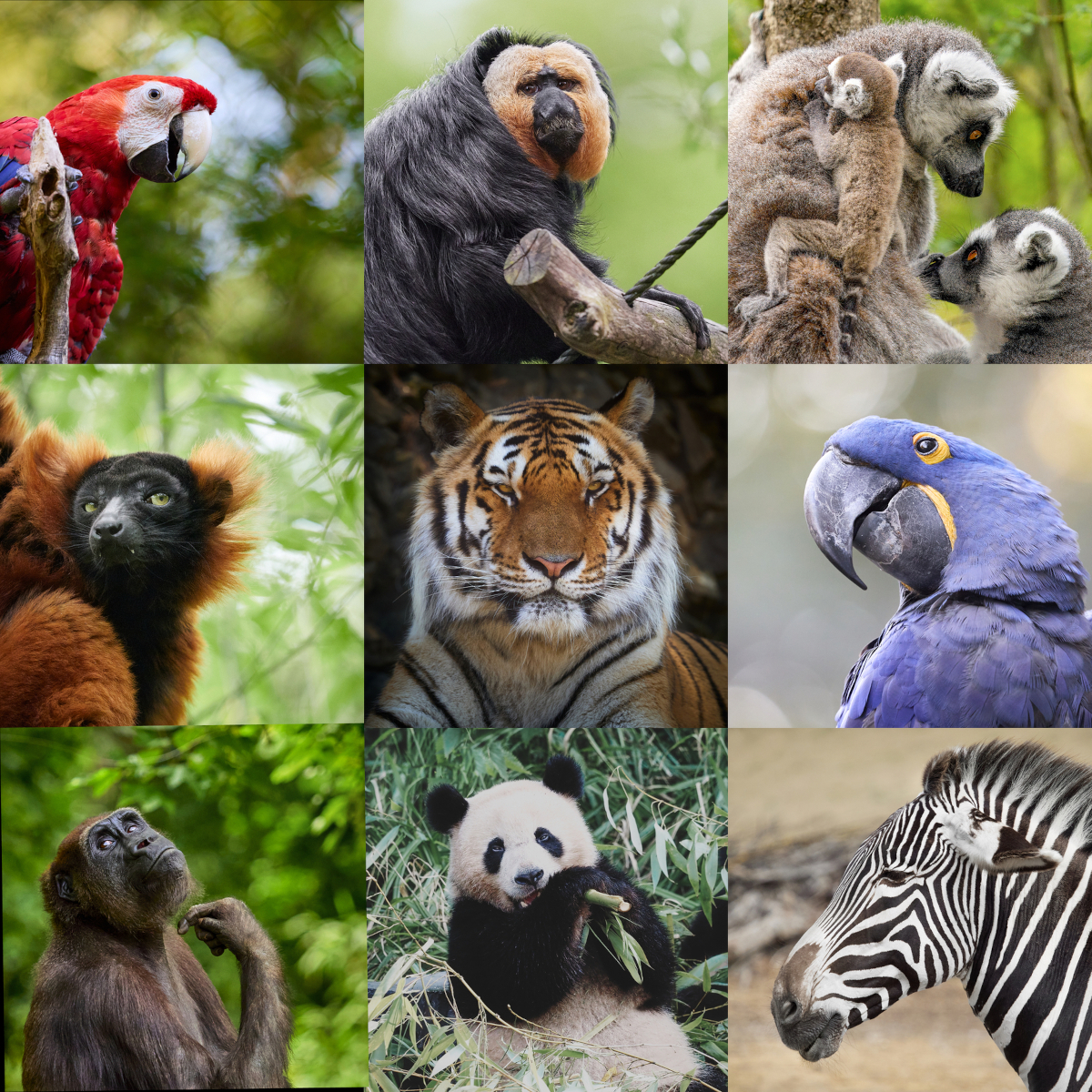
You’ll meet mammals, birds, reptiles, amphibians, insects, spiders, fish, marine animals and a few creatures that are harder to place at first glance. Some may be familiar from zoos or documentaries, while others are more likely to turn up on a wildlife-focused trip.
Keep track of your score if you want to see where you end up after question 200.
ID 452828908 ©Denisa Prouzová | Dreamstime.com
Easy Animal Trivia Questions and Answers
I’m starting with animal facts that many people will recognize without making the questions so obvious that there’s nothing to solve. These easy animal trivia questions and answers cover familiar wildlife, basic anatomy, habitats, animal groups and famous records.
They also work well as fun animal trivia questions for families or as the opening round of a game night. If nature questions are usually your strongest category, you’ll find plenty more wildlife mixed through these national parks trivia questions.
1. What is the largest animal known to have ever lived on Earth?
Answer: The blue whale. The largest individuals can reach around 100 feet in length and weigh well over 100 tons.
2. What is the largest living land animal?
Answer: The African bush elephant. It is larger on average than both the African forest elephant and the Asian elephant.
3. What is the fastest land animal?
Answer: The cheetah. Its long limbs, flexible spine and specialized body allow explosive acceleration over short distances.
4. What are the only mammals capable of true, sustained powered flight?
Answer: Bats. Flying squirrels and several other mammals can glide, but bats actively generate powered flight with their wings.
5. What is the largest living bird?
Answer: The ostrich. Adult males can stand more than eight feet tall.
6. Which birds can fly backward as well as forward?
Answer: Hummingbirds. Their unusual wing movement also allows them to hover with remarkable control.
7. What is a group of lions called?
Answer: A pride. Lions are unusually social compared with most other wild cats.
8. What is the familiar collective term for a group of wolves?
Answer: A pack. Wild wolf packs are generally family groups rather than collections of unrelated animals.
9. What is a baby kangaroo called?
Answer: A joey. The term is also used for the young of several other marsupials.
10. What type of animal is an orca?
Answer: A dolphin. Orcas, or killer whales, are the largest members of the dolphin family.
11. Which bear species eats a diet dominated by bamboo?
Answer: The giant panda. Bamboo makes up the overwhelming majority of its natural diet.
12. What substance makes up most of a rhinoceros horn?
Answer: Keratin. It’s the same structural protein found in human hair and fingernails.
13. What class of animals do sea turtles belong to?
Answer: Reptiles. Although they spend most of their lives in water, sea turtles breathe air with lungs.
14. What is a shark’s skeleton made from instead of bone?
Answer: Cartilage. This is the same flexible type of connective tissue found in parts of the human nose and ears.
15. How many legs does an adult insect have?
Answer: Six. The three pairs are attached to the thorax.
16. How many legs does a spider have?
Answer: Eight. Spiders are arachnids rather than insects.
17. Is a frog a reptile, mammal, fish or amphibian?
Answer: An amphibian. Frogs generally begin life in water before undergoing metamorphosis.
18. In which hemisphere do almost all wild penguin species live?
Answer: The Southern Hemisphere. Penguins range from Antarctica to much warmer regions, including the Galápagos Islands.
19. What does a camel store in its hump?
Answer: Fat. The hump isn’t a water tank, although camels have many other adaptations that help them survive in dry environments.
20. What gives flamingos their pink or reddish color?
Answer: Carotenoid pigments in their food. These pigments come from organisms such as algae and small crustaceans.
Animals aren’t only something we encounter in wildlife documentaries or on vacation. Many of us share our homes with them, and taking one on a trip brings its own practical questions. These tips for travelling with a dog by car cover safety, documents and preparation, while a longer vacation may also require careful packing for a pet.
21. Through what opening does a dolphin breathe?
Answer: A blowhole. Dolphins are mammals and must regularly reach the surface to breathe air.
22. Which country is the natural home of koalas?
Answer: Australia. Wild koalas live in eucalyptus forests and woodlands in eastern and southeastern parts of the country.
23. Do polar bears live naturally in the Arctic or Antarctica?
Answer: The Arctic. Antarctica has no native polar bears.
24. Is a chimpanzee a monkey or an ape?
Answer: An ape. Chimpanzees are great apes and don’t have tails.
25. How many arms does an octopus have?
Answer: Eight. Biologists generally refer to all eight appendages as arms rather than tentacles.
26. What is the largest living species of penguin?
Answer: The emperor penguin. Adults can stand more than three and a half feet tall.
27. Which Australian mammal has a duck-like bill and lays eggs?
Answer: The platypus. It’s one of the world’s few living monotremes, the egg-laying mammals.
28. Is a horse naturally a herbivore, carnivore or omnivore?
Answer: A herbivore. Horses are grazing animals with digestive systems adapted mainly to plant material.
29. What is an adult male chicken commonly called?
Answer: A rooster. The term “cock” is also widely used, particularly outside North America.
30. What is an adult female sheep called?
Answer: A ewe.
31. What is a young horse called?
Answer: A foal. A young male is a colt and a young female is a filly.
32. What traditional collective noun is used for a group of crows?
Answer: A murder. It’s one of the most memorable collective nouns in English.
33. Which bird was formally designated the national bird of the United States in 2024?
Answer: The bald eagle. It had been an American national symbol for centuries before receiving the formal designation.
34. Which animal became the national mammal of the United States in 2016?
Answer: The American bison. It joined the bald eagle as one of the country’s major official wildlife symbols.
Animals appear surprisingly often in geography and regional general knowledge too. If those last two were easy points, the US state trivia questions move through all 50 states with geography, landmarks and unusual facts.
35. What is the tallest living land animal?
Answer: The giraffe. Adult males can grow more than 18 feet tall.
36. What is the largest living fish?
Answer: The whale shark. Despite its enormous size and its name, it is a shark rather than a whale.
37. What is the largest living reptile?
Answer: The saltwater crocodile. Very large males can exceed 17 feet, with exceptional individuals growing even longer.
38. What is the largest living species of lizard?
Answer: The Komodo dragon. It is native to a small group of Indonesian islands.
39. What is the world’s largest living rodent?
Answer: The capybara. This highly social South American mammal is also an excellent swimmer.
Capybaras live in several parts of South America, including Argentina, where the country’s wildlife ranges from subtropical wetlands to Patagonia. They appear among these surprising facts about Argentina alongside plenty of things that have nothing to do with football or tango.
40. Which bird becomes the world’s fastest animal during a hunting dive?
Answer: The peregrine falcon. During its steep hunting stoop, it can exceed 200 mph.
Medium Animal Trivia Questions and Answers
This next animal trivia section goes a little deeper into anatomy, migration, senses, reproduction and behavior. The medium animal trivia questions should still feel fair to a general audience, especially if you’ve watched wildlife programs, visited zoos or aquariums, or spent years collecting random facts without realizing you were doing it.
These are also some of the strongest animal trivia questions with answers for game night because plenty of them create that frustrating feeling of knowing you’ve heard the fact before. Marine life appears frequently here, and seeing sharks, rays and other species up close at somewhere such as SEA LIFE Munich can make the details much easier to remember.
41. How many hearts does an octopus have?
Answer: Three. Two pump blood through the gills, while the third circulates blood through the rest of the body.
42. What color is octopus blood?
Answer: Blue. It uses copper-containing hemocyanin to transport oxygen rather than the iron-containing hemoglobin responsible for red human blood.
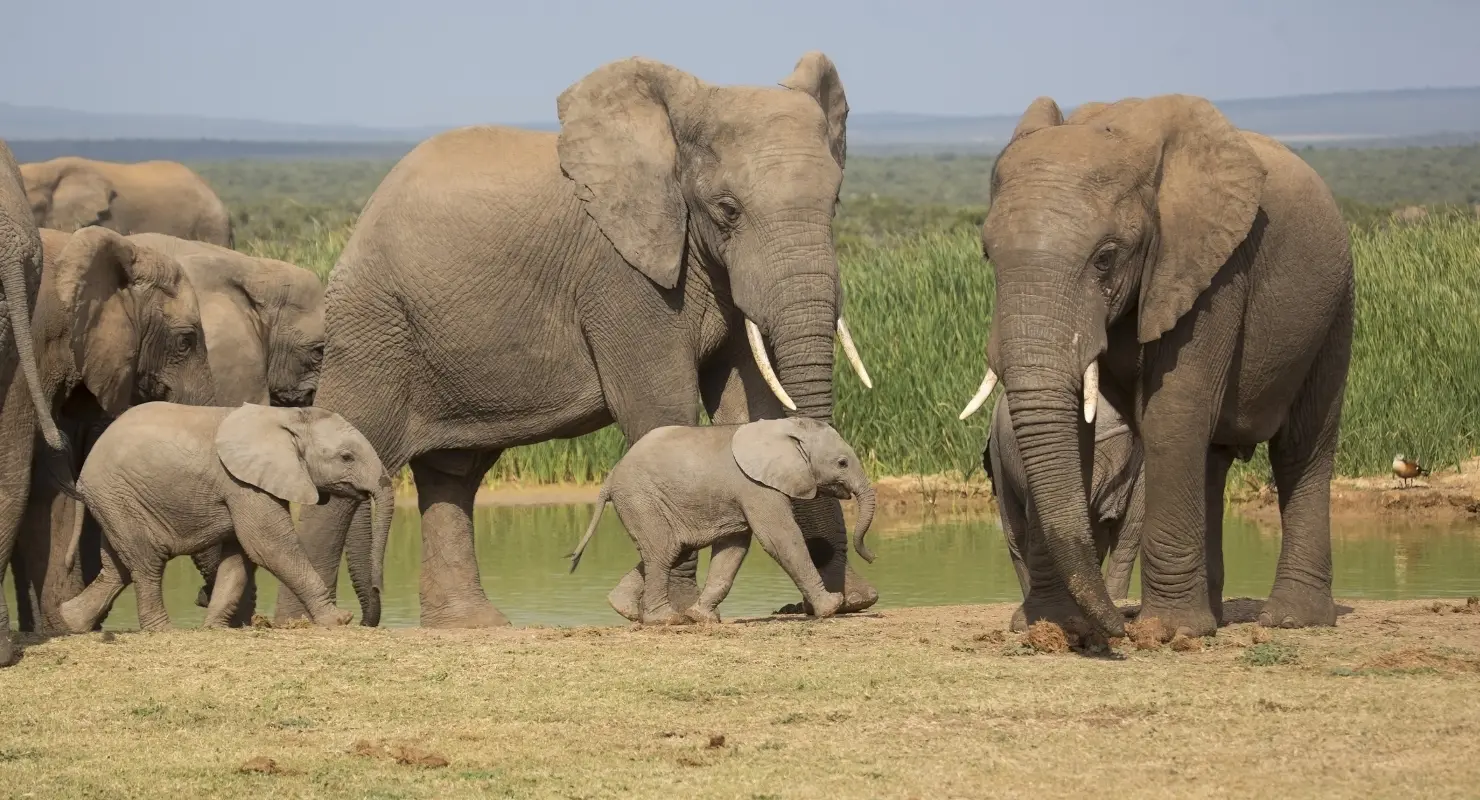
43. Which land mammal has a pregnancy lasting around 22 months?
Answer: The elephant. It has the longest gestation period of any living land mammal.
ID 43602740 ©Sarahthexton | Dreamstime.com
44. How many neck vertebrae does a giraffe normally have?
Answer: Seven. Humans usually have seven too, but a giraffe’s individual vertebrae are enormously elongated.
45. Which Australian marsupial has fingerprints that can look remarkably similar to human fingerprints?
Answer: The koala. Their fingertips have loops and whorls that evolved independently from ours.
46. In which familiar fish does the male carry the developing young?
Answer: The seahorse. The female deposits eggs into the male’s brood pouch, where they develop until birth.
47. Which marine mammal is famous for using stones to break open shellfish?
Answer: The sea otter. Some individuals repeatedly use the same stone.
48. Why are beaver incisors orange rather than white?
Answer: Their enamel contains iron. This contributes to the strength of the front surface of the teeth.
49. What kind of body part is a narwhal’s long tusk?
Answer: A tooth. It is an elongated canine that most commonly grows in males.
50. What type of teeth form a walrus’s tusks?
Answer: Canine teeth. Both male and female walruses can develop them.
51. What sensory structures allow sharks to detect weak electrical fields produced by other animals?
Answer: The ampullae of Lorenzini. These electroreceptors are concentrated around the head and snout.
52. Why do snakes repeatedly flick their tongues in and out?
Answer: They collect chemical particles from their surroundings and transfer them to the vomeronasal, or Jacobson’s, organ for analysis.
53. Which body parts do butterflies use to taste plants when they land?
Answer: Their feet. Taste receptors on the legs can help females identify suitable plants for laying eggs.
54. What behavior do honeybees use to communicate the direction and approximate distance of a food source?
Answer: The waggle dance. Features of the dance convey location information to other bees.
55. Which highly intelligent birds have been shown to remember individual human faces?
Answer: Crows. Research has shown that they can recognize particular people and retain those associations for years.
56. What personalized calls do many bottlenose dolphins use in a way that resembles individual names?
Answer: Signature whistles. Individual dolphins develop distinctive whistle patterns associated with their identity.
57. What type of very low-frequency sound can elephants use to communicate across long distances?
Answer: Infrasound. Some elephant calls contain frequencies below the normal lower limit of human hearing.
58. What navigation and hunting system do many bats use by producing sounds and listening for returning echoes?
Answer: Echolocation. The returning echoes provide information about nearby objects and prey.
59. What helps many owls approach prey with unusually quiet wingbeats?
Answer: Specialized feather structures. Features along the feathers reduce some of the noise created as air moves over the wings.
60. Which parent incubates the single egg in emperor penguins after it is laid?
Answer: The male. He balances it on his feet beneath a brood pouch while the female returns to sea to feed.
Some animal attractions bring together species that would never share a habitat in nature. Vienna’s Haus des Meeres, for example, combines aquarium and zoo exhibits inside a former World War II flak tower.
61. Which visible feature helps distinguish most sea lions from true seals?
Answer: External ear flaps. Sea lions have small visible pinnae, while true seals don’t.
62. Is a turtle’s shell separate armor that can simply be removed from its body?
Answer: No. The shell is part of the turtle’s skeleton, with ribs and vertebrae integrated into it.
63. What covers a snake’s eyes instead of movable eyelids?
Answer: A transparent protective scale often called a spectacle or brille. It is shed with the rest of the outer skin.
64. What environmental factor can help determine whether developing crocodilians become male or female?
Answer: Incubation temperature. Crocodilians use temperature-dependent sex determination.
65. What biological process allows fireflies to produce their own light?
Answer: Bioluminescence. A chemical reaction in specialized organs creates light while producing very little heat.
66. What happens to many scorpions when they are illuminated with ultraviolet light?
Answer: They fluoresce. Compounds in their exoskeleton can produce a bright blue-green glow under UV illumination.
67. Which familiar domestic animal can doze while standing but normally needs to lie down for REM sleep?
Answer: The horse. A leg-locking system helps horses rest while standing, while deeper REM sleep generally requires lying down.
68. How many compartments does a cow’s stomach have?
Answer: Four. They are the rumen, reticulum, omasum and abomasum.
69. What unusual shape do goats’ pupils have?
Answer: Horizontal rectangles. This contributes to a broad field of view.
70. What is unusual about the location of a kiwi’s nostrils?
Answer: They are near the tip of its bill. Kiwis rely heavily on smell when searching for food.
71. What is the name for the common parrot foot arrangement with two toes pointing forward and two backward?
Answer: Zygodactyl. The arrangement helps parrots grip branches and manipulate objects.
72. Which bird is famous for one of the longest annual migrations in the animal kingdom, traveling between Arctic and Antarctic regions?
Answer: The Arctic tern. Over its lifetime, the cumulative distance traveled can be extraordinary.
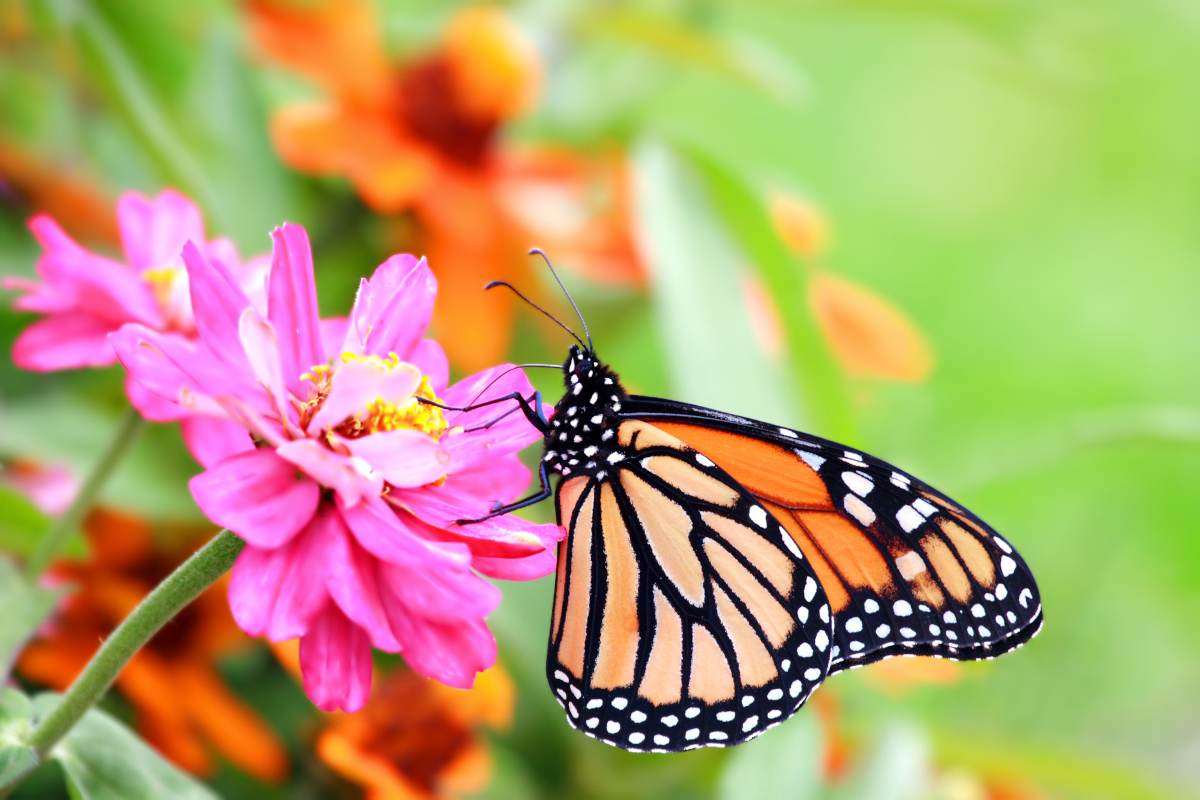
73. Which North American butterfly is famous for a multigenerational migration to overwintering areas in Mexico?
Answer: The monarch butterfly. No single butterfly completes the entire annual round trip.
ID 3163146 ©Misscanon | Dreamstime.com
74. Which fish is famous for returning from the ocean to freshwater breeding areas associated with its birthplace?
Answer: Salmon. Smell and other navigational cues help many salmon locate natal waters.
75. What can happen to the dominant male in a group of clownfish if the breeding female disappears?
Answer: It can change sex and become female. A lower-ranking male then moves up within the reproductive hierarchy.
76. How do many frogs take in the water they need rather than drinking it through the mouth?
Answer: Through their skin. A specialized region on the underside of the body can absorb water directly.
77. Which familiar marine animals can regenerate lost arms?
Answer: Sea stars. The extent of regeneration varies considerably between species.
78. What microscopic structures help geckos cling to walls and ceilings?
Answer: Millions of tiny hair-like structures called setae on their toe pads.
79. Which African mammals often have an individual stand upright as a sentinel while the rest of the group forages?
Answer: Meerkats. The lookout scans for predators and gives alarm calls when danger is detected.
80. Which black bird related to crows can learn to imitate parts of human speech?
Answer: The raven. Ravens are talented vocal learners and can reproduce a surprising range of sounds.
Watching normal animal behavior can be as interesting as seeing a rare species. The live bear cams are a simple way to watch bears fishing, feeding and moving around without disturbing them.
81. How can a dolphin sleep without completely losing awareness of the need to surface and breathe?
Answer: It can allow one brain hemisphere to sleep while the other remains more alert. This is called unihemispheric sleep.
82. Where are a cricket’s hearing organs located?
Answer: On its front legs. Tympanal organs allow crickets to detect sounds important for communication and survival.
83. Which Australian bird is famous for arranging blue objects around a structure built to impress females?
Answer: The satin bowerbird. Males collect items such as berries, flowers and sometimes human-made blue objects around their bowers.
84. Which shark is especially well known for being able to move between saltwater and freshwater?
Answer: The bull shark. It can regulate salt and water balance well enough to travel far into some river systems.
85. Which small mountain mammal gathers plants into “hay piles” that it stores for winter?
Answer: The pika. These rabbit relatives collect vegetation during warmer months and store it near their rocky shelters.
86. Which North American marsupial is famous for entering an involuntary immobile state when severely threatened?
Answer: The Virginia opossum. The behavior behind “playing possum” isn’t simply a conscious acting performance.
87. What do wild gorillas commonly build before settling down to sleep?
Answer: Sleeping nests. They construct them from branches, leaves and other vegetation.
88. What elastic material do hummingbirds often incorporate into their tiny nests so the structure can expand as chicks grow?
Answer: Spider silk. It helps bind the nest while allowing some flexibility.
89. Which great ape lives naturally only on the islands of Borneo and Sumatra?
Answer: The orangutan. The living orangutan species are native to those two Southeast Asian islands.
Orangutans are only one of the animals that can appear in broader questions about the continent. These Asia trivia questions mix wildlife with geography, landmarks, culture, food and history.
90. Which famous primatologist began studying wild chimpanzees at Gombe in 1960?
Answer: Jane Goodall. Her observations transformed scientific understanding of chimpanzee behavior, including their use and modification of tools.
Hard Animal Trivia Questions and Answers
The hard animal trivia questions go further into biology, evolution, migration, unusual species and remarkable animal abilities. I didn’t want this round to turn into a list of obscure Latin names or numbers that nobody could reasonably know, so these are challenging without being designed purely to defeat the player.
People who spend time watching animals, reading nature books or working on wildlife photography may recognize more of these than they expect. Others will probably pick up several facts worth remembering even when the answer is wrong.
91. Which British natural historian and broadcaster became internationally associated with series including Planet Earth and The Blue Planet?
Answer: Sir David Attenborough. His work has introduced generations of viewers around the world to wildlife and natural history.
92. Which Australian wildlife presenter became famous worldwide through the television series The Crocodile Hunter?
Answer: Steve Irwin. His television work and conservation advocacy made him one of the most recognizable wildlife personalities of his generation.
93. Which tiny bat from Thailand and Myanmar is often described as the world’s smallest mammal by body length?
Answer: Kitti’s hog-nosed bat, also called the bumblebee bat. Its body is only a little over an inch long.
94. Which fish was thought to have disappeared with prehistoric relatives until a living specimen was discovered in 1938?
Answer: The coelacanth. Its rediscovery off South Africa became one of the most famous zoological finds of the twentieth century.
95. Which shark is famous for an exceptionally long lifespan that can extend for several centuries?
Answer: The Greenland shark. Age estimates make it the longest-lived vertebrate currently known to science.
96. In which seabird has brain monitoring directly demonstrated sleep while the animal is flying?
Answer: The great frigatebird. Researchers recorded the birds sleeping with one hemisphere and, for short periods, both hemispheres while airborne.
97. Which goose is famous for high-altitude migrations across the Himalayan region?
Answer: The bar-headed goose. Physiological adaptations help it cope with the low oxygen levels encountered at extreme elevations.
98. Which shorebird set a tracked record by flying more than 8,000 miles nonstop from Alaska to Tasmania?
Answer: The bar-tailed godwit. A juvenile tracked in 2022 completed the extraordinary journey without stopping to feed or rest.
99. Which deep-sea cephalopod is known for having the largest eyes documented in the animal kingdom?
Answer: The colossal squid. Its enormous eyes are thought to help detect movement in deep Antarctic waters.
100. Which mammal is covered in large overlapping keratin scales?
Answer: The pangolin. It is the only living mammal with this extensive covering of protective scales.
Seeing some of the world’s large wild mammals in their natural environment is a completely different experience from knowing the facts. Africa remains the obvious dream for many people, and these top safari destinations in Africa show how different the experience can be from one country or ecosystem to another.
101. What unusual defensive feature do male platypuses carry on their hind legs?
Answer: Venomous spurs. Males can deliver venom through a spur connected to a venom gland.
102. What is the closest living relative of the giraffe?
Answer: The okapi. Its shorter neck and striped legs make the relationship far from obvious.
103. Which small African mammal that often lives among rocks belongs to the same broad evolutionary group as elephants and manatees?
Answer: The hyrax. Its appearance gives little hint of those evolutionary relationships.
104. Horseshoe crabs are more closely related to which familiar group: true crabs or spiders?
Answer: Spiders. Horseshoe crabs are chelicerates and are more closely related to arachnids than to true crabs.
105. Which mammal normally gives birth to genetically identical quadruplets?
Answer: The nine-banded armadillo. A single fertilized egg typically divides into four embryos.
106. Are hyenas evolutionarily closer to cats or dogs?
Answer: Cats. Hyenas belong to the feliform branch of the carnivores despite some dog-like features.
107. Which bird is famous for making hooked tools from plant material to extract prey?
Answer: The New Caledonian crow. Its sophisticated tool-making abilities have made it an important species in animal cognition research.
108. Armadillos belong to the same major mammalian lineage as which two familiar groups?
Answer: Sloths and anteaters. All belong to the group Xenarthra.
109. In which direction does a wombat’s pouch open?
Answer: Backward. The orientation helps reduce the amount of soil entering the pouch while the animal digs.
110. Which North American mammal combines exceptional speed with the ability to maintain it over much longer distances than a cheetah?
Answer: The pronghorn. It is one of the fastest land mammals and has remarkable endurance.
111. Which deer is unusual because females commonly grow antlers as well as males?
Answer: Reindeer, also called caribou. Female antlers are unusual among living deer species.
112. What do male musk deer grow instead of antlers?
Answer: Long upper canine teeth resembling tusks. Males can use them during competition with rivals.
113. Which mammal lives in eusocial colonies that can include a reproductive queen and large numbers of nonbreeding workers?
Answer: The naked mole-rat. Its social structure is exceptionally unusual among mammals.
114. Which social insects commonly maintain both a king and a queen in a mature colony?
Answer: Termites. The reproductive pair can remain together while workers maintain the colony.
115. Which insects have provided experimental evidence that individuals can recognize the faces of members of their own species?
Answer: Paper wasps. In some social species, facial patterns help individuals distinguish one another.
116. Which fish hunts insects above the water by firing carefully aimed jets of water?
Answer: The archerfish. It can knock insects from vegetation and collect them when they fall.
117. What distinctive shape do cuttlefish pupils have?
Answer: A W shape. The unusual pupil helps control incoming light across the animal’s broad field of view.
118. Which marine crustaceans have unusually sophisticated vision that includes sensitivity to polarized light?
Answer: Mantis shrimps. Their visual systems contain an extraordinary array of specialized photoreceptors.
119. What is unusual about a nautilus eye compared with the camera-like eyes of squid and octopuses?
Answer: It works like a pinhole camera and lacks a lens. Light enters through a small opening into the eye chamber.
120. Where are roughly two-thirds of an octopus’s neurons located?
Answer: In its arms. The arms can perform substantial local sensory processing and movement control.
A first safari also brings practical questions that don’t show up in a trivia game. Wildlife seasons, guides, safety, distances and expectations all affect the experience, which is why planning a first Big Five safari takes more than choosing the animals you hope to see.
121. Which bats are known to share regurgitated food with hungry roost-mates that failed to feed?
Answer: Vampire bats. Long-term social relationships can influence these food-sharing interactions.
122. Which North American shrew can use venomous saliva to help subdue prey?
Answer: The northern short-tailed shrew. Its saliva contains toxins capable of immobilizing small prey.
123. Which unusual bird has chicks with functional claws on their wings?
Answer: The hoatzin. Young chicks can use the claws while climbing through vegetation.
124. Which Australian bird is famous for exceptionally accurate mimicry that can include other birds and human-made sounds?
Answer: The lyrebird. Its repertoire can be remarkably complex.
125. Which living bird has the greatest wingspan?
Answer: The wandering albatross. The largest individuals can have wings spanning more than 11 feet.
Weird Animal Trivia Questions and Answers
I’ve saved a very different type of challenge for this section. These weird animal trivia questions focus on the things animals do that sound made up the first time you hear them – bizarre defenses, strange anatomy, unexpected feeding methods and biological tricks that would fit comfortably into science fiction.
These are also some of my favorite weird animal facts trivia questions because getting the answer wrong doesn’t ruin the question. The explanation is often the best part. That may be why animal documentaries held my attention for so many hours growing up: even after you recognize the animal, you can still discover a behavior you never expected.
126. Which Australian marsupial is famous for producing cube-shaped droppings?
Answer: The wombat. The unusual shapes form as feces move through regions of the intestine with different elastic properties.
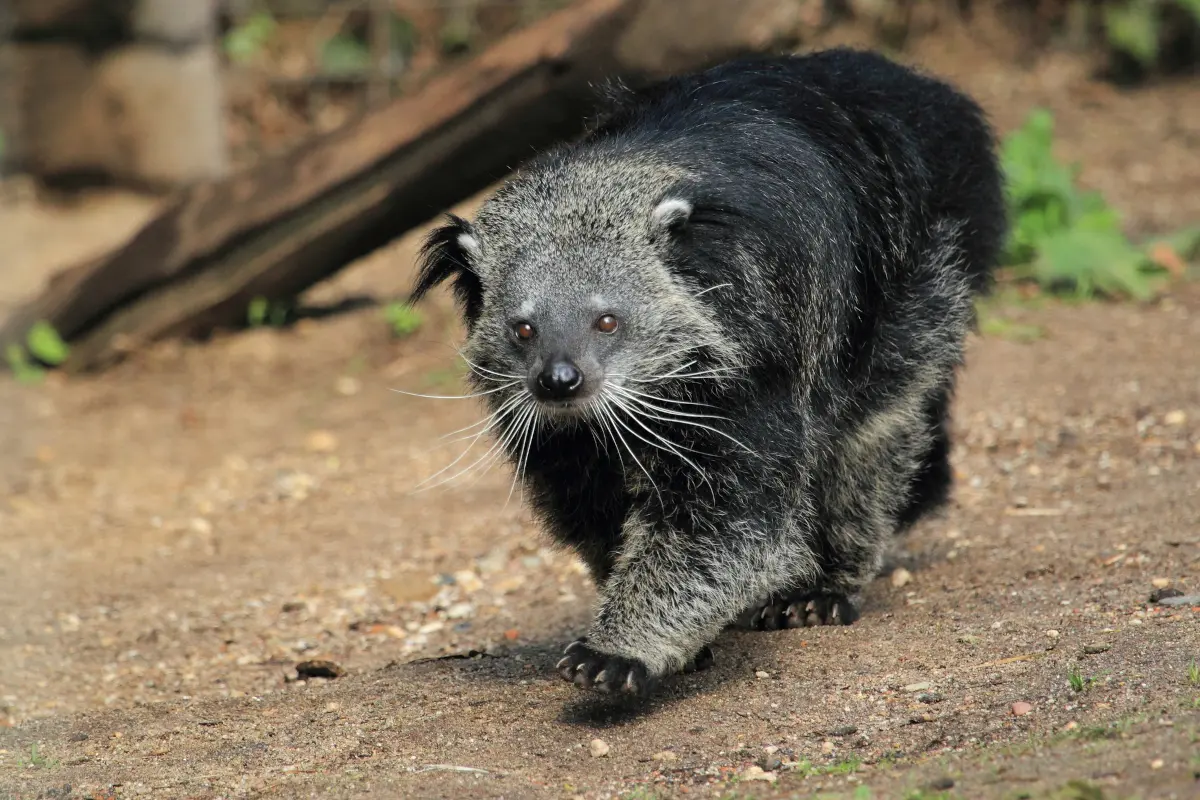
127. Which Asian mammal is famous for smelling surprisingly similar to buttered popcorn?
Answer: The binturong. One of the major scent compounds in its urine is also associated with the smell of cooked popcorn.
ID 24406982 ©Lukas Blazek | Dreamstime.com
128. Which lizard can defend itself by squirting blood from around its eyes?
Answer: A horned lizard. Several species can rupture small blood vessels near the eyes when threatened by particular predators.
129. Which beetle defends itself by firing a hot chemical spray in rapid pulses?
Answer: The bombardier beetle. Chemicals stored separately in its abdomen react inside a specialized chamber immediately before discharge.
130. Which eel-shaped marine animal can produce enormous quantities of slime when threatened?
Answer: The hagfish. Its defensive slime expands rapidly in seawater and can interfere with a predator’s gills.
131. Which marine animal can eject internal organs as a defense and later regenerate what was lost?
Answer: Some sea cucumbers. The extraordinary behavior is known as evisceration.
132. Which African amphibian can break bones in its toes so sharp points pierce the skin and act like claws?
Answer: The hairy frog. The unusual mechanism creates temporary claw-like defensive structures.
133. Which small crustacean can snap one enlarged claw so quickly that it creates a cavitation bubble?
Answer: The pistol shrimp. The collapsing bubble produces an intense sound and pressure wave.
134. Which marine snail can strike prey using a harpoon-like tooth connected to venom?
Answer: The cone snail. The modified tooth can be fired through a flexible proboscis to inject venom.
135. Which jellyfish is famous for being able to reverse its life cycle from an adult stage back toward a juvenile polyp stage?
Answer: Turritopsis dohrnii, often called the immortal jellyfish. The ability doesn’t make an individual impossible to kill, but the life-cycle reversal is exceptional.
136. Which microscopic animals can enter an extremely resistant dormant state called cryptobiosis?
Answer: Tardigrades. During cryptobiosis, their metabolism can become extraordinarily low until favorable conditions return.
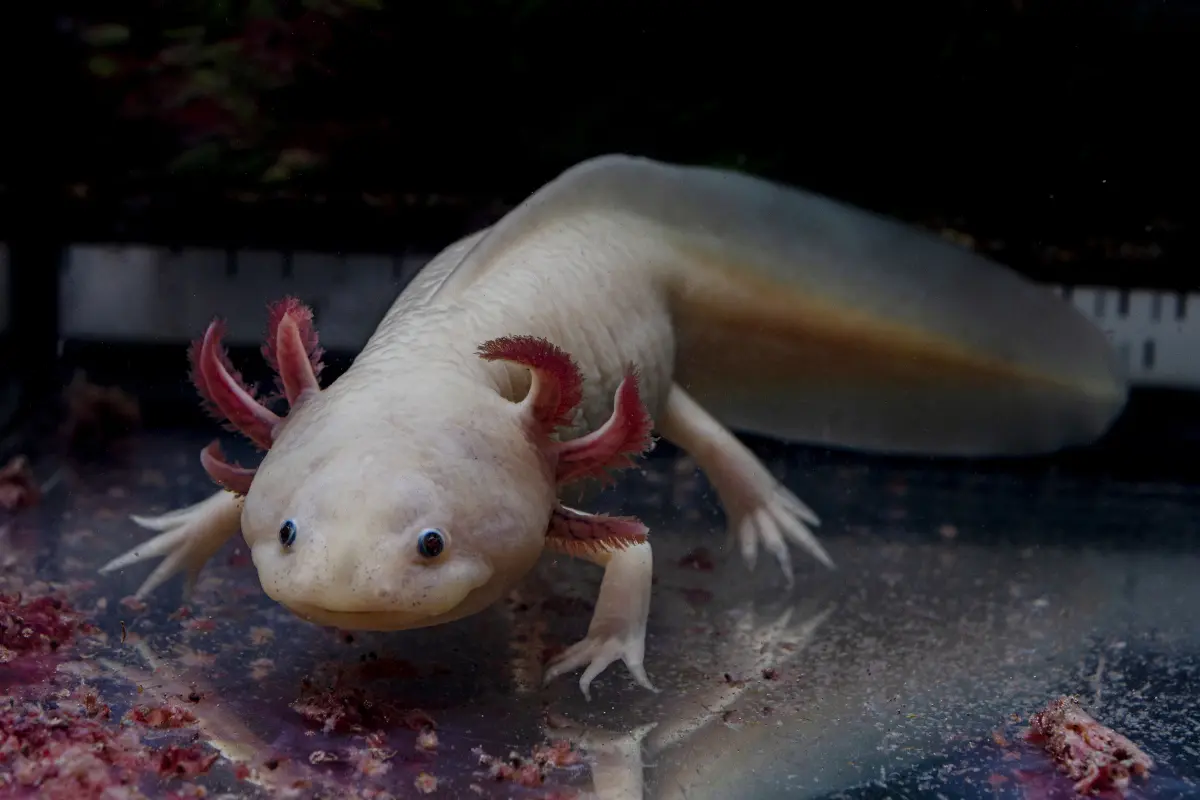
137. Which Mexican salamander is famous for regenerating limbs and parts of several internal structures?
Answer: The axolotl. Its regenerative ability has made it an important research animal.
ID 279013772 ©Iva Dimova | Dreamstime.com
138. Which body parts can many frogs use to help push food down their throats?
Answer: Their eyes. Retracting the eyes can help press food toward the esophagus during swallowing.
139. Which famously slow mammal normally leaves the trees only about once a week to defecate?
Answer: The three-toed sloth. The journey to the forest floor can expose it to risks it avoids in the canopy.
140. In some deep-sea anglerfish species, what can happen after a tiny male bites a much larger female?
Answer: The male can permanently fuse with her body. He eventually becomes dependent on her circulation while continuing to provide sperm.
Unusual animal behavior becomes even more interesting when the setting changes. Singapore’s Night Safari was built around observing animals during the hours when many nocturnal species are naturally active.
141. Which sea slugs can retain chloroplasts from algae and keep them functioning inside their own bodies?
Answer: Certain sacoglossan sea slugs. The process of retaining functional stolen chloroplasts is called kleptoplasty.
142. What defensive weapons can some nudibranchs steal from animals they eat?
Answer: Stinging cells called nematocysts. Some nudibranchs consume cnidarians and store unfired stinging cells for their own defense.
143. Which birds make valuable edible nests largely from hardened saliva?
Answer: Edible-nest swiftlets. The pale nests are harvested for use in bird’s nest soup.
144. Which crabs deliberately attach algae, sponges and other material to their bodies as camouflage?
Answer: Decorator crabs. Their disguise can make them very difficult to distinguish from the surrounding seafloor.
145. Which octopus became famous for copying the appearance and movements of animals such as sea snakes and lionfish?
Answer: The mimic octopus. Its repertoire of defensive impersonations is unusually broad.
146. Which octopus carries shells or pieces of coconut shell that can later be assembled into a shelter?
Answer: The coconut octopus. The behavior is often discussed as an example of tool use in an invertebrate.
147. What unusual bedtime protection do some parrotfish produce around themselves?
Answer: A mucus cocoon. The layer appears to help reduce detection by certain parasites and possibly predators while the fish rests.
148. Which tall pink birds feed their chicks a nutrient-rich substance known as crop milk, produced by both sexes?
Answer: Flamingos. Despite the name, crop milk isn’t mammalian milk.
149. Which monkey’s male is instantly recognizable because of an unusually large, hanging nose?
Answer: The proboscis monkey. The enlarged male nose is involved in communication and sexual selection.
150. How many fleshy rays surround the nose of a star-nosed mole?
Answer: 22. The star is an extraordinarily sensitive touch organ used to explore the mole’s surroundings and locate food.
151. Which primate searches for food by tapping wood and using a very long, thin middle finger to pull prey from small openings?
Answer: The aye-aye. This unusual lemur uses the specialized finger as part of a foraging method called percussive foraging.
152. Which eusocial mammal can switch to using fructose in a way that helps it survive extremely low-oxygen conditions?
Answer: The naked mole-rat. This unusual metabolic response helps protect tissues when oxygen becomes scarce underground.
153. Which Australian lizard collects water through microscopic channels between its scales and directs it toward its mouth?
Answer: The thorny devil. Capillary action helps move moisture through grooves in its skin.
154. Which snakes can flatten their bodies and glide from trees without having wings?
Answer: Flying snakes of the genus Chrysopelea. They launch from branches and reshape their bodies to generate aerodynamic lift.
155. Which seabird can defend its nest by spitting or vomiting foul-smelling stomach oil at a threat?
Answer: The northern fulmar. The oily defense can be directed at predators approaching the nest.
156. Which spider spends almost its entire life underwater using a silk structure filled with air?
Answer: The diving bell spider. It transports air below the surface and stores it inside an underwater silk web.
157. Which insects have been shown to use the Milky Way as a navigation cue?
Answer: Dung beetles. Experiments have shown that some nocturnal species use the bright band of the Milky Way to maintain a straighter route.
158. Which tiny Australian spiders perform elaborate dances while displaying brightly colored abdominal fans?
Answer: Peacock spiders. Males combine visual displays with vibrations during courtship.
159. Which insect can resemble a flower so closely that its appearance may help it approach insect prey?
Answer: The orchid mantis. Its shape and coloration create a striking flower-like appearance.
160. Which large North American moth doesn’t eat during its adult stage because its mouthparts aren’t functional?
Answer: The luna moth. The adult survives on energy accumulated during the caterpillar stage.
South America has more than its share of animals that seem designed for trivia – capybaras, anteaters, jaguars, unusual frogs and an enormous variety of birds. For more questions about the places around them rather than the animals alone, the geography trivia quiz moves across countries, continents, rivers, mountains and landmarks.
161. Which insects can spend 13 or 17 years developing underground before appearing in enormous synchronized groups?
Answer: Periodical cicadas. The famous 13-year and 17-year cycles occur in particular North American species.
162. Which North American amphibian can survive winter even when much of the water in its body freezes?
Answer: The wood frog. Protective substances including glucose help its cells survive freezing conditions.
163. Which Antarctic fish family is famous for species whose blood lacks the red oxygen-carrying pigment hemoglobin?
Answer: The crocodile icefishes. Their blood appears pale because they lack hemoglobin and red blood cells.
164. What do glass frogs do with many of their red blood cells while sleeping that makes their bodies more transparent?
Answer: They concentrate them in the liver. This reduces the amount of red blood visibly circulating through the body.
165. Which critically endangered flightless parrot is famous for a deep booming courtship call?
Answer: The kākāpō. Males create resonant booming sounds that can carry over long distances while trying to attract females.
Surprising Animal Trivia Questions and Answers
The last round isn’t simply another hard section. These surprising animal trivia questions focus on myths, misleading names, unexpected relatives and familiar ideas that turn out to be incomplete or wrong.
That makes the final section particularly good for adults and older kids playing together, because a lot of the answers don’t depend on obscure knowledge. They depend on noticing how often something we’ve heard for years isn’t quite the full story.
166. Despite the common expression, are bats actually blind?
Answer: No. Bats can see, and different species combine vision with senses such as hearing and echolocation in different ways.
167. Do ostriches really bury their heads in the sand when frightened?
Answer: No. The myth may partly come from the way ostriches lower their heads toward nests or the ground.
168. What actually triggers a bull during bullfighting rather than the red color of the cape?
Answer: Movement. Cattle don’t perceive red the way humans do, and the motion of the cape is the important stimulus.
169. Is a goldfish’s memory limited to only three seconds?
Answer: No. Goldfish can learn tasks and retain information far longer than a few seconds.
170. Do lemmings intentionally commit mass suicide by jumping from cliffs?
Answer: No. Lemming populations can fluctuate dramatically and individuals may die while dispersing, but deliberate mass suicide is a myth.
171. Can a porcupine deliberately shoot its quills at an attacker?
Answer: No. The quills can detach after contact, but porcupines don’t launch them like projectiles.
172. Do snakes have to dislocate or “unhinge” their jaws to swallow large prey?
Answer: No. Their skulls contain highly mobile joints and flexible connections that allow extensive movement without the jaw being dislocated.
173. Do penguins actually have knees?
Answer: Yes. Much of each leg, including the knee joint, is hidden within the bird’s body and dense feathers.
174. What color is a polar bear’s skin beneath its fur?
Answer: Black. The animal’s snowy appearance comes from its fur rather than white skin underneath.
175. Did whales evolve entirely in the ocean, or did their ancestors once live on land?
Answer: Their ancestors lived on land. Fossils document a long evolutionary transition from terrestrial mammals to increasingly aquatic early whales.
Some of the most interesting wildlife trips put evolution right in front of you. The Galápagos are the obvious example, while destinations across Africa, Asia and the Americas offer completely different encounters. Looking for animals in the wild also comes with responsibilities, especially when people get too close in pursuit of dangerous wildlife photos.
176. What living animals are the modern descendants of theropod dinosaurs?
Answer: Birds. In evolutionary terms, birds are the surviving dinosaur lineage.
177. Are crocodiles evolutionarily closer to birds or to lizards?
Answer: Birds. Crocodilians and birds are the two surviving branches of the archosaur lineage.
178. What are starfish more accurately called, since they aren’t actually fish?
Answer: Sea stars. They are echinoderms, relatives of animals such as sea urchins and sea cucumbers.
179. Which famous ocean creature that resembles a jellyfish is actually a colony of specialized animals working together?
Answer: The Portuguese man o’ war. Its colony is composed of specialized units called zooids that perform different functions.
180. Despite its name, what type of fish is an electric eel?
Answer: A knifefish. Electric eels aren’t members of the true eel order.
181. Is a koala actually a bear?
Answer: No. A koala is a marsupial whose young continue developing in a pouch.
182. What kind of animal is a flying fox?
Answer: A bat. Flying foxes are large fruit-eating bats.
183. What kind of animal is a seahorse?
Answer: A fish. Its upright posture and horse-like head don’t change its basic fish anatomy.
184. What joint are people usually seeing when they think a flamingo’s knee bends backward?
Answer: The ankle. The actual knee is higher up and largely hidden by feathers.
185. Is a cuttlefish actually a fish?
Answer: No. It’s a cephalopod mollusk related to squid and octopuses.
186. What type of animal is a silverfish?
Answer: An insect. Its fish-like name comes from its silvery appearance and wriggling movement.
Names can be especially deceptive in the ocean. Aquariums are good places to see how radically different marine groups can look when they’re side by side, whether that’s SEA LIFE in Munich or The Deep in Hull, which includes fish, penguins and other aquatic species.
187. What feeding structure allows many snails to scrape food using rows of numerous microscopic teeth?
Answer: The radula. Depending on the species, this tongue-like ribbon can carry hundreds or thousands of tiny teeth.
188. Which major animal lineage existed before the first trees appeared on Earth?
Answer: Sharks. Shark-like ancestors were already swimming in ancient seas hundreds of millions of years ago.
189. How do ants breathe if they don’t have lungs?
Answer: Through a network of tubes called tracheae connected to openings called spiracles. Oxygen travels through this system to body tissues.
190. Which tiny spiders are known for having unusually sharp vision compared with many other spiders?
Answer: Jumping spiders. Their large forward-facing principal eyes support precise visual hunting and elaborate displays.
191. Why does an owl move its whole head so much when looking around?
Answer: Its large, tube-shaped eyes have very limited movement within their sockets. Neck movement compensates for that restriction.
192. Where are a dog’s important sweat glands used in thermoregulation concentrated?
Answer: In the paw pads. Dogs depend much more heavily on panting than humans do on whole-body sweating.
193. Which familiar pet is physically unable to vomit?
Answer: The rabbit. Its digestive anatomy makes vomiting effectively impossible.
194. Which domestic animal is an obligate nasal breather and normally can’t switch to breathing through its mouth the way a human can?
Answer: The horse. Its anatomy keeps the normal breathing pathway routed through the nose.
195. Which enormous mammals can detect vibrations traveling through the ground and respond to seismic signals?
Answer: Elephants. They can detect ground vibrations through sensitive structures in their feet.
196. Which Arctic deer’s eyes can change color with the seasons, appearing more golden in summer and deep blue in winter?
Answer: The reindeer. Changes within the eye help adapt vision to radically different seasonal light conditions.
197. Do chameleons change color only to hide from predators?
Answer: No. Color changes can also be involved in communication, social signaling and temperature regulation.
198. Which insects effectively “farm” aphids, protecting them in exchange for sugary honeydew?
Answer: Ants. Workers may defend aphids from predators and stimulate them to release the sweet liquid.
199. Which North American bird can remember the locations of many thousands of seeds it has hidden for later?
Answer: Clark’s nutcracker. Its remarkable spatial memory helps it recover cached seeds months after hiding them.
200. Which living land mammals are the closest relatives of whales and dolphins?
Answer: Hippopotamuses. Genetic and fossil evidence places hippos and cetaceans within closely related evolutionary branches.
How Many Animal Trivia Questions Did You Get Right?
If you made it all the way through the 200 animal trivia questions, now comes the fun part: checking your score.
Getting fewer than 70 correct doesn’t mean the quiz went badly. There are a lot of specialized facts in the later rounds, and you’ve probably collected dozens of new ones along the way. A score from 70 to 119 is a solid result for general animal knowledge, while 120 to 159 suggests wildlife and nature are already among your stronger trivia subjects.
From 160 to 179 is impressive. If you reached 180 or more, you knew the answers to questions covering everything from everyday pets and famous wildlife to animal evolution, deep-sea biology and some very strange adaptations.
I still enjoy discovering new animal facts after all those years of encyclopedias, TV programs and animals in my own home. There’s always another species or behavior that makes you wonder how you somehow never heard about it before.
For a different animal-heavy quiz, the Thanksgiving trivia questions include an entire turkey round, while summer trivia brings in insects, wildlife and seasonal nature. Bats also cross over naturally into the much spookier Halloween movie trivia collection.
How These Animal Trivia Facts Were Checked
Animal facts are particularly easy to distort online. A precise observation becomes an exaggerated record, one species gets generalized to an entire group, and memorable myths can circulate for years after scientists have already corrected them.
For that reason, I avoided claims with unclear definitions and common viral “facts” that don’t hold up. Records were phrased according to what is actually being measured, and unusual biological claims were checked against scientific, museum, conservation or government sources where possible.
The goal wasn’t to produce 200 questions at any cost. It was to create 200 questions with clear answers that are useful in an actual quiz and interesting enough to remember afterward.
Using These Animal Trivia Questions
Are these animal trivia questions suitable for adults?
Yes. The easy questions provide a warm-up, but the medium, hard, weird and surprising sections include plenty for experienced trivia players. For an adults-only game, you can start with the medium round and mix in questions from the later sections.
Can kids use these animal trivia questions too?
Yes, especially older children who enjoy nature, science, zoos, wildlife documentaries or general-knowledge quizzes. The first 40 questions are the easiest starting point, but children who already know a lot about animals may do surprisingly well much further into the quiz.
How difficult are the hard animal trivia questions?
They’re meant to be challenging without relying on facts so obscure that virtually nobody could answer them. An animal enthusiast or strong general-knowledge player should have a realistic chance with at least some of the hard round.
Can these questions be used for a family quiz or game night?
Yes. For a quick animal trivia game, choose 20 to 30 questions from different sections. For a longer game, use the five sections as separate rounds and award one point for each correct answer.
If your group wants something less competitive after 200 factual questions, the animal choices mixed into these travel would you rather questions can turn the next round into a conversation instead.
And for people who’d rather see wildlife than answer questions about it, responsible viewing is worth keeping in mind. A good safari or nature trip can be unforgettable without getting dangerously close to an animal, and preparation makes the experience better for both visitors and wildlife.
More amazing articles for you:
200 October Trivia Questions and Answers (Easy, Medium & Hard)
Best European Destination Dupes for 2026: Cheaper Alternatives to Santorini, Prague, and Amalfi
She Ate Garlic Chicken on a Plane. A Passenger Complained - What She Wrote Next Turned People Agains...
Bumped Up To Business Class: Blag Holiday Upgrades
This Passenger’s In-Flight Move Sparks Outrage - Comfort or Just Disgusting?
Australian food: the 12 best Australian dishes you should try
A Complete Travel Guide to Darjeeling (India), The Queen of Hills
A Woman Shared the First Thing She Does in Paris. Millions Watched - Then the Comments Made Me Check...

Violeta-Loredana Pascal is a communications expert, business mentor, and the founder of Earth’s Attractions and PRwave INTERNATIONAL. A pioneer in the Romanian digital PR landscape since 2005, she holds a degree in Communication and Social Sciences from SNSPA Bucharest. Violeta is a senior trainer at AcademiadeAfaceri.ro, where she leverages over 20 years of experience to teach professional courses in PR strategy and workplace productivity. By blending high-level business consulting with a passion for holistic travel and wellness, she empowers solopreneurs to overcome procrastination, build profitable brands, and design a life of purposeful adventure.