“History is a guide to navigation in perilous times. History is who we are and why we are the way we are.” — David McCullough
I believe that history is also a great trivia topic. It lets us recall details we haven’t thought about in years, spot connections we may have missed at school, and discover facts that are likely to stay with us.
After publishing U.S. travel trivia, U.S. state trivia, U.S. National Parks trivia, and a challenge devoted to European history, I thought it was time for a U.S. history trivia quiz of its own.
Working on this quiz reminded me how many parts of U.S. history I first encountered through travel, museums, books, and films. Don’t worry: these American history trivia questions and answers for adults aren’t reserved for history buffs. I always create my quizzes to be accessible, so the opening rounds offer plenty of satisfying wins. The hard U.S. history trivia questions require a little more knowledge, but you’ll probably answer more of them than you expect.
I’ve grouped the questions by both difficulty and historical period, so I recommend trying every section, even if a particular period isn’t your strong suit. You may know much more about the periods that come later and pick up plenty of points there.
ID 20119900 ©Yobro10 | Dreamstime.com
How This American History Quiz Works
This U.S. history quiz with answers begins with a 20-question warm-up, then moves through easy, medium, hard, and final-challenge rounds. The answers appear directly below the questions, and each one includes a little context so you can learn while you play. Give yourself one point for every correct answer, and don’t peek until you’ve made your guess.
I checked key names, dates, and documents against the National Archives, the Library of Congress, and the National Park Service. The questions favor documented facts over legends.
Warm-Up: 20 U.S. History Trivia Questions Everyone Can Try
These easy U.S. history trivia questions for adults cover famous people, documents, places, and turning points. The subjects move around the timeline on purpose, so the warm-up feels lively instead of reading like a textbook chapter.
1. Which song became the national anthem of the United States in 1931?
Answer: “The Star-Spangled Banner.” Francis Scott Key wrote the words after witnessing the British bombardment of Fort McHenry in 1814.
2. Who refused to give up her bus seat in Montgomery, Alabama, in 1955?
Answer: Rosa Parks. Her action became a national symbol of the civil rights movement.
3. What settlement, founded in Virginia in 1607, became England’s first permanent colony in North America?
Answer: Jamestown. The settlement stood along the James River and later served as Virginia’s colonial capital.
4. Who became the first person to walk on the Moon?
Answer: Neil Armstrong. He stepped onto the lunar surface during the Apollo 11 mission in July 1969.
5. What 1803 land deal nearly doubled the size of the United States?
Answer: The Louisiana Purchase. The acquisition added roughly 828,000 square miles to the country.
6. Who delivered the “I Have a Dream” speech at the March on Washington?
Answer: Martin Luther King Jr. He addressed the crowd from the steps of the Lincoln Memorial on August 28, 1963.
7. Who served as the first president of the United States?
Answer: George Washington. He remains the only president unanimously chosen by the Electoral College.
8. Which place became the first U.S. national park in 1872?
Answer: Yellowstone National Park. Its geysers, hot springs, and wildlife also make it a favorite subject in national parks trivia.
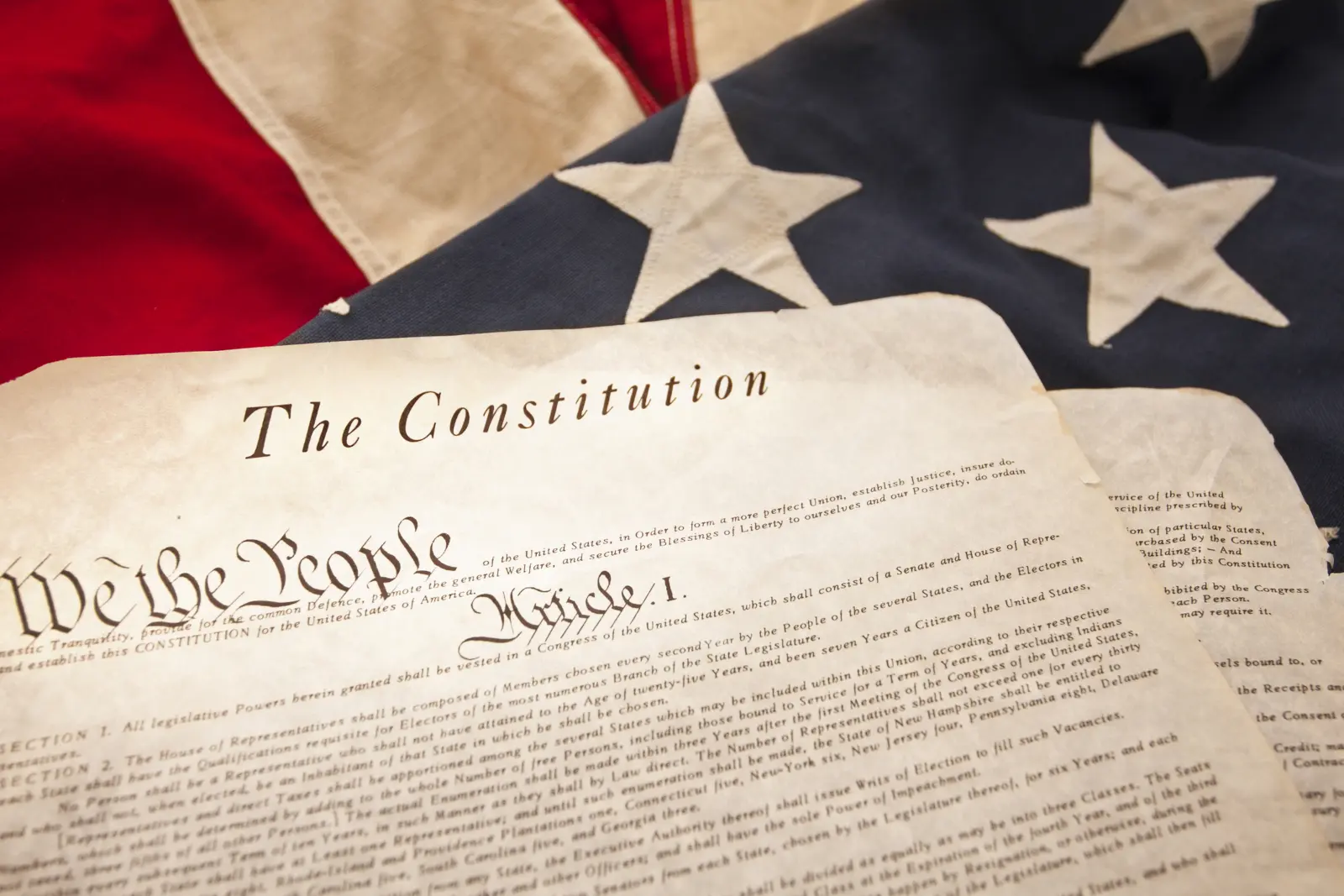
9. Which document begins with the words “We the People”?
Answer: The U.S. Constitution. Delegates signed it in 1787, and it took effect after the required states ratified it.
10. Which country sold Alaska to the United States in 1867?
Answer: Russia. The United States paid $7.2 million for the territory.
11. Which U.S. naval base was attacked on December 7, 1941?
Answer: Pearl Harbor. The attack led Congress to declare war on Japan the following day; the site is also a central stop in this Oahu guide.
12. Which constitutional amendment guaranteed women the right to vote nationwide?
Answer: The Nineteenth Amendment. It was ratified in 1920 after a long campaign for women’s suffrage.
13. What war was fought between the Union and the Confederacy?
Answer: The Civil War. It lasted from 1861 to 1865 and preserved the United States as one nation.
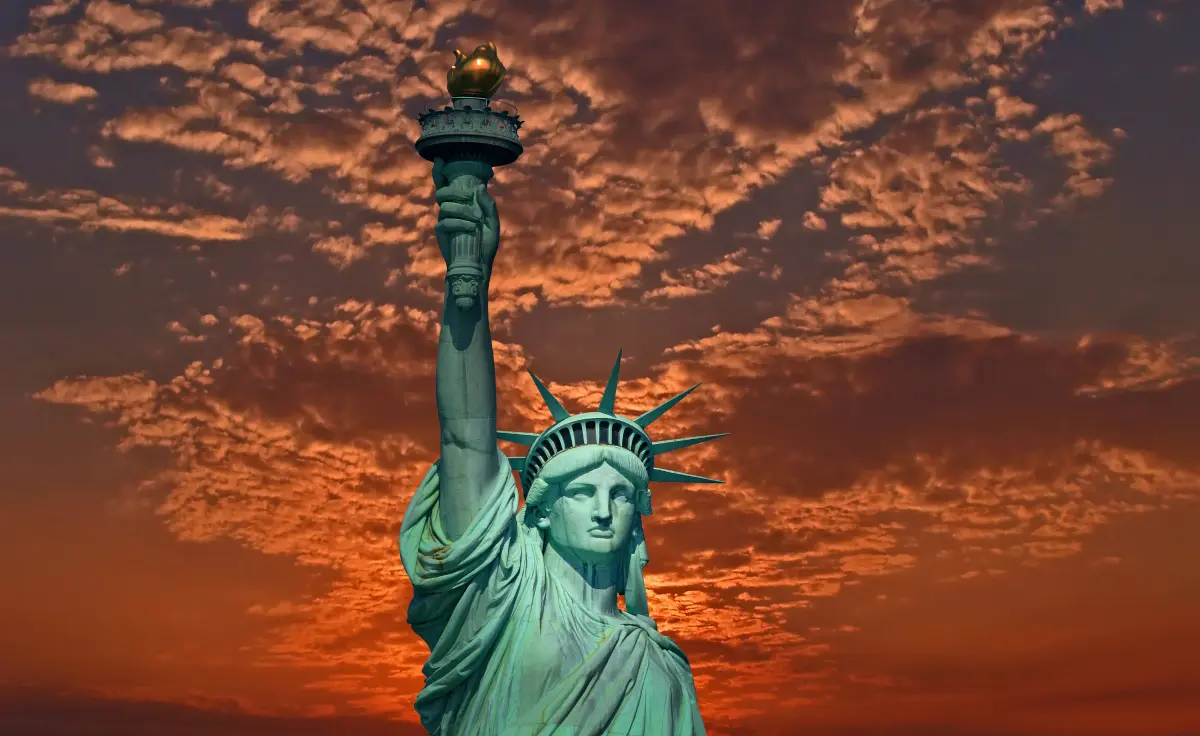
14. Which country gave the Statue of Liberty to the United States?
Answer: France. The monument was dedicated in New York Harbor in 1886 and remains one of the most iconic U.S. landmarks.
15. In what year did the Continental Congress adopt the Declaration of Independence?
Answer: 1776. Delegates approved the final wording on July 4.
16. What name is given to the severe economic downturn that began in 1929?
Answer: The Great Depression. Bank failures, unemployment, and falling production affected millions of people during the 1930s.
17. Which president delivered the Gettysburg Address?
Answer: Abraham Lincoln. His brief November 1863 speech connected the war to the promise of equality in the Declaration of Independence.
18. Which amendment abolished slavery in the United States?
Answer: The Thirteenth Amendment. It was ratified in December 1865.
19. Which city served as the first U.S. capital under the Constitution?
Answer: New York City. The federal government met there before moving to Philadelphia and, later, Washington, D.C.
20. In what year did the Berlin Wall fall?
Answer: 1989. Its opening became a defining symbol of the Cold War’s approaching end.
Easy American History Trivia Questions and Answers
The next 40 questions add more details – but you will see that they are accesible. This easy American history quiz moves in chronological order, which makes people, laws, and events easier to place on a mental timeline.
Colonies and the American Revolution
In this round of colonial American history trivia questions, familiar names blend with perhaps less popular events (but not unknown or hard). The answers explain enough to refresh your memory without slowing down the game.
21. What ship carried the Pilgrims to present-day Massachusetts in 1620?
Answer: The Mayflower. Its passengers established Plymouth Colony after crossing the Atlantic.
22. What protest saw colonists dump tea into Boston Harbor in December 1773?
Answer: The Boston Tea Party. Participants opposed a tax system that gave them no representation in Parliament, and Boston’s historic sites still bring this period into view.
23. Who drafted the principal text of the Declaration of Independence?
Answer: Thomas Jefferson. A committee reviewed his draft before Congress debated and revised it.
24. Which bird appears on the Great Seal of the United States?
Answer: The bald eagle. Congress adopted the seal’s design in 1782.
25. Which silversmith made a famous nighttime ride to warn that British troops were advancing?
Answer: Paul Revere. He was one of several riders who carried warnings through the Massachusetts countryside in April 1775.
26. Where did the Continental Army spend a difficult winter in 1777–1778?
Answer: Valley Forge. Training introduced during the encampment helped make the army more disciplined.
27. At which Virginia town did a major British army surrender in 1781?
Answer: Yorktown. The surrender effectively ended large-scale fighting in the Revolutionary War.
28. Which American diplomat helped negotiate the peace agreement that ended the Revolutionary War?
Answer: Benjamin Franklin. He joined John Adams and John Jay in the negotiations with Britain.
29. What founding document announced that the thirteen colonies regarded themselves as free and independent states?
Answer: The Declaration of Independence. Its parchment copy is preserved at the National Archives in Washington, D.C.
30. Which British monarch ruled during the American Revolution?
Answer: King George III. He reigned from 1760 until 1820.
31. What body governed the colonies collectively during much of the Revolutionary War?
Answer: The Continental Congress. Its delegates coordinated the war effort and conducted diplomacy.
32. Which 1777 American victory helped secure a formal alliance abroad?
Answer: The Battle of Saratoga. The victory strengthened the American diplomatic position in Europe.
33. What agreement formally ended the American Revolutionary War?
Answer: The Treaty of Paris of 1783. Britain recognized the independence of the United States in the treaty.
34. In which city did delegates meet for the Constitutional Convention?
Answer: Philadelphia. Independence Hall hosted both the convention and the earlier debate over independence; the city’s wider story appears in this Philadelphia guide.
35. What series of essays argued for ratification of the new Constitution?
Answer: The Federalist Papers. The 85 essays appeared under the shared pen name Publius.
Building and Expanding the Nation
Next, I am adding early U.S. history trivia questions that follow a young country as it added territory, improved transportation, and faced growing political divisions. They’re accessible questions, but the short explanations can refresh your memory.
36. Which Lemhi Shoshone woman served as an interpreter and diplomat during the expedition that crossed the West from 1804 to 1806?
Answer: Sacagawea. She helped members of the Corps of Discovery communicate with Shoshone people and was the only woman in its permanent party.
37. Which waterway, completed in 1825, connected the Hudson River with the Great Lakes?
Answer: The Erie Canal. It sharply reduced the cost of moving goods between the interior and the Atlantic coast.
38. What 1823 policy warned European powers against further colonization in the Western Hemisphere?
Answer: The Monroe Doctrine. It became a lasting reference point in U.S. foreign policy.
39. What 1820 agreement admitted Maine as a free state and Missouri as a slave state?
Answer: The Missouri Compromise. It also drew a geographic line for slavery in much of the remaining territory from the earlier land acquisition.
40. What federally funded route became known as the Cumberland Road?
Answer: The National Road. Construction began in 1811, creating a major east-west route into the Ohio Valley.
41. What 1848 discovery brought a rush of fortune seekers to California?
Answer: The California Gold Rush. The population surge accelerated California’s admission to the Union in 1850.
42. Which communication device did Samuel Morse help develop for long-distance messages?
Answer: The telegraph. Morse’s system transmitted coded electrical signals over wires.
43. What 1848 gathering issued a declaration calling for greater rights for women?
Answer: The Seneca Falls Convention. Its Declaration of Sentiments was modeled on the language of the nation’s independence document.
44. Which route did many nineteenth-century migrants follow toward the Pacific Northwest?
Answer: The Oregon Trail. Most travelers made the journey in wagon parties during the 1840s through the 1860s.
45. What conflict between the United States and Mexico lasted from 1846 to 1848?
Answer: The Mexican-American War. The peace settlement transferred a vast area of the Southwest and California to the United States.
46. At which fort did Confederate forces open fire on a federal garrison in April 1861?
Answer: Fort Sumter. Confederate forces opened fire on the federal installation in Charleston Harbor in April 1861.
47. What presidential order declared enslaved people in areas in rebellion to be free?
Answer: The Emancipation Proclamation. It took effect on January 1, 1863, and changed the legal status of millions within designated Confederate areas.
48. At what Virginia location did the principal Confederate army surrender in April 1865?
Answer: Appomattox Court House. The surrender there effectively ended major fighting in Virginia.
Milestones of the Late Nineteenth and Twentieth Centuries
This set of easy modern U.S. history trivia questions covers transportation, reform, migration, and public life. Several answers are places you can still visit, which gives the history a useful connection to the present.
49. What rail line was completed when workers joined tracks at Promontory Summit in 1869?
Answer: The first transcontinental railroad. It linked existing rail networks in the East with the Pacific coast.
50. Which New York immigration station processed more than 12 million arrivals between 1892 and 1954?
Answer: Ellis Island. Its restored main building now houses a national immigration museum near the many sights in this New York City guide.
51. Which brothers made the first successful powered, controlled airplane flight in 1903?
Answer: Orville and Wilbur Wright. Their flight near Kitty Hawk, North Carolina, lasted 12 seconds.
52. Which engineered waterway opened in 1914 and shortened voyages between the Atlantic and Pacific?
Answer: The Panama Canal. The United States operated the canal until its transfer to Panama at the end of 1999.
53. Which affordable automobile began rolling off Ford assembly lines in 1908?
Answer: The Model T. Moving assembly methods later reduced its production time and price.
54. Who became the first woman elected to Congress?
Answer: Jeannette Rankin. Montana voters elected her to the House of Representatives in 1916.
55. Which president won four presidential elections?
Answer: Franklin D. Roosevelt. He won in 1932, 1936, 1940, and 1944; a constitutional amendment ratified in 1951 later limited presidents to two elected terms.
56. What name was given to the collection of federal programs launched to address the economic crisis of the 1930s?
Answer: The New Deal. Its programs changed banking regulation, public works, labor policy, and social welfare.
57. Which South Dakota memorial features four presidential faces carved into granite?
Answer: Mount Rushmore. Work on the sculpture continued from 1927 to 1941.
58. What 1944 law helped eligible veterans pay for education, housing, and training?
Answer: The GI Bill. Its formal title was the Servicemen’s Readjustment Act.
59. What coast-to-coast highway network expanded rapidly after a major federal law was signed in 1956?
Answer: The Interstate Highway System. The network reshaped long-distance travel and freight movement across the country.
60. Which 1965 law prohibited racial discrimination in voting?
Answer: The Voting Rights Act of 1965. The law gave the federal government new enforcement powers to protect access to the ballot.
Medium U.S. History Trivia Questions With Explanations
ID 127427678 ©Gary718 | Dreamstime.com
The medium American history trivia questions form the largest part of the quiz. They cover more of the eras that short trivia lists skip, and the answers include enough explanation to turn a half-remembered name into something you can place in context.
Colonial America Before Independence
These colonial history quiz questions look beyond the best-known settlement stories. You’ll encounter early assemblies, religious debates, imperial rules, and the ideas that drew the colonies closer together.
61. What English colony disappeared after being established on an island off present-day North Carolina?
Answer: The Roanoke Colony. When a supply expedition returned in 1590, the settlers were gone and the word “CROATOAN” had been carved into a post.
62. What representative assembly first met in Virginia in 1619?
Answer: The House of Burgesses. It was the first elected legislative assembly in England’s mainland North American colonies.
63. What agreement established a framework for self-government among Plymouth’s passengers?
Answer: The Mayflower Compact. Forty-one adult men signed it aboard ship in November 1620.
64. Which religious dissenter was banished from Massachusetts Bay in 1637 and later helped settle Portsmouth?
Answer: Anne Hutchinson. Her trial became an enduring episode in the history of religious liberty and colonial authority.
65. Which colony did William Penn establish as a haven for Quakers?
Answer: Pennsylvania. Its 1681 charter granted Penn a large area west of the Delaware River.
66. What name is given to the 1692–1693 prosecutions for witchcraft in colonial Massachusetts?
Answer: The Salem witch trials. More than 200 people were accused, and the episode ended after the special court was dissolved.
67. What North American conflict between Britain and a rival empire lasted from 1754 to 1763?
Answer: The French and Indian War. Fighting in North America formed part of the wider Seven Years’ War and left Britain with heavy debts.
68. What 1770 confrontation in Massachusetts left five colonists dead after British soldiers fired into a crowd?
Answer: The Boston Massacre. The event intensified colonial anger toward British rule.
69. What royal order restricted colonial settlement west of the Appalachian Mountains after the conflict ended in 1763?
Answer: The Proclamation of 1763. British officials intended the boundary to reduce conflict and control western expansion.
70. Which 1765 tax required many paper items in the colonies to carry an official stamp?
Answer: The Stamp Act. Organized resistance and boycotts helped persuade Parliament to repeal it the next year.
71. What protest organization used public demonstrations and boycotts to oppose British taxation?
Answer: The Sons of Liberty. Local chapters operated in several colonial cities.
72. Which widely read pamphlet made a forceful case for independence?
Answer: “Common Sense.” Thomas Paine wrote it for a broad colonial audience in direct, accessible language.
73. Which early Revolutionary War battle produced heavy British losses near Boston in June 1775?
Answer: The Battle of Bunker Hill. Most of the fighting actually took place on nearby Breed’s Hill.
74. Which young French officer volunteered to serve with American forces and became a trusted major general?
Answer: The Marquis de Lafayette. He later helped secure French support and returned with troops in 1780.
75. What was the United States’ first national framework of government?
Answer: The Articles of Confederation. Ratified in 1781, they created a central government with limited power and no separate executive branch.
The Constitution and the Early Republic
In this early American republic trivia round, the questions follow the shift from a loose union to a functioning federal government. The laws and court decisions here explain powers that still shape public institutions.
76. What 1787 law established a process for governing and admitting new states from territory north of the Ohio River?
Answer: The Northwest Ordinance. It also barred slavery in the territory it organized.
77. What collective name is used for the first ten amendments to the Constitution?
Answer: The Bill of Rights. The amendments were ratified in 1791 and protect freedoms including speech, religion, and due process.
78. Which convention agreement created equal representation in the Senate and population-based representation in the House?
Answer: The Great Compromise. It’s also known as the Connecticut Compromise.
79. Who became the first secretary of the Treasury?
Answer: Alexander Hamilton. He proposed plans for federal credit and the repayment of public debt.
80. What financial institution did Congress charter in 1791 to hold federal funds and support national credit?
Answer: The First Bank of the United States. Its initial charter lasted for 20 years.
81. What 1794 protest grew out of resistance to a federal tax on distilled spirits?
Answer: The Whiskey Rebellion. The federal response demonstrated the new government’s ability to enforce its laws.
82. Which 1803 Supreme Court case established the principle of judicial review?
Answer: Marbury v. Madison. The ruling asserted the Court’s power to declare a federal law unconstitutional.
83. What 1807 law attempted to pressure two warring European powers by halting U.S. exports?
Answer: The Embargo Act of 1807. It damaged American commerce and proved difficult to enforce.
84. What conflict began after years of maritime disputes between the United States and Britain?
Answer: The War of 1812. Fighting took place on land and water until a peace treaty restored prewar boundaries.
85. Which January 1815 victory made Andrew Jackson a national military hero?
Answer: The Battle of New Orleans. News of the peace treaty hadn’t reached the armies when they fought; today, museums and preserved buildings add historical depth to New Orleans beyond Bourbon Street.
86. What nickname described the period of reduced party competition after the conflict with Britain?
Answer: The Era of Good Feelings. The label is associated with the administration that began in 1817.
87. What 1819 agreement transferred Florida from Spain to the United States?
Answer: The Adams-Onís Treaty. It also clarified part of the boundary between U.S. and Spanish claims in North America.
88. Which convention delegate helped prepare the Virginia Plan and kept detailed notes of the debates?
Answer: James Madison. His preparation and influence contributed to his later reputation as the “Father of the Constitution.”
89. What political confrontation centered on South Carolina’s claim that it could reject federal tariff laws?
Answer: The Nullification Crisis. It raised a major constitutional question about federal authority and state power.
90. What revival movement expanded evangelical churches and inspired reform campaigns in the early nineteenth century?
Answer: The Second Great Awakening. Its meetings drew large audiences, especially in growing communities and frontier regions.
Expansion, the Civil War, and Reconstruction
These Civil War and Reconstruction trivia questions connect westward settlement, political conflict, wartime turning points, and the difficult work of rebuilding. The wording stays direct, while the explanations help keep closely related laws and amendments separate.
91. Which 1862 law offered 160 acres of public land to eligible settlers who met its requirements?
Answer: The Homestead Act. Claimants had to live on and improve the land before receiving title.
92. What 1854 law allowed voters in two western territories to decide the slavery question for themselves?
Answer: The Kansas-Nebraska Act. It overturned the earlier geographic restriction and intensified sectional conflict.
93. Which 1857 Supreme Court decision held that Congress couldn’t prohibit slavery in federal territories?
Answer: Dred Scott v. Sandford. The decision also denied U.S. citizenship to people of African descent and was later superseded by constitutional amendments.
94. What secret network helped freedom seekers travel away from slavery?
Answer: The Underground Railroad. It wasn’t a literal railroad but a changing network of routes, homes, guides, and communities.
95. Which three-day battle in July 1863 ended a major Confederate invasion of the North?
Answer: The Battle of Gettysburg. It produced the highest number of casualties of any battle in the war.
96. Which Confederate commander led the Army of Northern Virginia for most of the war?
Answer: Robert E. Lee. He assumed command of that army in June 1862.
97. Which Union general won the presidency in the election of 1868?
Answer: Ulysses S. Grant. His two terms in office began in March 1869.
98. What annual commemoration marks the June 19, 1865 announcement of emancipation in Galveston, Texas?
Answer: Juneteenth. It became a federal holiday in 2021.
99. What federal agency aided formerly enslaved people and war refugees after the conflict?
Answer: The Freedmen’s Bureau. It supported schools, negotiated labor arrangements, and distributed essential supplies.
100. Which amendment defined national citizenship and guaranteed equal protection of the laws?
Answer: The Fourteenth Amendment. It was ratified in 1868.
101. Which amendment prohibited denying the vote on the basis of race, color, or previous condition of servitude?
Answer: The Fifteenth Amendment. It was ratified in 1870.
102. What laws divided most former Confederate states into military districts and set conditions for readmission?
Answer: The Reconstruction Acts. Congress passed the first of these measures in 1867.
103. Which federal law prohibited racial discrimination in inns, public transportation, theaters, and other public places in 1875?
Answer: The Civil Rights Act of 1875. The Supreme Court invalidated key provisions in 1883, but the law was an important Reconstruction measure.
104. Which federal laws funded colleges through grants of public land?
Answer: The Morrill Land-Grant Acts. The first act became law in 1862 and helped expand practical higher education.
105. What express mail service carried letters by horseback between Missouri and California in 1860 and 1861?
Answer: The Pony Express. Its dramatic reputation outlasted its brief period of operation.
Industry, Immigration, and Reform
This Gilded Age and Progressive Era trivia brings labor, regulation, business, public health, and culture into the game. Those themes receive less attention in many American history quiz questions, yet they explain much about daily life in a rapidly changing country.
106. Which 1883 law required many federal jobs to be filled through competitive examinations?
Answer: The Pendleton Civil Service Reform Act. It reduced the reach of the political patronage system in federal hiring.
107. What 1890 federal law targeted monopolistic business practices?
Answer: The Sherman Antitrust Act. It became the foundation for later federal antitrust enforcement.
108. What 1894 labor conflict began at a railroad-car factory near Chicago and disrupted national rail traffic?
Answer: The Pullman Strike. Federal intervention ended the strike, and its history adds another layer to a visit using this Chicago travel guide.
109. What brief 1898 conflict brought U.S. forces into fighting in Cuba, Puerto Rico, Guam, and the Philippines?
Answer: The Spanish-American War. The peace treaty ended Spanish rule in Cuba and transferred several overseas territories.
110. What policy called for equal commercial access to markets in China?
Answer: The Open Door Policy. U.S. diplomatic notes circulated the principle among major powers beginning in 1899.
111. Which president became known for the phrase “speak softly and carry a big stick”?
Answer: Theodore Roosevelt. The expression summarized his preference for patient diplomacy backed by strength.
112. What 1906 law prohibited the interstate sale of misbranded or adulterated food and drugs?
Answer: The Pure Food and Drug Act. It helped establish a stronger federal role in consumer protection.
113. Which 1911 New York disaster accelerated demands for safer factory conditions?
Answer: The Triangle Shirtwaist Factory fire. The blaze killed 146 workers and prompted new workplace safety laws.
114. Which amendment authorized a federal income tax?
Answer: The Sixteenth Amendment. It was ratified in 1913.
115. What central banking system did Congress create in 1913?
Answer: The Federal Reserve System. It consists of a national Board of Governors and regional reserve banks.
116. What 1915 world’s fair celebrated the completion of a major canal and San Francisco’s recovery from the 1906 earthquake?
Answer: The Panama-Pacific International Exposition. The Palace of Fine Arts is its best-known surviving structure and appears among the sights in this San Francisco guide.
117. Which federal agency was created in 1916 to manage protected parks and monuments?
Answer: The National Park Service. Its mission includes preserving natural and cultural resources for future generations.
118. Which amendment established nationwide prohibition of intoxicating liquor?
Answer: The Eighteenth Amendment. It took effect in 1920 and was repealed thirteen years later.
119. What cultural movement flourished among Black artists, writers, and musicians in 1920s New York?
Answer: The Harlem Renaissance. Its influence reached literature, visual art, theater, scholarship, and jazz.
120. Who completed the first solo nonstop flight across the Atlantic in 1927?
Answer: Charles Lindbergh. He flew the Spirit of St. Louis from New York to Paris.
The Great Depression and World War II
These Great Depression and World War II trivia questions move beyond battlefield names. Economic policy, life on the home front, military service, industry, and diplomacy all appear in the round.
121. What name is commonly given to the stock-market crash of October 29, 1929?
Answer: Black Tuesday. The crash didn’t cause every part of the economic collapse, but it became its best-known opening symbol.
122. What environmental disaster drove many farming families from the Great Plains during the 1930s?
Answer: The Dust Bowl. Drought and poor soil conservation contributed to enormous dust storms and crop failures.
123. Which work-relief program hired young men for conservation projects in forests and parks?
Answer: The Civilian Conservation Corps. Participants planted trees, built trails, and improved public lands.
124. What federal agency built dams and brought electricity to parts of the southeastern United States?
Answer: The Tennessee Valley Authority. Congress created it in 1933 as a regional development program.
125. Which 1935 law created a federal system of old-age benefits?
Answer: The Social Security Act. It also established unemployment insurance and several public-assistance programs.
126. What name was given to the president’s informal radio addresses during the 1930s and 1940s?
Answer: Fireside chats. The broadcasts explained government policy in conversational language to a national audience.
127. Which program allowed the United States to supply military equipment to countries considered vital to its defense before formally entering World War II?
Answer: Lend-Lease. Congress approved the program in March 1941.
128. Which illustrated character in a polka-dot bandanna symbolized women’s wartime industrial work?
Answer: Rosie the Riveter. The name came to represent millions of women who took jobs in factories and shipyards.
129. What name is commonly used for the Allied landings in Normandy on June 6, 1944?
Answer: D-Day. The landings opened a major western front against Nazi Germany.
130. Which June 1942 naval battle shifted the balance of power in the Pacific?
Answer: The Battle of Midway. U.S. forces sank four Japanese aircraft carriers.
131. What secret wartime research effort developed the first atomic bombs?
Answer: The Manhattan Project. Its laboratories and production sites operated across several states.
132. Which group of Black military pilots trained in Alabama during World War II?
Answer: The Tuskegee Airmen. Their service included fighter and bomber units as well as ground support roles.
133. What system limited civilian purchases of scarce goods such as gasoline, sugar, and tires?
Answer: Rationing. Families used government-issued stamps or coupons for controlled items.
134. What nickname was given to mass-produced cargo vessels that carried troops and supplies?
Answer: Liberty ships. American shipyards built more than 2,700 of them during the war.
135. What international organization was formally established in 1945 to promote peace and cooperation?
Answer: The United Nations. Representatives of 50 nations signed its charter in San Francisco.
The Cold War, Civil Rights, and Recent Milestones
These Cold War and Civil Rights Movement trivia questions cover diplomacy, court rulings, public programs, and technology. The final answers in the medium round reach into the late twentieth century, where many competing quizzes stop too soon.
136. What 1947 policy promised support to countries resisting armed pressure or outside control?
Answer: The Truman Doctrine. Its first major aid requests focused on Greece and Turkey.
137. What U.S.-funded program helped rebuild European economies after World War II?
Answer: The Marshall Plan. Participating countries received more than $13 billion between 1948 and 1952.
138. What operation supplied West Berlin by air during a Soviet blockade?
Answer: The Berlin Airlift. American and British aircraft delivered food, fuel, and other necessities for nearly a year.
139. Which collective-defense alliance was formed by the United States, Canada, and ten Western European nations in 1949?
Answer: NATO. Its founding treaty treats an attack on one member as an attack on all.
140. What conflict began when North Korean forces crossed the 38th parallel in June 1950?
Answer: The Korean War. An armistice stopped the fighting in 1953 without a formal peace treaty.
141. Which 1954 Supreme Court decision ruled that racial segregation in public schools was unconstitutional?
Answer: Brown v. Board of Education. The Court held that separate educational facilities are inherently unequal.
142. What year-long protest challenged segregation on the public buses of an Alabama city?
Answer: The Montgomery Bus Boycott. The campaign lasted from December 1955 until December 1956.
143. What name is given to the students who integrated Central High School in Arkansas in 1957?
Answer: The Little Rock Nine. Federal troops protected the students as they attended the school.
144. Which landmark law banned segregation in public accommodations and employment discrimination?
Answer: The Civil Rights Act of 1964. It also strengthened the federal government’s ability to enforce school desegregation.
145. What federal health-insurance program for people aged 65 and older began in 1966?
Answer: Medicare. Its first beneficiaries enrolled after the program was signed into law in 1965.
146. Which Texas city became home to NASA’s Manned Spacecraft Center in 1961?
Answer: Houston. The facility was later renamed the Lyndon B. Johnson Space Center, and Space Center Houston is one of the stops in this guide to Houston for first-time visitors.
147. What political scandal led a president to resign in August 1974?
Answer: Watergate. The scandal began with a break-in at Democratic National Committee offices and widened through investigations of the cover-up.
148. What 13-day confrontation began after U.S. surveillance photographs revealed Soviet nuclear missile sites in Cuba?
Answer: The Cuban Missile Crisis. The October 1962 standoff ended after negotiations produced an agreement to remove the missiles.
149. Which reusable spacecraft made its first orbital flight in 1981?
Answer: The Space Shuttle. The program completed 135 missions before ending in 2011.
150. Which 1990 law prohibited disability discrimination in employment, public services, and public accommodations?
Answer: The Americans with Disabilities Act. Its protections cover several major areas of public life.
Hard American History Trivia Questions and Answers
ID 1633372 ©Ken Cole | Dreamstime.com
Finally, the last part 🙂 The next 40 hard American history trivia questions ask for specific laws, movements, diplomatic ideas, and political episodes. They’re challenging without depending on tiny local details, but you will see that the questions are relevant and the answers worth knowing.
Colonial Politics and the Founding Era
These difficult Revolutionary War trivia questions reach beyond the standard names and battles. They focus on the written rules, organized resistance, and interstate meetings that shaped the route toward a stronger union.
151. Which 1649 Maryland law protected freedom of worship for Christians who professed belief in the Trinity?
Answer: The Maryland Toleration Act. It was an early colonial law addressing religious practice, though its protections were limited by modern standards.
152. Which 1735 trial ended with the acquittal of a New York printer charged with seditious libel?
Answer: The John Peter Zenger trial. The verdict encouraged the developing American tradition of freedom of the press, even though it didn’t create a binding legal precedent.
153. What 1639 document created a framework of government for Connecticut River towns?
Answer: The Fundamental Orders of Connecticut. It’s often described as one of the earliest written constitutions in the English colonies.
154. What collective name is given to British laws that regulated colonial shipping and trade?
Answer: The Navigation Acts. The measures generally required trade to move through English ships and markets.
155. What short-lived administrative union placed several northeastern colonies under one royal government?
Answer: The Dominion of New England. It operated from 1686 until colonial opposition toppled it in 1689.
156. What 1772 incident involved Rhode Island colonists boarding and burning a British customs schooner?
Answer: The Gaspee Affair. The attack occurred in Narragansett Bay during growing resistance to imperial enforcement.
157. What 1775 document made a final attempt to seek reconciliation with the British king?
Answer: The Olive Branch Petition. It was sent while armed conflict had already begun.
158. What series of essays by John Dickinson challenged Parliament’s right to raise colonial revenue?
Answer: “Letters from a Farmer in Pennsylvania.” The essays were published in colonial newspapers in 1767 and 1768.
159. What 1786–1787 uprising by indebted farmers and laborers in Massachusetts intensified calls for a stronger national government?
Answer: Shays’ Rebellion. The unrest exposed weaknesses in the government created under the country’s first national framework.
160. Which 1786 meeting on interstate commerce issued the call for a broader convention the following year?
Answer: The Annapolis Convention. Only five states sent commissioners, but their report helped set the next gathering in motion.
Sectional Conflict and Reconstruction
This set of hard Civil War history questions tests the legislation, party platforms, naval technology, court limits, and competing reconstruction plans surrounding the conflict. The answers are less obvious than the battlefield basics, but they belong to the national story.
161. Which part of the Compromise of 1850 required the return of people who had escaped slavery and imposed penalties for assisting them?
Answer: The Fugitive Slave Act of 1850. Its enforcement brought the institution’s reach into free states and intensified northern resistance.
162. Which political party opposed the expansion of slavery into western territories during the late 1840s and 1850s?
Answer: The Free Soil Party. Its slogan called for “Free Soil, Free Speech, Free Labor, and Free Men.”
163. What 1854 diplomatic proposal suggested that the United States should purchase Cuba from Spain?
Answer: The Ostend Manifesto. Public reaction forced the administration to abandon the proposal.
164. What repeatedly introduced congressional proposal sought to bar slavery from territory acquired after war with Mexico?
Answer: The Wilmot Proviso. It never became law, but debate over it deepened sectional division.
165. Which September 1862 battle became the bloodiest single day in American military history?
Answer: The Battle of Antietam. The fighting near Sharpsburg, Maryland, left roughly 23,000 soldiers killed, wounded, or missing.
166. What 1862 naval battle marked the first clash between ironclad warships?
Answer: The Battle of Hampton Roads. The USS Monitor and CSS Virginia fought to a tactical draw.
167. Which 1866 Supreme Court case ruled that military courts couldn’t try civilians where regular civil courts were operating?
Answer: Ex parte Milligan. The decision placed limits on military jurisdiction during wartime.
168. What lenient presidential reconstruction proposal offered readmission after a tenth of a state’s 1860 voters took a loyalty oath?
Answer: The Ten Percent Plan. It was announced in December 1863 while the war was still underway.
169. Which congressional reconstruction proposal required a majority loyalty oath and stronger guarantees than the presidential plan?
Answer: The Wade-Davis Bill. It passed Congress in 1864 but didn’t become law.
170. What group of federal laws passed in 1870 and 1871 aimed to protect voting rights and suppress organized political violence?
Answer: The Enforcement Acts. They authorized federal prosecution and, in certain circumstances, intervention against conspiracies that blocked constitutional rights.
The Gilded Age Through the Interwar Years
These Gilded Age, Progressive Era, and World War I trivia questions reward readers who can connect policies with the problems they tried to solve. Business regulation, foreign policy, military mobilization, and veterans’ activism all have a place here.
171. What railroad-finance scandal implicated members of Congress during the early 1870s?
Answer: The Crédit Mobilier scandal. Insiders used a construction company to divert profits from the Union Pacific Railroad project.
172. What 1886 Chicago labor rally became associated with a deadly bombing and controversial trial?
Answer: The Haymarket Affair. The event shaped international labor memory and the later observance of May Day.
173. Which 1887 law created the first federal agency designed to regulate private industry?
Answer: The Interstate Commerce Act. It established a commission to oversee railroad practices.
174. Which 1890s party grew from farmers’ alliances and advocated railroad regulation and monetary reform?
Answer: The Populist Party. It was formally known as the People’s Party.
175. What name did a reform-minded president give his domestic program of consumer protection, corporate regulation, and conservation?
Answer: The Square Deal. Its three themes were sometimes described as control of corporations, consumer protection, and conservation of natural resources.
176. Which federal law-enforcement agency traces its beginning to a small Justice Department force created in 1908?
Answer: The Federal Bureau of Investigation. The force received the name Bureau of Investigation in 1909 and became the FBI in 1935.
177. What intercepted German message proposed a military alliance with Mexico during World War I?
Answer: The Zimmermann Telegram. Its publication in 1917 helped shift American opinion toward entering the war.
178. Which 1917 law created a national military draft for World War I?
Answer: The Selective Service Act of 1917. Registration supplied most of the personnel who served in the wartime army.
179. What name was given to veterans who gathered in Washington in 1932 to seek early payment of promised compensation?
Answer: The Bonus Army. Thousands camped in the capital, where the memorials and government buildings in this Washington, D.C. guide help visitors place national events in their physical setting.
180. Which 1938 law established a federal minimum wage, overtime rules, and restrictions on child labor?
Answer: The Fair Labor Standards Act. It created nationwide rules for wages and working hours in covered employment.
Cold War Government, Diplomacy, and Technology
This difficult modern U.S. history quiz covers the institutions, doctrines, laws, and early networks that defined the postwar decades. The subjects are specific, but the explanations keep the round useful even when an answer is new to you.
181. Which 1947 law restricted certain union practices and allowed states to pass right-to-work laws?
Answer: The Taft-Hartley Act. Congress enacted it over a presidential veto.
182. Which law reorganized the armed forces and created both a secretary of defense and a central intelligence agency?
Answer: The National Security Act of 1947. It reshaped the country’s military and intelligence structure after World War II.
183. Which 1948 executive order established equal treatment and opportunity in the U.S. armed forces?
Answer: Executive Order 9981. It directed the military to end segregation and created a presidential committee to oversee the policy.
184. Which 1958 law increased federal support for science, mathematics, foreign-language, and technical education?
Answer: The National Defense Education Act. Congress passed it after the Soviet launch of Sputnik intensified concern about education and research.
185. What volunteer service organization did the federal government establish in 1961 for overseas work?
Answer: The Peace Corps. Volunteers have served in fields including education, agriculture, health, and community development.
186. Which 1964 congressional measure gave the president broad authority to use military force in Southeast Asia?
Answer: The Gulf of Tonkin Resolution. Congress repealed it in 1971.
187. What 1973 law sought to limit the president’s ability to commit U.S. forces without congressional involvement?
Answer: The War Powers Resolution. It established reporting requirements and time limits for certain deployments.
188. What 1975 agreements addressed European security, economic cooperation, and human rights?
Answer: The Helsinki Accords. Thirty-five countries signed the final act after a multiyear conference.
189. Which amendment prohibited denying citizens aged 18 or older the right to vote because of their age?
Answer: The Twenty-Sixth Amendment. It was ratified in 1971.
190. What experimental computer network sent its first host-to-host message in 1969?
Answer: ARPANET. Its packet-switching research helped lay foundations for the modern internet, making it a natural crossover with science trivia.
Final Challenge: 10 Expert U.S. History Questions
The expert U.S. history trivia round is short, exact, and still grounded in nationally significant facts. Several questions ask for documents or laws that changed how the federal government worked, so a correct answer here deserves full bragging rights.
191. Which state constitution, drafted in 1780, is the world’s oldest written constitution still in continuous effect?
Answer: The Massachusetts Constitution. John Adams drafted its principal text, and its structure influenced later constitutions.
192. What total population did the first federal census report in 1790?
Answer: 3,929,214. The count covered the original states as well as districts and territories then under federal jurisdiction.
193. Which amendment required presidential electors to cast separate ballots for president and vice president?
Answer: The Twelfth Amendment. It was ratified in 1804 after the earlier system produced serious electoral difficulties.
194. Which 1819 Supreme Court case confirmed implied congressional powers and rejected a state tax on a federal bank?
Answer: McCulloch v. Maryland. The ruling broadly interpreted the Necessary and Proper Clause and affirmed federal supremacy.
195. What 1853 acquisition established the present southern boundaries of Arizona and New Mexico?
Answer: The Gadsden Purchase. The United States bought the land from Mexico, partly to support a potential southern railroad route.
196. What communication link was completed in October 1861 between eastern and western wire networks?
Answer: The first transcontinental telegraph line. Messages that had taken days could then cross the country in minutes.
197. Which 1906 law expanded federal power to regulate railroad rates?
Answer: The Hepburn Act. It authorized the national rail commission to set maximum rates and inspect company records.
198. Which 1933 banking law separated commercial banking from most investment-banking activity?
Answer: The Glass-Steagall Act. It also created a federal system for insuring bank deposits.
199. What 1944 conference designed a postwar monetary system and proposed two major international financial institutions?
Answer: The Bretton Woods Conference. Delegates from 44 countries developed plans that led to the International Monetary Fund and World Bank.
200. What 1975 mission produced the first international human spaceflight docking?
Answer: The Apollo-Soyuz Test Project. American and Soviet spacecraft linked in orbit, and crew members crossed between them; related artifacts help tell the wider story of flight in the Smithsonian museums.
How Did You Score?
Your result on these U.S. history trivia questions and answers reflects both recall and range. A score of 0–60 is a starting point, and you’ve now met 200 facts that can help on the next attempt.
A score of 61–110 makes you a Curious Time Traveler. You know many of the national milestones and picked up useful context along the way.
A score of 111–150 makes you a Strong History Player. Your knowledge reaches well beyond the standard classroom facts.
A score of 151–180 makes you a Timeline Expert. You can connect events across several centuries and handle plenty of difficult details.
A score of 181–200 makes you an American History Master. That range takes unusual recall across politics, culture, law, diplomacy, science, and everyday life. If you want a different kind of test next, the general knowledge quiz casts a much wider net.
How to Use These Questions for a U.S. History Trivia Night
A good American history pub quiz works best when nobody waits too long between wins. Choose ten questions from each difficulty level for a five-round game, keeping the mixed warm-up first and the expert set for last.
Read each question once, allow roughly 20 seconds for easy answers and 30 seconds for hard ones, then repeat it only if someone asks. Phones stay out of reach until the round is scored. Each correct answer earns one point, with no partial points unless you announce that rule before play begins.
Pause after every ten questions to reveal the answers and read the short explanations. That rhythm gives teams time to talk and makes the game useful instead of turning it into a rapid list of names and dates. A few of the objects and locations mentioned here can also be explored through virtual U.S. museums after the game.
For a tie-breaker, ask both teams to write a numerical estimate for Question 192 without showing the choices or answer. The closest estimate wins. If the guesses are equally close, use the year of any event from the hard round and award the game to the nearest answer.
American History Is Easier to Remember When the Facts Connect
After working through 200 American history trivia questions and answers, the timeline should feel more connected. I hope this quiz brought back a few facts, introduced several new ones, and made the harder rounds feel possible instead of punishing.
You can keep exploring through famous landmark questions, discover history in unforgettable U.S. cities, or look beyond the best-known stops to find American hidden gems. Share your score with the person you’d most like to challenge, then see if they can beat it without peeking.
Frequently Asked Questions About U.S. History Trivia
These quick answers cover common questions about American history trivia for adults, families, students, and game-night hosts. They’ll help you choose a difficulty level and turn the 200-question collection into a game that suits your group.
What are good U.S. history trivia questions?
Good questions focus on documented people, events, laws, places, or cultural milestones and use wording that allows one clear answer. A balanced set mixes familiar facts with details that players can understand and remember once the answer is revealed.
What makes an American history trivia question easy?
An easy question asks about a widely taught subject without placing the answer inside the wording. It should reward basic knowledge, not test a tiny date or an easily confused technical term.
How can I make a history quiz fun for adults?
Mix eras, reveal answers in short rounds, and add one sentence of context after each answer. Keep the first questions welcoming, raise the difficulty gradually, and save a numerical question for a tie-breaker.
Which topics should a U.S. history quiz include?
A broad quiz should include colonial America, independence, the Constitution, expansion, the Civil War and Reconstruction, industrialization, reform, the world wars, civil rights, diplomacy, science, and recent national milestones. That range gives different kinds of players a fair chance.
How many questions work well for an American history trivia night?
Forty to fifty questions usually fill a comfortable game, especially when you pause after every ten to score and explain the answers. For a shorter gathering, choose 25 questions across all five difficulty levels.
More amazing articles for you:
Why you should take a trip before going back to school
Viral Paris Hair Hack at the Eiffel Tower: Genius or Gross?
Your Complete Local's Guide to Durham, NC by a resident with the best things to do in Durham NC, whe...
Weird Laws Tourists Break Abroad (And the Fines You Could Face)
An Airport Banned Pajamas — And People Absolutely Lost It
The Best Places to Visit in Asia in January
The Safest cities in the world to visit right now
Is it a good idea to get a travel loan?

Violeta-Loredana Pascal is a communications expert, business mentor, and the founder of Earth’s Attractions and PRwave INTERNATIONAL. A pioneer in the Romanian digital PR landscape since 2005, she holds a degree in Communication and Social Sciences from SNSPA Bucharest. Violeta is a senior trainer at AcademiadeAfaceri.ro, where she leverages over 20 years of experience to teach professional courses in PR strategy and workplace productivity. By blending high-level business consulting with a passion for holistic travel and wellness, she empowers solopreneurs to overcome procrastination, build profitable brands, and design a life of purposeful adventure.