Visiting France is a dream come true for many people. It was for me and my husband too. Paris had been on my wish list for years, and finally seeing the places I had read about and admired in photos made the trip feel very special.
France is one of the most appealing European destinations for a first trip. It is home to the Louvre, the most visited museum in the world, as well as numerous other museums in Paris and throughout the country. Beyond the capital, the country offers castles, coastlines, mountain views, medieval towns, wine regions, villages, gardens, and enough attractions to fill a list of 100 places to visit in France.
People from around the world know many things about France even when they have never visited it. I also see increasing interest in the France travel articles on this site, especially the four-day Paris itinerary and the practical advice for a first trip to Paris.
The travel trivia section is popular too, so I decided to create a fun and varied France trivia quiz that starts with familiar answers and becomes harder gradually. It complements the Italy trivia questions, Spain trivia quiz, UK trivia questions, and the broader Europe travel trivia.
If you enjoy learning about language and culture as much as testing facts, you can also explore 150 French proverbs and meanings, these interesting facts about France, and a separate collection of interesting facts about Paris.
ID 12524477 ©Franky | Dreamstime.com
There are exactly 200 France trivia questions and answers below. Answer each question before reading the answer underneath it, give yourself one point for every correct response, and keep your total until the score guide after Question 200.
Last fact-checked: September 3, 2026.
Easy France Trivia Questions and Answers
As you will see, the opening round is designed to be very accessible – as it should be. These easy France trivia questions cover familiar symbols, landmarks, food, people, sports, and everyday culture, so children, adults, families, and trivia-night teams can all settle into the game. You can continue later with a broader famous landmark quiz when you want to test places from around the world.
France Basics and National Symbols
I am starting this France general knowledge quiz with facts you will be able to answer immediately. This warm-up covers the flag, language, currency, national symbols, and a few expressions recognized well beyond the country’s borders.
1. What is the capital of France?
Answer: Paris.
It is also the country’s largest city and the destination many international visitors see first.
2. Which three colors appear on the French flag?
Answer: Blue, white, and red.
3. What currency is used in France?
Answer: The euro.
4. What is the official language of France?
Answer: French.
5. What geometric nickname is often given to mainland France because of its shape?
Answer: The Hexagon, or l’Hexagone.
6. What is the national motto of France?
Answer: Liberté, égalité, fraternité – Liberty, Equality, Fraternity.
7. What is the name of the French national anthem?
Answer: La Marseillaise.
8. Which female figure wearing a Phrygian cap symbolizes the French Republic?
Answer: Marianne.
9. Which bird is a traditional national symbol of France?
Answer: The Gallic rooster.
10. On which date is France’s national holiday celebrated?
Answer: July 14.
11. What is France’s international telephone country code?
Answer: +33.
12. On which continent is metropolitan France located?
Answer: Europe.
13. Which body of water separates northern France from southern England?
Answer: The English Channel.
14. Which tiny principality lies on France’s Mediterranean coast?
Answer: Monaco.
15. Which French greeting means “hello” or “good day”?
Answer: Bonjour.
Paris and Iconic French Landmarks
The capital gives us some of the most recognizable Paris trivia questions and answers, but the round also reaches beyond the city for one major French landmark. If these names make you want to plan a trip, the Paris bucket list adds the experiences many first-time visitors hope to have.
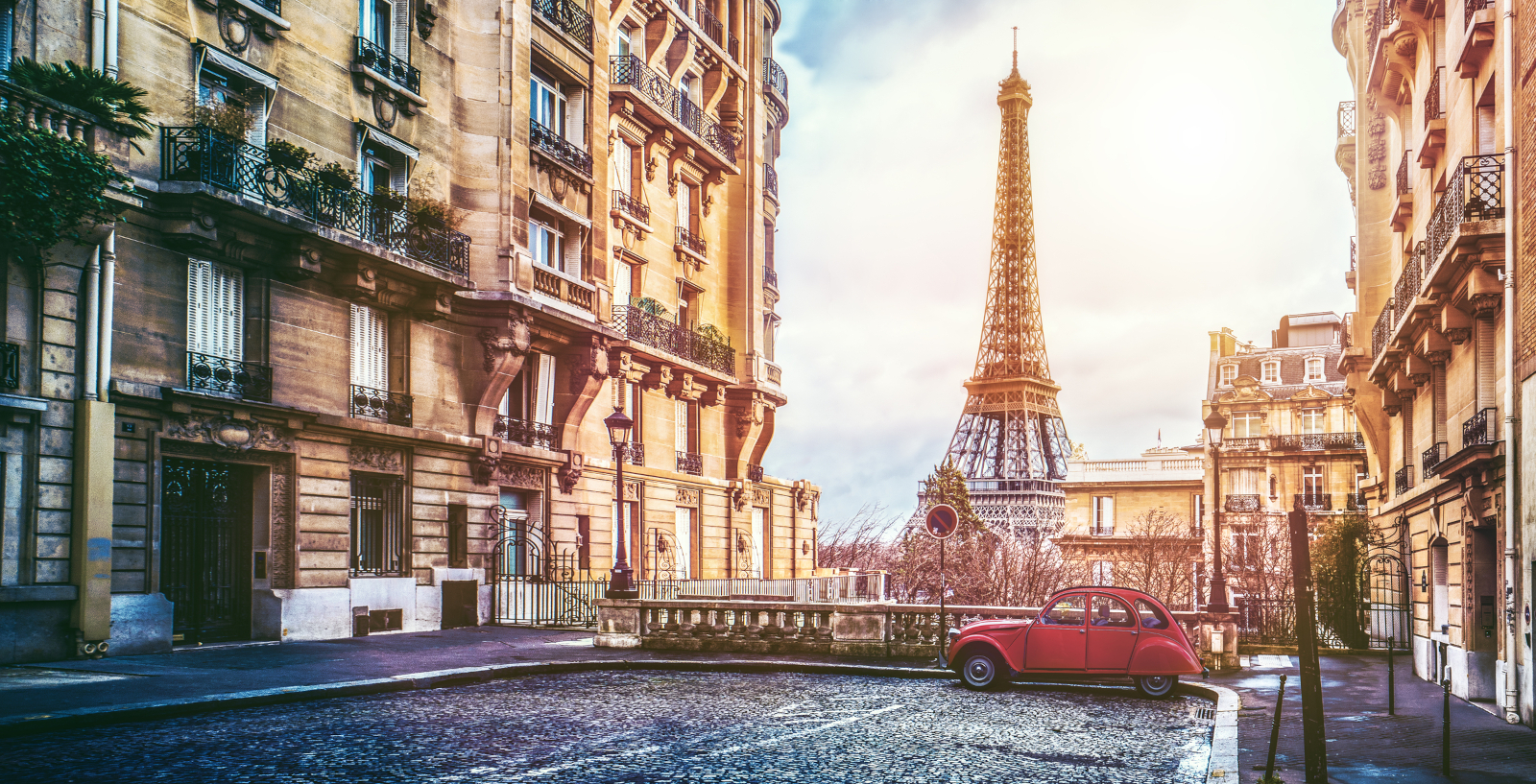
16. Which iron landmark was built for the 1889 World’s Fair?
Answer: The Eiffel Tower.
It later became useful for scientific experiments and radio communications. If you plan to go up, the practical differences between the summit and second floor are greater than they may appear from the ground.
ID 92248026 ©Audioundwerbung | Dreamstime.com
17. Which museum displays the Mona Lisa?
Answer: The Louvre.
Its galleries cover civilizations and art across thousands of years. The Louvre and Musée d’Orsay comparison shows why the two museums offer completely different experiences.
18. Which river flows through the French capital?
Answer: The Seine.
The river and its historic quays are central to the city, and the Banks of the Seine form a UNESCO World Heritage site.
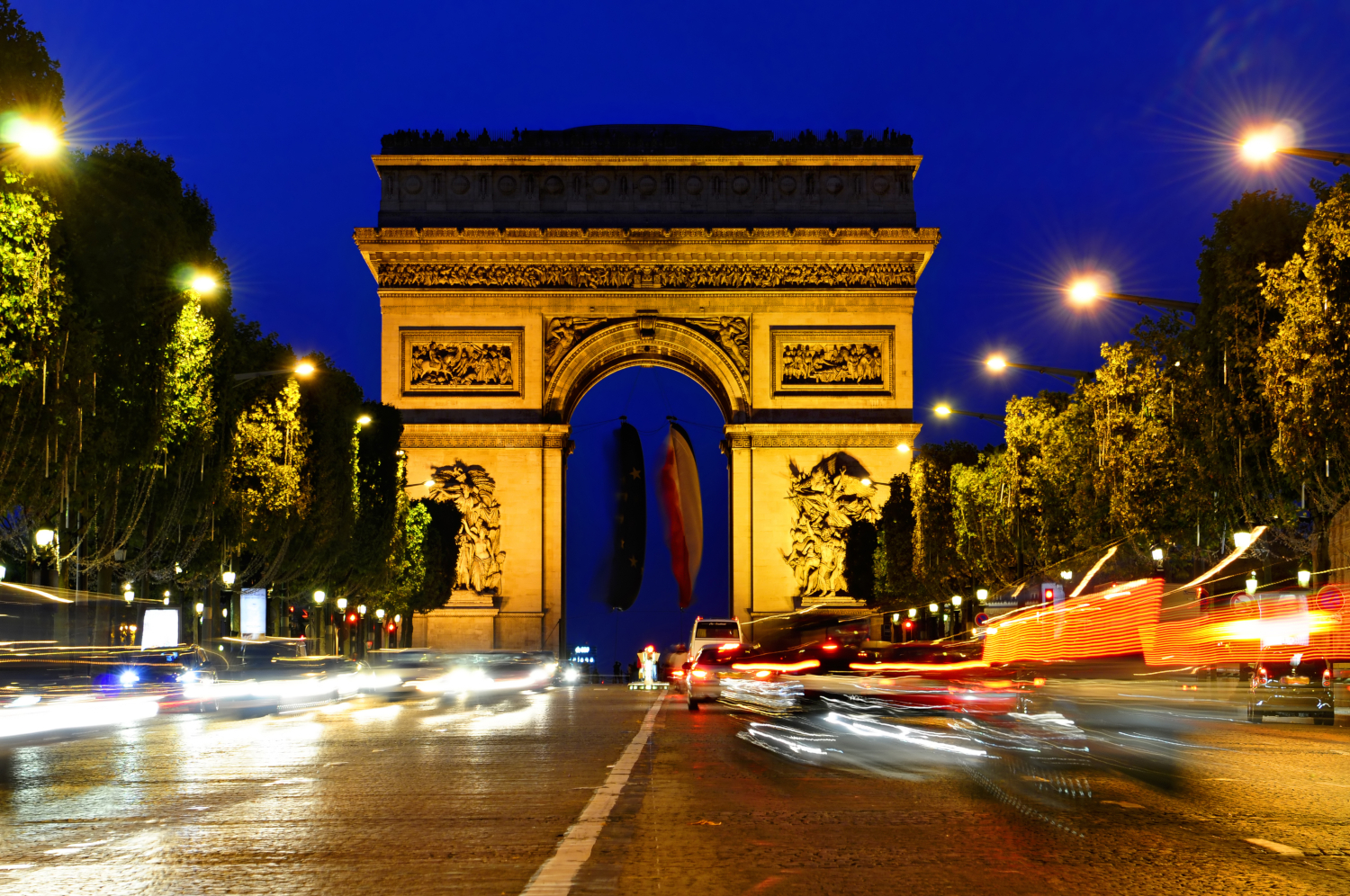
19. Which monumental arch stands at the western end of the Champs-Élysées?
Answer: The Arc de Triomphe.
20. Which Gothic cathedral stands on the Île de la Cité?
Answer: Notre-Dame Cathedral.
21. Which royal palace outside the capital is famous for its Hall of Mirrors?
Answer: The Palace of Versailles.
The palace is outside central Paris, so it needs more time than a quick landmark stop. My husband and I visited it during the same trip, and the scale of the buildings and grounds made it one of the most memorable days.
22. Which white-domed basilica crowns the hill of Montmartre?
Answer: Sacré-Cœur Basilica.
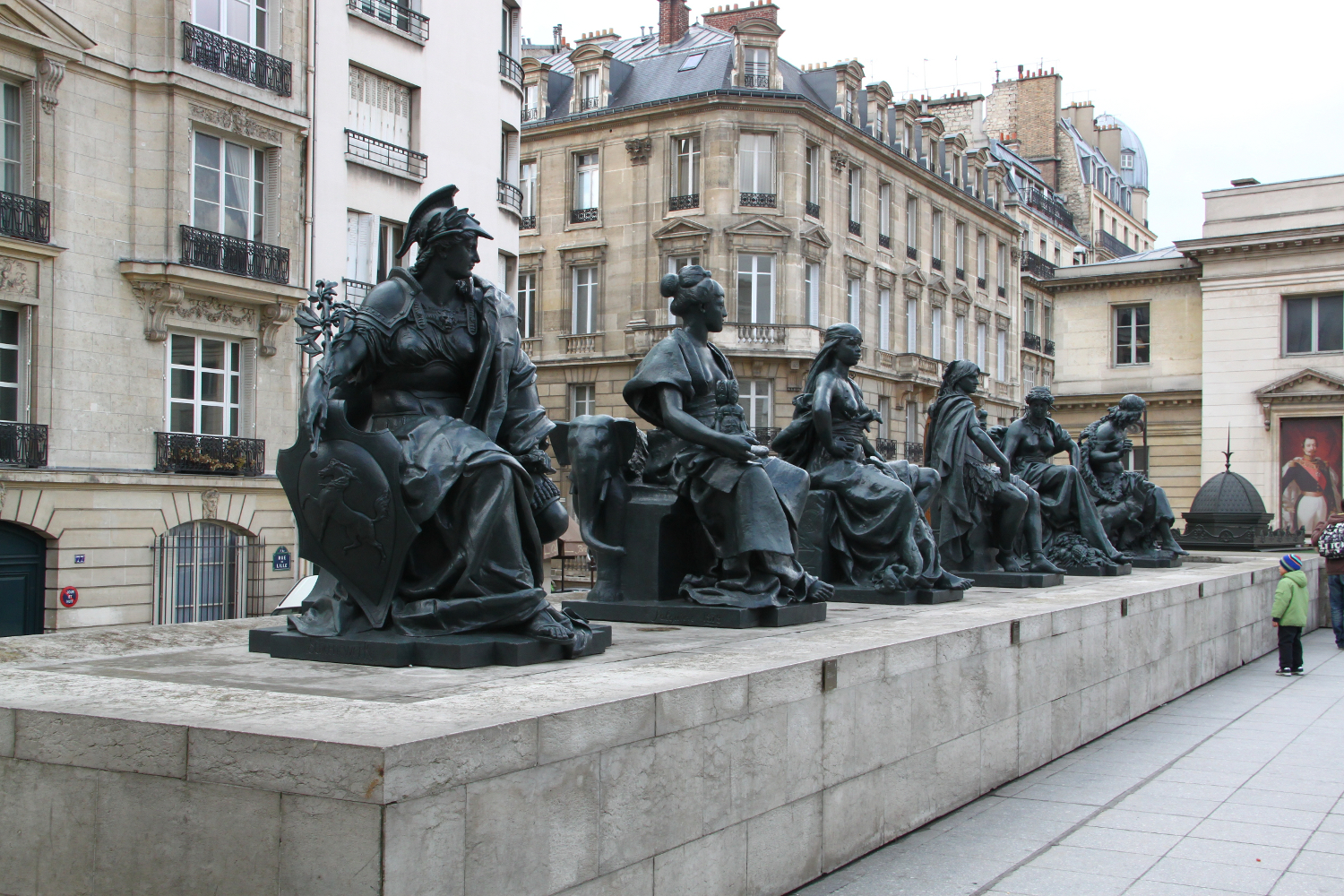
23. Which major art museum occupies a former railway station?
Answer: Musée d’Orsay.
Musée d’Orsay was the first major attraction I visited in the city. These practical Musée d’Orsay tips explain the queues, timing, and details that can affect a visit.
24. Which famous avenue runs west from Place de la Concorde?
Answer: The Champs-Élysées.
The avenue appears in many first-trip routes, but the surrounding district contains far more than a single famous street. The wider collection of Paris landmarks gives it useful context.
25. Which tidal island in Normandy is crowned by a medieval abbey?
Answer: Mont-Saint-Michel.
26. Which architect designed the glass pyramid in the courtyard of France’s most visited museum?
Answer: I. M. Pei.
27. Which historic complex contains Napoleon’s tomb?
Answer: Les Invalides.
28. Which cabaret is recognized by the red windmill on its roof?
Answer: The Moulin Rouge.
29. Which formal garden lies between France’s most visited museum and Place de la Concorde?
Answer: The Tuileries Garden.
30. Which ornate bridge is known for gilded statues and views toward the gold-domed military complex nearby?
Answer: Pont Alexandre III.
The bridge was completed for the 1900 Universal Exposition and was named after Tsar Alexander III.
Famous French Food, Drinks and Familiar Words

ID 99816387 ©Sonyakamoz | Dreamstime.com
Food is one of the easiest ways to make a long quiz enjoyable. These French food trivia questions begin with pastries and dishes familiar to an American audience, then add cheeses, drinks, and a few terms you may already use without thinking about their origin.
31. What long, narrow loaf is one of the best-known symbols of French baking?
Answer: A baguette.
UNESCO added the artisanal know-how and culture of baguette bread to its Intangible Cultural Heritage list in 2022.
32. What flaky, crescent-shaped pastry is commonly associated with a French breakfast?
Answer: A croissant.
33. What thin French pancake can be served with sweet or savory fillings?
Answer: A crêpe.
34. What colorful sandwich cookie is made with almond-meringue shells?
Answer: A macaron.
35. What Provençal dish combines vegetables such as tomatoes, zucchini, eggplant, and peppers?
Answer: Ratatouille.
36. What French delicacy consists of cooked land snails?
Answer: Escargots.
37. Which soft cheese from the Île-de-France region shares its name with a historic area near the capital?
Answer: Brie.
38. Which soft, round cheese takes its name from a village in Normandy?
Answer: Camembert.
39. Which sparkling wine takes its protected name from a region in northeastern France?
Answer: Champagne.
The name is legally protected for sparkling wine produced under the rules of the Champagne appellation.
40. What is the name of the hot ham-and-cheese sandwich often topped with béchamel?
Answer: Croque monsieur.
41. Which pastry consists of laminated dough wrapped around bars of chocolate?
Answer: Pain au chocolat.
42. What soup is traditionally made with caramelized onions and often topped with bread and melted cheese?
Answer: French onion soup, or soupe à l’oignon.
43. Which dessert has a custard base beneath a crisp layer of caramelized sugar?
Answer: Crème brûlée.
44. What is the French name for frog legs served as food?
Answer: Cuisses de grenouille.
45. Which small shell-shaped sponge cake is associated with the town of Commercy?
Answer: A madeleine.
Famous French People, Books and Cultural Icons
Writers, artists, rulers, scientists, and designers give this round a wide range of recognizable answers. The famous French people trivia stays accessible by focusing on major works, achievements, and associations rather than birth dates or minor biographical details.
46. Which military leader crowned himself Emperor of the French in 1804?
Answer: Napoleon Bonaparte.
47. Which teenage heroine helped lift the siege of Orléans during the Hundred Years’ War?
Answer: Joan of Arc.
48. Which monarch was known as the Sun King?
Answer: Louis XIV.
49. Which queen is commonly – but probably incorrectly – associated with the phrase “Let them eat cake”?
Answer: Marie Antoinette.
Versions of the story circulated before she became queen, and historians don’t regard the phrase as a reliable quotation from her.
50. Who wrote Les Misérables and The Hunchback of Notre-Dame?
Answer: Victor Hugo.
51. Who wrote The Three Musketeers and The Count of Monte Cristo?
Answer: Alexandre Dumas.
52. Which Impressionist painted the famous Water Lilies series?
Answer: Claude Monet.
53. Which sculptor created The Thinker?
Answer: Auguste Rodin.
54. Which fashion designer founded the Chanel fashion house?
Answer: Coco Chanel.
55. Which engineer’s surname is attached to France’s best-known iron tower?
Answer: Gustave Eiffel.
56. Who wrote Around the World in Eighty Days and Twenty Thousand Leagues Under the Seas?
Answer: Jules Verne.
57. Who wrote and illustrated The Little Prince?
Answer: Antoine de Saint-Exupéry.
58. Which singer made La Vie en rose internationally famous?
Answer: Édith Piaf.
59. Which Polish-born French scientist shared two Nobel Prizes for work connected with physics and chemistry?
Answer: Marie Curie.
She remains the only person to have received Nobel Prizes in two different scientific fields.
60. Which philosopher wrote “I think, therefore I am”?
Answer: René Descartes.
Celebrations, Sports and Everyday France
The last part of the easy round combines French culture trivia questions with festivals, sports, fashion, and entertainment. The difficulty rises slightly here, but the subjects are still widely known or easy to recognize from the wording.
61. What famous cycling race is held mainly in France each summer?
Answer: The Tour de France.
The route changes from year to year, but the race traditionally finishes in the capital.
62. What Grand Slam tennis tournament is played on clay in the French capital?
Answer: The French Open.
63. Which glamorous film festival is held annually on the French Riviera?
Answer: The Cannes Film Festival.
64. What nickname is commonly used for France’s national soccer team?
Answer: Les Bleus.
65. Which Provençal game is played by throwing metal balls toward a small target ball?
Answer: Pétanque.
66. What nationwide music celebration takes place on June 21?
Answer: The Fête de la Musique.
67. What French term refers to exclusive, made-to-measure high fashion?
Answer: Haute couture.
68. Which restaurant-rating publication awards one, two, or three famous stars?
Answer: The Michelin Guide.
The guide grew from a publication created by the tire company to encourage motorists to travel and use their cars.
69. Which theme-park resort opened east of the French capital in 1992?
Answer: Disneyland Paris.
70. What were the red Phrygian-cap mascots of the 2024 Olympic and Paralympic Games called?
Answer: The Phryges.
Their shape was inspired by the Phrygian cap, a symbol of liberty and the French Republic.
You’ve completed the easy round. The next questions move beyond the most famous symbols, but they still focus on people, places, food, and events many readers have encountered before.
Medium France Trivia Questions and Answers
The next round is a little bit more difficult, but I still kept it accessible, as I don’t think this trivia should be an impossible test. These medium France trivia questions include geography, French history trivia questions and answers, regional food, art, literature, inventions, and sports. Many answers will feel familiar from school, travel, films, museums, books, or meals you’ve already tried.
France Geography, Cities and Regions
The map expands in this section through France geography trivia questions about rivers, mountains, cities, coastlines, and regional identities. A wider set of geography trivia questions is available when you want to continue beyond one country.
71. Which river is the longest entirely within France?
Answer: The Loire.
72. Which river joins another major river in France’s gastronomic capital?
Answer: The Saône.
73. Which major river continues south from that confluence toward the Mediterranean?
Answer: The Rhône.
74. Which mountain range forms much of the border between France and Spain?
Answer: The Pyrenees.
75. Which mountain range stretches along France’s borders with Italy and Switzerland?
Answer: The Alps.
76. What is the highest mountain in Western Europe?
Answer: Mont Blanc.
77. Which Mediterranean island is the birthplace of the emperor who ruled France in the early 19th century?
Answer: Corsica.
The island has its own strong identity, mountainous interior, and long Mediterranean coastline.
78. Which southeastern region is famous for lavender fields, hilltop villages, and Mediterranean light?
Answer: Provence.
The region extends well beyond its lavender images. The broader choice of places to stay in France can help visitors compare Provence with the capital, the Alps, Corsica, and the Riviera.
79. Which southwestern city gives its name to one of the world’s best-known wine regions?
Answer: Bordeaux.
80. Which eastern cultural region is known for half-timbered villages and both French and German influences?
Answer: Alsace.
The region’s architecture, food, place names, and traditions reflect its position near Germany and Switzerland.
81. Which northwestern region is closely associated with the D-Day landings?
Answer: Normandy.
82. Which peninsula in northwestern France has a strong Celtic identity?
Answer: Brittany.
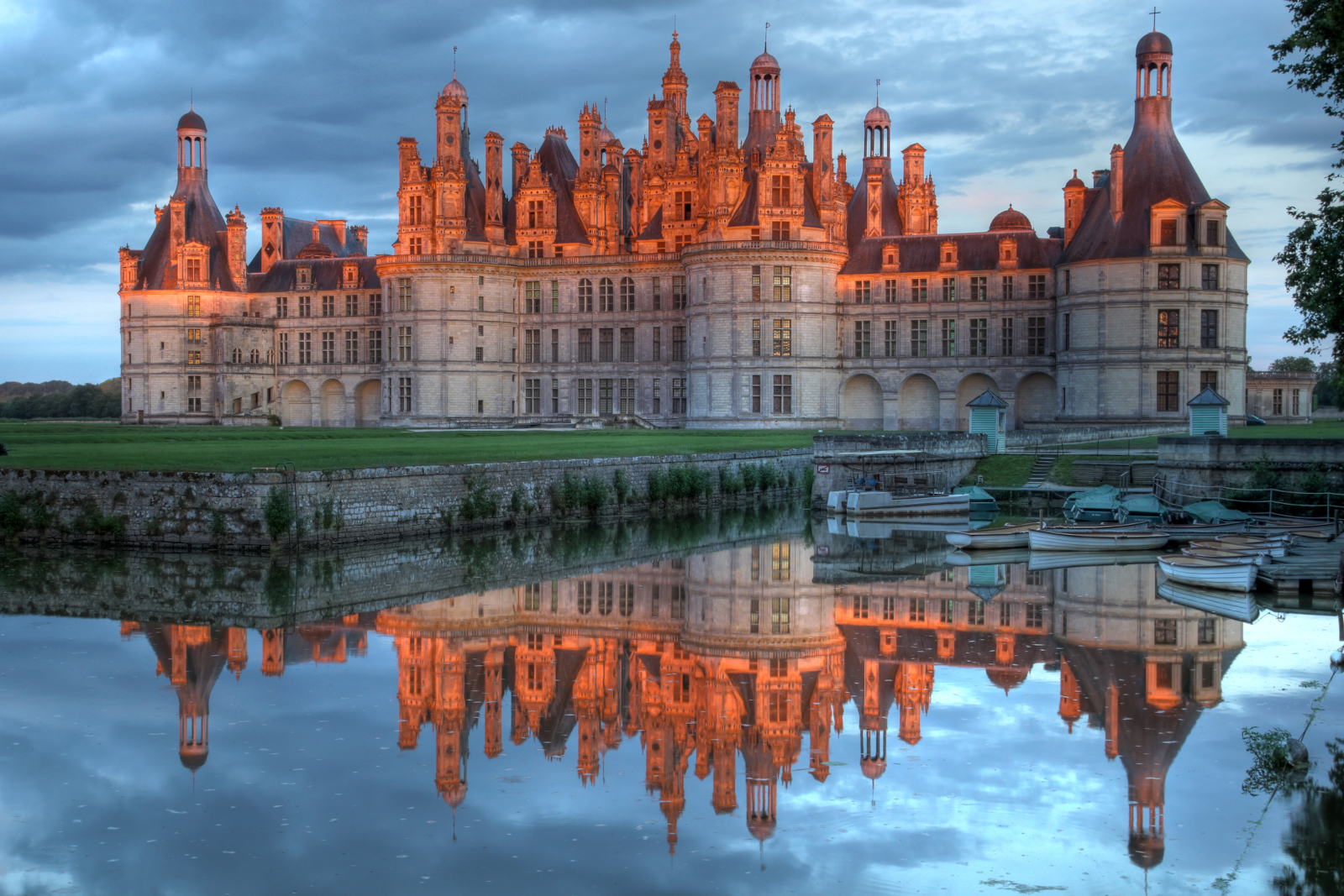
83. Which valley is famous for a concentration of Renaissance and medieval châteaux?
Answer: The Loire Valley.
The area is known for royal residences, defensive castles, gardens, and towns spread along and near France’s longest river.
ID 15413095 @ Bogdan Lazar | Dreamstime.com
84. Which Mediterranean port, founded by Greek settlers, is widely described as France’s oldest city?
Answer: Marseille.
Greek settlers founded Massalia around 600 BCE, giving the modern port a history stretching back more than 2,600 years.
85. Which city is famous for gastronomy and sits at the confluence of two major rivers?
Answer: Lyon.
86. Which city on the Côte d’Azur is known for the Promenade des Anglais?
Answer: Nice.
The city’s palm-lined seafront and pebbled shore make it immediately recognizable. This older look at Nice by the Mediterranean captures that atmosphere.
87. Which city near the German border is one of the official seats of the European Parliament?
Answer: Strasbourg.
88. Which southwestern city is a major center of Europe’s aerospace industry?
Answer: Toulouse.
89. What French name is commonly used for the French Riviera?
Answer: The Côte d’Azur.
The name usually refers to the Mediterranean coast around places such as Nice, Cannes, and nearby resort towns. These French Riviera beaches show a quieter side of the coast.
90. How many administrative regions are there in metropolitan France?
Answer: Thirteen.
The total includes Corsica, which has a special territorial status but is counted with the metropolitan regions.
French History and the Revolution
These French history trivia questions and answers cover the Revolution, Napoleon, medieval conflicts, World War II, and the creation of the current republic. Exact dates are used only when the date itself is central to the event, so the round doesn’t become a list of years to memorize.
91. Which attack on a Paris prison-fortress became one of the defining moments of the French Revolution?
Answer: The Storming of the Bastille.
92. Which 1789 document proclaimed liberty and equal rights for men?
Answer: The Declaration of the Rights of Man and of the Citizen.
Its language influenced later declarations of rights, although the 1789 text referred to the rights of men rather than universal suffrage as understood today.
93. Which execution device became closely associated with the Reign of Terror?
Answer: The guillotine.
The device was named after Joseph-Ignace Guillotin, although he didn’t invent it.
94. To which Mediterranean island was the former French emperor first exiled in 1814?
Answer: Elba.
95. On which remote Atlantic island did the same former emperor spend his final exile?
Answer: Saint Helena.
96. At which 1815 battle was the French emperor finally defeated?
Answer: Waterloo.
97. What legal code introduced during the Consulate and First Empire influenced civil-law systems around the world?
Answer: The Napoleonic Code.
Its influence can still be seen in civil-law systems well beyond France.
98. Which treaty was signed in the Hall of Mirrors in 1919 and formally ended the state of war between Germany and most Allied powers after World War I?
Answer: The Treaty of Versailles.
The signing location connected the postwar settlement with the royal palace that had symbolized French power.
99. Which D-Day landing beach is especially associated with heavy American losses?
Answer: Omaha Beach.
100. Which general led Free France during World War II and later became president?
Answer: Charles de Gaulle.
He later played a central role in the creation of the Fifth Republic.
101. What revolutionary government controlled the capital for about two months in 1871?
Answer: The Paris Commune.
102. Which 1598 decree granted important rights to French Protestants?
Answer: The Edict of Nantes.
The decree offered limited religious and civil protections rather than complete modern freedom of religion.
103. What long medieval conflict pitted the kingdoms of England and France against each other?
Answer: The Hundred Years’ War.
104. Which Frankish ruler was crowned emperor in Rome on Christmas Day in 800?
Answer: Charlemagne.
The wider European history trivia continues with conflicts, rulers, ideas, and turning points beyond France.
105. Which 1415 English victory took place during the long medieval conflict between England and France?
Answer: The Battle of Agincourt.
106. Which city’s siege was lifted in 1429 after the arrival of a teenage French heroine?
Answer: Orléans.
107. Which royal house ruled France immediately before the French Revolution?
Answer: The House of Bourbon.
108. What name is given to the period of radical violence led by the Committee of Public Safety in 1793-1794?
Answer: The Reign of Terror.
109. Which 1848 uprising forced King Louis-Philippe to abdicate?
Answer: The February Revolution.
The uprising led to the proclamation of the Second Republic.
110. What political system was established by France’s 1958 constitution?
Answer: The Fifth Republic.
French Food, Wine and Regional Traditions
The medium French food and wine trivia questions move from famous national associations to regional dishes, protected products, and dining traditions. Several answers may sound familiar even when you haven’t tried the food yet.
111. What Burgundy dish slowly braises beef in red wine?
Answer: Boeuf bourguignon.
The wine, food, art, and cultural connections between the country and its southern neighbor also appear in this France vs. Italy comparison.
112. What dish traditionally cooks chicken with wine, mushrooms, and aromatics?
Answer: Coq au vin.
113. Which fish stew originated in France’s oldest Mediterranean port?
Answer: Bouillabaisse.
114. Which southwestern stew combines white beans with meats such as sausage or duck?
Answer: Cassoulet.
115. Which savory tart is named after a historic region in northeastern France?
Answer: Quiche Lorraine.
116. Which pungent condiment is named after the capital of Burgundy?
Answer: Dijon mustard.
117. Which apple brandy comes from northwestern France?
Answer: Calvados.
118. Which blue sheep’s-milk cheese matures in caves near the village that gives it its name?
Answer: Roquefort.
Only cheese produced and matured according to the protected rules can use the Roquefort name.
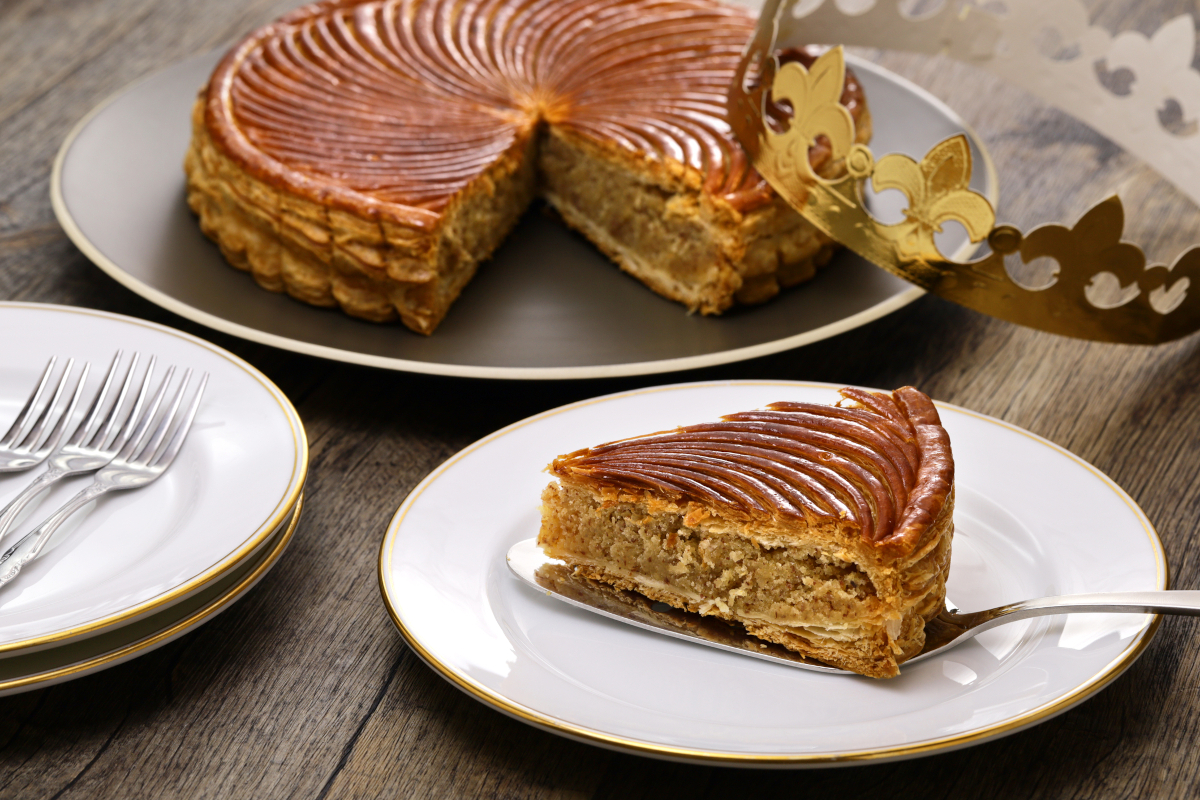
119. Which cake containing a hidden charm is traditionally eaten for Epiphany?
Answer: Galette des rois.
The hidden token is called a fève, and the person who finds it is traditionally crowned for the day.
ID 304234600 ©Ppy2010ha | Dreamstime.com
120. Which ring-shaped choux pastry was inspired by a bicycle race between two French cities?
Answer: Paris-Brest.
Its circular shape was created to resemble a bicycle wheel.
121. Which Provençal spread is usually made with olives, capers, and anchovies?
Answer: Tapenade.
122. Which upside-down caramelized apple dessert was named after two sisters?
Answer: Tarte Tatin.
123. What method preserves duck by slowly cooking it in fat?
Answer: Confit de canard.
124. Which raw-beef preparation is usually seasoned and served finely chopped or minced?
Answer: Steak tartare.
125. What French word describes a drink taken before a meal?
Answer: An apéritif.
It can describe both the drink and the social moment before a meal.
French Art, Literature, Cinema and Fashion
France’s cultural influence reaches painting, novels, cinema, music, and fashion. These French culture trivia questions use famous works and movements to keep the round answerable while still going beyond the names found in every short online quiz. Several major collections can also be explored through these European museum virtual tours.
126. Which art movement took its name from a critic’s response to Impression, Sunrise?
Answer: Impressionism.
The name came from Monet’s Impression, Sunrise and was first used mockingly by a critic.
127. Which Romantic artist painted the famous 1830 allegory of a woman carrying the tricolor over a barricade?
Answer: Eugène Delacroix.
The allegorical woman is often identified as Liberty rather than as a portrait of one specific historical person.
128. Which Impressionist artist is especially famous for paintings of ballet dancers?
Answer: Edgar Degas.
129. Which artist became a leading figure of Fauvism and created The Dance?
Answer: Henri Matisse.
130. Who wrote the multi-volume novel In Search of Lost Time?
Answer: Marcel Proust.
131. Who wrote Madame Bovary?
Answer: Gustave Flaubert.
132. Which composer wrote the opera Carmen?
Answer: Georges Bizet.
133. Which actress played the title character in the film Amélie?
Answer: Audrey Tautou.
134. Which brothers presented some of the earliest public projected motion pictures in 1895?
Answer: Auguste and Louis Lumière.
Their Cinématographe could record, develop, and project moving images.
135. What movement included directors such as François Truffaut and Jean-Luc Godard?
Answer: The French New Wave.
The movement rejected many studio conventions and favored location shooting, experimentation, and personal directing styles.
136. Who directed the 1960 film Breathless?
Answer: Jean-Luc Godard.
137. Which designer introduced the postwar “New Look” in 1947?
Answer: Christian Dior.
138. Which luxury house began with a trunk maker who opened a Paris workshop in 1854?
Answer: Louis Vuitton.
139. What is the name of France’s prestigious annual literary prize first awarded in 1903?
Answer: The Prix Goncourt.
The winning author receives a symbolic monetary award, while the prize’s commercial effect can be substantial.
140. What is the original French title of The Hunchback of Notre-Dame?
Answer: Notre-Dame de Paris.
French Science, Inventions, Transport and Sports
This section adds one of the areas missing from many France quiz questions and answers. The questions cover discoveries, communication, measurement, rail travel, aviation, marine exploration, and major sporting institutions.
141. Which scientist gave his name to the process of heating food or drink to reduce harmful microorganisms?
Answer: Louis Pasteur.
The process can improve safety and shelf life without sterilizing the product completely.
142. Which tactile reading and writing system was developed by a French teenager?
Answer: Braille.
Louis Braille developed the system while still a teenager, adapting ideas from a tactile military code.
143. Which brothers launched the first manned hot-air balloon flight in 1783?
Answer: The Montgolfier brothers.
The first untethered manned flight took place near Paris in November 1783.
144. Which French doctor invented the stethoscope?
Answer: René Laennec.
Laennec first experimented with a rolled paper tube before developing a wooden instrument.
145. What abbreviation identifies France’s high-speed train network?
Answer: TGV.
The initials stand for Train à Grande Vitesse.
146. What early French online service allowed users to access directories, messages, and other services before the World Wide Web became common?
Answer: Minitel.
Millions of terminals were used in homes and workplaces before ordinary web access became widespread.
147. Which base unit of length was developed as part of the metric system introduced during the French Revolution?
Answer: The metre.
The original definition was tied to a fraction of the distance from the equator to the North Pole.
148. Which ocean explorer co-invented the Aqua-Lung and became famous for marine documentaries?
Answer: Jacques Cousteau.
His films and television programs introduced generations of viewers to marine life and underwater exploration.
149. Which French mathematician and physicist has an SI unit of pressure named after him?
Answer: Blaise Pascal.
150. Which physicist demonstrated Earth’s rotation with a famous pendulum experiment?
Answer: Léon Foucault.
A large demonstration was installed beneath the dome of the Panthéon in 1851.
151. Which endurance race has been held near the Sarthe River since 1923?
Answer: The 24 Hours of Le Mans.
The race tests both speed and durability over a full day and night.
152. Which stadium hosts France’s Grand Slam tennis tournament?
Answer: Stade Roland-Garros.
The venue is named after a French aviation pioneer rather than a tennis player.
153. Which supersonic passenger aircraft was developed jointly by France and Britain?
Answer: Concorde.
154. Which French educator helped revive the modern Olympic Games?
Answer: Pierre de Coubertin.
He founded the International Olympic Committee and promoted the revival of the Games in the late 19th century.
155. Which dance sport made its Olympic debut at the 2024 Games?
Answer: Breaking.
You’ve reached the final round. The last 45 questions are harder, but you won’t need to identify every French monarch, minor official, or small administrative department.
Hard France Trivia Questions – But Still Fair
The final 45 hard France trivia questions are more demanding, but they still focus on important names, places, institutions, and discoveries. This part of the France quiz for adults avoids minor officials, changing statistics, and questions that require specialist knowledge of every dynasty or department.
Deeper French History and Institutions
The hard round begins with institutions and historical turning points that still appear in books, documentaries, museums, and public debate. These hard French history trivia questions ask for significant answers, not the names of minor ministers or obscure court officials.
156. Which institution founded in 1635 is charged with safeguarding the French language?
Answer: The Académie Française.
The institution is closely associated with its dictionary and with debates about French usage.
157. Which 17th-century cardinal served as chief minister to Louis XIII and promoted a royal language academy?
Answer: Cardinal Richelieu.
He served as chief minister under Louis XIII and was one of the most powerful figures in 17th-century France.
158. Which city served as the seat of the papacy for much of the 14th century?
Answer: Avignon.
The papal residence from this period remains one of the city’s defining landmarks.
159. What name is given to the 1572 wave of killings that began in the capital and targeted Huguenots?
Answer: The St. Bartholomew’s Day Massacre.
160. Which 1685 decree revoked many protections previously granted to French Protestants?
Answer: The Edict of Fontainebleau.
The revocation increased pressure on Huguenots and contributed to further emigration.
161. What uprising overthrew Charles X in 1830?
Answer: The July Revolution.
162. Which late-19th-century scandal centered on the wrongful conviction of a Jewish army officer?
Answer: The Dreyfus affair.
The case divided the country and became a major debate about justice, antisemitism, the army, and the republic.
163. Which landmark law established the separation of churches and the state in France?
Answer: The 1905 law on the Separation of the Churches and the State.
The law remains central to the French principle of laïcité.
164. Which republican regime governed France from 1870 until 1940?
Answer: The Third Republic.
165. Which symbol adopted by Free France features a double horizontal crossbar?
Answer: The Cross of Lorraine.
The emblem became closely associated with Charles de Gaulle and the Free French movement.
166. Which palace is the official residence of the French president?
Answer: The Élysée Palace.
167. What is the upper house of the French Parliament called?
Answer: The Senate.
168. What is the lower house of the French Parliament called?
Answer: The National Assembly.
France Beyond Paris – Regions, Historic Sites and Overseas France
The country becomes much larger and more varied when the focus leaves the capital. These France geography trivia questions include prehistoric art, Roman engineering, fortified cities, overseas departments, and one fact that explains why France appears in more time zones than its European map suggests. Several of these names can also become future travel ideas.
169. Which cave complex in southwestern France is famous for prehistoric paintings discovered in 1940?
Answer: Lascaux.
The original cave was closed to ordinary tourism to protect the paintings, while replica sites allow visitors to see faithful recreations.
170. Which fortified medieval city in Occitanie is surrounded by double walls and towers?
Answer: Carcassonne.
Its restored fortifications are among the most recognizable medieval sights in southern France.
171. Which Roman aqueduct bridge crosses the Gardon River?
Answer: The Pont du Gard.
The three-tiered structure demonstrates the precision of Roman water engineering.
172. Which embroidered medieval work recounts the Norman conquest of England?
Answer: The Bayeux Tapestry.
Despite its familiar name, the work is technically embroidery rather than a woven tapestry.
173. Which Renaissance château is famous for a double-helix staircase often associated with Leonardo da Vinci?
Answer: Château de Chambord.
The staircase allows two people to ascend and descend without necessarily meeting.
174. Which southern city is known for one of the best-preserved Roman amphitheaters in France?
Answer: Nîmes.
The city also preserves other Roman remains, including the Maison Carrée.
175. Which eastern town is known for canals and colorful half-timbered houses?
Answer: Colmar.
176. Which Alpine resort town lies beneath Western Europe’s highest mountain?
Answer: Chamonix.
177. Which eastern city is watched over by a monumental stone lion built after the Franco-Prussian War?
Answer: Belfort.
178. Which French overseas department lies on the mainland of South America?
Answer: French Guiana.
Because it is an integral part of France, the country has territory on the South American continent.
179. Which French overseas region in the Caribbean is known as the “Island of Flowers”?
Answer: Martinique.
180. Which French overseas department lies east of Madagascar in the Indian Ocean?
Answer: Réunion.
181. Which country shares France’s longest land border when overseas France is included?
Answer: Brazil.
The border exists because French Guiana meets Brazil in South America.
182. How many standard time zones does France span when its overseas territories are included?
Answer: Twelve.
That overseas reach changes the way the country appears on a map.
French Language, Innovation and Cultural Connections
Several French words, scientific names, and artistic terms are used internationally. This round mixes language and innovation, and the collection of travel names people mispronounce can help with several French place names that often catch English speakers out.
183. Which French word meaning “workshop” is often used for an artist’s or designer’s studio?
Answer: Atelier.
184. Which French expression describes the feeling that a present moment has happened before?
Answer: Déjà vu.
185. Which French phrase means a shared sense of loyalty and pride within a group?
Answer: Esprit de corps.
186. Which art term means an image designed to “deceive the eye”?
Answer: Trompe-l’œil.
187. Which decorative style took its modern name from a major 1925 exhibition in Paris?
Answer: Art Deco.
The shorter name was derived from the title of the International Exhibition of Modern Decorative and Industrial Arts.
188. Which early photographic process was named after one of its French inventors?
Answer: The daguerreotype.
The process was announced publicly in 1839 and produced a detailed image on a silvered metal plate.
189. What was the name of the mechanical calculator created in 1642?
Answer: The Pascaline.
The device could add and subtract mechanically, and later versions could also assist with multiplication and division.
190. Which chemist is often called a founder of modern chemistry and helped explain combustion through oxygen?
Answer: Antoine Lavoisier.
His work helped replace older explanations of combustion and supported modern chemical naming and measurement.
191. Which French inventor produced the earliest surviving camera photograph?
Answer: Joseph Nicéphore Niépce.
His View from the Window at Le Gras is generally recognized as the oldest surviving photograph made with a camera.
192. Which scientist gave his name to the SI unit of electric current?
Answer: André-Marie Ampère.
Final Challenge – Surprising France Facts
The final eight questions are short, direct, and surprising. They correct familiar assumptions about pastries and landmarks, then finish with perfume, engineering, and France’s Pacific presence. Question 200 is challenging, but it isn’t based on a tiny village or an unstable current record.
193. Which Austrian crescent-shaped baked good is commonly regarded as an ancestor of France’s famous flaky breakfast pastry?
Answer: The kipferl.
The modern croissant developed in France, but the older crescent-shaped pastry is linked with Central European baking.
194. For how many years was the original concession for France’s 1889 iron landmark intended to last?
Answer: Twenty years.
The concession was due to expire in 1909, though the structure remained useful for science and communications.
195. What was the original function of the building that now houses France’s most visited museum?
Answer: A defensive fortress.
Remains of the medieval foundations can still be seen beneath the museum.
196. Which monument did France give to the United States as a symbol of friendship?
Answer: The Statue of Liberty.
The monument was dedicated in New York Harbor in 1886.
197. Which French sculptor is best known for designing the colossal copper figure dedicated in New York Harbor in 1886?
Answer: Frédéric Auguste Bartholdi.
The internal iron framework involved engineering work associated with Gustave Eiffel’s company.
198. Which town in southeastern France is widely known as the perfume capital of the world?
Answer: Grasse.
The town’s perfume tradition is tied to flowers, distillation, and the earlier leather-tanning industry.
199. Which cable-stayed bridge crosses the Tarn Valley in southern France?
Answer: The Millau Viaduct.
The bridge carries the A75 motorway across the valley near Millau.
200. Which French Pacific territory is famous for a vast UNESCO-listed lagoon?
Answer: New Caledonia.
Its lagoons and reefs are recognized for their exceptional marine diversity.
Your France Trivia Score
You’ve reached the end of all 200 France trivia questions and answers. Count your correct answers and see where you finished.
0-50 correct: France Beginner. You know several of the most famous symbols, and you now have plenty of new facts for the next game.
51-100 correct: France Explorer. Your knowledge reaches beyond the obvious landmarks, especially if you did well in food, culture, or geography.
101-140 correct: France Fan. You handled the easy round and a substantial part of the medium questions.
141-170 correct: France Expert. You know major historical events, regions, art, and inventions as well as the familiar attractions.
171-190 correct: Serious Francophile. Very little in this quiz caught you completely by surprise.
191-200 correct: France Trivia Master. That is an exceptional score across history, geography, culture, food, science, and overseas France.
Which section gave you the most trouble, and which answer surprised you most?
A Few France Facts That Are Especially Useful for Travelers
Trivia becomes more useful when a name helps you understand a real place. In the capital, the Louvre and Musée d’Orsay aren’t interchangeable museum stops. I visited both and loved different things about each. A short route built around the latter appears in this one-day Paris itinerary, while the choice between major sights becomes easier with a realistic look at what not to do on a first Paris trip.
Opening days and distances can change an itinerary quickly. Versailles is outside central Paris, Musée d’Orsay is closed on Mondays, and the Louvre is closed on Tuesdays. Weather and crowds also affect how much you can comfortably see, so check the best time to visit Paris before choosing dates. The current Louvre ticket details are worth checking separately because admission rules and prices can change.
France isn’t only the capital. Nice, Provence, Corsica, the Loire Valley, Normandy, Alsace, the Alps, and the Atlantic coast can lead to completely different trips. Choosing a base becomes easier once you compare regions rather than assuming every first visit must stay entirely in one city.
For more inspiration inside the capital, these favorite places in Paris and photos from Paris show why the city remained memorable even during windy and rainy days.
How These France Trivia Questions Were Checked
Every question was reviewed for one clear answer. Direct duplicates and reverse question pairs were removed, and the explanations were checked so they wouldn’t reveal answers required later in the quiz. Current officeholders, population estimates, annual rankings, and other answers likely to change were left out.
Historical, geographical, cultural, scientific, and institutional details were compared with authoritative museum, government, heritage, sports, and reference sources. French accents and spellings were preserved where they help readers identify the correct name. A fact with disputed wording, changing boundaries, or more than one equally defensible answer wasn’t used.
The set also avoids repeating the same location through several easy questions. After Paris is established as the capital, for example, later questions test museums, monuments, history, and culture rather than repeatedly asking which city contains each attraction.
Conclusion
France can feel familiar before you ever arrive. Its landmarks, food, artists, writers, history, and fashion appear around the world, yet the country still has many details that are easy to miss. I hope these 200 France trivia questions gave you plenty of quick wins, a fair challenge, and a few facts you’ll remember on a future trip or during your next trivia night.
Keep your score and compare it with the results from your next country or travel quiz.
Questions About This France Trivia Quiz
Are these France trivia questions suitable for kids and adults?
Yes. The first 70 questions are accessible for families, older children, classrooms, and mixed-age groups. Much of the medium round can also work for children with an interest in geography, history, food, or art. The final section is better suited to adults, older students, and experienced trivia players.
Are the France trivia questions arranged from easy to hard?
Yes. Questions 1-70 form the easy round, Questions 71-155 are medium, and Questions 156-200 are hard but fair. The difficulty rises gradually, and the last round avoids specialist questions about minor officials or obscure local statistics.
What subjects are included in this France quiz?
The quiz covers national symbols, Paris, landmarks, geography, cities, regions, history, the French Revolution, food, wine, art, literature, cinema, fashion, science, inventions, transport, sports, language, and overseas France.
What is the difference between France trivia and French trivia?
France trivia focuses on the country, its places, people, history, culture, and institutions. French trivia can also refer to the French language. This article includes a few familiar words and expressions, but the main subject is France.
Can these questions be used for a trivia night?
Yes. You can use the full quiz, select one difficulty level, or choose complete themed sections. Award one point for each correct answer and decide in advance whether accents are required for written answers. For most informal games, an unmistakably correct spelling should count.
More amazing articles for you:
Tourists Said They Couldn’t Sleep Because of What They Heard Outside. Then the Mayor Posted a “Speci...
150 National Parks Trivia Questions and Answers: How Well Do You Know America’s Parks?
Spring blossoms: apricot tree, cherry blossom and others
The spring is here with „Martisor” holiday
The 2026 Travel Trends Everyone Is Talking About - But Are You Ready for Them?
Ducks from The Tuileries Garden in Paris
Perfect Spots For A Daycation in Europe
A Local's Guide to Minneapolis–Saint Paul

Violeta-Loredana Pascal is a communications expert, business mentor, and the founder of Earth’s Attractions and PRwave INTERNATIONAL. A pioneer in the Romanian digital PR landscape since 2005, she holds a degree in Communication and Social Sciences from SNSPA Bucharest. Violeta is a senior trainer at AcademiadeAfaceri.ro, where she leverages over 20 years of experience to teach professional courses in PR strategy and workplace productivity. By blending high-level business consulting with a passion for holistic travel and wellness, she empowers solopreneurs to overcome procrastination, build profitable brands, and design a life of purposeful adventure.