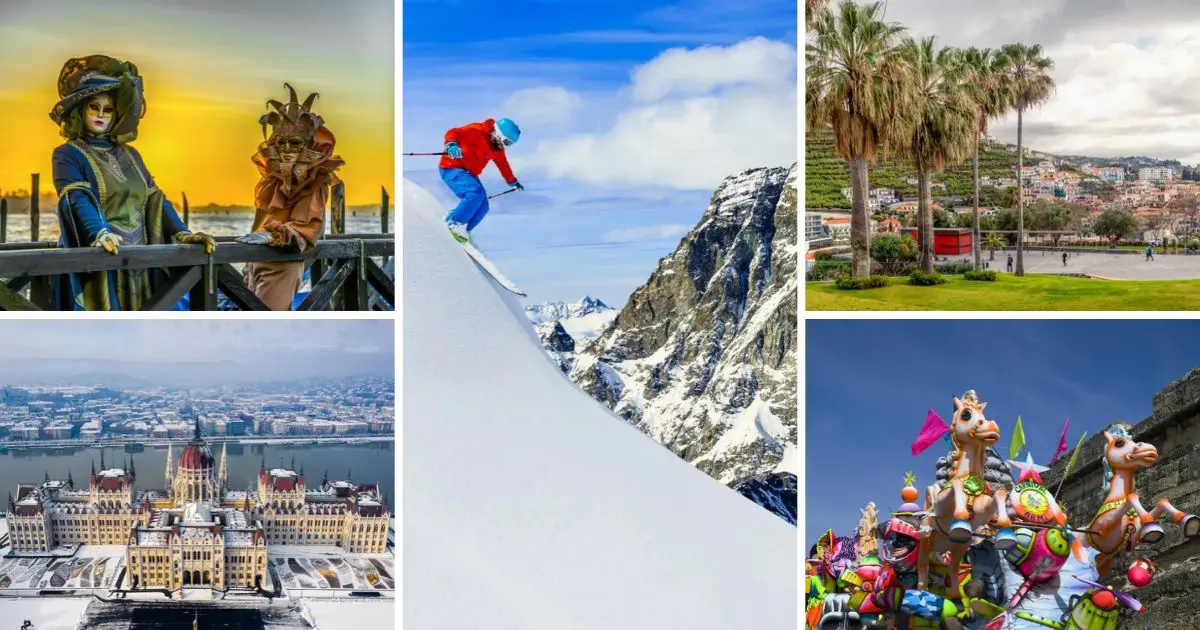
February can be a wonderful month to visit Europe. You could enjoy sunshine on a Spanish island, explore beautiful cities without the enormous summer crowds, head to the mountains for skiing, or plan a vacation around one of Europe’s famous winter festivals. And there are interesting destinations for almost every budget.
So, where should you go? I’ve selected some of the best places to visit in Europe in February, including warm-weather escapes, romantic cities, affordable destinations, and places worth visiting for their seasonal events – I grouped them by category so that you can easily find what interests you. You’ll also find practical details about February temperatures, attractions, travel conditions, and the dates worth checking before booking.
What Is Europe Like in February?
February is still winter in Europe, but the temperatures vary enormously. The Canary Islands often enjoy daytime highs around 20–22°C (68–72°F), while cities such as Vienna and Budapest generally have temperatures only a few degrees above freezing. In Finnish Lapland, daytime temperatures can remain well below freezing, especially during particularly cold periods.
Southern Europe has longer days than northern Scandinavia. Around the Mediterranean, there’s generally enough daylight for a full day of sightseeing, while Arctic destinations have shorter days and long nights suitable for northern lights excursions. Many famous European cities receive fewer tourists than in summer. Museums, historic neighborhoods, and popular landmarks can be more pleasant to explore, although weekends and special events still bring visitors.
Winter sports destinations are different. February is an important skiing month, and school holidays across several European countries increase demand for accommodation and lift passes. Some coastal resorts, particularly those dependent on summer tourism, may have fewer restaurants and attractions open. If you’re considering different winter months, these observations about Europe in winter and early spring can help you compare the experience.
Best Warm Places to Visit in Europe in February
I know many people want to escape the winter cold and are looking for sunnier, warmer destinations, so I am starting with these recommendations. The Canary Islands are among the warmest places in Europe in February, making them attractive for travelers who want sunshine and time outdoors. Madeira, southern Spain, Cyprus, Malta, and Sicily offer milder temperatures than much of the continent, with historic attractions, beautiful scenery, and plenty of sightseeing. The water is cold, so a heated hotel pool is always better (if you like warm water).
1. Gran Canaria, Spain – Beaches, Coastal Towns, and Winter Sunshine
Gran Canaria is a lovely February destination for sunshine, with average daytime highs around 21°C (70°F) along the coast. The southern part of the island is generally sunnier and drier than the north, making Maspalomas, Meloneras, and Puerto Rico de Gran Canaria popular winter destinations.
The Maspalomas dunes are among the island’s most famous sights, with enormous stretches of sand along the Atlantic coast. Puerto de Mogán has a picturesque harbor, colorful houses, waterfront restaurants, and small streets filled with flowers. You can also visit Las Palmas de Gran Canaria, explore the historic Vegueta neighborhood, and discover the mountainous interior.
Roque Nublo is one of the island’s best-known natural landmarks, but access to its walking routes is regulated, so check reservation requirements before visiting. The mountain scenery is beautiful, and temperatures are considerably cooler at higher elevations.
The Atlantic Ocean is generally around 19–20°C (66–68°F) in February. Swimming is possible, but the water is chilly for many visitors. Wind can also affect beach conditions, particularly in exposed areas. Five to seven days gives you time for beach visits, sightseeing, and a few excursions around the island.
2. Tenerife, Spain – Winter Sunshine, Beaches, and Mount Teide
Tenerife is one of the warmest places in Europe in February (and one of my friends’ preferred destinations for yearly trips), with daytime temperatures often reaching 20–22°C (68–72°F) along the southern coast. Costa Adeje and Los Cristianos are popular for their beaches, waterfront restaurants, and sunny weather. The Atlantic is cooler, with sea temperatures generally around 19–20°C (66–68°F).
As maybe you know, Tenerife has some gorgeous scenery, from the impressive lava formations of Teide National Park to the golden sands of Playa de las Teresitas and the black volcanic beach of Playa Jardín. Mount Teide, Spain’s highest mountain, can even have snow in February. The cable car may close during bad weather, and some hiking routes require permits.
San Cristóbal de La Laguna, a UNESCO World Heritage city, is known for its historic streets and colorful architecture. The Anaga Mountains have beautiful viewpoints, ancient laurel forests, and hiking trails. The northern part of Tenerife is generally cooler and wetter than the southern coast.
February also brings Carnival celebrations in Santa Cruz de Tenerife, with parades, music, and elaborate costumes. The dates of the main events vary each year, so check the official program if you’d like to attend.
3. Madeira, Portugal – Beautiful Gardens, Coastal Views, and Carnival
ID 274291125 | Winter © Jan SuÄ�ko | Dreamstime.com
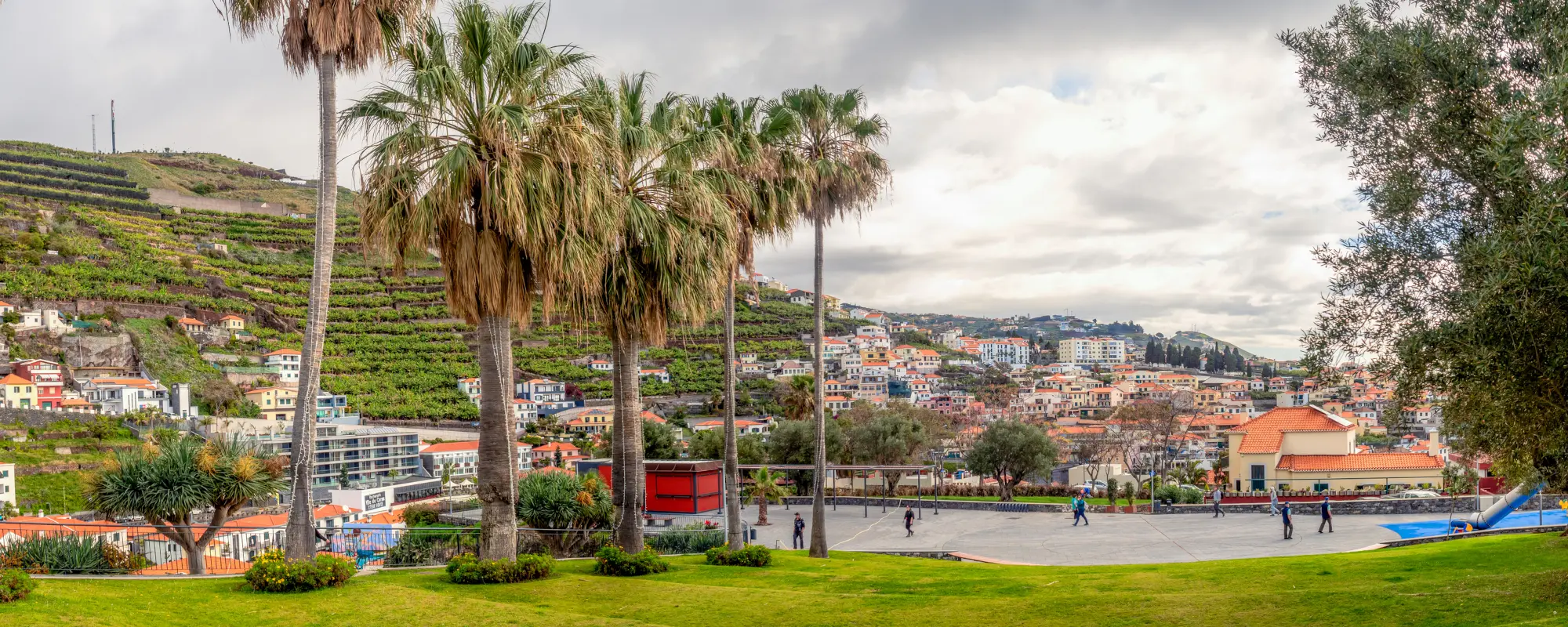
Madeira is one of the best European islands to visit in February for gardens, scenic drives, and exploring nature. Funchal typically has daytime highs around 19–20°C (66–68°F), although mountain areas can be much colder and wetter. Monte Palace Tropical Garden is a beautiful place to explore, with exotic plants, decorative lakes, and views over Funchal. You can travel up from the city by cable car, visit the historic center, discover local markets, or relax in restaurants overlooking the Atlantic.
Beyond the capital, Madeira is famous for its levada walks, laurel forests, steep coastal cliffs, and mountain viewpoints. Cabo Girão has a glass-floored viewing platform high above the ocean, while Porto Moniz is known for its natural volcanic swimming pools. Winter storms and rough seas can make swimming unsafe, and mountain hiking trails may be closed after heavy rain or landslides. Check official conditions before setting out.
February 2027 also brings Madeira Carnival, from February 3 to 14. The main parade celebrations in Funchal are scheduled for February 5 and 6, with costumes, music, and decorated floats. The official Madeira Carnival website has the current program. You can easily spend a week here, exploring Funchal, taking several coastal excursions, and discovering the island’s interior.
4. Lanzarote, Spain – Volcanic Landscapes and Atlantic Beaches
Lanzarote is filled with black lava fields, volcanic craters, whitewashed villages, and beautiful Atlantic beaches. February temperatures commonly reach around 20–21°C (68–70°F), making sightseeing comfortable on many days.
Timanfaya National Park is one of the island’s main attractions. Its volcanic formations and vast lava fields are extraordinary, and visitors explore the protected volcanic area using the authorized routes and services. Jameos del Agua and Cueva de los Verdes offer another opportunity to discover Lanzarote’s volcanic geology, while La Geria is famous for vineyards planted in dark volcanic soil.
Playa de Papagayo is known for its clear water and sheltered coves, while Playa Blanca and Puerto del Carmen have beaches, restaurants, and a wide choice of accommodation. February can be windy, particularly in exposed coastal areas. The sea is also cool, so swimming conditions depend on your tolerance for cold water. Renting a car is useful if you want to visit attractions across the island.
5. Seville, Spain – Historic Architecture Without the Summer Heat
Seville is famous for its beautiful architecture, orange trees, flamenco, and traditional tapas bars. February daytime temperatures average around 18°C (64°F), making it a comfortable time for exploring the city’s many outdoor attractions.
The Royal Alcázar has magnificent courtyards, gardens, and richly decorated interiors. Seville Cathedral and the Giralda are nearby, and you can visit the three attractions while exploring the historic center. Plaza de España is another highlight, with its semicircular buildings, decorative ceramic tiles, bridges, and canal.
Santa Cruz has narrow streets, small squares, and charming buildings. Across the Guadalquivir River, Triana is known for its ceramics, food, and flamenco traditions. Evenings can be chilly in February, and rain is possible. I’d book Alcázar tickets in advance, especially for a weekend, and allow three or four days for the main attractions.
6. Paphos, Cyprus – Ancient Ruins and Mediterranean Scenery
Paphos is an interesting choice for a February vacation focused on history and sightseeing. Coastal temperatures often reach around 17°C (63°F), with cooler evenings and occasional rain. The Archaeological Park of Kato Paphos has remarkable Roman mosaics, while the Tombs of the Kings are famous for their ancient underground burial chambers. Paphos Castle, the harbor, and the surrounding coastline are also worth visiting.
Aphrodite’s Rock, also known as Petra tou Romiou, is a popular coastal excursion, with a beautiful setting connected to the legends of the Greek goddess Aphrodite. Inland, Cyprus has traditional villages and the Troodos Mountains, where winter snow is possible.
The Mediterranean is cold in February, and some seasonal coastal businesses operate reduced hours. Paphos can be seen in 4-5 days of sightseeing, with a rental car useful for exploring the surrounding region. Remember that driving in Cyprus is on the left.
7. Valletta, Malta – Magnificent Churches and Historic Harbor Views

ID 13687907 © William Attard Mccarthy | Dreamstime.com
My husband liked Valletta! It is packed with historic buildings, churches, museums, and beautiful views over the Grand Harbour. February is generally mild, with typical daytime highs around 15–16°C (59–61°F), although wind and rain are common enough to affect outdoor plans.
St. John’s Co-Cathedral has a lavishly decorated interior and important paintings by Caravaggio. The Upper Barrakka Gardens offer views across the harbor, and the nearby Three Cities are filled with narrow streets, fortifications, and historic buildings.
Mdina, known as the Silent City, is another fascinating place to explore, especially if you enjoy medieval architecture. Malta’s compact size makes several excursions possible during a short visit. These places in Malta are worth considering, along with some of the destinations in this alternative Malta guide.
Malta’s Carnival celebrations take place around the period before Lent. In 2027, the main Carnival period falls in early February, so check the official local program for parade locations and dates. Note: Valletta is hilly, with steep streets and numerous steps. The sea is also cold in February, making historic attractions and coastal sightseeing more appealing than swimming.
8. Sicily, Italy – Ancient Temples, Historic Cities, and Almond Blossoms
February is a pleasant time to explore Sicily’s archaeological sites and historic cities if you prefer cooler sightseeing weather. Palermo, Syracuse, and Agrigento are particularly interesting, with architecture and traditions shaped by the island’s long history.
Palermo has beautiful churches, historic palaces, and lively markets. On the southeastern coast, the island of Ortigia forms Syracuse’s historic center, with narrow streets, elegant squares, and waterfront views.
Agrigento’s Valley of the Temples is one of the island’s most impressive ancient sites, with remarkably preserved Greek temples. It’s among the famous places in Italy that deserve time rather than a rushed visit. Almond trees also begin flowering in parts of Sicily in late winter, though timing varies with the weather.
February temperatures are generally around 13–16°C (55–61°F) in many coastal cities. Rain and chilly evenings are common, and smaller seaside resorts may have limited tourist services. Sicily is a large island, so choose one area if you only have a few days. Palermo and its surroundings can fill a short trip, while the eastern and southeastern coast deserves several days of its own.
Best Places to Visit in Europe in February for Snow and Skiing
February is one of Europe’s main skiing months, with established winter conditions at many mountain resorts. You’ll find everything from famous Alpine destinations to smaller resorts offering skiing, snowboarding, winter walks, and mountain excursions.
School holidays can make a considerable difference to prices and crowds. France, the UK, Austria, Germany, Italy, and other European countries have different holiday schedules, so checking the dates for your chosen resort is worthwhile.
9. Val Gardena, Italy – Skiing in the Dolomites
Val Gardena has spectacular Dolomite peaks, attractive Alpine villages, and access to extensive ski terrain. The valley includes Ortisei, Selva di Val Gardena, and Santa Cristina, each with its own atmosphere and access to the surrounding mountains.
Skiers can explore the local slopes and connections to the wider Dolomiti Superski network, including the famous Sellaronda circuit around the Sella massif. The scenery is gorgeous, with distinctive rocky peaks rising above the snow-covered slopes.
Ortisei has colorful buildings, shops, restaurants, and a pleasant village center. Selva is particularly convenient for accessing several major ski connections, while Santa Cristina is another base for exploring the valley.
You can enjoy mountain restaurants and winter walking routes even if you’re not skiing, although pedestrian access to lifts and trails varies. February is busy, and accommodation near the ski lifts can be expensive during school-holiday weeks.
10. Bansko, Bulgaria – Skiing in the Pirin Mountains
Bansko is one of the European ski destinations worth comparing if you have a limited budget. I have many friends who went here and they were pleased with the experience. The resort sits at the foot of Bulgaria’s Pirin Mountains and offers ski schools, equipment rental shops, restaurants, and a wide selection of accommodation.
The ski area includes slopes for different abilities, although conditions depend on snowfall, temperatures, and snowmaking. In the old town, you’ll find traditional buildings, cobbled streets, and taverns serving Bulgarian dishes.
One detail worth researching before booking is the gondola connecting the town to the ski area. Queues can be lengthy during popular periods, particularly on weekends and during school holidays. Check your accommodation’s location and the available transport arrangements.
Bansko can offer better value than some famous Alpine resorts, but include lift passes, lessons, equipment, and transfers when comparing prices. A five- to seven-day trip gives beginner skiers time for lessons and practice.
11. Innsbruck, Austria – A Beautiful Alpine City With Skiing Nearby
Innsbruck is surrounded by mountains, with colorful buildings along the Inn River and a historic center filled with Austrian architecture. It’s also a convenient base for reaching several ski areas in the Tyrol region. A good friend of mine goes here every year with his family – he knows the ski slopes like the back of his hand!
The Nordkette cable car system connects Innsbruck to mountain viewpoints and winter sports terrain, depending on weather conditions. Other ski areas around the city include Axamer Lizum and the Stubai Glacier, with different transport connections and skiing opportunities. Innsbruck has plenty of attractions away from the slopes. The Golden Roof is one of its best-known landmarks, while the Imperial Palace and Court Church offer a look at the city’s Habsburg history. You can explore the old town, visit museums, and enjoy traditional Austrian food.
February temperatures in the city are often around 4–6°C (39–43°F) during the day, with much colder conditions higher in the mountains. Snow isn’t guaranteed on city streets, even when the surrounding ski areas have good conditions. Three or four days allow time for the city and a mountain excursion; dedicated skiers may prefer a longer stay – our friends spend at least a week here, usually 2.
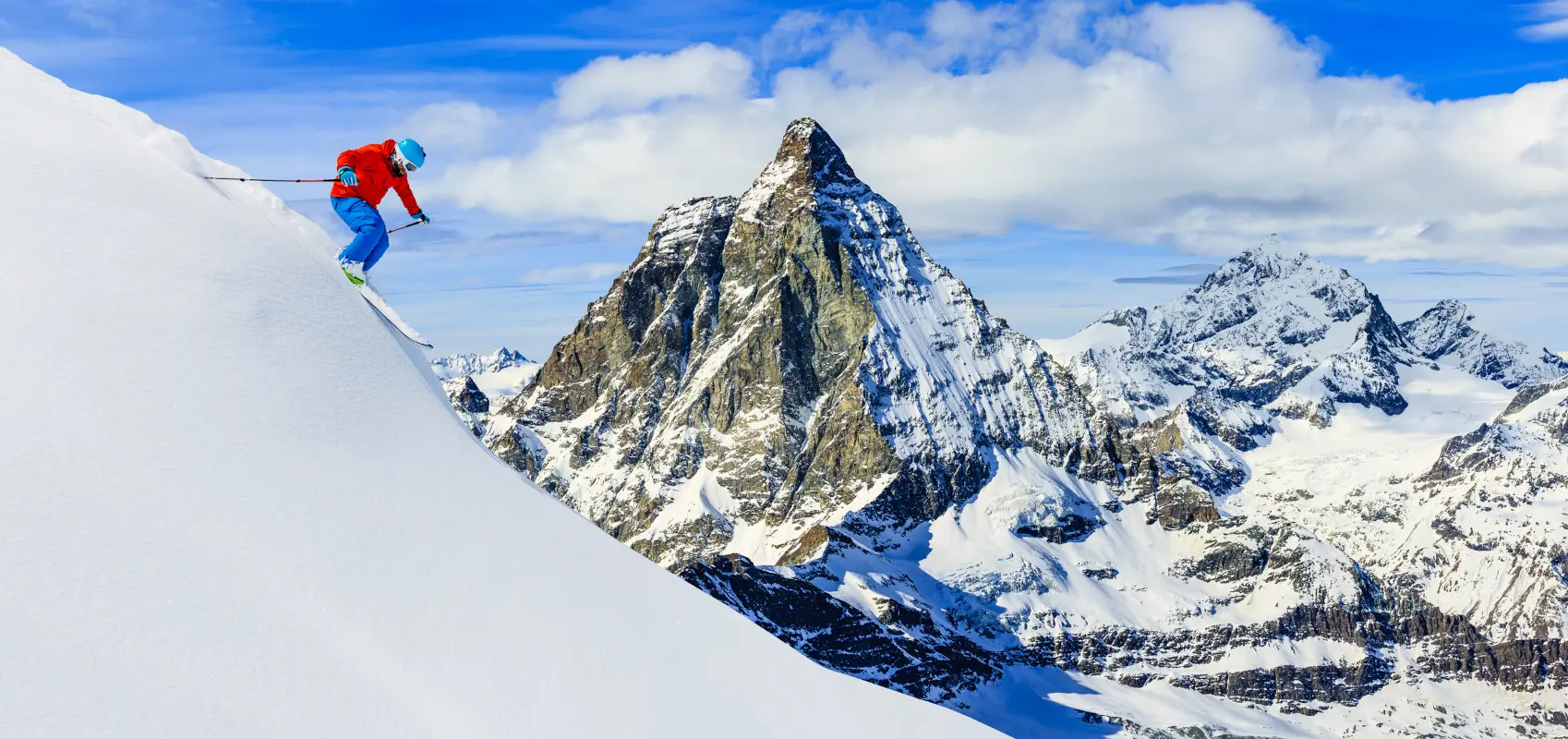
12. Zermatt, Switzerland – Snowy Mountain Scenery Beneath the Matterhorn
ID 78497790 © Pro777 | Dreamstime.com
Zermatt is famous for the Matterhorn, one of the world’s most photographed mountains. The village has wooden chalets, mountain restaurants, and an extensive ski area surrounded by beautiful Alpine scenery.
The Gornergrat railway takes visitors into the mountains for panoramic views, while cable cars provide access to other viewpoints and skiing areas. Visibility depends on the weather, and clouds can completely hide the Matterhorn on some days. Zermatt is car-free for ordinary private vehicles. If you’re arriving by car, you’ll generally need to park in Täsch and take the train to the village. Accommodation, dining, and mountain transport can be expensive, especially during the February ski season. For alternatives, you can explore these lesser-known Swiss ski resorts before deciding where to stay.
13. La Thuile, Italy – Skiing Across the Italian and French Alps
La Thuile is located in Italy’s Aosta Valley, near the French border. Its ski area connects with La Rosière in France, creating an international skiing experience known as Espace San Bernardo. The resort has broad slopes, mountain scenery, and restaurants serving regional specialties. Skiers can explore terrain on both sides of the border when the connecting lifts and runs are open.
Weather conditions can affect cross-border access, particularly during strong winds or heavy snowfall. Check current lift operations and your ski pass coverage, as not every ticket necessarily includes the full international ski area. La Thuile is worth considering for several days of Alpine skiing, although February school holidays can increase demand here too. Accommodation prices and lift queues vary by date, so compare the actual travel week rather than assuming smaller resorts are always quieter.
14. Brașov, Romania – A Historic Town Near the Carpathian Ski Slopes
I had to include something from my country too, especially since we have plenty of destinations perfect for a February trip. Brașov has a beautiful historic center surrounded by the Carpathian Mountains, and February brings opportunities for both city sightseeing and winter sports. Council Square, with its colorful buildings and historic architecture, is a lovely place to explore. The Black Church is one of the city’s major landmarks, and the surrounding streets are lined with cafés, restaurants, and shops.
Poiana Brașov, located in the mountains above the city, has ski slopes, lifts, and winter sports facilities. Snow conditions vary, especially at lower elevations, so check the resort’s latest reports before planning a day of skiing.
Bran Castle is another popular excursion. Its history is more complicated than the Dracula stories associated with it, but the castle and its mountain setting attract visitors year-round. Brașov can be more affordable than famous Alpine destinations, particularly for accommodation and food. February weekends and Romanian school-holiday periods can still be busy, especially around Poiana Brașov. In fact, we have the school winter vacations (in Romania, different regions have different periods or this vacation – during February).
Where Can You See Snow in Europe in February Without Skiing?
Lucerne, Switzerland, is a good option for travelers who enjoy mountain scenery without skiing. The city has a beautiful lakeside setting, the historic Chapel Bridge, and access to mountain excursions around Lake Lucerne. Snow is much more reliable at higher elevations than beside the lake, so check conditions if snowy scenery is your main reason for visiting.
Innsbruck also has mountain cable cars and viewpoints accessible to non-skiers, while Brașov offers a historic center and winter scenery in the surrounding Carpathians.
Lake Bled in Slovenia is beautiful in winter, with the Julian Alps in the background. Snow around the lake isn’t guaranteed, but the nearby mountains provide opportunities for winter excursions when conditions permit.
Best Places to See the Northern Lights in Europe in February
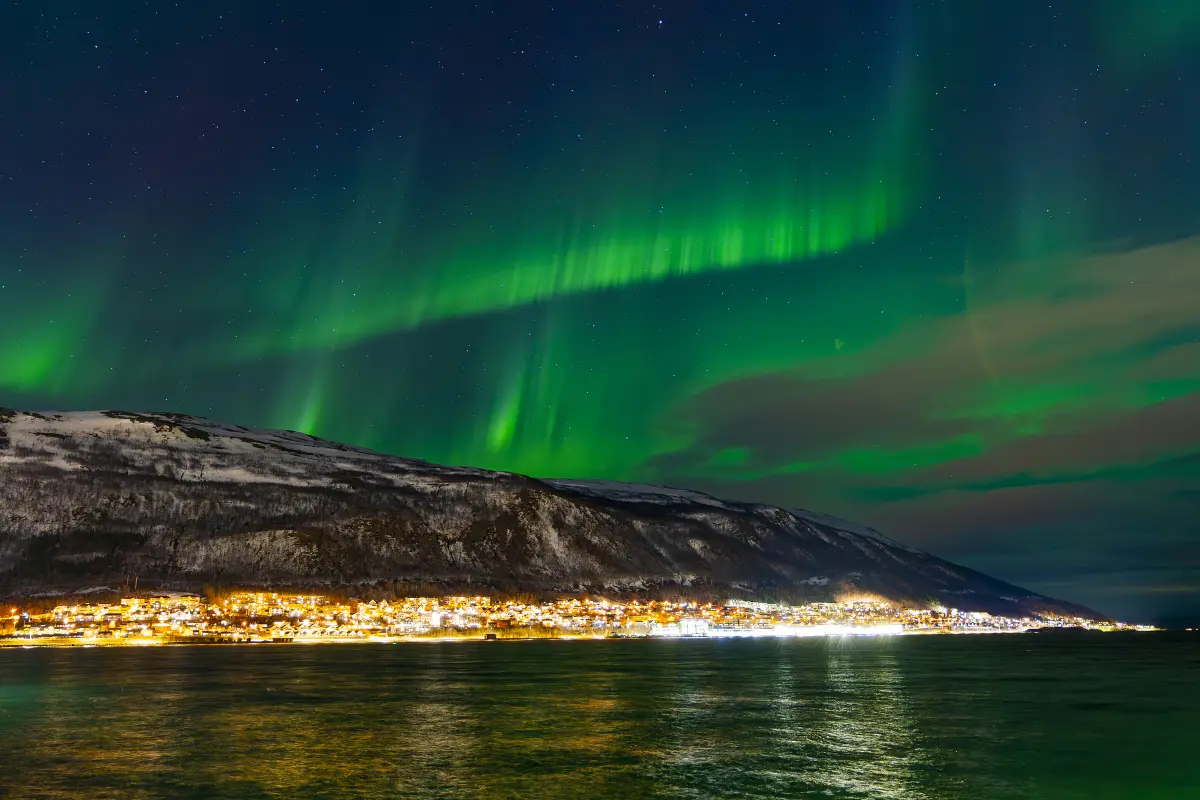
February is a good month for viewing the Northern Lights in Arctic Europe. The nights are still long, while increasing daylight makes winter sightseeing and excursions possible during the day. The aurora borealis depends on solar activity, darkness, and clear skies. Even on a night with strong geomagnetic activity, clouds can hide the display. A trip of several nights gives you more opportunities to encounter favorable conditions.
15. Tromsø, Norway – Northern Lights and Arctic Fjords
ID 366465981 | February © Stefano Tava | Dreamstime.com
Tromsø is one of Norway’s most popular destinations for northern lights excursions (usually 4-7 days). The city sits in an extraordinary Arctic landscape, surrounded by mountains, fjords, and islands.
Guided aurora tours often travel outside Tromsø in search of clearer skies. Some excursions head inland or toward the Finnish border when coastal cloud cover is unfavorable, although routes depend on the forecast and road conditions. During the day, you can visit the Polar Museum, explore the waterfront, see the Arctic Cathedral, or take the Fjellheisen cable car for views over the city. Winter boat trips and other excursions are available through local operators, with schedules influenced by the weather.
February temperatures are typically around or slightly below freezing, although colder conditions, snowstorms, and strong winds are possible. Aurora excursions often involve standing outdoors for extended periods, so check whether operators provide thermal clothing.
16. Rovaniemi, Finland – Snowy Forests and Arctic Winter Experiences
Rovaniemi is famous for Santa Claus Village, but the snowy landscapes of Finnish Lapland remain a major attraction long after Christmas. February is typically very snowy. You can visit Santa Claus Village, join reindeer or husky excursions, explore forest trails, and book guided Northern Lights activities. Snowmobile tours and other winter experiences are also available, with age requirements and restrictions that vary by operator.
The Arctic Circle runs through the Santa Claus Village area, making it a popular stop for visitors. Beyond the main attractions, the surrounding forests offer beautiful scenery, particularly when the trees are covered in snow. Temperatures can fall below -20°C (-4°F), sometimes considerably lower. Proper winter clothing is essential, including insulated boots, thermal layers, gloves, and protection for exposed skin. Some excursion providers include specialized clothing, so check what’s provided before booking.
Rovaniemi is popular with families, although accommodation and activities can be expensive during winter. Four to six days gives you time to enjoy several experiences without filling every hour with excursions.
17. Abisko, Sweden – Northern Lights and Swedish Lapland
Abisko is a small destination in Swedish Lapland, near Abisko National Park – I heard about it recently from a friend who loved it. Its mountain scenery, dark skies, and northern location attract travelers interested in aurora photography and Arctic nature.
The area is known for local weather conditions that can sometimes produce clearer skies than surrounding regions. However, cloudy nights still occur, and northern lights sightings cannot be guaranteed. Winter activities include snowshoeing, cross-country skiing, and guided excursions, depending on conditions and operator availability. The landscape includes mountains, forests, and the nearby Lake Torneträsk.
Abisko has fewer hotels, restaurants, and transport options than larger Arctic cities. Many travelers reach the region through Kiruna, continuing by train or road. Book accommodation and transportation in advance, particularly if your dates are fixed.
18. Iceland – Northern Lights, Waterfalls, and Geothermal Landscapes
Iceland offers a February vacation filled with waterfalls, volcanic scenery, geothermal attractions, and the chance to see the Northern Lights. Reykjavík makes a convenient base for a short winter trip. You can explore the city, visit museums, enjoy geothermal bathing, and arrange excursions to the Golden Circle, which includes Þingvellir National Park, the Geysir geothermal area, and Gullfoss waterfall.
The landscapes can be beautiful in winter, but Iceland’s weather changes quickly. Snow, ice, heavy rain, and strong winds can affect roads and excursions, sometimes requiring major adjustments to your plans. For northern lights viewing, look for nights with clear skies and suitable aurora activity. I’d avoid planning a demanding winter road trip across the island without experience driving in snow and ice. Official road and weather reports are essential, and guided excursions from Reykjavík may be more convenient for a short visit.
Best European Cities to Visit in February
February is an appealing month for city breaks, particularly in places with great museums, historic architecture, traditional cafés, and interesting neighborhoods. Many European cities have fewer tourists than in summer, although famous attractions still draw visitors year-round.
I also love having indoor attractions available during a winter vacation. Museums are among my favorite places to visit, and colder weather is a good opportunity to explore collections I might otherwise struggle to fit into a busy itinerary.
19. Vienna, Austria – Imperial Palaces, Famous Museums, and Ball Season
Vienna is one of my favorite European cities, and February offers several reasons to visit, including the traditional ball season, classical music performances, and its magnificent museums.
I loved the Kunsthistorisches Museum, with its impressive art collections and beautiful interiors. The Albertina and Belvedere are also worth visiting, while the Natural History Museum and Technical Museum are excellent choices for travelers with different interests.
In the historic center, you’ll find the Hofburg Palace, elegant streets, traditional coffeehouses, and St. Stephen’s Cathedral. Schönbrunn Palace is another major attraction, with magnificent interiors and extensive gardens. The gardens are very different in February than in spring, but the palace itself is worth exploring year-round.
Vienna’s famous Opera Ball takes place on February 4, 2027, at the Vienna State Opera. It’s a formal event requiring tickets and appropriate attire, but there are many other concerts and performances for visitors interested in Vienna’s musical traditions. February is cold, with average daytime highs around 5–6°C (41–43°F). Snow is possible, although winter rain and cloudy weather are common too. If you’re comparing different seasons, this article on the best time to visit Vienna covers the advantages of each period. I could spend months in Vienna – but it can be visited on short trips (3-4 days) or longer ones – 1-2 weeks.
20. Budapest, Hungary – Thermal Baths and Beautiful Views of the Danube
ID 141933058 | Budapest January © Zoltan Gabor | Dreamstime.com
Budapest’s outdoor thermal baths are especially appealing in February, when steam rises from the heated pools into the cold winter air. Széchenyi is the most famous choice, with several outdoor pools surrounded by its grand yellow buildings. Rudas offers another historic bathing experience, including a rooftop pool overlooking the Danube. Check its admission schedule before visiting, as access to different bathing areas varies.
Gellért Thermal Bath, another well-known Budapest attraction, closed for renovation in October 2025 and isn’t an option for a February 2027 visit unless the operator announces an earlier reopening.
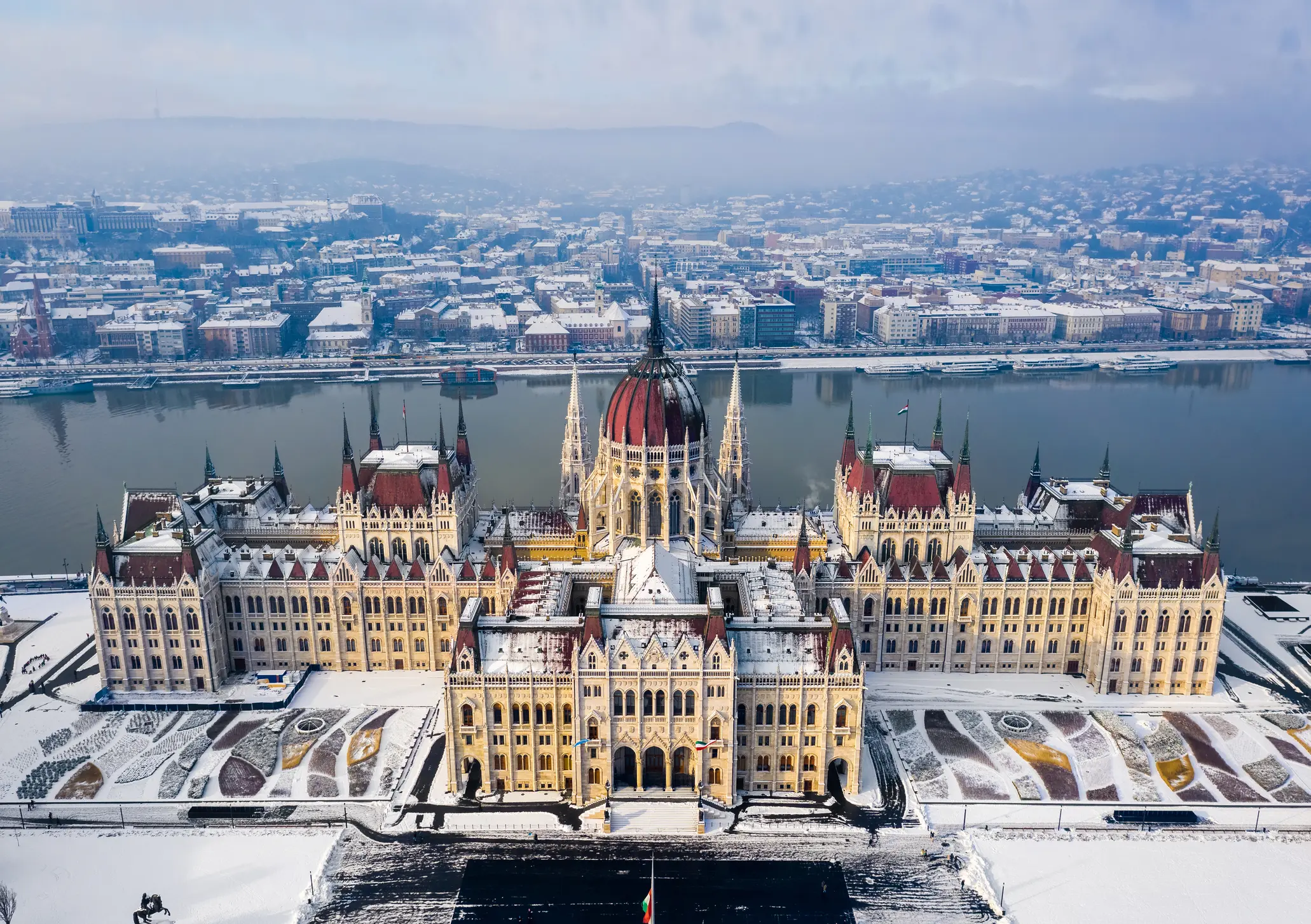
There are plenty of things to do in Budapest even without the baths – and you can spend more days here. The Parliament Building is impressive from across the Danube, especially after dark when it’s illuminated. On the Buda side, Fisherman’s Bastion and Matthias Church are close enough to explore together, while the Pest side has St. Stephen’s Basilica, historic cafés, and restaurants serving traditional Hungarian dishes. One important thing I think you should know: February temperatures typically hover a few degrees above freezing during the day, and the wind can be sharp along the river.
21. Florence, Italy – Renaissance Art and Historic Streets
Florence has some of Italy’s most extraordinary art and architecture, including the Uffizi Gallery, Accademia Gallery, Florence Cathedral, and the beautiful buildings surrounding Piazza della Signoria. The Uffizi houses important Renaissance paintings, while the Accademia is famous for Michelangelo’s David. I recommend booking tickets in advance, because these are popular museums and you might not be able to visit when you want.
Florence’s historic center is filled with remarkable buildings and squares. Ponte Vecchio crosses the Arno River, the cathedral’s enormous dome dominates the skyline, and the narrow streets lead to churches, traditional shops, and restaurants. Typical February daytime highs are around 12–13°C (54–55°F). Rain is possible, and evenings are chilly, but the cooler weather can make walking through the city more comfortable than during the hottest summer months.
22. Verona, Italy – Historic Squares and a Romantic Valentine’s Day Trip
Verona – where temperatures often reach around 8–10°C (46–50°F) during the day, with colder evenings and occasional fog or rain – is closely associated with Shakespeare’s Romeo and Juliet, which makes it a popular destination for romantic vacations. Juliet’s House and its famous balcony attract visitors interested in the story, although the characters are fictional and the balcony’s connection to the play is a later tradition.
The city has plenty of attractions beyond Juliet’s House. Piazza delle Erbe is filled with historic buildings, while the Roman Arena dominates Piazza Bra. Verona’s churches, bridges, and riverside streets are beautiful, and there are numerous places to enjoy Italian food.
23. Lisbon, Portugal – Historic Neighborhoods, Viewpoints, and Portuguese Food
Lisbon is generally milder than many European capitals in February, with daytime highs around 15–16°C (59–61°F). Rain is common during winter, but the city’s museums, restaurants, and historic neighborhoods provide plenty to explore.
Alfama is known for its narrow streets, traditional buildings, and viewpoints overlooking the Tagus River. Baixa and Chiado have elegant squares, shops, cafés, and historic attractions. São Jorge Castle offers panoramic views across Lisbon, although its exposed grounds can be less comfortable on rainy or windy days. Belém is worth visiting for Jerónimos Monastery, the waterfront, and the famous Portuguese custard tarts.
24. Munich, Germany – Museums, Bavarian Architecture, and Alpine Excursions
If you’ve been here in the past, you know I like Munich – with its impressive historic center, excellent museums, and convenient transport connections to the surrounding Bavarian region. February is cold, with average daytime highs around 4–5°C (39–41°F), and snow is possible.
Marienplatz is one of the city’s main gathering places, with the New Town Hall and its famous Glockenspiel. Nearby streets lead to churches, shops, restaurants, and traditional Bavarian buildings.
Munich also has several excellent museums. The Deutsches Museum is especially interesting for science and technology, while the BMW Museum and BMW Welt attract automotive enthusiasts. The Residenz, the former royal palace of the Bavarian monarchs, has richly decorated rooms and collections. If you’re visiting for the first time, this Munich walking tour covers the historic center. With more time, you can explore places outside the city, including Bavarian towns, palaces, and mountain destinations. This five-day Munich itinerary includes additional ideas.
25. Kraków, Poland – Medieval Architecture and Fascinating History
Kraków has one of Europe’s most beautiful historic centers, with an enormous medieval market square, impressive churches, and streets filled with architectural details.
Rynek Główny, the Main Market Square, is surrounded by historic buildings, including St. Mary’s Basilica and the Cloth Hall. Wawel Castle and Wawel Cathedral are important places to visit, while the Kazimierz district has significant Jewish heritage, museums, restaurants, and cultural attractions. February is cold, with daytime temperatures commonly around 3–4°C (37–39°F). Snow is possible, although rain, ice, and overcast skies also occur. Museums and historic attractions make it possible to spend several interesting days in Kraków regardless of the weather.
The Wieliczka Salt Mine is a popular excursion, but the standard tourist route includes numerous stairs and substantial walking, as I discovered when I planned a trip here. Check the available routes and accessibility arrangements before booking.
26. Ljubljana, Slovenia – A Charming Capital Near the Julian Alps
Another lesser-known European capital destination, Ljubljana has a compact historic center, beautiful bridges, riverside cafés, and Ljubljana Castle overlooking the city. February is generally quieter than summer, with temperatures often around 5–7°C (41–45°F) during the day.
The Triple Bridge and Prešeren Square are among the main landmarks, while the Central Market area offers local food and a look at everyday city life. The streets beside the Ljubljanica River are filled with cafés and attractive buildings.
Lake Bled is a popular excursion, surrounded by beautiful Alpine scenery. Winter conditions can make the area especially scenic, although snow and ice aren’t guaranteed around the lake. The nearby Julian Alps offer mountain landscapes, and you should check road conditions before traveling.
Best Places in Europe to Visit in February for Festivals
February is an exciting month for festivals in Europe. Venice has its famous masked Carnival, the French Riviera hosts two colorful celebrations, and cities such as Cologne, Cádiz, and Basel have traditions that attract visitors from around the world.
The dates are especially important in 2027. Venice Carnival ends on February 9, while other festivals continue into the second half of the month.
27. Venice, Italy – The Famous Venice Carnival
ID 86089171 | February © Vigen Mnoyan | Dreamstime.com
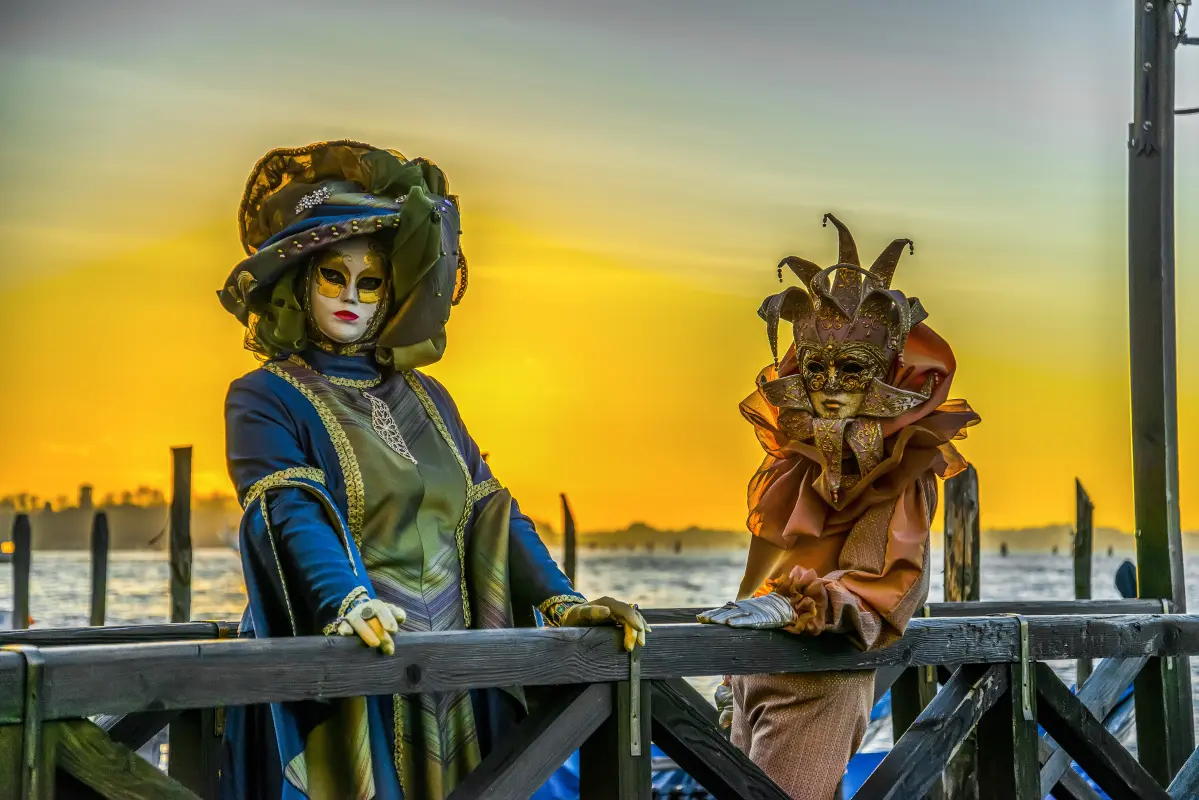
Venice Carnival is known for its elaborate masks, historical costumes, performances, and celebrations in the city’s famous squares and streets. The 2027 edition runs from January 23 to February 9, ending on Shrove Tuesday. St. Mark’s Square is a central gathering place during Carnival, and you’ll see visitors in intricate costumes inspired by Venetian traditions. Some events are open to the public, while masked balls and special performances require tickets. The official Carnival program has the latest event details.
Venice has plenty to explore beyond the celebrations. St. Mark’s Basilica, the Doge’s Palace, Rialto Bridge, and the beautiful neighborhoods of Dorsoduro and Cannaregio are among the attractions worth visiting. There are more suggestions in this Venice travel guide. February can be cold, foggy, and damp, with average daytime highs around 8–9°C (46–48°F). Carnival attracts large crowds, and hotels may be expensive during the main celebrations. After February 9, Venice returns to a quieter winter atmosphere.
28. Menton, France – The Extraordinary Lemon Festival
Every February, Menton celebrates citrus fruits with enormous sculptures, decorated floats, and colorful parades. The Fête du Citron (Lemon Festival) is one of the most unusual winter events on the French Riviera. In 2027, it takes place from February 13 to 28, with the theme “Douce France.”
The festival includes ticketed parades and citrus displays, so check the official program when choosing your dates. You can also explore Menton’s old town, with its pastel-colored buildings, narrow streets, and views across the Mediterranean. The town’s gardens and seaside promenade are worth visiting between events.
Nice is roughly 35–40 minutes away by regional train, depending on the service, and holds its own Carnival during February. Staying in one city and visiting the other by train is a practical way to experience both celebrations. There’s more to explore along the coast in this French Riviera guide.
29. Nice, France – Carnival and Mediterranean Scenery
Nice Carnival runs from February 9 to 28, 2027, with the theme “Vive l’Amour.” The celebrations include elaborate floats, illuminated parades, music, and flower-themed events, with individual performances scheduled throughout the festival.
Nice has plenty of attractions to enjoy between the celebrations. The Promenade des Anglais stretches along the Mediterranean, while the colorful streets of Vieux Nice are filled with shops, restaurants, and markets. Castle Hill offers beautiful views of the coastline and city.
February daytime highs are usually around 13–14°C (55–57°F). There can be sunny afternoons, but rain and cold winds are possible, particularly near the waterfront. Nice also has good regional train connections to Menton, Monaco, Antibes, and other destinations along the French Riviera. Check the official Nice Carnival calendar for parade dates, tickets, and any road closures affecting your visit.
30. Cádiz, Spain – Carnival Music, Costumes, and Satirical Performances
Cádiz Carnival is famous for its music, humor, costumes, and satirical songs. The celebrations have a strong local character, with groups performing songs about current events and everyday life. The 2027 festivities take place from February 4 to 14. Visitors can enjoy street performances and organized Carnival events, but should check specific schedules and locations before traveling.
Cádiz has a beautiful historic center, an impressive cathedral, coastal fortifications, and waterfront promenades. The city sits on a peninsula surrounded by the Atlantic, giving it a distinctive setting and lovely sea views. February is relatively mild, with daytime highs around 16–17°C (61–63°F), although Atlantic winds can be strong. Accommodation may be in high demand during the busiest Carnival days.
31. Cologne, Germany – Traditional Street Carnival
Another German city my husband likes, Cologne has one of Germany’s most famous Carnival celebrations, with large street parades, costumes, music, and a festive atmosphere throughout the city. In 2027, the main street Carnival begins on February 4, and Rose Monday falls on February 8. The celebrations bring large crowds to Cologne, particularly around the major parades.
Outside Carnival, Cologne Cathedral is an extraordinary Gothic landmark and one of Germany’s most famous churches. You can also explore the historic center, visit museums, and enjoy traditional Rhineland food. February weather is cold, with average daytime highs around 6–7°C (43–45°F). Dress warmly for outdoor parades and check the official Carnival information for event schedules and visitor arrangements.
32. Basel, Switzerland – A Carnival That Starts at 4 a.m.
Basel Fasnacht is one of Europe’s most distinctive Carnival traditions. In 2027, it takes place from February 15 to 17, beginning with Morgestraich at 4 a.m. on Monday morning. During Morgestraich, the city center is darkened as participants carry illuminated lanterns and play traditional drums and piccolos. The celebrations continue over three days with processions, music, and elaborate costumes.
Basel has a beautiful historic center, the Rhine River, and several museums, including the Kunstmuseum Basel. However, Fasnacht is the main reason to visit on these dates, and accommodation should be booked early. The official Basel Carnival information explains the traditions and schedule. Visitors are expected to respect the event’s customs, particularly during Morgestraich.
Best Romantic Places to Visit in Europe in February
Valentine’s Day falls on Sunday, February 14, 2027, making February 12–14 an appealing weekend for a romantic European getaway.
Verona has a beautiful historic center and a literary connection to Romeo and Juliet, while Florence is wonderful for art, architecture, and Italian food. Venice is another romantic destination, especially after the Carnival celebrations have ended.
Budapest is a lovely choice for thermal baths and historic sights, and Vienna has classical concerts, museums, and traditional coffeehouses. Madeira offers mild weather, beautiful coastal views, and gardens for couples who enjoy nature and sightseeing.
Paris is another option for a February romantic city break. You can visit museums, discover historic neighborhoods, enjoy restaurants, and explore famous landmarks. Some Paris attractions are worth reserving ahead of time, even during winter. There are also beautiful romantic places in Romania, including historic towns and mountain destinations that can be particularly attractive during the colder months.
Cheap Places to Visit in Europe in February
February can be a good month for affordable European city breaks, particularly outside school holidays and major festivals. Accommodation in some historic cities may cost less than during summer, although flight prices and local events can change the total cost considerably.
Kraków, Budapest, Ljubljana, and Brașov are worth comparing if you’re looking for European destinations with interesting attractions and a range of accommodation prices. Lisbon and Seville can also offer good value on certain dates, especially when flights are reasonably priced.
For winter sports, Bansko is often more affordable than famous Swiss or French resorts. However, lift passes, equipment rental, lessons, and transfers can account for a substantial part of the budget.
Compare the total vacation cost rather than focusing only on hotel prices. A cheaper hotel in a city requiring expensive flights or airport transfers may not save much overall.
Which Places in Europe Are Less Crowded in February?
Florence, Kraków, Ljubljana, and some parts of Sicily can be quieter in February than during their busiest summer months. This can make historic centers, museums, and popular attractions more comfortable to explore.
Timing makes an enormous difference. Venice attracts large crowds during Carnival but can be much quieter later in the month. Nice and Menton are busy during their festivals, while mountain resorts may experience their highest winter demand during school-holiday weeks. If you want to avoid crowds, compare dates carefully and check local calendars. A city that’s quiet for much of the month can become extremely busy during a particular weekend.
Places That May Not Be The Best For a February Vacation
Some European destinations are less suitable for particular activities in February. Small seasonal beach resorts around the Mediterranean may have limited restaurant options, reduced excursion schedules, or accommodations that close during winter.
Greece’s islands, parts of the Croatian coast, and smaller seaside resorts in Italy and Spain can be very quiet. This may appeal to travelers who enjoy peaceful places, but it can be inconvenient if you’re hoping for lively nightlife, boat trips, or a typical summer beach holiday. Mountain roads are another consideration. Some high-altitude passes close during winter, including the high mountain section of Romania’s Transfăgărășan road. You cannot normally drive the summer route to Bâlea Lake in February.
For Arctic destinations, temperatures can be severe, and activities may involve long periods outdoors. If you prefer museums, cafés, and relaxed sightseeing, a city break may be more comfortable than a northern lights expedition.
Practical Tips for Traveling to Europe in February
Check Winter Opening Hours
Major city attractions generally operate throughout winter, although some have shorter opening hours or close on particular weekdays. Seasonal resorts, boat excursions, mountain lifts, and outdoor attractions may have limited schedules. Check official websites before arranging your itinerary, especially for places that require advance reservations or depend on weather conditions.
Plan Around School Holidays
February school holidays vary across Europe. Ski resorts in France, Austria, Switzerland, Italy, and other countries can be busy during different weeks, and accommodation prices may increase. Carnival celebrations also influence travel demand in cities such as Venice, Nice, Cologne, and Cádiz. If your dates are flexible, compare prices before and after major events.
Remember That Winter Days Are Shorter
Daylight hours are shorter in February than during summer, particularly in northern Europe. In Arctic destinations, plan outdoor activities around the available daylight and leave evenings for northern lights excursions. For city breaks, I like scheduling outdoor sightseeing earlier in the day and keeping museums or indoor attractions available for colder afternoons. It also gives me flexibility when the weather changes.
What to Wear in Europe in February
Clothing depends on your destination. The Canary Islands generally call for comfortable layers, a light jacket, and suitable footwear for sightseeing. Southern European cities can be mild during the day but chilly or wet in the evenings.
Vienna, Budapest, Munich, Kraków, and other Central European cities require warmer clothing, including a winter coat, sweaters, gloves, and comfortable shoes. Snowy mountain resorts and Arctic destinations need thermal layers, insulated waterproof footwear, and proper cold-weather protection. I find layers particularly useful when visiting museums and other indoor attractions, where temperatures can be much warmer than outside. I have more suggestions in this Europe winter packing list, including clothing recommendations for December, January, and February.
Check Travel Documents and Entry Requirements
Passport, visa, and border requirements depend on your nationality and destination. Not all European countries have the same entry rules, and some countries are outside the European Union or Schengen Area. Check the official EU travel website for current information, including any requirements related to the Entry/Exit System or ETIAS, before departure.
February 2027 Festivals and Events in Europe
These are some of the major European celebrations taking place in February 2027. The dates were checked against official event information available when this article was prepared. Check individual parade times, performances, and ticket availability with the organizers.
| Festival or event | Destination | 2027 dates |
|---|---|---|
| Venice Carnival | Venice, Italy | January 23 – February 9 |
| Madeira Carnival | Funchal, Portugal | February 3–14 |
| Vienna Opera Ball | Vienna, Austria | February 4 |
| Cologne Street Carnival | Cologne, Germany | Major celebrations from February 4; Rose Monday February 8 |
| Cádiz Carnival | Cádiz, Spain | February 4–14 |
| Nice Carnival | Nice, France | February 9–28 |
| Menton Lemon Festival | Menton, France | February 13–28 |
| Basel Fasnacht | Basel, Switzerland | February 15–17 |
Carnival dates change from year to year, so check the official organizers’ websites if you’re planning a trip for another February.
Which European Destination Should You Choose in February?
With so many places to visit, it helps to narrow the options based on the kind of vacation you’re planning.
| What you’re looking for | Places to consider |
|---|---|
| Warm weather and winter sun | Gran Canaria, Tenerife, Lanzarote |
| Scenic islands and outdoor activities | Madeira, Lanzarote |
| Mild weather for sightseeing | Seville, Paphos, Valletta, Sicily |
| Affordable skiing | Bansko, Poiana Brașov |
| Alpine skiing | Val Gardena, Zermatt, La Thuile |
| Snow without skiing | Innsbruck, Lucerne, Brașov |
| Northern lights | Tromsø, Abisko, Rovaniemi, Iceland |
| Art and museums | Vienna, Florence, Munich |
| Romantic city breaks | Verona, Budapest, Venice, Vienna |
| Festivals and Carnival | Venice, Nice, Menton, Cádiz, Cologne, Basel |
| Budget-friendly city breaks | Kraków, Budapest, Ljubljana, Brașov |
| Family winter vacations | Rovaniemi, Innsbruck, Canary Islands |
Is February a Good Time to Visit Europe?
February offers plenty of opportunities to discover Europe, from sunny islands and historic cities to snowy mountains and festivals. Some destinations are quieter than during summer, while others are enjoying their busiest winter season.
There are options for different budgets, and the weather doesn’t have to limit your choices. You can head south for milder temperatures, embrace winter in the Alps, or spend several days exploring the museums and attractions of a beautiful European city.
The dates and activities you choose will shape your experience, so compare the weather, local events, and travel costs before booking. With so many destinations worth visiting, February can be a wonderful month for a European vacation.

Frequently Asked Questions About Visiting Europe in February
Where is the warmest place in Europe in February?
The Canary Islands are among the warmest European destinations in February, particularly southern Tenerife and Gran Canaria. Daytime temperatures are often around 20–22°C (68–72°F). Lanzarote and Fuerteventura also have mild winter weather. On mainland Europe, southern Spain is one of the warmer regions, with Seville often reaching around 18°C (64°F) during the day.
Where is hot in Europe in February?
Europe doesn’t have reliably hot summer weather in February. The Canary Islands offer some of the mildest conditions, with many afternoons around 20–22°C (68–72°F). If you want consistently hot temperatures above 25°C (77°F), you’ll generally need to consider destinations outside Europe.
Can you swim in Europe in February?
Swimming is possible in the Canary Islands, where sea temperatures are usually around 18–20°C (64–68°F), but many travelers find the water cold. The Mediterranean is also chilly during February. A heated hotel pool is useful if swimming is an important part of your vacation.
What are the best European cities to visit in February?
Vienna, Budapest, Florence, Seville, Munich, Lisbon, and Kraków are all worth considering. Vienna has excellent museums and classical music, Budapest is famous for thermal baths, Florence offers Renaissance art, and Seville has relatively mild sightseeing weather. Lisbon is another choice for travelers who prefer cooler rather than freezing winter temperatures.
Where can you see snow in Europe in February?
The Alps, Dolomites, Carpathians, and Scandinavian mountain regions are among the best places to find snow in February. Ski destinations such as Val Gardena, Zermatt, Bansko, and Poiana Brașov offer winter sports facilities, though conditions depend on the weather. Finnish and Swedish Lapland also typically have extensive snow cover.
Where can you see the northern lights in Europe in February?
Tromsø in Norway, Abisko in Sweden, Finnish Lapland, and Iceland are popular destinations for viewing the Northern Lights. February offers long dark nights, although sightings depend on aurora activity and cloud cover. Spending several nights in the region gives you more opportunities to see them.
Is February a good time to visit Europe with kids?
February can be a good time for a family vacation. Rovaniemi has snowy activities and Santa Claus Village, Innsbruck offers access to mountain excursions, and the Canary Islands have milder weather and family-friendly resorts. Check school-holiday dates, activity restrictions, and winter weather conditions before booking.
What are the cheapest places to visit in Europe in February?
Kraków, Budapest, Ljubljana, and Brașov can be relatively affordable choices for February city breaks. Bansko is worth considering for skiing on a budget. However, flight prices, hotel availability, school holidays, and local events can affect costs considerably.
Is Europe cheaper to visit in February than in summer?
Some European cities and seaside destinations have lower accommodation prices in February than during the peak summer season. However, winter sports resorts, northern lights destinations, and cities hosting Carnival celebrations can be expensive. Compare prices for your specific travel dates rather than assuming February is always cheaper.
Are tourist attractions open in Europe in February?
Most major museums, historic landmarks, and year-round attractions remain open during February. Some seasonal resorts, outdoor attractions, boat excursions, and mountain facilities operate reduced schedules or close temporarily. Check official opening hours before visiting, particularly in smaller coastal destinations.
Is early February or late February better for visiting Europe?
Early February 2027 is particularly interesting for Venice Carnival, Madeira Carnival, Cologne Carnival, and Cádiz Carnival. Later in the month, Nice Carnival, the Menton Lemon Festival, and Basel Fasnacht offer other reasons to travel. Northern Europe also gains daylight as February progresses. For skiing and winter sunshine, weather conditions and school-holiday dates are more important than choosing the beginning or end of the month.
How many days do you need for a European vacation in February?
Three or four days can be enough for a city break in Vienna, Budapest, Florence, or Seville. A week is useful for exploring Gran Canaria, Tenerife, Madeira, or a ski resort. For northern lights destinations, allow several nights rather than relying on a single opportunity to see the aurora.
Which European countries are best to visit in February?
Spain and Portugal are appealing for milder weather, while Austria, Switzerland, Italy, and Bulgaria have well-known winter sports destinations. Norway, Sweden, Finland, and Iceland offer Arctic scenery and opportunities to see the Northern Lights. France, Italy, Germany, and Switzerland also host important February festivals. The best country depends on your preferred weather, activities, and budget.
More amazing articles for you:
10 Best Places to Visit in Europe in September: Beaches, Cities and Early Autumn Escapes

I Was Stopped at Security at the UN in Vienna - What Can Trigger a Bag Search?

Driving in Germany for the First Time: What You’ll Wish You Knew Before the Trip
Surprising Facts: A World Without Romania

A local's guide to Vancouver, Canada
Staycation Ideas on a Budget: 100+ Ways to Make Time Off Feel Like a Real Vacation
48 hours in Brasov, Romania

A Local's Guide to Minneapolis–Saint Paul

Violeta-Loredana Pascal is a communications expert, business mentor, and the founder of Earth’s Attractions and PRwave INTERNATIONAL. A pioneer in the Romanian digital PR landscape since 2005, she holds a degree in Communication and Social Sciences from SNSPA Bucharest. Violeta is a senior trainer at AcademiadeAfaceri.ro, where she leverages over 20 years of experience to teach professional courses in PR strategy and workplace productivity. By blending high-level business consulting with a passion for holistic travel and wellness, she empowers solopreneurs to overcome procrastination, build profitable brands, and design a life of purposeful adventure.